

Portrait(s), the annual photography festival in Vichy, returns as a curatorial proposition that treats portraiture less as a genre than as a system for understanding how images construct identity, power and attention. The programme brings together David LaChapelle, Paul Graham, Yohanne Lamoulère, Julia Gat and Patrick Tournebœuf, each working through different models of portraiture: staged spectacle, documentary observation, social space and architectural trace. It positions photography as a field where historical memory, institutional frameworks and contemporary image saturation intersect. At its centre, LaChapelle anchors a major solo exhibition that sits alongside documentary, archival and pedagogical strands across the festival. Portraiture is treated as a structure of relations between subject, image and viewer rather than resemblance. The festival frames looking as something produced by systems of circulation, display and institutional framing rather than individual perception.
Portraiture here functions as a working system shaped by technological change, media economies and shifting ideas of identity. The programme shows how photographic images move between museums, advertising, archives and everyday circulation. This produces a sustained tension between portrait as encounter and portrait as reproducible surface. In LaChapelle’s work, that tension is staged through hyper-controlled environments where identity is manufactured through light, costume and set design. In Graham and Lamoulère’s documentary approaches, it emerges through attention to environments where meaning is unstable. Across these positions, portraiture is framed as something constructed rather than recorded.
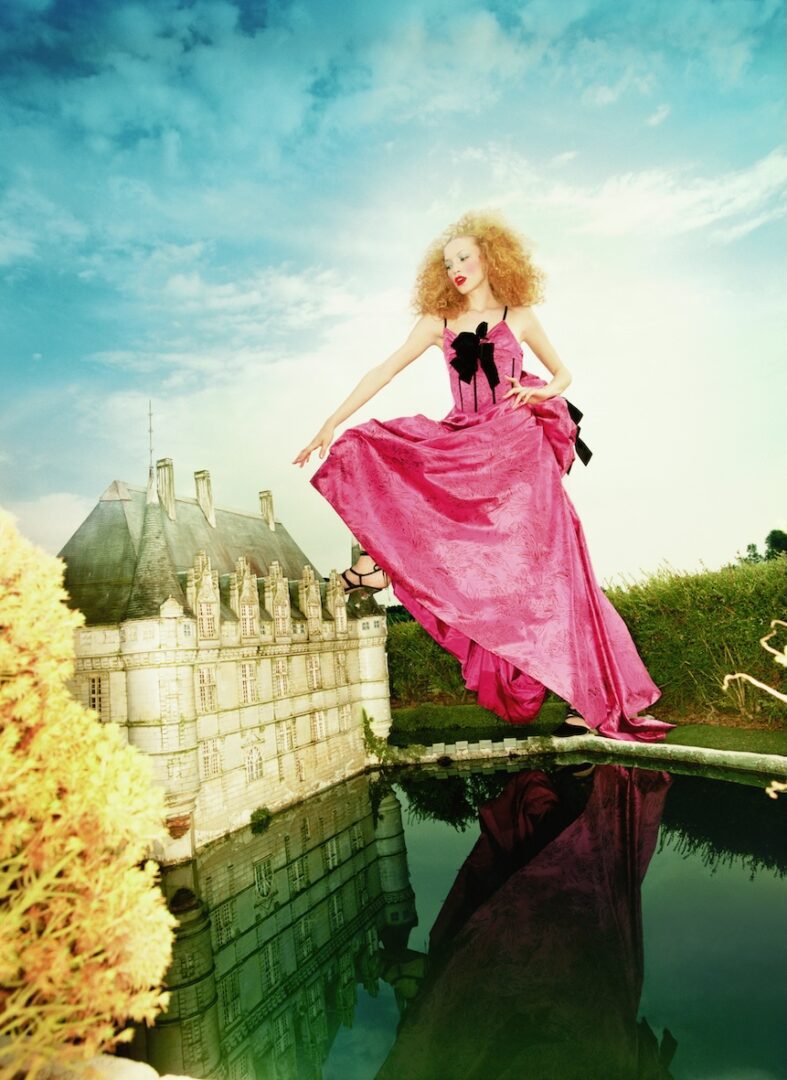
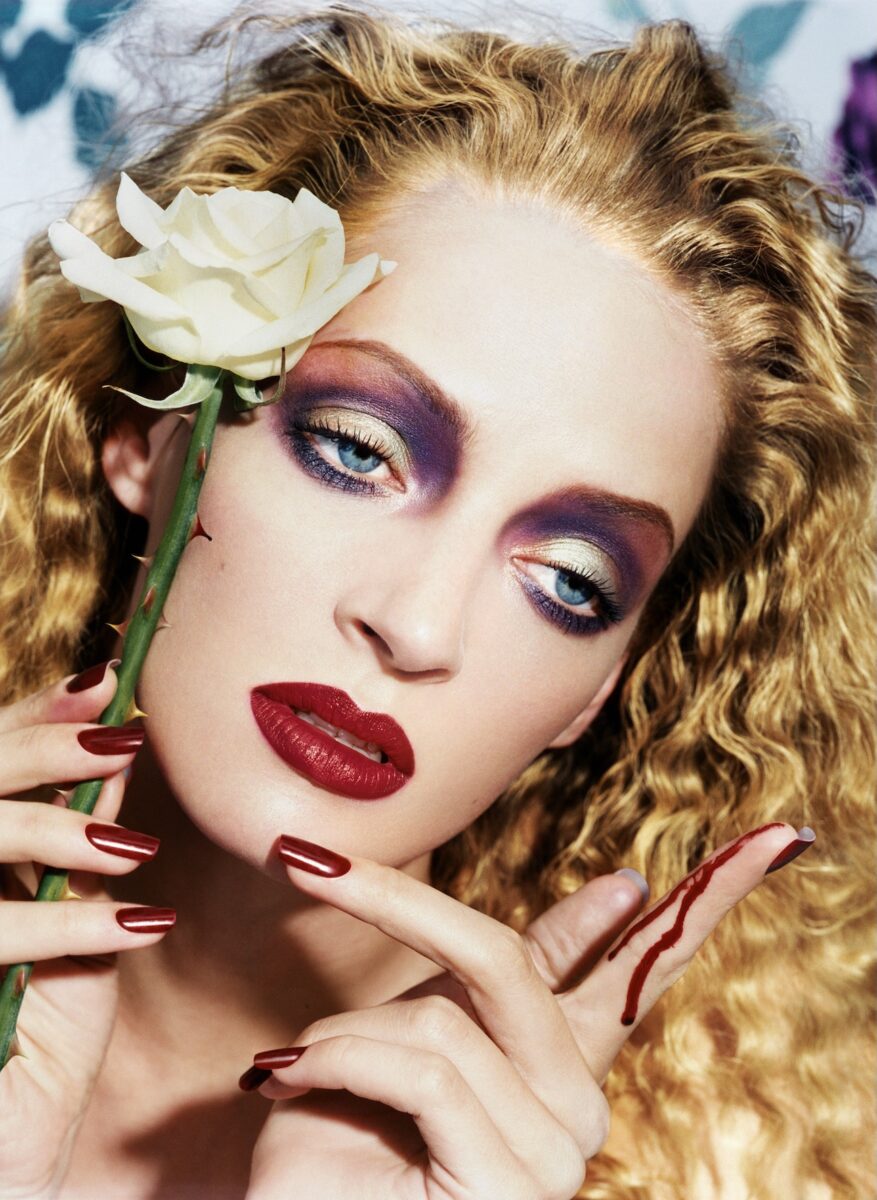
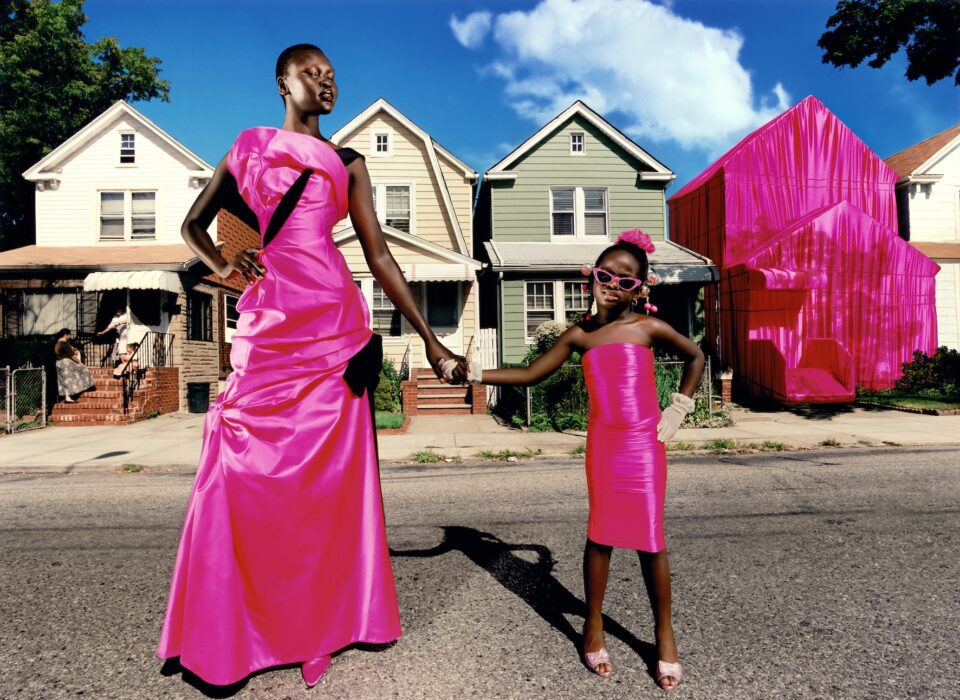
LaChapelle’s practice emerges from Pop Art and early proximity to Andy Warhol, where repetition and mass circulation define image culture. Rather than referencing this history, he extends it into constructed worlds where consumption becomes both subject and operating logic. His portraits of celebrities, performers and anonymous figures function as systems of staging rather than records of individuals. They demonstrate how visibility is produced through repetition, styling and scale. Religious and historical imagery appears as structural material embedded within commercial visual language rather than symbolic reference. The work holds attraction and critique in the same frame without resolving either.
The exhibition at the Grand établissement thermal de Vichy brings together around one hundred works spanning fashion photography, portraiture and large-scale allegorical compositions. It is organised spatially rather than chronologically, allowing different phases of LaChapelle’s practice to operate in parallel. Early editorial images sit alongside later sculptural works that extend photography into architectural and installation form. Fresco-based works push the image into mural scale, aligning photographic production with spatial narrative systems. The thermal setting intensifies this, placing the work inside an architecture already shaped by display and ritual use. The result is an exhibition structured around immersion.
The parallel exhibition with the Nicéphore Niépce Museum traces portraiture from early photographic processes to contemporary digital systems. It focuses on the face as a site where identity is classified, circulated and standardised. From daguerreotype studios to carte-de-visite formats and later mass photographic practices, portraiture is shown as a technology of organisation as much as representation. The museum’s collection frames photography as both technical archive and cultural infrastructure. Each shift in process reorganises how identity is recorded, stored and distributed. The show presents photographic history as a succession of changing systems rather than a narrative of progress.
Des mots pour voir, supported by the Neuflize OBC Foundation, introduces interpretation as part of the work’s structure. A piece by Paul Graham is presented alongside public responses and mediated commentary that accumulate around the image. Meaning is generated through these layers rather than fixed by institutional framing. Graham’s observational practice is repositioned within a network of interpretation, where viewing becomes collective rather than private. The photograph functions as a site where meaning is negotiated. This shifts attention from what the image shows to how it is read.
La voix du regard, led by Brigitte Patient, presents Yohanne Lamoulère’s images of Marseille through spoken narration and sequence. The narration does not explain the images but directs how they are approached and paced. Lamoulère’s work focuses on social environments and peripheral spaces where identity is formed through context rather than pose. Voice and image operate together but remain distinct, producing a layered structure of attention. Meaning remains open, shaped by the movement between description and observation. Portraiture becomes a mechanism for organising perception across time.
The residency programme extends the festival into lived environments through Julia Gat and Patrick Tournebœuf. Gat’s work with students at CAVILAM-Alliance Française constructs portraits of intercultural presence shaped by language, proximity and shared space. Identity is shown as something produced through interaction rather than representation. Tournebœuf’s series on European spa cities continues with Bath, where architecture is read as a record of civic organisation. His images map how built environments structure behaviour, memory and access. The residencies treat portraiture as spatial and social ordering.
The programme’s participatory projects extend photography into public and educational contexts. Portrait(s) s’invite à l’école embeds image production within classroom environments, where students construct portraits from everyday institutional life. The Cabine Studio Harcourt installation reduces portraiture to a controlled sequence of pose, light and capture. These projects shift photography from exhibition object to performed process. As part of the LUX network, the festival operates within a wider infrastructure of photographic institutions across France and its territories. Across all strands, Portrait(s) defines portraiture as a system that structures how visibility is produced, organised and controlled.
Portrait(s) ultimately reframes portraiture as an infrastructure of visibility rather than a mode of representation. Across LaChapelle’s staged systems, Graham’s mediated interpretation, Lamoulère’s social documentation, Gat’s relational portraits and Tournebœuf’s architectural mapping, the face is never isolated but positioned within structures that determine how it is seen. The festival makes clear that images do not simply reflect identity but organise the conditions under which it becomes visible. Looking is therefore produced through institutions, technologies and cultural formats that shape attention itself. The portrait becomes less a depiction than a site where visibility is constructed and regulated. What the programme exposes is not how we appear, but the systems that decide how we are allowed to be seen.
Portrait(s) runs at various locations across Vichy, France June 19 to October 4: 2e-bureau.com
Words: Shirley Stevenson
Image Credits:
1&5. This is my house, New York, 1997 © David LaChapelle.
2. Behold, Hawaii, 2017 © David LaChapelle.
3. Small landmarks : reflecIng, Paris, 1995 © David LaChapelle.
4. Uma Thurman: BeauIes bloom New York, 1997 © David LaChapelle.


