

Contemporary art from the Asia Pacific arrives in London with the force of something already long in motion. Rising Voices: Contemporary Art from Asia, Australia and the Pacific brings together more than 40 artists from 25 countries, assembling over 70 works that span sculpture, photography, painting, ceramics, weaving and body adornment. Many of these works have never been shown outside the region, and their presence at the V&A immediately shifts the terms through which visibility is negotiated. What unfolds is a profound encounter with interconnected and evolving cultural systems across one of the most diverse regions in the world. Australia, Asia and the Pacific together account for roughly 60 percent of the global population, a fact that quietly underpins the exhibition’s scale and urgency.
The exhibition emerges through a partnership between the V&A and the Queensland Art Gallery | Gallery of Modern Art (QAGOMA) in Brisbane, drawing directly on more than 30 years of the Asia Pacific Triennial of Contemporary Art, established in 1993. That lineage is crucial because it positions the show not as a selection extracted from elsewhere, but as the relocation of an already established curatorial infrastructure. The Asia Pacific Triennial operates as a long-form system rather than a periodic display, and what appears in London carries that accumulated curatorial intelligence with it. Installed at the V&A, the exhibition functions as a transfer of knowledge systems as much as objects.
Michael Parekōwhai’s Kapa Haka (Whero) (2003) sets the tone immediately at the entrance. The life-sized fibreglass figure of a Māori security guard stands as both institutional presence and structural disruption, folding surveillance, stereotype and authority into a single embodied form. The work refuses neutrality, insisting instead on the visibility of cultural coding within institutional space. Daniel Slater’s framing of the artists as “deeply rooted in place” becomes tangible here, though place operates less as geography than as contested cultural condition. The figure watches, but is also watched, establishing a reciprocal tension.
Slater’s language circulates through the galleries in fragments rather than declarations. Works are described as “urgently resonant”, narratives as “deserving far greater visibility”, and practices as forming a “shared contemporary world”. These phrases operate less as explanation than as atmosphere, shaping how the exhibition is read without fixing interpretation. In Re-Visioning History, this openness becomes central, as artists treat history not as record but as an unstable structure continually rewritten through contemporary experience. Meaning accumulates through disruption rather than resolution.
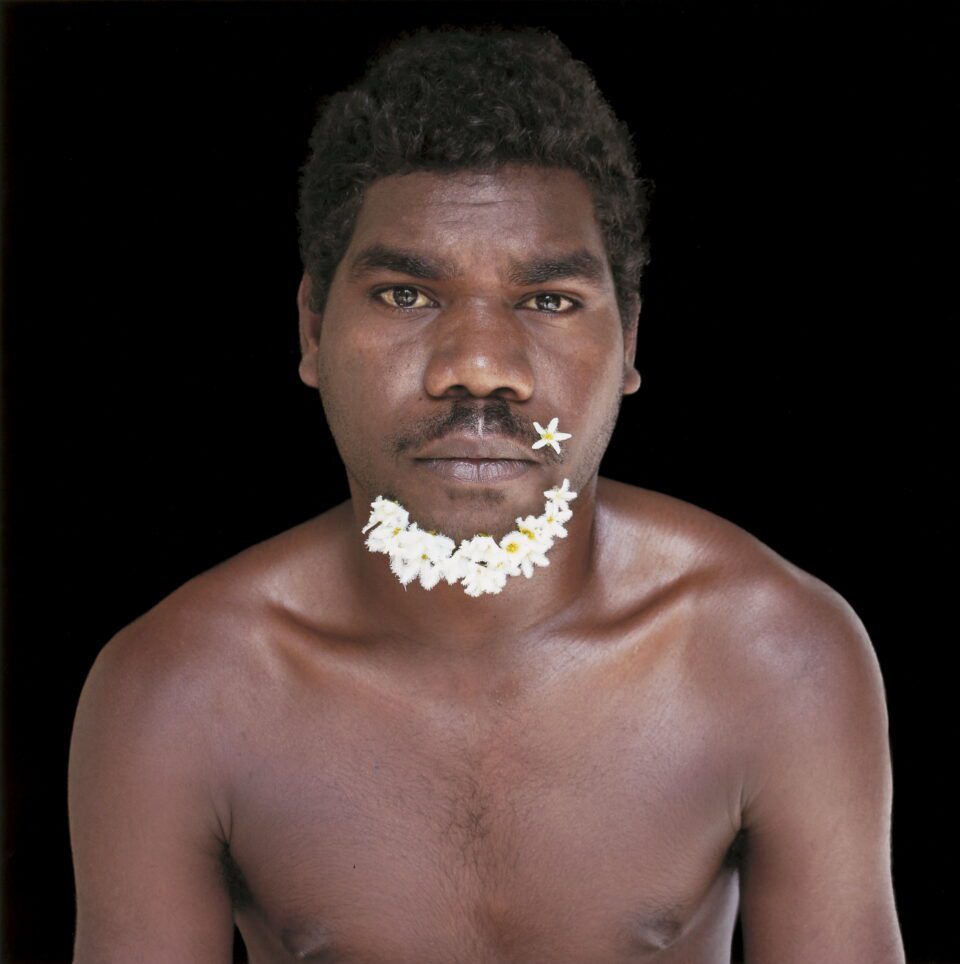
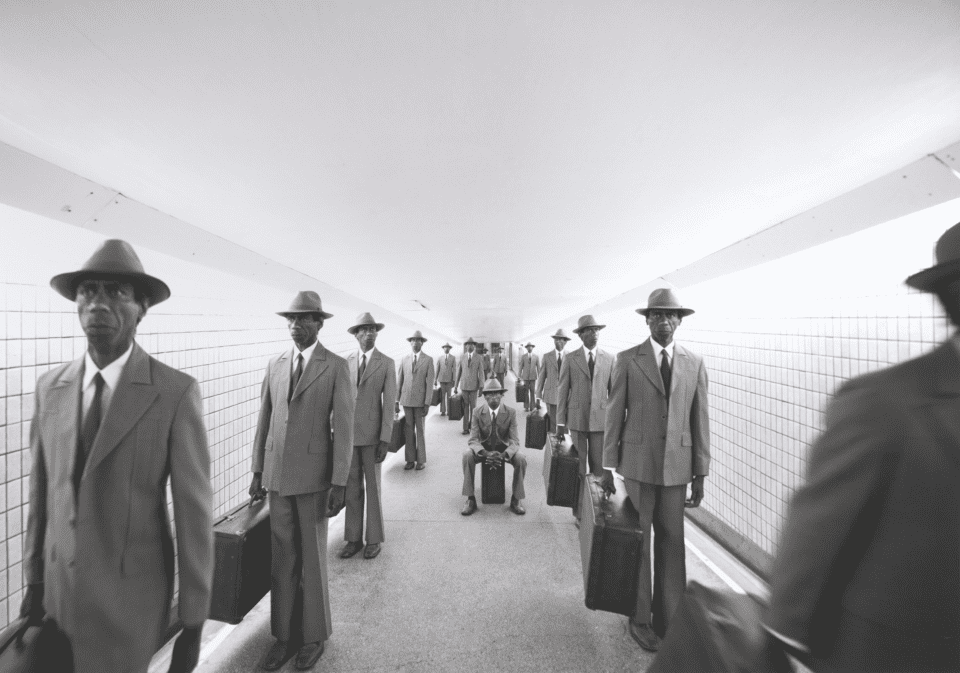
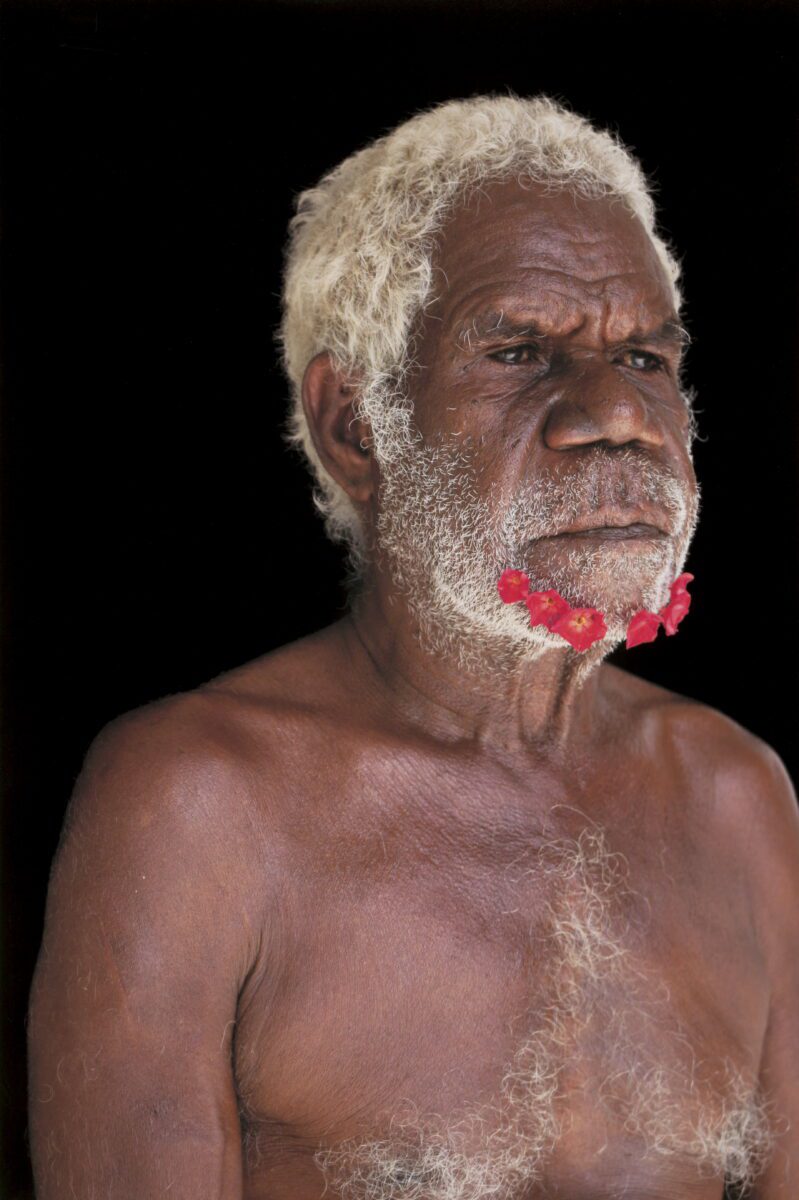
Pala Pothupitiye’s Kalutara Fort (2020–21) redraws colonial cartographies of Sri Lanka as layered, fractured spatial systems shaped by successive regimes of occupation. History here appears not as linear narrative but as contested infrastructure, repeatedly overwritten yet never fully erased. Works by Brenda Fajardo, Elisabet Kauage, Mathias Kauage and John Siune respond to the Bougainville conflict (1988–98), one of the most devastating in Oceania since World War II, through collaborative visual languages rooted in lived experience rather than archival distance. Photography by Naomi Hobson and Michael Cook moves between documentary intimacy and constructed narrative. Across this section, Slater’s reference to colonial legacies sits not as framing device but as ongoing structural reality.
If Re-Visioning History confronts contested pasts, Enduring Knowledge turns toward continuity embedded in material practice. Lola Greeno’s maireener shell necklaces anchor this section, operating simultaneously as adornment, ecological record and knowledge system carried through generational making. Their presence resists aesthetic abstraction, insisting instead on material specificity and cultural continuity rooted in place. Across more than 40 artists, inherited systems of knowledge become a shared but varied logic rather than a singular theme. Material practice becomes a way of thinking rather than illustrating.
This logic extends into Khadim Ali, Saira Wasim, Pushpa Kumari and Nusra Latif Qureshi, where miniature painting traditions are reworked through subtle but decisive shifts in composition and narrative authority. Qureshi centres female figures within visual systems historically structured by patriarchal and courtly frameworks, quietly recalibrating how meaning is distributed within the image. The intervention remains restrained but structurally significant, shifting rather than overturning inherited conventions. Alongside this, Ah Xian’s porcelain busts translate Chinese dynastic techniques into contemporary sculptural form, where cobalt landscapes sit across fragile surfaces shaped by migration and craft lineage. Across these works, Slater’s reference to “ancestral knowledge and faith” reads as material methodology.
The final section, Evolving Faith, moves into spatial and perceptual registers where belief systems intersect with contemporary urban and social conditions. Nomin Bold’s Labyrinth game (2012) compresses Ulaanbaatar into a thangka-influenced diagram, where city and cosmology collapse into a single visual field. Montien Boonma’s Lotus sound (1992) operates as immersive environment, where sound, symbolism and architectural memory dissolve into sensory experience rather than fixed objecthood. Takahiro Iwasaki’s Reflection Model (Perfect Bliss) (2010–12) suspends sacred architecture in near-weightless form. Faith here functions as spatial condition, continuously reconfigured through perception.
Across more than 40 artists, the exhibition returns repeatedly to how histories, materials and belief systems circulate across geography and generation. Slater describes these practices as revealing narratives that are “deeply rooted in place” while also speaking to a “shared contemporary world”, a tension that remains unresolved and productive. Place operates less as fixed origin than as shifting relational field, continually redefined through artistic practice. Nothing resolves into singular meaning; everything remains in motion. The exhibition holds this instability as its central condition.
Antwaun Sargent’s The New Black Vanguard, first staged at Aperture Gallery in New York in 2019 before travelling internationally to venues including Rencontres d’Arles and institutions across Europe and the United States, provides a useful point of comparison. Curated by Sargent, the exhibition repositions Black fashion photography within contemporary art discourse, collapsing distinctions between editorial, commercial and institutional image-making. It circulated widely, functioning not as fixed presentation but as curatorial argument that shifts across contexts. Its impact lies in reframing visibility as structural condition rather than representational inclusion. The exhibition becomes mobile infrastructure for rethinking photographic legitimacy. The connection to Rising Voices lies in this shared recalibration of how visibility operates within global art systems. Both projects reposition what is seen by reconfiguring the structures that determine seeing itself. Where Sargent reframes photographic discourse, Rising Voices brings more than 40 artists into a European context already shaped by a long-established Asia Pacific curatorial infrastructure. Slater’s emphasis on works that are “urgently resonant” echoes this logic, where resonance describes circulation across systems rather than fixed interpretation.
Rising Voices is distinguished in its foundation in a three-decade curatorial framework rather than a singular gesture. It emerges from the Asia Pacific Triennial’s sustained methodology, bringing that long-established system into dialogue with a European institutional context. That continuity gives the project a sense of depth and coherence, situating it within an ongoing curatorial conversation that has developed over time across the region. For UK audiences, its presentation marks a rare and significant opportunity to encounter the breadth of contemporary practice from Asia, Australia and the Pacific on this scale, bringing together perspectives that are often underrepresented in European exhibition contexts. Contemporary art here is shaped by interconnected networks of practice, exchange and knowledge that span geographies and generations. The presentation holds this sense of continuity and relation, offering a view of artistic production that feels expansive, interconnected and culturally vital in its reach.
Rising Voices: Contemporary Art from Asia, Australia and the Pacific is at V&A, London from 16 May – 10 September: vam.ac.uk
Words: Shirley Stevenson
Image Credits:
1&4. Michael Cook / Bidjara people / Majority Rule (Tunnel), 2014 / Purchased 2014. QAGOMA Foundation / Collection:QAGOMA, Brisbane/ © Michael Cook.
2. Takahiro Iwasaki/ Reflection Model (Perfect Bliss), 2010–12 / The Kenneth and Yasuko Myer Collection of Contemporary Asian Art. Purchased 2013 with funds from Michael Sidney Myer through the Queensland Art Gallery Foundation / Collection: QAGOMA, Brisbane / © Takahiro Iwasaki.
3. Naomi Hobson/ Kaantju/Umpila peoples / A Warrior without a Weapon 1(from ‘A Warrior without a Weapon’ series),2018 / Purchased 2019 with funds from the Future Collective through the QAGOMA Foundation / Collection: QAGOMA, Brisbane / © Naomi Hobson.
5. Naomi Hobson/ Kaantju/Umpila peoples / A Warrior without a Weapon 8 (from ‘A Warrior without a Weapon’ series),2018 / Purchased 2019 with funds from the Future Collective through the QAGOMA Foundation / Collection: QAGOMA, Brisbane / © Naomi Hobson.


