

The tenth edition of the Max Mara Art Prize for Women comes at a time when there is growing focus on how artists translate lived experience into broader social and political frameworks. The 2026 winner is Yogyakarta-based artist Dian Suci (b. 1985), whose work was selected from a shortlist of five finalists that also included Betty Adii, Dzikra Afifah, Ipeh Nur and Mira Rizki. The announcement reflects an ongoing commitment by the prize to foreground practices that move between material investigation and conceptual depth. The decision was made by a jury chaired by Cecilia Alemani, and including Venus Lau, Amanda Ariawan, Megan Arlin, Evelyn Halim and artist Melati Suryodarmo. Within this framework, the prize continues to function as both commissioning platform and research engine for contemporary women artists. Suci’s selection signals a continued shift towards practices grounded in embodied knowledge.
Dian Suci’s practice operates through an intimate yet structurally attuned lens, where the domestic becomes a site of political inscription rather than private isolation. Working from her lived experience as a single mother, she constructs narratives that reveal how care, labour and survival are shaped by broader ideological systems. Her work consistently addresses the intersection of patriarchy, capitalism and authoritarian governance, tracing how these forces embed themselves in everyday gestures and domestic rhythms. Rather than treating the household as a neutral space, she exposes it as a terrain of negotiation, control and resistance. Memory and repetition become central devices in her work, allowing her to articulate how history is carried in the body. In doing so, she positions artistic practice as a method of reading the unseen structures that organise contemporary life.
Her winning proposal, Crafting Spirit: Cultural Dialogues in Heritage and Practice, extends this enquiry into the realm of craft, ritual and embodied transmission. The project focuses on women artisans whose work exists at the intersection of devotion, labour and economic necessity, reframing craft as both survival strategy and cultural memory. Suci approaches gesture as a vessel for historical continuity, where repetition is never neutral but always encoded with meaning. The proposal considers how the body functions as both archive and instrument, carrying traces of belief systems and social hierarchies across generations. It also interrogates how spiritual practice is reshaped within systems of commodification and mass production. Through this lens, craft becomes a space where the personal and political converge.
As part of the prize, Suci will undertake a six month residency in Italy, developing her research across four cities that each offer distinct historical and material contexts. In Assisi, she will examine the tension between spirituality and commercialisation, focusing on how religious tradition is transformed through contemporary cultural economies. In Rome, she will explore symbolic systems and ritual performance at St. Peter’s Basilica, analysing how meaning is constructed through ceremony and architectural staging. Lecce will provide a site for studying papier mâché, a material deeply embedded in devotional sculpture and local craft histories, revealing the fragile continuity between handwork and mass reproduction. In Florence, she will engage with egg tempera painting, a medium historically tied to ecclesiastical art and Renaissance visual culture, extending her inquiry into techniques of spiritual representation. Together, these locations form a layered itinerary through which gesture, belief and materiality are continuously reconfigured.
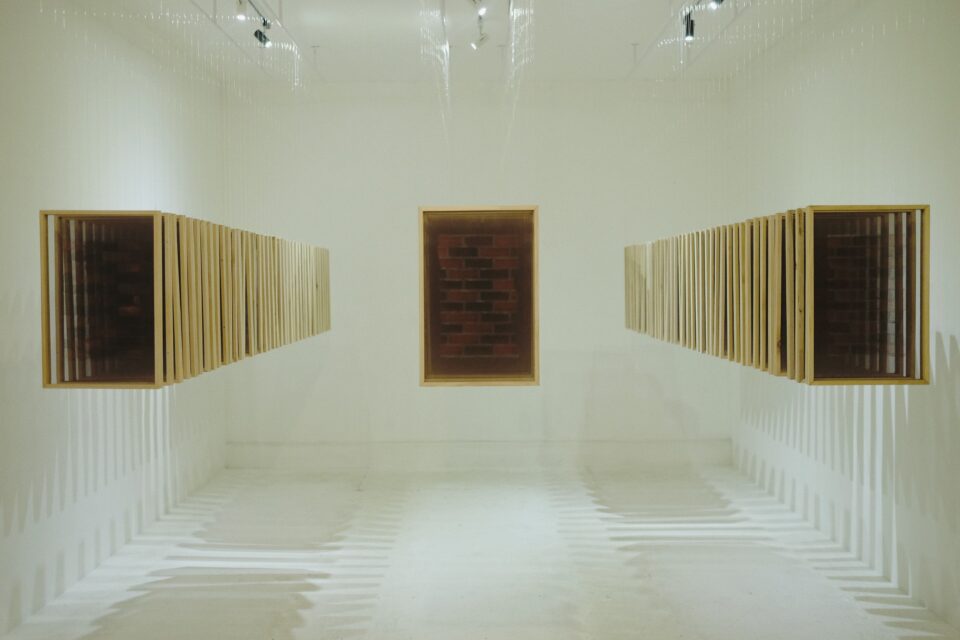
The shortlist for the 2026 edition reflects a diverse spectrum of contemporary practice across Southeast Asia, with each artist offering a distinct conceptual and material approach. Betty Adii’s work engages memory and narrative fragmentation, often drawing on personal and collective histories to construct layered visual systems. Dzikra Afifah explores language and perception, using text and spatial intervention to interrogate how meaning is formed and destabilised. Ipeh Nur’s practice is grounded in ecological concerns, situating human experience within shifting environmental conditions and systems of transformation. Mira Rizki works across installation and moving image to examine identity, hybridity and cultural displacement within globalised contexts. Together, the group reflects the prize’s emphasis on practices that are research led, materially attentive and critically engaged.
The jury for the tenth edition brings together figures from across curatorial, institutional and artistic fields, reinforcing the prize’s interdisciplinary orientation. Chaired by Cecilia Alemani, the panel includes Venus Lau of Museum MACAN, curator Amanda Ariawan, gallerist Megan Arlin, collector Evelyn Halim and artist Melati Suryodarmo. Their combined perspectives reflect a balance between institutional leadership, curatorial experimentation and artistic practice, shaping a decision making process grounded in both critical and contextual awareness. The jury’s selection of Suci underscores a shared interest in practices that move beyond medium specificity to engage broader questions of social structure. The prize continues to function as a site where curatorial discourse and artistic production intersect. It also reinforces the international scope of the award, connecting Southeast Asian practices with European networks.
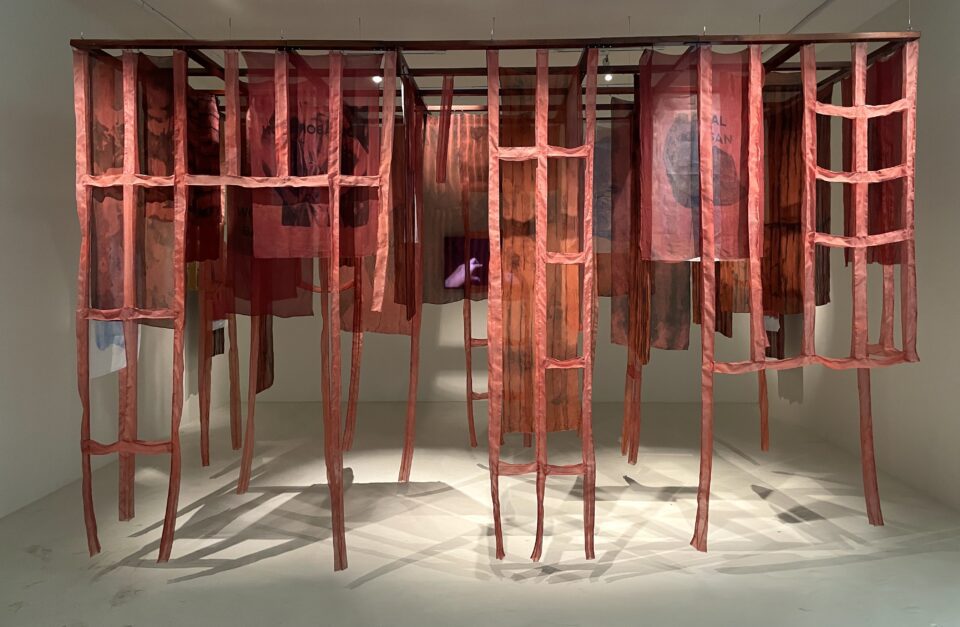
Looking ahead, Suci’s residency will culminate in a solo exhibition at Museum MACAN in Jakarta and at Collezione Maramotti in Reggio Emilia in 2027, marking the conclusion of her research journey. These presentations will offer an opportunity to trace the evolution of her work across the Italian sites of study, as well as the conceptual threads developed through her engagement with craft and ritual. The prize continues to position itself as a long form platform for artistic development, privileging process over immediate output and research over resolution. In Suci’s case, this structure allows for a sustained investigation into how gesture carries meaning across cultural and historical contexts. Her practice ultimately reframes craft not as static heritage but as an active and shifting field of knowledge. Within this expanded terrain, the domestic, the spiritual and the political remain inseparably entangled.
Find out more about the Max Mara Prize for Women 2026: maxmara.com
Words: Anna Müller
Image Credits:
1&4. Dian Suci, Beneath Fingers: Echoing Through the Shadow of a Still House, 2025. © and ph. Dian Suci.
2. Dian Suci, Searching Land in the Land Word, 2022. © and ph. Dian Suci.
3. Dian Suci, Is it a Body: A Field Inside a House, 2019. © and ph. Dian Suci.


