

Opening on 21 June, Directionless unfolds as a sweeping artist-led exhibition across Hauser & Wirth Menorca and the island landscape of Illa del Rei. Disorientation sits at the centre of the project, shaping both structure and tone. Contemporary practice is framed as a way of moving through instability rather than resolving it. The island becomes a field where architecture, coastline and light reconfigure perception. Meaning forms through proximity between works, site and viewer rather than through a fixed narrative.
The exhibition is organised by Rashid Johnson, an American artist whose multidisciplinary practice spans painting, sculpture, film and installation, and who is widely recognised for his explorations of identity, psychological space and cultural memory through material experimentation. His curatorial approach opens outward to a network of invited collaborators. These include Charles Gaines, a foundational figure in conceptual art whose grid-based systems replace expressive gesture with rule-bound structures that expose how meaning is constructed, and Firelei Báez, a Dominican-born, New York–based artist whose layered paintings rework colonial archives into speculative cartographies of the Caribbean and its diasporas. Alongside them is Cristina Iglesias, a Spanish sculptor recognised for architectural environments that dissolve distinctions between built form and natural landscape. Twenty-eight artists from over ten countries are drawn into this structure, producing a field that resists linear reading.
Within this constellation, disorientation operates less as theme than as shared condition. Charles Gaines has been central to conceptual practice since the 1970s, particularly through his Walnut Tree Orchard works, where numerical systems and photographic logic replace intuitive composition and foreground the constructed nature of perception. Firelei Báez builds visual systems in which maps, botanical forms, hair patterns and historical fragments accumulate without resolution, reflecting on how colonial histories persist within contemporary identity while resisting narrative closure. Cristina Iglesias, whose installations have been shown internationally and at major biennials, constructs sculptural environments that behave less as objects than as spatial conditions shaped by light, water and material flow. As Johnson notes, “We are all living inside a shared sense of disorientation right now. The artists here aren’t paralyzed by that condition; they’re animated by it.” Instability is held as productive ground rather than resolved outcome.
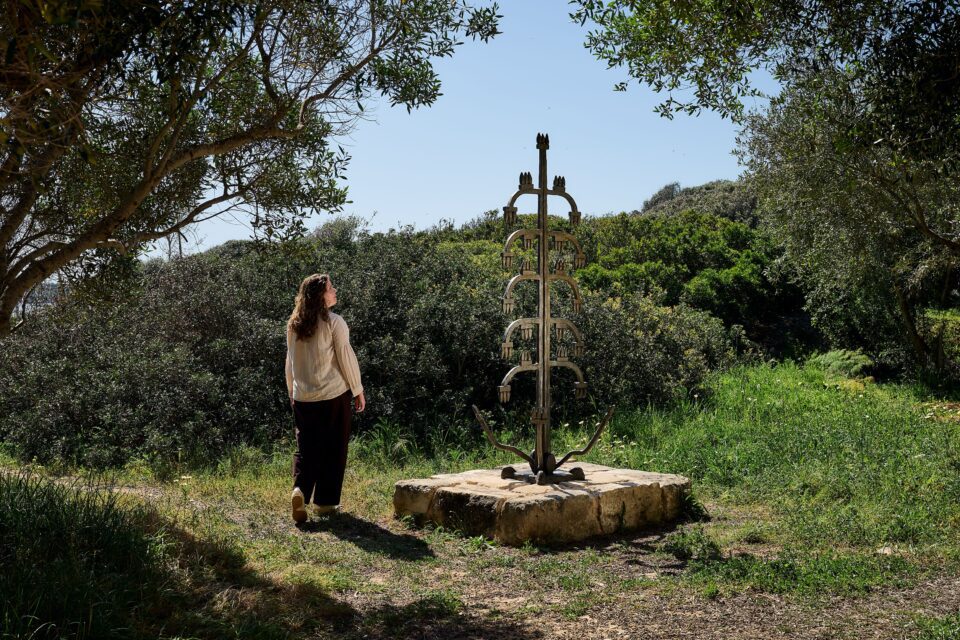
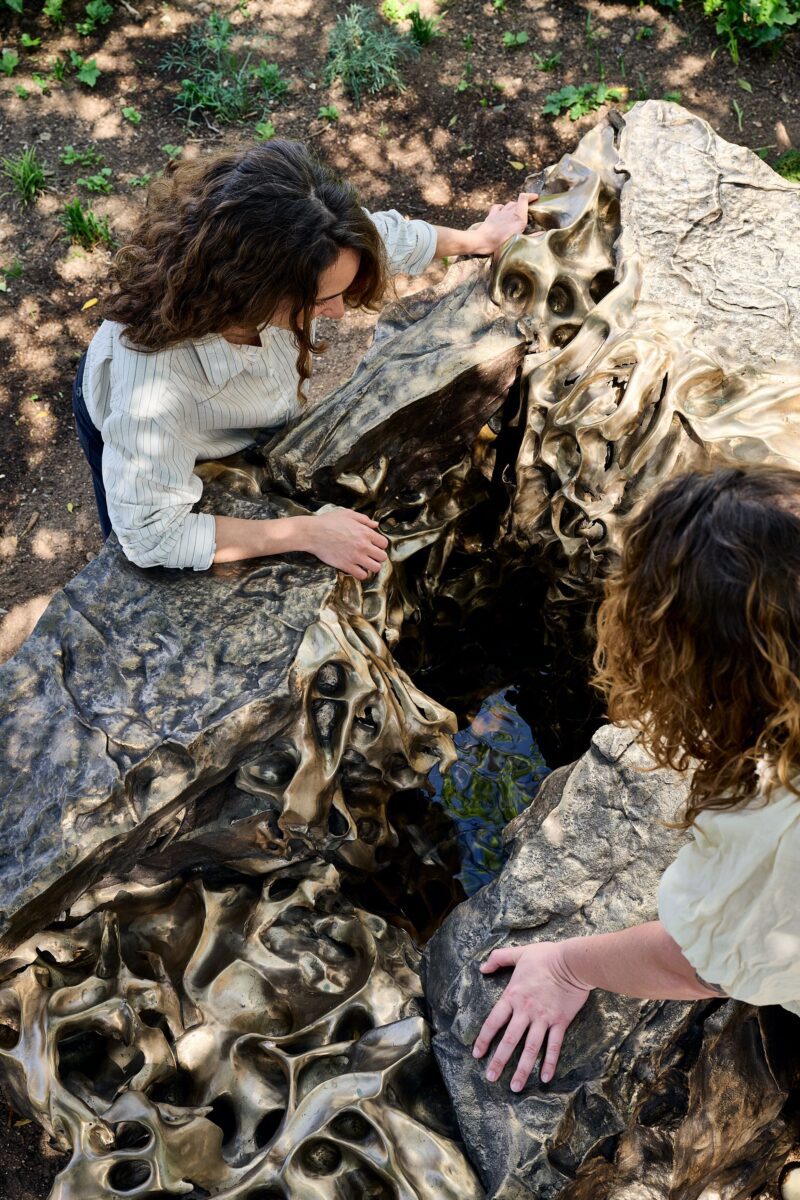
The outdoor sculpture programme is shaped by Cristina Iglesias, whose work consistently dissolves boundaries between architecture, geology and landscape. On Illa del Rei, she brings together Ali Cherri, a Lebanese-French artist and filmmaker whose sculptural practice engages archaeological fragments and museum objects to question preservation, violence and loss, Mona Hatoum, a Palestinian-born, London-based artist internationally recognised for transforming domestic and architectural forms into sites of surveillance, displacement and geopolitical tension, and Rayyane Tabet, whose research-led practice draws on geology, cartography and archival systems to examine how histories are constructed and destabilised over time. Cherri’s fractured material narratives, Hatoum’s spatial dislocation and Tabet’s geological temporalities converge within an environment shaped by wind, salt and erosion. Sculpture is no longer fixed form but an ongoing negotiation with conditions that refuse stability.
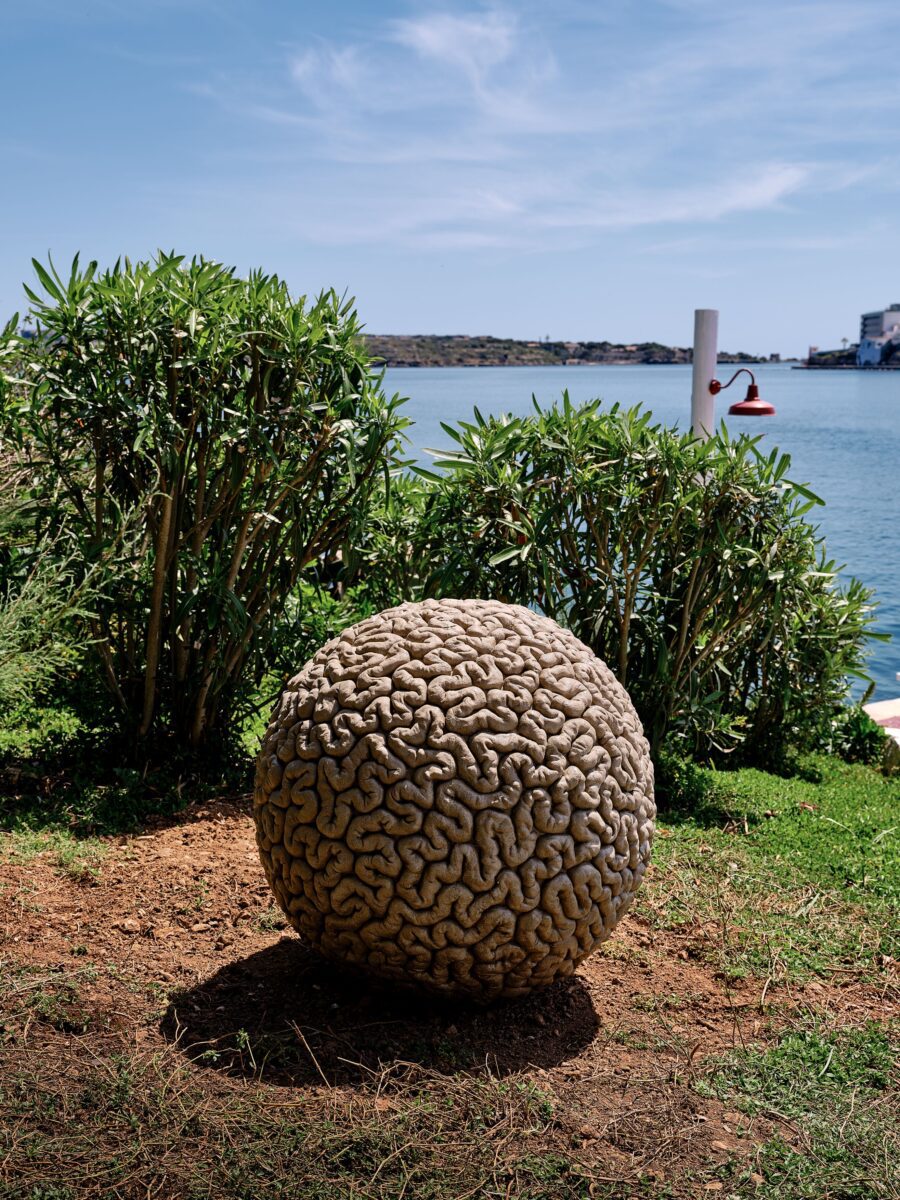
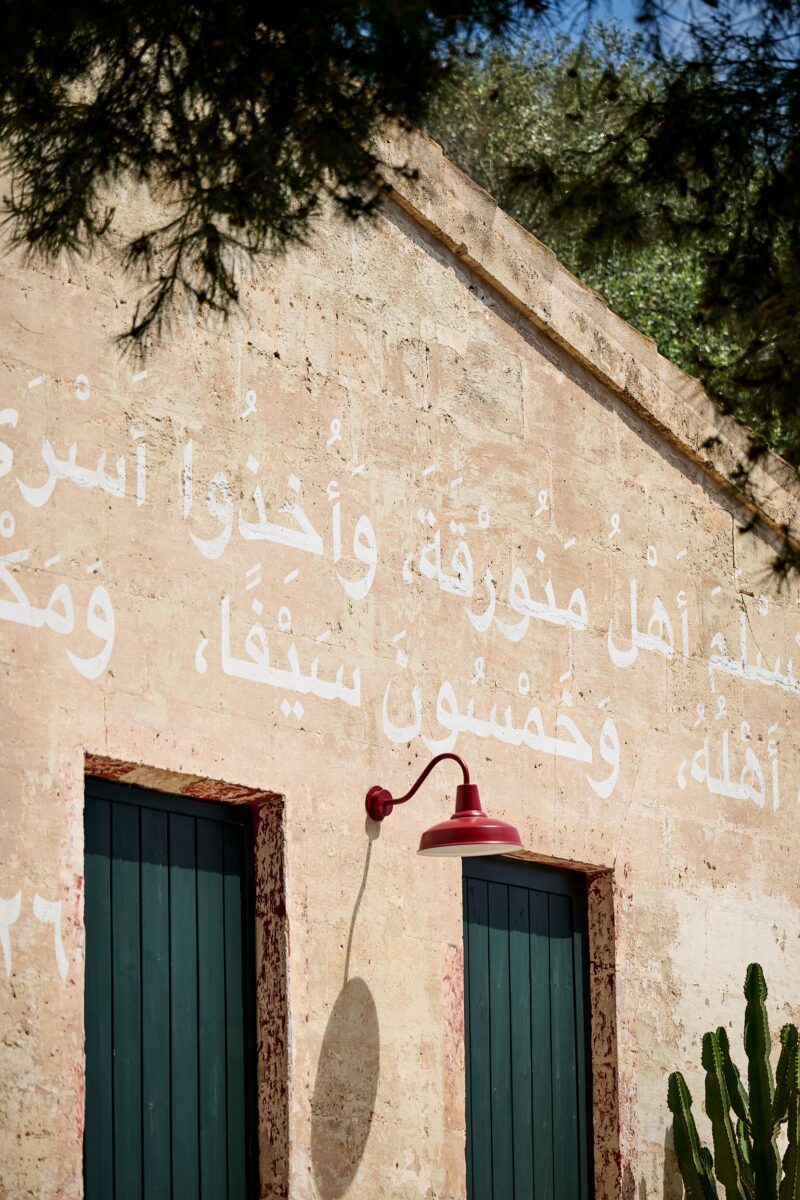
Iglesias’s own practice gives further depth to this framework. She has long described the Mediterranean not as a boundary but as a condition of passage, “a space of suspension and uncertainty” shaped by migration, exchange and layered civilisations. On Illa del Rei, this idea becomes physically immediate as works sit between water, stone and architectural ruin under shifting light. Her installations, often built through corridors, cavities and submerged spaces, evoke environments that feel excavated. In this setting, landscape functions as an active agent that continuously reshapes how works are read and experienced.
Inside the galleries, the exhibition is structured through proximity rather than chronology or medium. Yto Barrada, a Moroccan-French artist working across photography, film and installation, is known for examining urban transformation, migration and postcolonial infrastructure through a blend of documentary observation and fictional reconstruction. Sigalit Landau, an Israeli artist internationally known for her salt crystallisation works in the Dead Sea, uses processes of accretion and erosion to explore bodily endurance and political geography. Lyle Ashton Harris constructs photographic and collage-based works that interrogate race, sexuality and performance through archival layering. These sit alongside Julie Mehretu, whose large-scale abstractions layer architectural plans, maps and gestural marks into dense visual systems of global movement, and Wangechi Mutu, whose collaged figures merge mythology, feminism and postcolonial critique into hybrid forms that resist singular identity.
Across these positions, abstraction and figuration remain deliberately unresolved. Mona Hatoum reappears in the gallery context, extending her longstanding investigation into domesticity, exile and spatial control through sculptural interventions that unsettle familiar environments and reframe the everyday. Firelei Báez continues her layered constructions of cartography and speculative history, producing images in which geography becomes psychological and fluid rather than fixed. Meaning emerges through adjacency, interruption and friction rather than resolution or hierarchy.
The exhibition’s educational programme, developed with the University of the Balearic Islands and the University of Barcelona, extends these concerns into shared inquiry. It replaces fixed instruction with experimentation, positioning workshops and talks as spaces where ideas are tested and reconfigured in real time. Making, discussion and reflection operate as interconnected processes rather than separate formats. Knowledge is generated collectively between participants, artists and site. Learning becomes another form of instability within the wider structure.
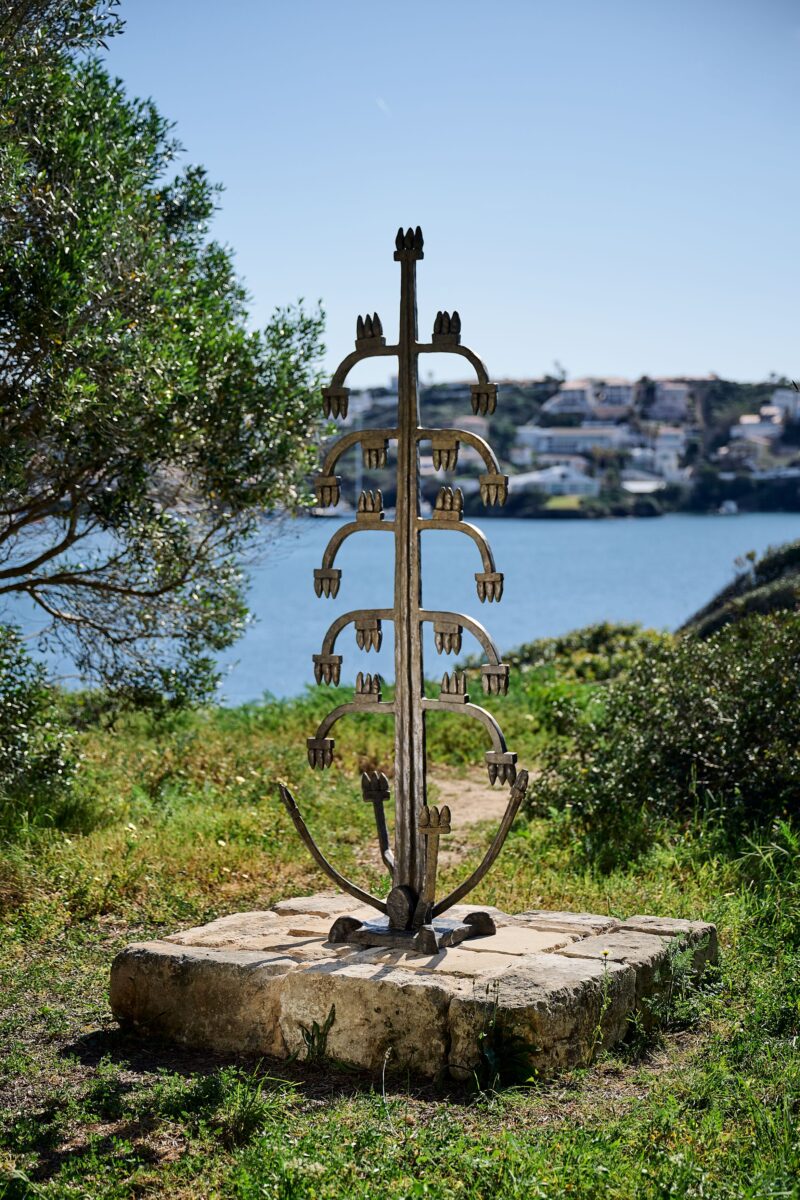
At Hauser & Wirth Menorca, Cantina folds hospitality into the exhibition’s spatial logic on Illa del Rei. Set within the island’s olive grove, it brings architecture, food and landscape into alignment through seasonal rhythms and local sourcing. Gathering becomes part of the curatorial field. Social encounter sits alongside artworks as another mode of relation. Cultural experience is embedded within the material conditions of the island. Works by Ali Cherri, Julie Mehretu and Firelei Báez remain open to shifting interpretation through environment, time and movement. No single reading or hierarchy takes hold. The island operates as a site of continuous recalibration. Disorientation is held not as absence but as method and structure.
Directionless is at Hauser & Wirth Menorca from 21 June – 25 October: hauserwirth.com
Words: Shirley Stevenson
Image Credits:
1&3. Mona Hatoum, Inside Out (concrete), 2019, Hauser & Wirth Menorca, 2026 © Mona Houtoum. Courtesy the artist and White Cube. Photo: Daniel Schäfer.
2. Cristina Iglesias, Littoral (Lunar Meteorite) IV, 2025, Hauser & Wirth Menorca, 2026 © Cristina Iglesias, VEGAP, Madrid. Photo: Daniel Schäfer.
4. Rayyane Tabet, Elegy at Minūrqa, 2026, Hauser & Wirth Menorca, 2026 © Rayyane Tabet. Courtesy the artist and Sfeir-Semler Gallery. Photo: Daniel Schäfer.
5. Ali Cherri, Tree of Life, 2023, Hauser & Wirth Menorca, 2026 © Ali Cherri. Courtesy the artist and Galerie Imane Farès. Photo: Daniel Schäfer.
6. Ali Cherri, Tree of Life, 2023, Hauser & Wirth Menorca, 2026 © Ali Cherri. Courtesy the artist and Galerie Imane Farès. Photo: Daniel Schäfer.
7. Cristina Iglesias, Littoral (Lunar Meteorite) IV, 2025, Hauser & Wirth Menorca, 2026 © Cristina Iglesias, VEGAP, Madrid. Photo: Daniel Schäfer.


