

Few photographers have altered the trajectory of contemporary image-making as profoundly as Joel Meyerowitz. Born in New York in 1938, Meyerowitz emerged as one of the defining visual voices of post-war America, transforming colour photography from a medium associated with advertising and vernacular snapshots into a serious artistic language capable of emotional and philosophical depth. Across six decades, his work has reshaped the possibilities of street photography, landscape, portraiture, and visual narrative, always guided by an acute sensitivity to light, atmosphere, and human presence. Alongside contemporaries such as William Eggleston and Stephen Shore, Meyerowitz established colour photography as an essential mode of fine art practice, influencing generations of photographers who sought to move beyond documentary realism toward something more lyrical and experiential. His images are never merely records of a place or moment – they are meditations on perception itself, on the fleeting alignments of gesture, light, colour and emotion that structure everyday life.
Huxley-Parlour’s forthcoming exhibition, Joel Meyerowitz: Select Works, 1962–2019, brings together twenty-five photographs spanning the breadth of the artist’s career, tracing the evolution of his visual language from the charged streets of 1960s New York to the contemplative stillness of his later work. Marking Meyerowitz’s fourth solo exhibition with the gallery, the presentation reveals the continuity beneath his stylistic shifts: an enduring fascination with what the artist has often described as the “nearly invisible.” Whether photographing a crowded Manhattan intersection or the last traces of evening light dissolving over water, Meyerowitz approaches the world with a heightened attentiveness to transient phenomena. His photographs occupy the delicate threshold between observation and revelation – moments in which the ordinary becomes unexpectedly luminous.
The early street photographs included in the exhibition capture New York at its most restless and improvisational. Working with a handheld 35mm camera, Meyerowitz moved instinctively through the city, constructing images layered with visual coincidence and subtle theatricality. A child illuminated by a sudden shaft of sunlight becomes an apparition amid the urban density; a mannequin perched on the back of a motorcycle appears simultaneously comic and uncanny; a businessman lingering beside a Cadillac drifts into the frame like a figure in an unscripted film still. These photographs possess an extraordinary rhythmic energy, recalling the improvisatory structures of jazz musicians such as Sun Ra, Pharoah Sanders, and Miles Davis, whose music similarly transformed chaos into moments of startling coherence. Slanted horizons, fragmented reflections, and spontaneous gestures all contribute to a sense of immediacy, yet Meyerowitz’s compositions never feel accidental. Beneath the spontaneity lies a profound understanding of how disparate visual elements can briefly converge into harmony.
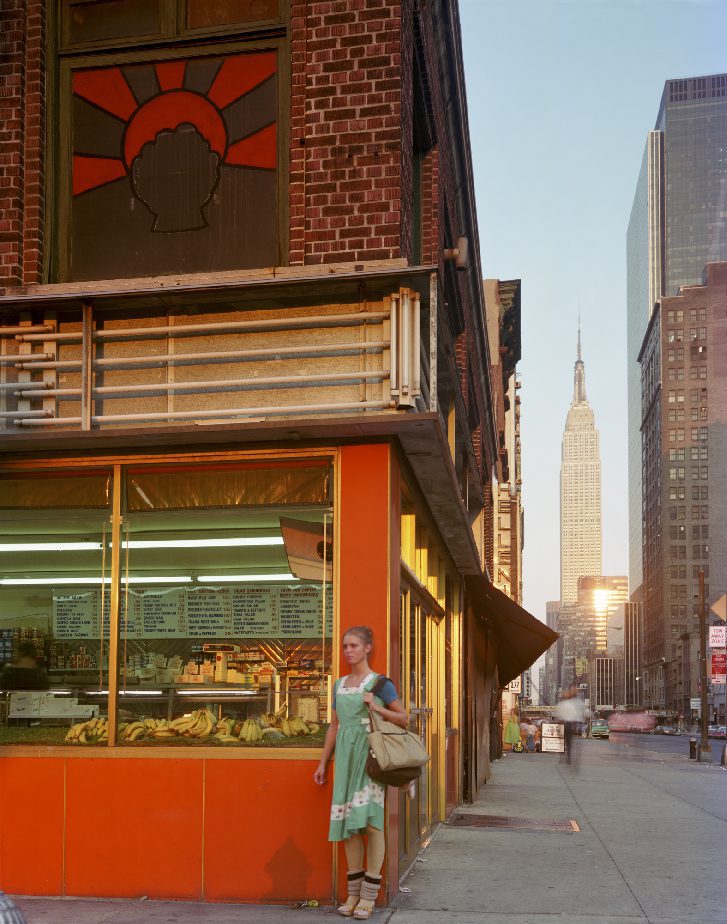
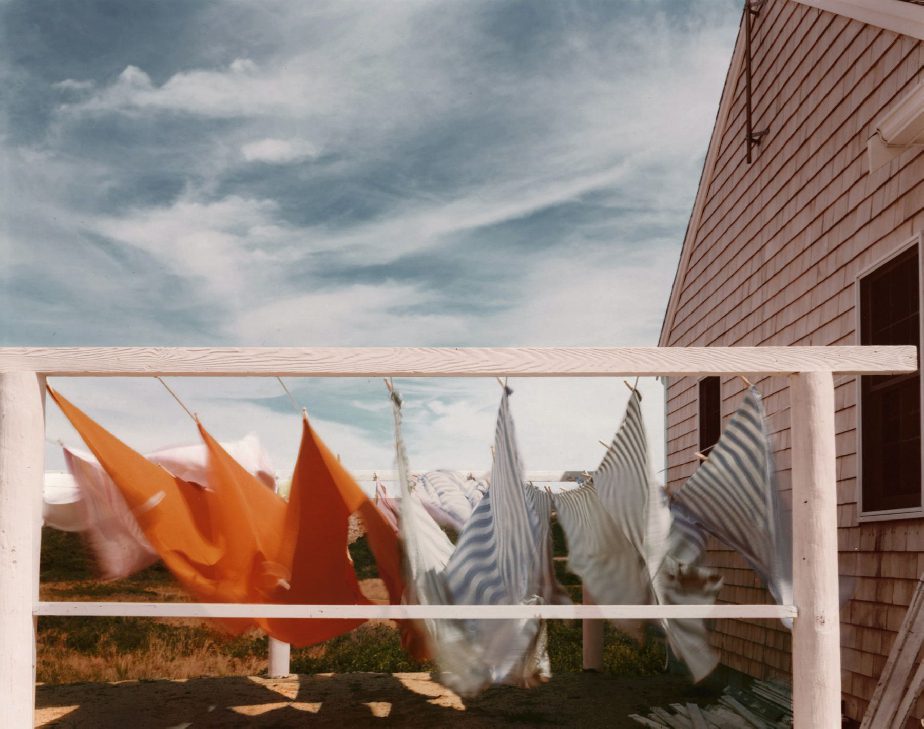
By the late 1970s, however, Meyerowitz began moving away from the velocity of the street toward a slower and more contemplative mode of working. His landmark photobook Cape Light, published in 1978, marked a decisive turning point. Adopting an 8×10-inch large-format camera, he exchanged the kinetic movement of Manhattan for the quiet coastal landscapes and domestic interiors of Cape Cod. The shift was not merely technical but philosophical. These photographs invite sustained looking, asking viewers to become attentive to subtle transitions of colour, atmosphere, and form. Laundry stirred by ocean wind becomes an abstract study in movement and chromatic balance; the fading glow of dusk over still water unfolds with painterly restraint. The urgency of the city gives way to something symphonic and meditative. Yet Meyerowitz continues searching for moments of revelation hidden within the familiar world.
The influence of Meyerowitz’s photographic philosophy can be seen across several generations of contemporary practitioners. Among the most significant is the American photographer Gregory Crewdson, whose elaborately staged suburban tableaux inherit Meyerowitz’s fascination with psychological atmosphere and cinematic light. While Crewdson’s practice differs radically in scale and construction, his images similarly depend upon the transformative potential of ordinary environments. In works such as Beneath the Roses, suburban streets, empty living rooms, and dimly lit intersections become sites of uncanny emotional tension. Like Meyerowitz, Crewdson treats light not simply as illumination but as a narrative force capable of revealing hidden emotional realities. The stillness present in Meyerowitz’s later coastal photographs reverberates through Crewdson’s suspended and meticulously orchestrated scenes, where silence itself becomes expressive. Both artists understand photography as an act of heightened perception – a means of uncovering the strange within the everyday.
Another artist deeply indebted to Meyerowitz is the British photographer and filmmaker Harley Weir, whose intimate, fluid visual language echoes his sensitivity to colour and embodied experience. Weir’s photographs often blur the boundaries between fashion imagery, portraiture, and documentary observation, producing images that feel instinctive yet psychologically layered. Her use of colour recalls Meyerowitz’s insistence that chromatic relationships can communicate mood with extraordinary subtlety. Flesh tones, saturated fabrics, reflected light, and environmental textures all operate emotionally within her compositions. Like Meyerowitz, Weir gravitates toward transitional moments rather than definitive narratives – gestures caught between vulnerability and performance, spaces suspended between familiarity and estrangement. There is also a shared attentiveness to the body as a site of perception, where emotional states are conveyed through atmosphere, posture, and spatial tension.
The influence of Meyerowitz also extends powerfully into the work of contemporary street photographer Alex Webb. Known for his densely layered colour compositions made across Latin America, the Caribbean, and beyond, Webb expands upon Meyerowitz’s understanding of the street as a space of visual simultaneity. His photographs are structured through complex interactions of shadow, movement, architecture, and human gesture, often containing multiple narratives unfolding within a single frame. Much like Meyerowitz’s New York images, Webb’s work depends upon extraordinary patience and alertness – an ability to recognise fleeting alignments before they disappear. However, Webb pushes this density further, constructing images that verge on abstraction while remaining deeply rooted in lived social realities. The chromatic intensity of his photographs, their fractured spatial organisation, and their sensitivity to transient human encounters all reveal the resonance of Meyerowitz’s approach to seeing.
What connects these photographers is not imitation but a shared commitment to attentiveness. Meyerowitz’s legacy lies less in a singular aesthetic than in a philosophy of observation – an understanding that photography can reveal dimensions of experience habitually overlooked. His images insist upon slowness within a culture increasingly defined by visual acceleration. Even in his earliest street photographs, there is an awareness that the camera can become a tool for discovering hidden structures of feeling embedded within everyday life. This commitment to perception links his work not only to photography but also to literature, painting, and music. Meyerowitz has frequently drawn inspiration from poetry, particularly Robert Frost’s essay The Figure of a Poem, in which Frost writes, “No surprise for the writer, no surprise for the reader.” The idea of surprise remains central to Meyerowitz’s practice.
The exhibition at Huxley-Parlour foregrounds this sense of discovery across the full span of the artist’s career. Rather than presenting a straightforward chronology, Select Works, 1962–2019 reveals the subtle continuities connecting seemingly disparate bodies of work. The frenetic urban images of the 1960s contain the seeds of the contemplative stillness that emerges decades later; the quiet horizons of Cape Cod retain the improvisatory sensitivity first developed on the streets of Manhattan. Throughout the exhibition, Meyerowitz’s photographs resist spectacle in favour of something quieter and more enduring. Their emotional force arises through accumulation – through the careful orchestration of colour, gesture, texture, and light. The viewer is encouraged not simply to look at the images but to inhabit them slowly.
At a moment when photography is increasingly consumed at speed and often reduced to digital ephemera, Meyerowitz’s work feels newly urgent. His images remind us that looking can be an ethical and imaginative act – one grounded in curiosity, patience, and openness to uncertainty. The enduring relevance of his practice lies in this insistence that the world remains inexhaustibly strange and beautiful when approached with sufficient attentiveness. Across city streets, domestic interiors, and coastal landscapes, Meyerowitz continually returns to the same essential question: how might photography help us see more fully?
Joel Meyerowitz: Select Works, 1962–2019 brings together works produced across nearly 60 years, the exhibition offers both an overview of an extraordinary career and a timely reflection on photography’s capacity for wonder. More than a retrospective, it is an invitation into Meyerowitz’s way of seeing – one defined by sensitivity, curiosity and an unwavering belief in the revelatory possibilities of light.
Joel Meyerowitz: Select Works, 1962-2019 is at Huxley Parlour, New York from 5 June – 11 July: huxleyparlour.com
Words: Anna Müller
Image Credits:
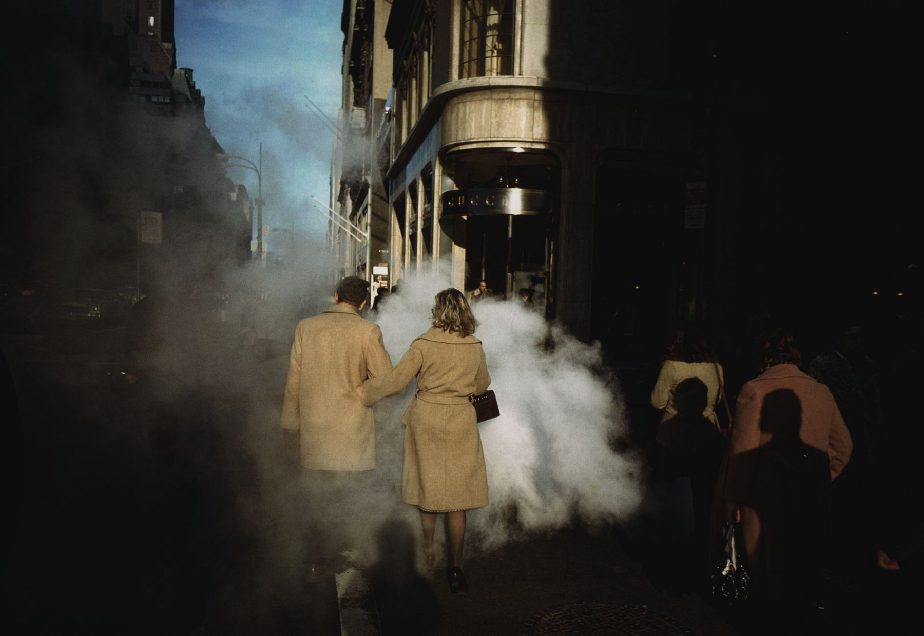
1&6. Camel Coats, New York City, 1975, Joel Meyerowitz, image courtesy Huxley-Parlour.
2. Gold Corner, New York City, 1975, Joel Meyerowitz, image courtesy Huxley-Parlour.
3. Young Dancer, Empire State Series, New York City, 1978, Joel Meyerowitz, image courtesy Huxley-Parlour.
4. Laundry, Provincetown, Massachusetts, 1977, Joel Meyerowitz, image courtesy Huxley-Parlour.
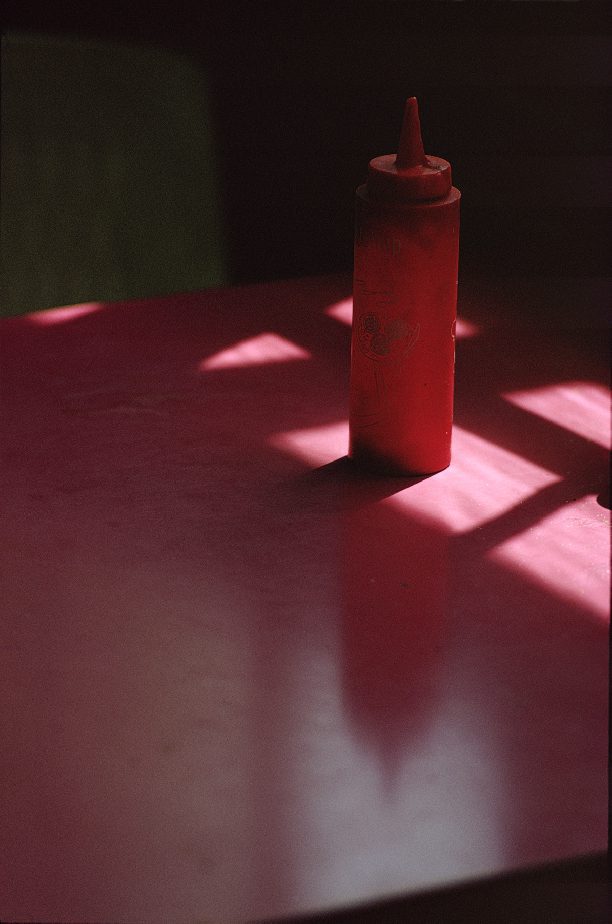
5. New Jersey, 1966, Joel Meyerowitz, image courtesy Huxley-Parlour.


