

In an age defined by the incessant circulation of images, photography has become less a discrete medium than an ambient condition. Pictures arrive and depart with such velocity that looking is often reduced to a kind of reflex – a flicker of attention rather than sustained encounter. The photograph, once anchored in the idea of duration, now behaves like a surface of perpetual present tense, endlessly refreshed and endlessly displaced. However, within this saturation, photography festivals have become increasingly important as counter-temporal spaces – environments in which images are slowed, recontextualised and recharged through proximity, scale and sequence. They function as temporary architectures of attention, where looking is restored to something closer to experience than consumption. It is within this broader ecology that Bristol Photo Festival returns for its third edition in autumn 2026, announcing a programme shaped around the conceptually expansive theme: Time Machine.
Running from 14 October to 15 November 2026, the biennial unfolds across Bristol’s major visual arts institutions as well as a constellation of independent and unexpected sites across the city. Although the opening lies several months ahead, the announcement in May occupies a significant position within the contemporary festival cycle, where meaning is increasingly generated in the interval between articulation and installation. Early programme statements now operate less as previews than as curatorial propositions in their own right – framing the intellectual and affective terrain through which audiences will later move. Building on the success of its second edition, which attracted over 115,000 visitors, Bristol Photo Festival continues to assert itself as one of the UK’s most ambitious platforms for contemporary photography. This edition turns towards time not as linear progression but as a folded condition – porous, recursive and unstable – in which past, present and future continually contaminate one another. Photography, within this logic, is a mechanism through which temporal experience is actively negotiated.
What distinguishes this curatorial framing is its alignment with a broader shift in photographic thinking, in which the image is no longer understood as a stable document but as a site of temporal entanglement. In contemporary visual culture, time has been radically compressed – collapsed into feeds, updates and algorithmic sequences that erase duration in favour of immediacy. The photograph loses its traditional anchoring function and becomes something closer to a circulating fragment, detached from origin yet perpetually reactivated in new contexts. Time Machine responds to this instability by repositioning photography as a medium capable of holding multiple temporalities at once – memory, anticipation and invention layered within a single frame. Rather than resisting technological acceleration, the festival instead asks how photography might metabolise it, producing forms of attention that are slower.
Alejandro Acín, Festival Director, describes this edition as an exploration of how photography unsettles “the idea of time as a single line.” This articulation signals a curatorial sensibility attuned to fragmentation rather than sequence, where images are understood as nodes within broader constellations of meaning rather than isolated statements. Increasingly, contemporary photographic practice moves between archives, speculative narratives and ecological frameworks, resisting closure in favour of open-ended interpretation. Bristol Photo Festival positions itself within this evolving field, bringing together international and local artists whose work engages with history, memory and imagined futures in ways that are layered, discontinuous and often deliberately unresolved. The festival’s emergence also takes place against a backdrop of precarity within the UK cultural sector, where institutions are being asked to rethink collaboration, sustainability and public value. In this context, the biennial becomes a structure of resilience.
Importantly, Bristol Photo Festival is not conceived as a temporary overlay on the city but as something embedded within its social and spatial fabric. Alongside exhibitions and public events, the programme extends into long-term engagement and education projects developed with local communities, exploring overlooked or marginalised narratives within Bristol’s histories. Photography here is positioned as a civic language as much as an aesthetic one – a means through which collective memory and present experience can be held in tension. The festival’s institutional network, including Arnolfini, Bristol Museums, Martin Parr Foundation, Watershed, University of the West of England, Brigstow Institute and the University of Bristol, reflects an interdisciplinary model of cultural production that resists single-authority interpretation. Instead, the biennial is structured as a distributed field of exchange, where photography operates across curatorial, educational and community contexts simultaneously.
The increasing prominence of photography festivals globally has reshaped how the medium is encountered, circulated and critically framed. Platforms such as Photo London or Paris Photo have played a central role in positioning photography within the broader contemporary art economy, bringing together commercial galleries, institutions and independent practitioners within a single cultural field. Whilst market visibility is an inevitable dimension of such events, their deeper significance lies in how they stage photography as a site of ongoing negotiation – between image and context, commerce and critique, spectacle and reflection. Across these frameworks, photography festivals increasingly function as instruments for reading contemporary visual culture itself, revealing how images are shaped by the conditions of their circulation as much as by their production. Within this landscape, Bristol’s focus on temporality offers a distinct counterpoint – less concerned with immediacy than with duration.
Equally foundational to this global ecology is Rencontres d’Arles, which has, since 1970, transformed Arles into a seasonal epicentre of photographic discourse. Its model of dispersed exhibition-making – activating churches, warehouses and public infrastructure across the city – has been instrumental in redefining photography as a spatial practice rather than a purely visual one. The experience of moving through Arles during the festival becomes part of the work itself, where geography, architecture and image are inseparably intertwined. This approach has had a lasting influence on the development of biennial culture internationally, encouraging festivals to think beyond the white cube and into the lived texture of urban environments. Bristol Photo Festival shares this commitment to spatial dispersal, using the city as active material within the curatorial structure, allowing exhibitions to unfold in dialogue with place.
Alongside these established models, festivals such as Les Rencontres de Bamako, Kyotographie and Cortona On The Move have contributed to a broader reorientation of photographic culture, decentralising its historical centres and expanding its narrative frameworks. These platforms have been crucial in foregrounding regional perspectives, alternative archives and transnational dialogues that challenge inherited hierarchies of visibility. Increasingly, photography festivals are understood not simply as exhibition formats but as infrastructures of exchange – spaces where pedagogical, curatorial and community-led practices intersect. Bristol Photo Festival’s emphasis on engagement and education situates it firmly within this evolving paradigm, particularly through its commitment to long-term work with local communities and its interest in overlooked histories of the city.
The conceptual proposition of Time Machine is particularly resonant for photography, a medium structurally bound to temporal paradox. Every photograph contains a tension between presence and absence – it records what was there while simultaneously affirming its disappearance. Yet contemporary practices increasingly move beyond this archival function, engaging instead with speculative histories, reconstructed narratives and hybrid forms of documentation. In a context where images can be endlessly generated, edited and recirculated, the distinction between memory and invention becomes increasingly unstable. Rather than resolving this instability, artists often embrace it, treating the photograph as a site where temporalities overlap and diverge. Bristol Photo Festival frames this condition not as crisis but as possibility – positioning photography as a medium through which time is continuously rewritten.
Across the city, the festival will unfold as a layered encounter rather than a single itinerary, encouraging audiences to move between institutional spaces and more informal sites of display. Exhibitions are expected to operate in dialogue with Bristol’s architectural and social textures, allowing photographic works to be read not only in isolation but in relation to their surroundings. Talks, screenings and workshops will extend these encounters beyond the gallery, shaping a programme in which discussion and participation are integral rather than supplementary. The emphasis on education and community engagement further suggests a festival attuned to photography as a shared language – one capable of holding personal memory, collective history and speculative futures within the same field of attention. In this sense, Time Machine offers not a fixed narrative but an unfolding structure, inviting audiences to experience photography as something active, temporal and continually in motion.
Bristol Photo Festival runs from 14 October – 15 November: bristolphotofestival.org
Words: Simon Cartwright
Image Credits:
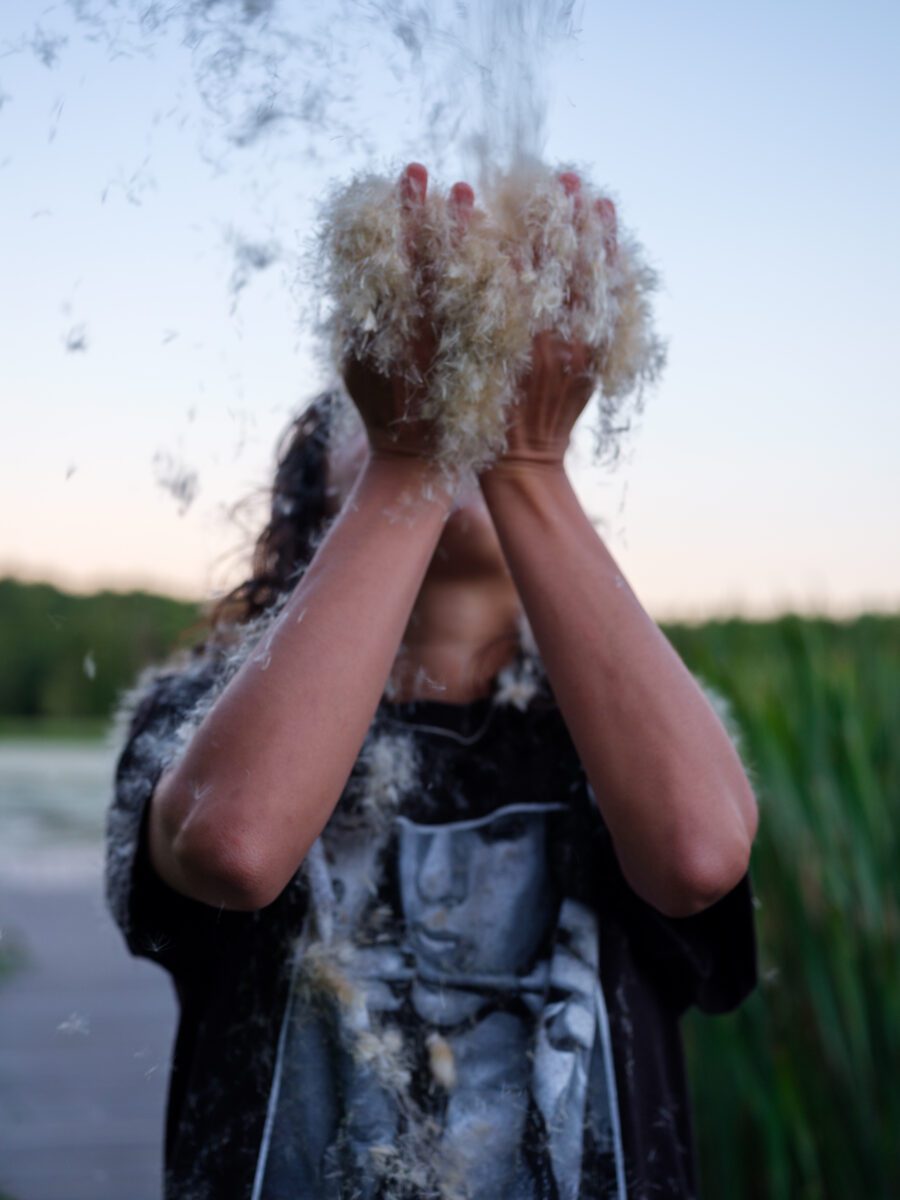
1&3. Holly Lynton, Hero, Florence, Massachusetts, 2022 © Holly Lynton.
2. Giulio di Sturco, Archive of the Future © Giulio di Sturco.
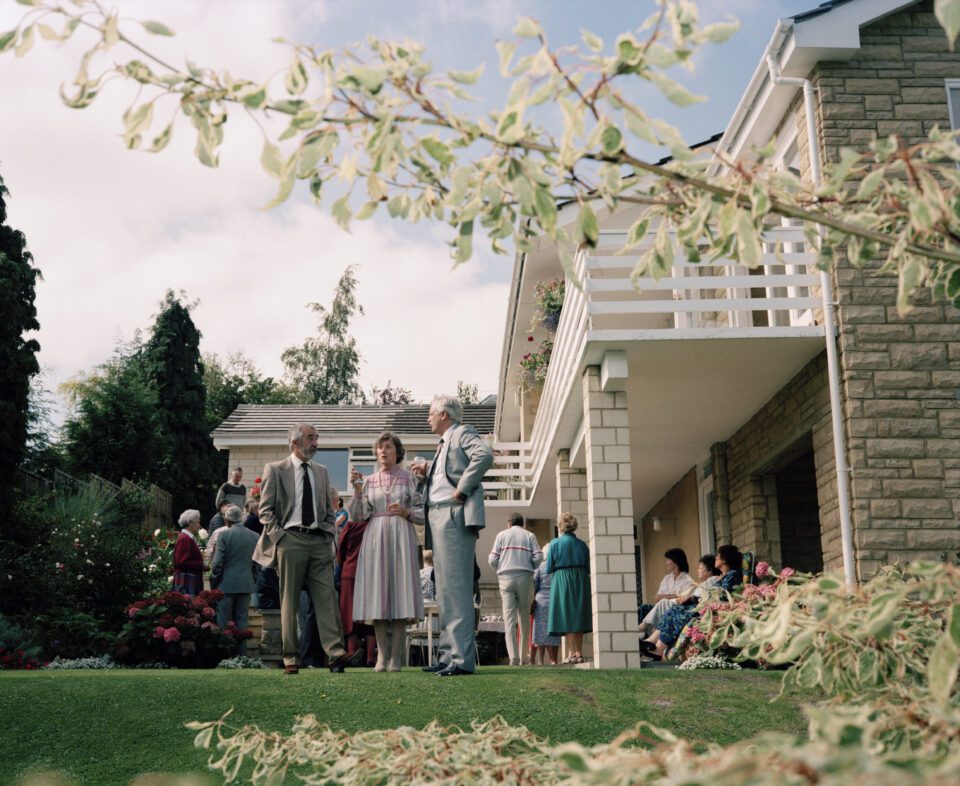
4. Martin Parr, Conservative Party fundraiser, England, 1988 © Martin Parr / Magnum Photos.


