

Now in its sixth year, the Listening Pitch – commissioned by Aesthetica Film Festival and Audible – continues to assert itself as a vital platform for ambitious, sound-led documentary work. What has become clear over time is that this is not simply a funding initiative, but a curatorial position: documentary understood through listening as method, where sound is not illustrative but generative, shaping how stories are formed, contested, and ultimately understood. In a contemporary nonfiction landscape defined by scale and saturation — where short documentary circulates widely across festivals, broadcasters, and platforms — the Listening Pitch offers a space where attention itself becomes the primary creative tool.
Over the past five editions, the initiative has established a demonstrable track record of impact and reach. Previous Listening Pitch winners have gone on to screen at major international festivals including Sundance and SXSW, while others have secured distribution and editorial partnerships with outlets such as The Guardian, extending the life of these projects well beyond their festival premieres. Several works have continued to evolve after their initial commissioning, developing into expanded documentary forms, installation-based pieces, and broadcast releases, reflecting the adaptability of sound-led storytelling across platforms. What unites this alumni body is not a single aesthetic, but a shared methodological shift: a generation of filmmakers treating listening as the foundation of documentary practice, using voice, archive, environment, and testimony as structural material rather than narrative support. In doing so, the Listening Pitch is positioning documentary as an act of construction through sound — where meaning is assembled through attention, interruption, and interpretation rather than fixed exposition.
That lineage is also defined by the range of films supported through previous shortlists and selections, which have consistently engaged with urgent global themes through experimental nonfiction approaches. Earlier projects have explored ecological systems, labour and industrial change, gender and identity, and the politics of voice, often blurring the boundaries between observational documentary and essay film. In 2025, Roberto Duque’s Voice Shift followed trans femme individuals as they worked with a vocal coach to find a voice that aligns with their gender identity, weaving personal journeys with broader social and political reflection. Carin Leong’s Untitled Fetal Heartbeat explores how Doppler ultrasound technology translates invisible biological processes into sound, transforming the inaudible into a sensory experience that shapes cultural understandings of pregnancy and birth.
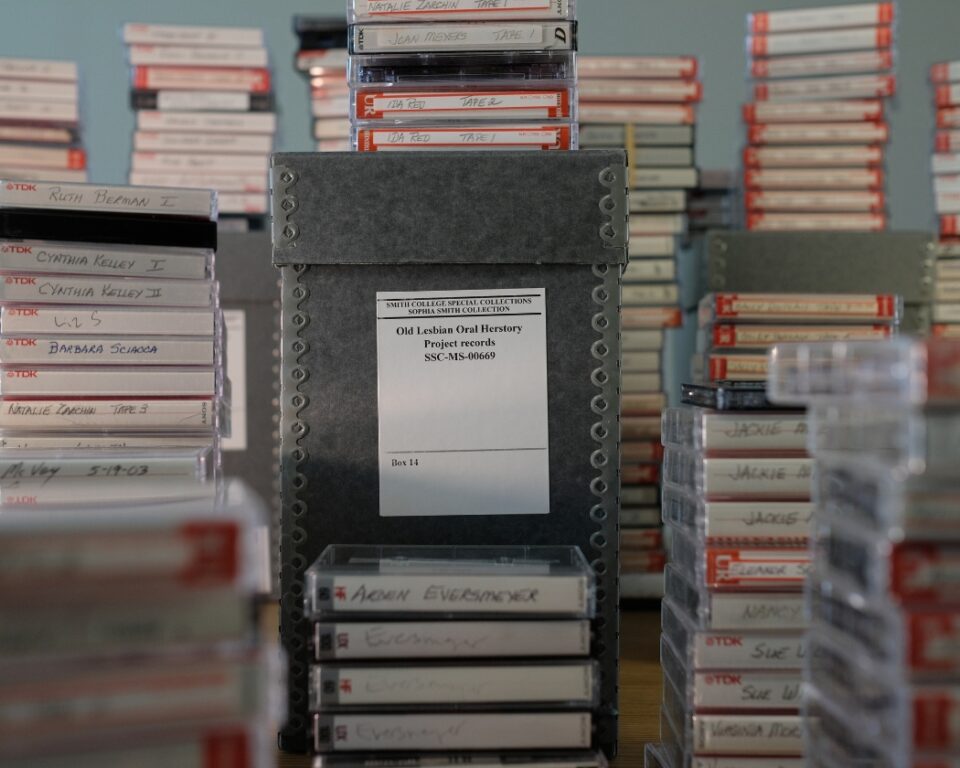
Works such as Banana by Matthew Herbert transformed commodity supply chains into immersive sonic environments; Old Lesbians by Meghan McDonough preserved endangered oral histories of a disappearing community; Greensound by Liberty Smith examined post-industrial healing through embodied encounters with landscape; and The Things We Don’t Say by Ornella Mutoni — acquired by The Guardian — traced intergenerational trauma and recovery in the wake of the Rwandan genocide. Alongside these, films like Birdsong (Sparsh Ahuja, Omi Gupta), Speed of Sound (Jade Ang Jackman), Blind as a Beet (Jessi Gutch and Liz Jackson) and Echo (Ross McClean) expanded the strand’s exploration of voice, communication, and sonic perception across cultural and personal contexts. Taken together, these works demonstrate how Listening Pitch has consistently functioned as a launchpad for documentaries that travel widely, resonate internationally, and reframe what nonfiction cinema can sound like when listening is placed at its centre.
This year’s three winning projects continue that trajectory with renewed focus, each grounded in distinct creative practices but unified by a commitment to sound as a way of accessing truth. Duncan Cowles’s Nibclout Neebors begins with a recovered 1964 cassette recording of his great-grandfather reading a Scots poem about a village shop in the Scottish Borders. The tape is rich in tone and presence, but shaped by dialectal density that renders parts of it partially unintelligible. Rather than resolving this opacity, Cowles builds the film around it, turning listening into a collective process. In Blyth Bridge, residents are invited to interpret the recording, producing a layered exchange of mishearing, memory, and invention. The film is less about recovering an original text than about observing how meaning is constructed when language is unstable, and how documentary can function as an act of interpretation.
Tobi Kyeremateng’s Cissé-Ceesay extends Listening Pitch’s engagement with decolonial listening practices through a deeply personal exploration of ancestry and oral tradition. The film follows cultural historian Sofia Cissé Akel as she travels to Casamance in southern Senegal to reconnect with her family lineage through the Griot tradition of storytelling, where history is preserved not in written record but through music, voice, and performance. Casamance becomes both setting and archive, where knowledge is transmitted through sound and social exchange. Guided by village elder Omar Touré and a local Griot, Sofia enters a system of knowledge that requires unlearning Western archival frameworks and instead embracing memory as something relational and performed. The film positions listening as a political and cultural act — one that reconfigures how history is held and who is authorised to speak it.
Hermione Spriggs’s Worm Charming pushes this logic further by moving beyond human-centred perception altogether. Rooted in the practice of worm charming — also known as grunting, fiddling, or rooping — where vibration is used to draw earthworms to the surface, the film uses an eccentric rural tradition as a gateway into non-human listening. Rather than treating the practice as curiosity, it reframes it as an entry point into ecological communication systems in which sound operates as physical force rather than symbolic language. Moving between the Willaston Worm Charming Championships in Cheshire and the wetlands of Florida’s Everglades, the film constructs a dense sonic ecology through field recording and granular synthesis, collapsing boundaries between soil, body, and environment. In doing so, it asks what documentary becomes when perception is distributed across living systems.
Taken together, this year’s selection underscores how Listening Pitch has matured into one of the most distinctive commissioning platforms within the Aesthetica Film Festival. Its influence is visible not only in the international trajectories of its alumni, but in the broader shift it has helped catalyse within contemporary documentary practice to a place where truth is not simply recorded but heard into being.
At its heart, the Listening Pitch is also a commitment to new talent — not only in the sense of early career opportunity, but in the creation of conditions where experimentation is protected, collaboration is encouraged, and risk is structurally supported. Each of this year’s projects reflects a process shaped by trust between filmmakers, producers, sound artists, and the wider Aesthetica team, where ideas are developed through dialogue rather than prescription. That collaborative framework is central to the strand’s identity: it allows filmmakers to test form, refine language, and expand documentary.
In an industry where independent documentary filmmaking often depends on fragile pathways between concept and completion, Listening Pitch provides something increasingly rare — space. Space to explore uncertainty without needing to resolve it too quickly. Space to foreground sound as a primary creative engine. And space for filmmakers to develop voices that might otherwise be constrained by more traditional commissioning structures. The result is work that feels open, exploratory, and formally alive.
As these films move toward their premieres, they carry with them not only individual artistic intent, but a wider ecosystem of partnership and exchange — between artists, mentors, collaborators and audiences. That spirit of collaboration, something deeply valued by both Aesthetica and Audible, is what continues to define Listening Pitch: a belief that documentary grows when it is made in conversation, and that supporting new voices means allowing those conversations the time, trust, and freedom to unfold.
This year’s Listening Pitch premieres will take place as part of the festival, which opens on Wednesday 4 November and runs until Sunday 8 November across 15 locations in York, UK.
The Listening Pitch screenings will premiere on Thursday 5 November, marking the first public presentation of this year’s commissioned works, with tickets available soon.
Words: Anna Müller
Image Credits:
1. Stocksy. Courtesy Ibai Acevedo.
2. Film Still. Banana. Matthew Herbert (2023).
3. Film trailer. Blind as a Beat. Jessi Gutch and Liz Jackson (2021).
4. Old Lesbians. Meghan McDonough (2023).
5. Film Still. Old Lesbians. Meghan McDonough (2023).
6. The Things We Don’t Say. Ornella Mutoni (2024).


