

Sculpture in the UK finds one of its most concentrated and historically continuous centres in Leeds and the wider Yorkshire region, where institutional frameworks, collections and landscapes collectively sustain the medium as both practice and discourse. Rather than functioning as isolated venues, spaces such as Leeds Art Gallery, the Henry Moore Institute and Yorkshire Sculpture Park form an interconnected ecology in which sculpture is studied, exhibited and rethought across generations. This is not simply a matter of heritage, but of ongoing curatorial and artistic experimentation that positions material form as a living question rather than a fixed category. The Summer of Sculpture programme at Leeds Art Gallery enters directly into this field, foregrounding how plaster, sound, bronze and installation operate as carriers of memory, uncertainty and transformation. Within this context, Yorkshire operates less as a regional backdrop than as a structural centre of sculptural thought in the UK.
At the core of this infrastructure is the Henry Moore Institute in Leeds, a research-led institution dedicated exclusively to sculpture in its historical, modern and contemporary forms. Its recent programme demonstrates a sustained interest in expanding how sculpture is experienced and understood, particularly through exhibitions that foreground material process and sensory engagement. Among its recent exhibitions is Beyond the Visual, a landmark project developed through a three-year research initiative exploring multisensory approaches to sculpture and accessibility. The exhibition includes both historical and contemporary works, incorporating artists such as Henry Moore and Barry Flanagan alongside new commissions by practitioners including David Johnson and others working at the intersection of sound, touch and spatial experience. By challenging the dominance of sight in sculptural reception, the Institute continues its longstanding commitment to rethinking how form is encountered.
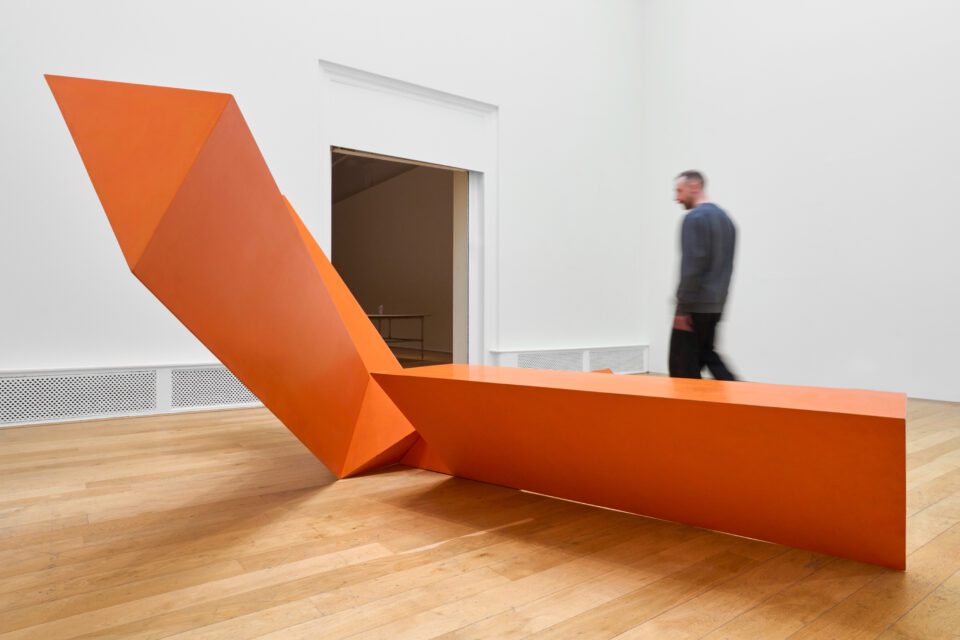
Alongside this, Some Steel: Sculpture and Steel in Britain, 1960–90, presented jointly with Leeds Art Gallery, examines the industrial and post-industrial language of metal-based sculpture in Britain. The exhibition traces how steel became both material and metaphor for artists working in the late 20th century, particularly in relation to abstraction, minimalism and public sculpture. Works drawn from institutional collections are placed in dialogue with archival material, revealing how fabrication, engineering and industry shaped sculptural thinking during this period. This focus on material intelligence reinforces the Institute’s role as a space where sculpture is actively interrogated through its conditions of production. The result is an ongoing curatorial model that treats sculpture as both object and research field.
This emphasis on process and material transformation is inseparable from the legacy of Henry Moore himself, whose early training in Leeds continues to inform the city’s sculptural identity. Moore’s insistence on tactility, mass and void established a vocabulary that still resonates across both the Institute and the broader regional landscape. The Henry Moore Institute extends this lineage not as a fixed canon, but as a set of evolving questions about how form is felt, shaped and understood. Its exhibitions frequently draw attention to the importance of touch, material experimentation and the sculptural object as an evolving proposition rather than a resolved statement. In this sense, Leeds remains a site where modernist inheritance is neither archived nor aestheticised, but reactivated through contemporary practice.
This institutional framework extends outward to Yorkshire Sculpture Park, one of the most significant open-air sculpture spaces in Europe, where sculpture is embedded directly within the landscape. The Park’s programming consistently foregrounds the relationship between object, environment and perception, allowing works to shift meaning through weather, distance and movement. A key recent highlight is William Kentridge’s major exhibition The Pull of Gravity, which spaned drawing, animation, bronze sculpture and large-scale outdoor installation. Kentridge’s practice, deeply rooted in political memory and performative drawing, translates into sculptural forms that operate between stillness and motion, permanence and fragmentation. Installed across the parkland, these works engage the viewer not as a passive observer but as a participant moving through shifting spatial narratives.
Kentridge’s exhibition exemplifies Yorkshire Sculpture Park’s curatorial approach, which consistently privileges artists working across disciplines and scales. Rather than isolating sculpture as an autonomous object, the Park situates it within a broader ecology of landscape, architecture and time. This allows works to function as evolving encounters, reinforcing sculpture’s capacity to respond to environmental conditions. The dialogue between indoor gallery spaces and outdoor installations complicates the boundaries between object and experience, positioning the Park as a site where sculpture becomes temporal. Yorkshire Sculpture Park operates as both exhibition space and interpretive landscape.
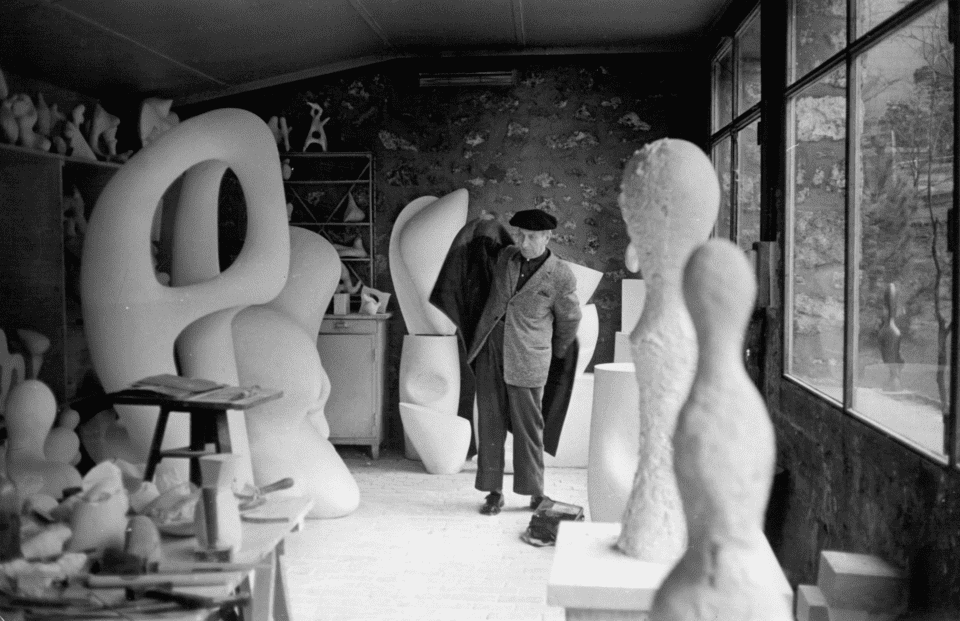
Within Leeds Art Gallery itself, the Summer of Sculpture programme brings these regional and international currents into concentrated form. Arp: The Plasters offers a focused examination of Jean (Hans) Arp’s sculptural process, foregrounding plaster as a medium of continuous transformation. The works, presented alongside figures such as Barbara Hepworth, Alexander Calder and Paule Vézelay, reveal how modernist abstraction developed through shared visual and material languages. Arp’s biomorphic forms, shaped through chance and organic logic, demonstrate how sculpture can emerge as a negotiation between control and spontaneity. In plaster, these tensions preserve the immediacy of the artist’s process.
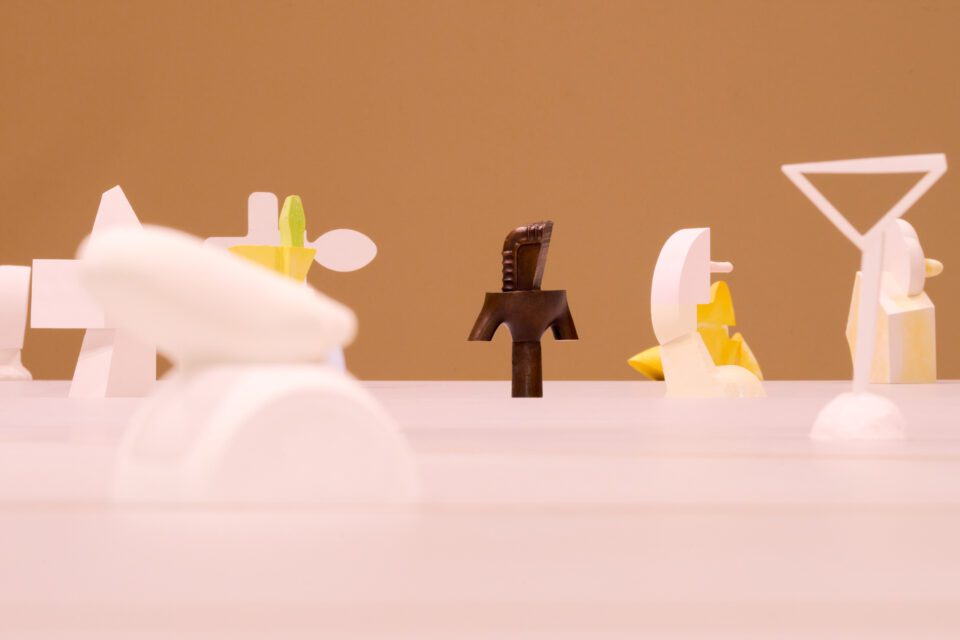
Alongside this historical framing, Garth Evans’ The Anti-Virus Sculptures introduces a more recent register of sculptural response. Created during the Covid-19 lockdown, the works reflect a moment of global uncertainty through small-scale plaster forms that oscillate between humour, anxiety and invention. Evans’ sculptures resist singular interpretation, instead operating as a constellation of fragmented responses to isolation and containment. Their irregular shapes and vivid surfaces suggest both protection and vulnerability, echoing the psychological conditions of their making. In this way, sculpture becomes a means of externalising internal states, translating lived experience into material form.
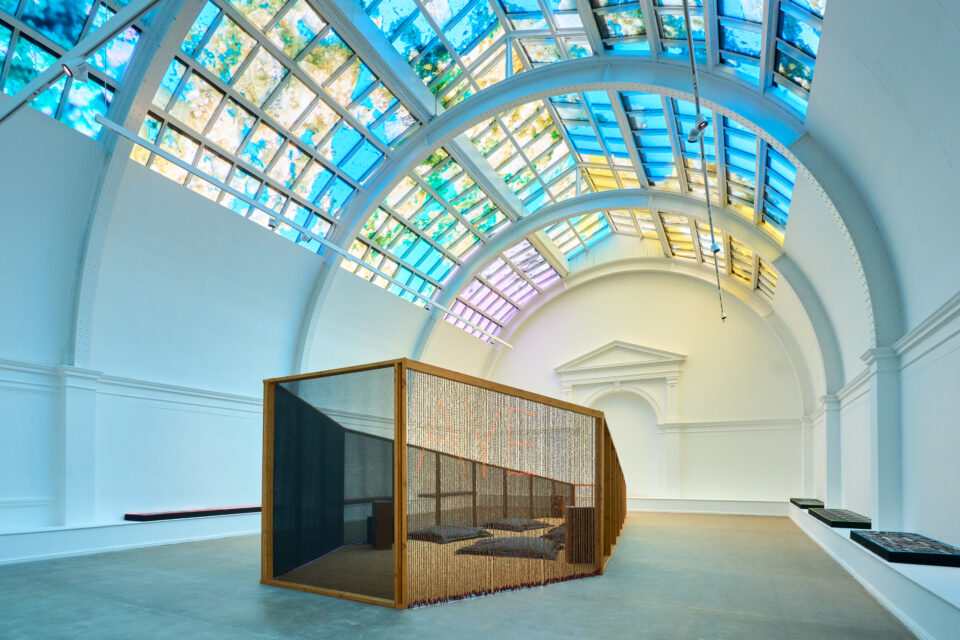
Hannah Catherine Jones’ UNEARTHING(S) extends this exploration into sound, installation and diasporic memory, transforming Leeds Art Gallery’s Central Court into an immersive environment shaped by layered composition and spatial resonance. Jones’ practice engages with themes of grief, regeneration and cultural inheritance, drawing on her experience growing up within Yorkshire’s Caribbean community. Sound operates as sculptural material, shaping perception and movement through the gallery space. The work unfolds as an atmospheric field in which history and memory are continuously reconfigured. The gallery becomes a site of listening, expanding the definition of sculpture into temporal and sonic dimensions.
Taken together, these exhibitions reveal a regional ecosystem in which sculpture is continually redefined through institutional dialogue and artistic experimentation. The proximity of Leeds Art Gallery, the Henry Moore Institute and Yorkshire Sculpture Park creates a unique curatorial triangulation, where historical collections, research-led exhibitions and landscape-based installations coexist. This structure enables sculpture to be approached not as a closed historical category, but as an active field shaped by material, environment and encounter. The inclusion of artists such as Arp, Evans, Jones and Kentridge demonstrates the breadth of this field, spanning modernist abstraction, contemporary installation and interdisciplinary practice. Across these contexts, sculpture emerges as a language in negotiation with its own conditions.
What ultimately distinguishes this regional constellation is its sustained commitment to sculpture as both practice and inquiry. Leeds and Yorkshire do not simply preserve sculptural history; they actively produce the frameworks through which it is reconsidered. From plaster and steel to sound and landscape, material becomes a site of ongoing experimentation. The Summer of Sculpture reflects this broader ecology, situating contemporary practice within a lineage that is neither static nor hierarchical. In doing so, it reaffirms the region’s position as one of the most significant centres for sculptural thought in the UK.
Arp: The Plasters, Garth Evans: The Anti-Virus Sculptures and Unearthing(s): Hannah Catherine Jones are at Leeds Art Gallery until 30 August: museumsandgalleries.leeds.gov.uk
Words: Shirley Stevenson
Image Credits:
1&3. Installation shot Hannah Catherine Jones – UNEARTHING(S) – Leeds Art Gallery. Photo: Rob Battersby.
2. Arp in his studio, Clamart 1961/62, (photographer: André Morain) Stiftung Arp e.V., Berlin/Rolandswerth.
4. Arp in his studio, Clamart 1961/62, (photographer: André Morain) Stiftung Arp e.V., Berlin/Rolandswerth.
5. Garth Evans installation shot. Leeds Art Gallery. Photo: Rob Battersby.
6. Garth Evans installation shot. Leeds Art Gallery. Photo: Rob Battersby.


