

In April, it was announced that Kengo Kuma and Associates will design the new wing at the National Gallery in London. This major development, titled Project Domani, will be “the largest and most significant transformation” of the institution since its formation 200 years ago. It marks a milestone, as the gallery extends its historic collection beyond 1900. The studio’s design was selected not only for innovation and beauty, but its social value and commitment to sustainability.
These principles have long driven Japanese architect Kengo Kuma (b. 1954). In 1923, modern architecture pioneer Le Corbusier made the famous assertion that “a house is a machine for living in.” It appeared in the seminal book Vers une architecture, through which he argued for utility, efficiency and functionality – in short, buildings that meet the needs of occupants. Today, Kuma offers a counterpoint to this view, proposing instead that we build for humanity as part of the natural world, rather than a modernist “aggregation of functions such as working, eating and sleeping.” Kuma established his practice in the 1980s, and has gone on to become a leading figure in the field. He is a prolific writer and philosopher and Professor Emeritus, University of Tokyo.
One of Kuma’s key ideas is to create structures that protect both people and the ecosystems of which they are a part. He does so by foregrounding designs that blend into the landscape, promote long-term sustainability and integrate traditional techniques and processes. A defining way this shows up is through materials. Instead of using industrial substances lauded by modernism, like concrete, Kuma chooses natural options: bamboo, clay, earth, paper, stone and wood.
The architect’s latest monograph, New Works (Thames & Hudson), contains 40 recent projects – museums and houses, cafés and parks, temples and pavilions – that respond to timely events and themes. These include natural disasters, the pandemic and the importance of fostering connection in communities. A powerful example is the Minamisanriku 311 Memorial, which marks the Great East Japan Earthquake and subsequent tsunami, which took place on 11 March 2011. It appears in the section of the book titled Remembering, which is dedicated to built structures that link people with their past.
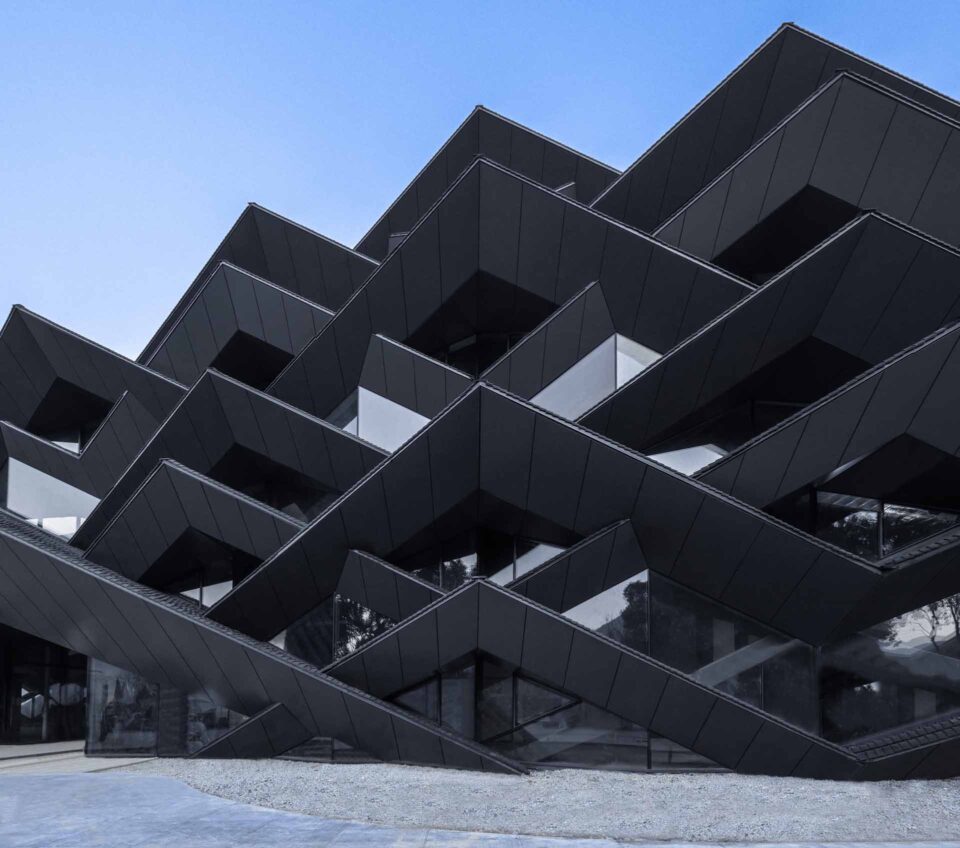
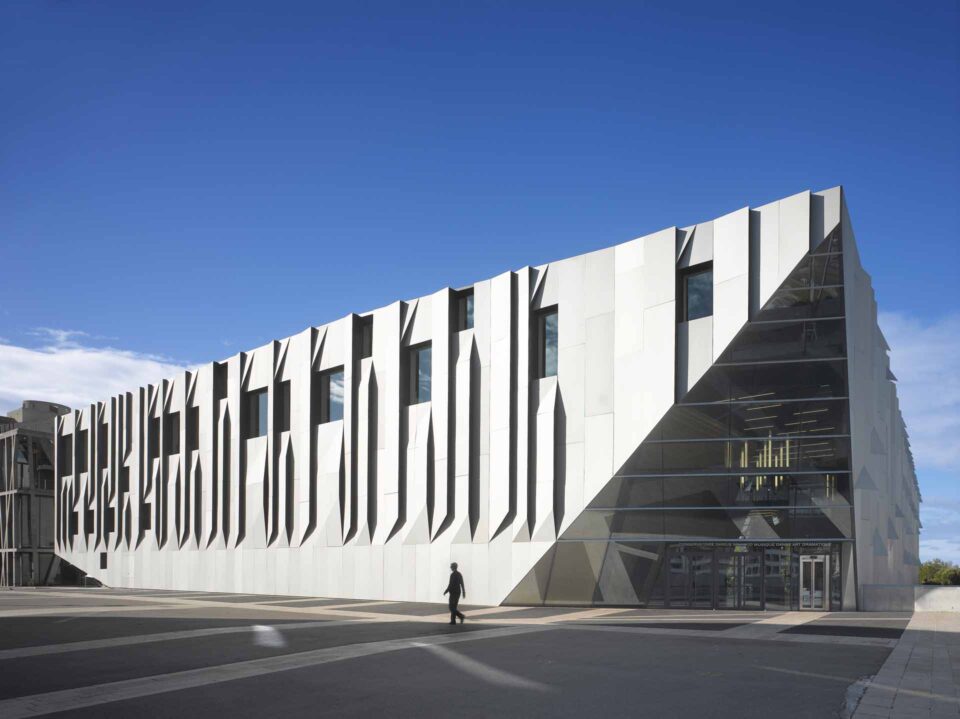
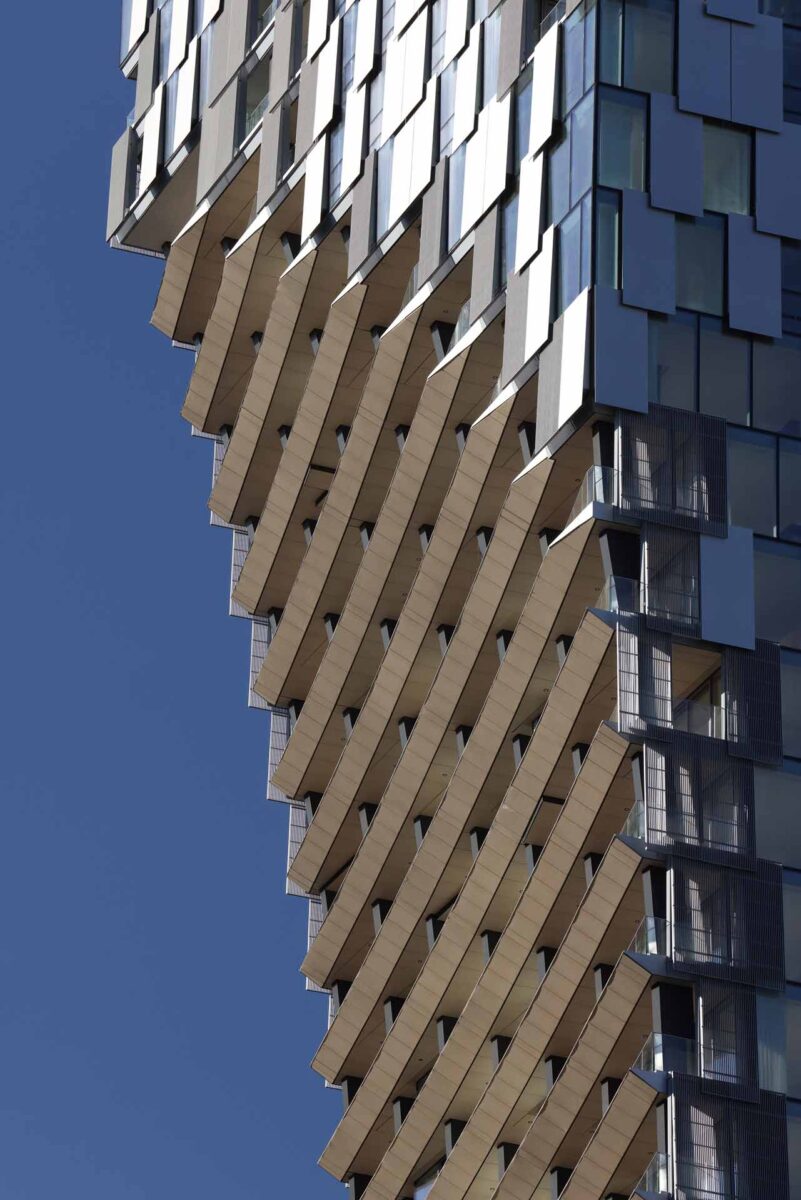
Other examples include the Darius Milhaud Conservatory of Music, Aix-en-Provence, which draws on origami folds and the Impressionist paintings of Paul Cézanne, as well as the Hanling Museum of Art, designed “to be more like a mountain than a building.” Both are part of the Experiencing chapter, devoted to how nature can be integrated into built spaces. Even skyscrapers, which are traditionally associated with blocked views and disconnection, are given a new identity by Kuma. The 1550 Alberni Street Tower, Vancouver, in the Gathering portion of the book, was conceived to take up less space, “by means of subtraction, rather than addition.” There are further chapters titled Connecting, Inspiring and Retreating. Each one is devoted to a different form of engagement.
New Works is testament to Kuma’s adherence to his principles across different scales. Its buildings range in size and renown, from Japan’s Olympic Stadium – where Kuma used timber from every region in the country to build the nation’s largest arena – to one small community centre in Yusuhara. Here, Aesthetica speaks to the architect about the new release.
A: What are the origins of Kengo Kuma and Associates? Where does your interest in architecture come from?
KK: I started my practice in 1986. Back then, I felt strong scepticism and aversion towards the spread of big, monumental buildings in cities. It wasn’t until the 1990s that my focus shifted towards nature and the environment. In 1991, the so-called “bubble economy” burst in Japan. All of my works in Tokyo were cancelled, and for the next 10 years, I spent my days travelling through the countrysides of Japan. There, I encountered the rich natural environment of each area, as well as ordinary, skilled artisans and carpenters who used their materials in daily life and construction. I came to deeply appreciate the importance of tradition and craftsmanship. In this sense, the economic downturn and the loss of my work in Tokyo proved to be a blessing in disguise, allowing me to find my direction and grasp what I ought to be pursuing. I resolved to learn from nature, our greatest treasure, and made it a primary goal to engage with and protect it.
A: You’ve said that architecture should position humanity as part of the organic world, rather than separate from it. What are the key principles behind this philosophy? Was there an event that led you to adopt this viewpoint?
KK: It wasn’t as though there was a single decisive moment that led me to perceive architecture as an integral part of nature. In my case, I believe I was greatly influenced by the small wooden house where I spent my childhood and the neighbourhood where I grew up. Although it was located on the outskirts of Tokyo, the rural woodlands (satoyama) still remained intact, and I had the opportunity to spend time in the forest nearby, interacting with plants and animals.
A: This book follows your earlier monograph, Complete Works, first published in 2012 and expanded in 2018. Why was this the right moment to release a fresh title?
KK: Interestingly, each of these three editions was published immediately after the completion of a major project and just before the start of the next epoch-making one. This latest volume features key ventures undertaken both in Japan and abroad, over the past decade. The number of buildings located outside of Japan is higher than in the preceding edition. Coinciding with the book’s completion, we were selected to design the new wing of London’s National Gallery – which is a significant milestone. As a result, the timing for this publication in mid-2026 could not have been more appropriate.
A: How has your process evolved since the previous volume? And in what ways has the wider field changed?
KK: Over the last 10 years, architecture has been affected at various levels by pandemics and wars that occur repeatedly. The number of crises has grown. What has become clear to me is that humanity can only survive by protecting the environment and forging a relationship with nature. Nowadays, in my design process, I give extra thought to creating dialogue with the community and the importance of the external spaces that surround buildings. This latest monograph features recent projects that particularly reflect these ideas.
A: Which design featured here would you say is most emblematic of this more recent period of your career?
KK: It is difficult to single out just one example, but in terms of raising awareness of a building’s relationship with its external space, I would like to mention the Engawa at the Calouste Gulbenkian Foundation in Lisbon, which was completed last year. It references a semi-open corridor, typical of Japanese architecture, through which we could play with light and improve circulation between the museum’s galleries. This philosophy – of prioritising community engagement and connections with the outside world – will also be incorporated into the design of the upcoming National Gallery extension.
A: You’ve spoken and written previously about “weak architecture” as an alternative to monumental design. How does this idea manifest across the buildings included?
KK: I have long been committed to creating architecture that is “defeated” and “weak”. By this expression, which is now like my signature phrase, I wish to demonstrate that, unlike the 20th century – when architecture around the world was dominated by monolithic, heavy concrete boxes – our era is home to a new kind of construction that is warmer, softer, more human-oriented not only in scale but in materials. Whilst the specific ways in which a building is “defeated” or rendered “vulnerable” vary depending on the context of the site, I am confident that I have built up enough methods during my career in order to respond to different conditions.
A: Your practice is global. How do you navigate the relationship between incorporating Japanese architectural traditions and designing for international contexts? KK: I feel that worldwide interest in Japan’s traditional appreciation of the natural environment and craftsmanship has grown, particularly in recent years. Drawing on this as a strength, we intend to explore a wider range of such designs in the projects we are working on, in many parts of the world.
A: Your work is frequently associated with natural materials. Are there particular projects in New Works where those tools revealed something that was unexpected to you?
KK: I cannot talk about just one, but I would particularly like to draw readers’ attention to our structures that use wood as a material, as these always offer something new to discover. Kengo Kuma and Associates strives to harmonise the durability of wood with the unique sense of warmth it brings to architecture, whilst paying close attention to the finer details.
A: What have you found to be most complicated about working in this industry over the past decade – environmentally, culturally or economically? Was there a particular idea that proved especially difficult to realise?
KK: The real issue now is that construction costs have risen far too sharply due to the Covid-19 pandemic and ongoing conflicts. Despite these challenging circumstances, we have come to realise that it is still possible to create high-quality buildings – even on a tight budget – by taking a flexible approach and incorporating new and advanced technologies.
A: After 40 years of practice, what still excites you about your work? What does the future of the discipline hold?
KK: In my view, for many years architecture and architects have been widely regarded as villains who destroy the environment. Nowadays, however, it is starting to be seen not as a force of destruction, but as an essential means of protecting and restoring our natural surroundings and enhancing people’s lives. I take great pride in, and feel a sense of excitement about, working in a profession which is dedicated to the restoration of the connection between nature and humanity.
Image Credits:
- Page 160 (TL) Darius Milhaud Conservatory of Music, The façade © Roland Halbe.
- (R) Hanling Museum of Art, Ningbo, China, © Songkai Liu.
- Page 156-7 Darius Milhaud Conservatory of Music, Aix-en-Provence, France © Roland Halbe.
- Page 103, 1550 Alberni Street Tower, Vancouver, Canada, © Ema Peter.
The post Buildings Redefined appeared first on Aesthetica Magazine.


