

Czech photographer Josef Koudelka kept a diary for over 50 years, resulting in 69 journals. Their pages contain details of years spent documenting Roma communities across Europe, the 1968 Soviet-led invasion of Prague, and the devastating impact of humans on the landscape. Put simply, they are a rare glimpse inside the mind of an iconoclastic figure, renowned for a life in exile and images that full of immediacy and authenticity. As curator Tomáš Pospěch writes: “Koudelka’s diaries are a ‘cookbook’ of classic photography. He associated with the most renowned photographers. His notes sum up his rich experience, including work created with the now vanishing technology of analog black-and-white photography. His remarks, quips and stories reappear, just as he repeatedly made resolutions, affirmed the rules he had adopted, and recalled earlier events and dreams.” Now, Aperture offers readers the opportunity to read these intensely personal documents and step into the artist’s world.
The book feels entirely immersive, and to read them is an intimate experience. This is partly because transcripts of the diaries are interspersed with photographs of the real pages, where you can see Koudelka’s handwriting, complete with highlighting, circling and crossing out. It’s added to by the artist’s introduction, which explains that: “My diaries are notes, written out of personal necessity. After I realised they were too personal, I considered destroying them to make sure that nobody would.” In fact, it wasn’t until 2014 that Koudelka decided it was time to show them to another person.
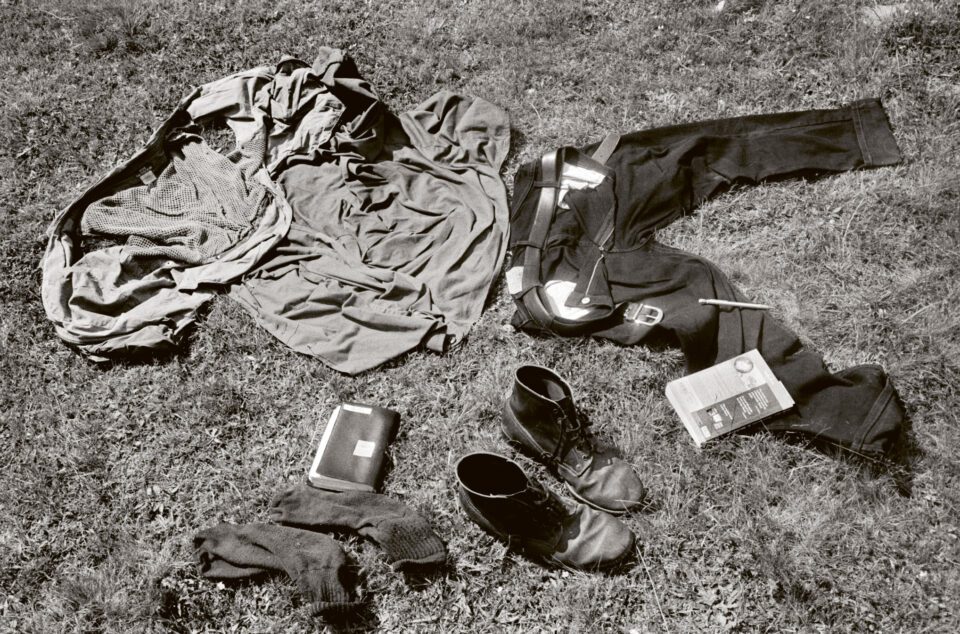
The result is a publication that feels uniquely raw. His desire to produce art is evident on every page. In 1969, he writes: “You feel strong, so get to work! Make everything else secondary,” and eight years later, he says: “Taking photographs isn’t only pleasure. Taking photographs is also suffering, self-denial and deprivation.” The whole book is a swirling mix of the philosophy of art, creative techniques and glimpses into Europe throughout the latter half of the 20th century. In Milan, he observes that “kidnappings and murders happen here…people are afraid,” whilst “Poland has changed greatly in the last 3 years. In 10 years, there won’t be anything.” Few are better placed to address these shifts than Koudelka, who trained as an aeronautical engineer before turning to photography in the 1960s, where he documented the Soviet-led invasion of Czechoslovakia. This act led him to leave the country in 1970, seeking political asylum.
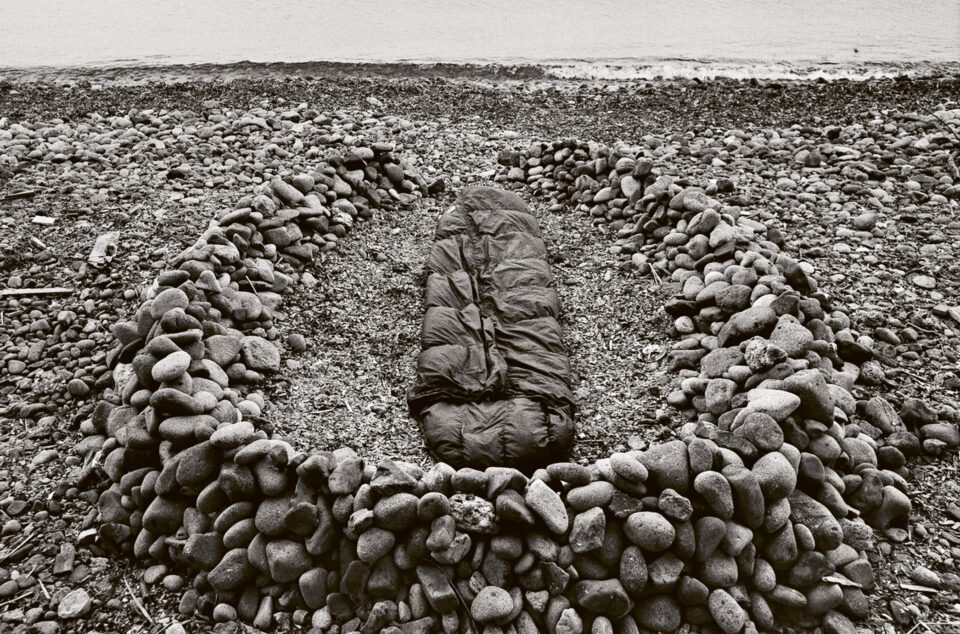
Josef Koudelka: Diaries is immediate and authentic, revealing decades of creative exploration. Readers have an unbelievable wealth of material to wade through, but it never feels like a slog. Instead, audiences are carried along by the momentum of Koudelka’s ideas and experiences, following the rhythms of his inner monologue. It’s a rare treat to read something so frank and candid – a phenomena that can be solely traced back to the fact that Kodelka never expected to have an audience – and the result is a portrait of a life lived at high speed, dedicatedly solely to making art and documenting society as it truly exists.
Josef Koudelka: Diaries is published by Aperture: aperture.org
Words: Emma Jacob
Image Credits:
1. Josef Koudelka, Spain, 1973; from Josef Koudelka: Diaries(Aperture, 2026). Copyright © 2026 Josef Koudelka/Magnum Photos, courtesy of the Josef Koudelka Foundation.
2. Josef Koudelka, Greece, 1986; from Josef Koudelka: Diaries(Aperture, 2026). Copyright © 2026 Josef Koudelka/Magnum Photos, courtesy of the Josef Koudelka Foundation.
3. Josef Koudelka, Romania, 2001; from Josef Koudelka: Diaries(Aperture, 2026). Copyright © 2026 Josef Koudelka/Magnum Photos, courtesy of the Josef Koudelka Foundation.
4. Josef Koudelka, Greece, 1983; from Josef Koudelka: Diaries(Aperture, 2026). Copyright © 2026 Josef Koudelka/Magnum Photos, courtesy of the Josef Koudelka Foundation.


