

The asylum where Van Gogh lived in 1889-90 is set among some of the most beautiful scenery of Provence, just beneath Les Alpilles (the little Alps). Just a couple of kilometres away is a soaring limestone crest, known as Le Rocher des Deux Trous (The Rock of the Two Holes). It has a skull-like appearance, pierced with eye sockets. The larger hole is nearly 3m high, the smaller one around half that.
Van Gogh included the Deux Trous in a pair of his landscapes, but because it is such an unexpected feature it has sometimes been seized upon as evidence of the artist’s fragile mental state—the product of an overblown imagination.
The Deux Trous features in paintings which by chance both ended up in New York collections: The Olive Trees (June 1889) at the Museum of Modern Art and Mountains at Saint-Rémy (July 1889) at the Solomon R. Guggenheim Museum. In both pictures, the bulkier summit on the right side is Mont Gaussier.
Van Gogh’s The Olive Trees (June 1889) and Mountains at Saint-Rémy (July 1889), both showing the Deux Trous on the crest of Les Alpilles
Museum of Modern Art (Mrs. John Hay Whitney Bequest) and Solomon R. Guggenheim Museum (gift of Justin K. Thannhauser, 1978), both New York
By good fortune the two paintings have been borrowed by London’s National Gallery, for its exhibition Van Gogh: Poets & Lovers (until 19 January 2025). They hang on adjacent walls in the final room, giving a very unusual opportunity to see them together.
Van Gogh described The Olive Trees as a grove “with the blue hills”. It was probably painted in his studio at the asylum from memory, not in front of the motif. He would have known the scene well, since it represents a view just a few minutes’ walk from the asylum entrance, on the southern outskirts of Saint-Rémy-de-Provence. Mountains at Saint-Rémy, painted a month later, was largely painted outdoors and is more topographically accurate.
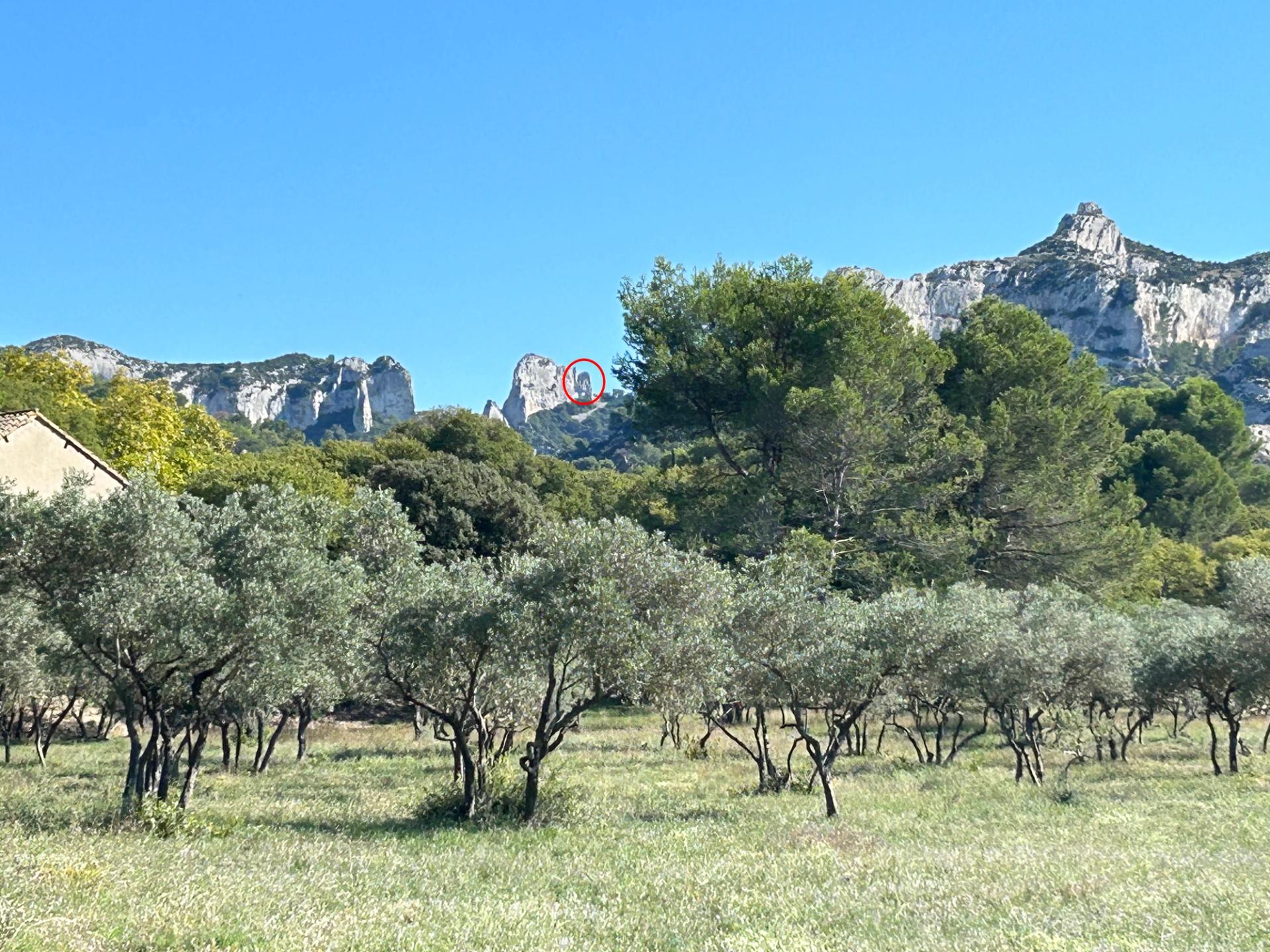
View of the Deux Trous (circled in red), with the closer Mont Gaussier (on the right), seen from an olive grove near Saint-Paul-de-Mausole
The Art Newspaper
Van Gogh was certainly not the only artist to be struck by the Deux Trous. Four centuries ago an anonymous artist boldly included it in a view of Saint-Rémy-de-Provence, exaggerating its size.
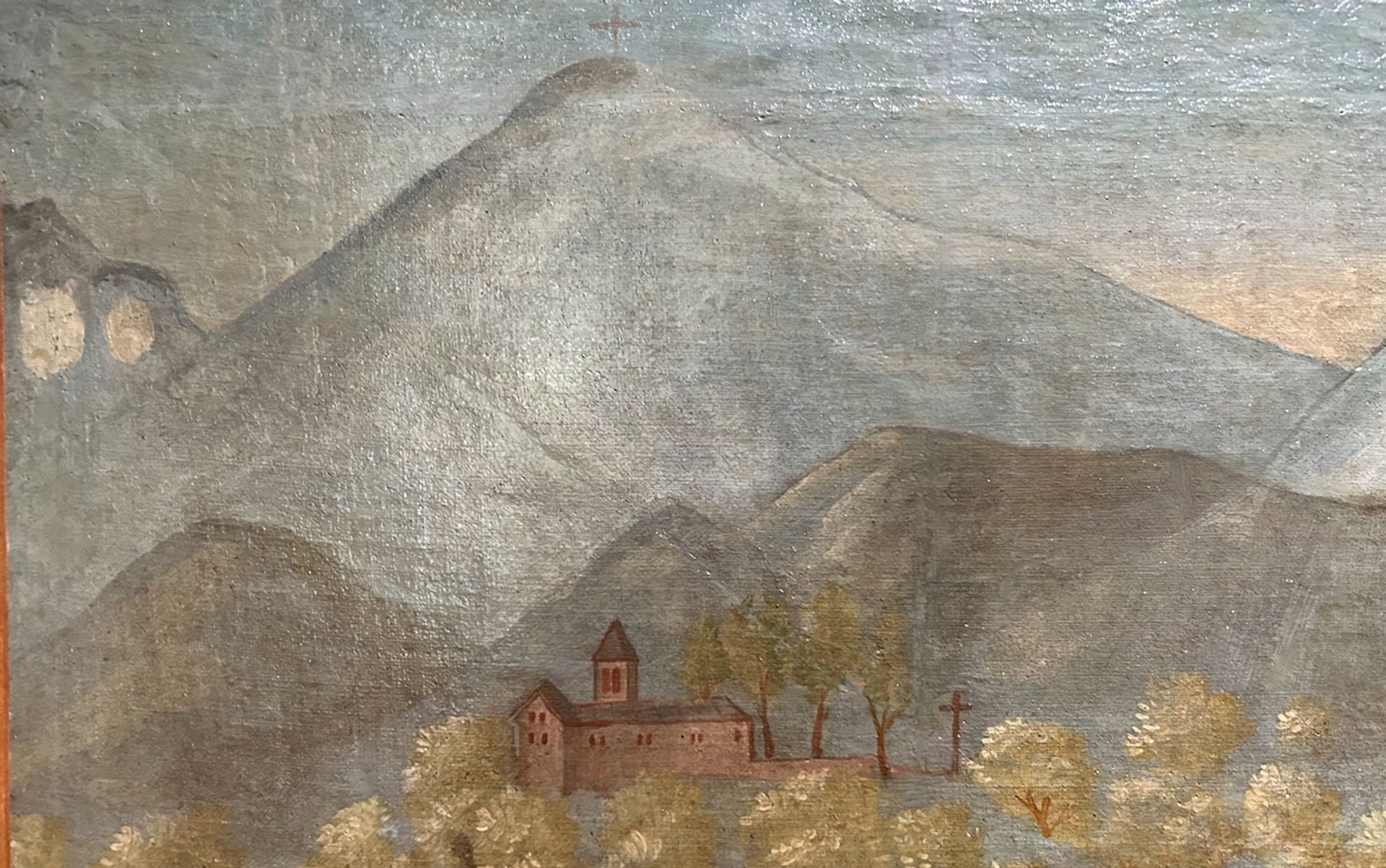
Anonymous, Saint-Rémy-de-Provence in the 17th century (detail), with the Deux Trous and the monastery of Saint-Paul-de-Mausole surrounded by an olive grove
Musée des Alpilles, Saint-Rémy-de-Provence
Although Van Gogh never mentions the Deux Trous in his letters, it is very likely that on a day when he was feeling well he climbed up to sit in one of the holes and look down on Saint-Paul-de-Mausole, the former monastery-turned-asylum.
Saint-Paul-de-Mausole still survives, as a modern hospital for patients with mental issues. Its church and cloister are open to visitors and a room has been reconstructed to give an idea of where Van Gogh would have slept.
From Saint-Paul-de-Mausole, it is a delightful eight-kilometre walk (two to three hours) to the Deux Trous (height 326m) and back again. Head southwards from the hospital and climb up the valley Saint-Clerg, then at the top make a short detour to the Deux Trous, where one can sit in the holes and look back at the hospital and the town of Saint-Rémy-de-Provence. Return down via a parallel valley, Gaudre de Valrugue. Near the start and end of the walk you will enjoy the olive groves which inspired some of Van Gogh’s finest landscapes.


