

In 1945, WWII was in its waning months. Allied forces entered Nazi occupied territories, liberating concentration camps and revealing the true extent of the horrors of the war for the first time. Adolf Hitler committed suicide on 30 April, and Victory in Europe Day was officially celebrated on 8 May. At the same time, John Baer was serving with the 644th Tank Destroyer Battalion, a unit of the US military. Here, he got a Leica camera from a captured German soldier. His earliest photographs were taken of his fellow soldiers in France and Germany, weary from war. Baer’s collection is a moving portrait of Europe and New York City in the decade after WWII. Now, almost a century on, a debut book demonstrates his gift for catching people in the most unguarded and vulnerable moments of their lives – at work, at rest, at play. John Baer: The Extraordinary Ordinary highlights a world both familiar and forever changed.
The book is remarkable in many ways, not only for its value as a historical archive, but also because, in the mid-1950s, after years of honing his craft, Baer boxed up his work and stowed it away. When he died, in 1994, his son, Andrew, discovered three bins containing more than 4,000 negatives, silver gelatin prints and contact sheets. He describes the process in the introduction: “I opened one box and then another. Beneath the photographs were piles of envelopes full of negatives…John had written notes in pencil on almost all of them.” The containers went largely unexplored until 2021, when Andrew and his wife began to scan the negatives. They uncovered a remarkable collection – one which traced the life of Baer, but also his friends, fellow troops and neighbours. This publication marks the first time these photographs have been seen publicly. Andrew continued: “As we scanned more negatives and sorted the contact sheets and printing notes, I began to see my father in a different light. His curiosity and willingness to experiment were evident in the subjects he chose to photograph and how he approached his work in the darkroom.”
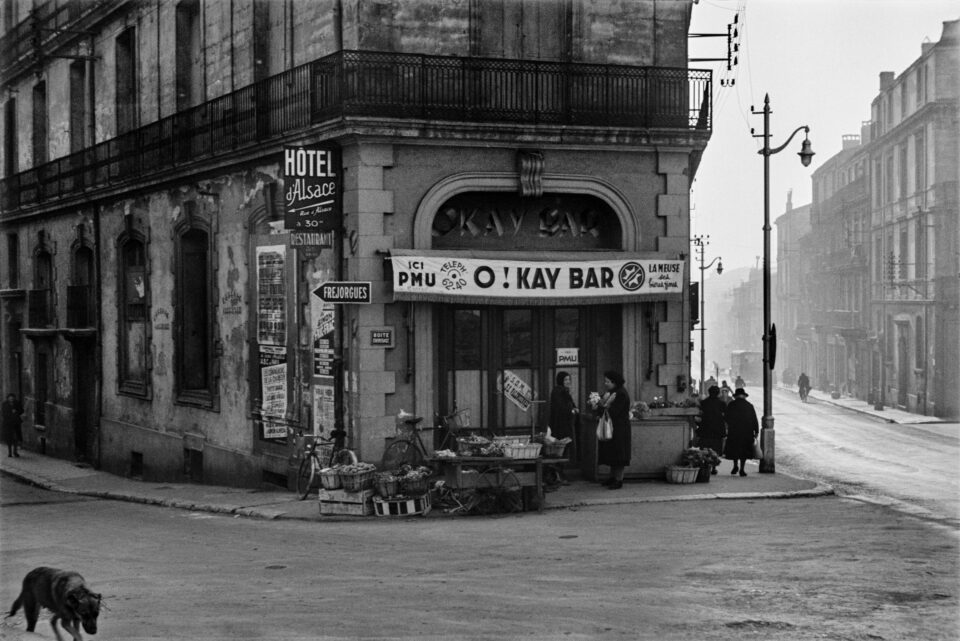
The first chapter is Baer at war, and his very early shots are of soldiers after years of conflict. The 644th had lost dozens of troops and witness the horrors of administrating prisoner of war camps. In October 1945, their duty was over. A picture John called Soldiers on a French train, captures weary servicemen on the first stage of their journey home. Baer was uniquely placed to capture these moments, not an external photojournalist or reporter, but a fellow solider, experiencing the same pain, exhaustion and trauma. The images are visceral, documenting the light and shade, showing the tanks and guns alongside baseball games and moments of levity. His photographs tell stories of countries struggling to understand themselves following years of political realignment. Posters in France call for disarmament and warn against American dominance; boys play with wooden guns in Franco’s Spain; Germans rebuild their cities, ferrying building materials in horse-drawn carts. The war and its aftermath are ever present.
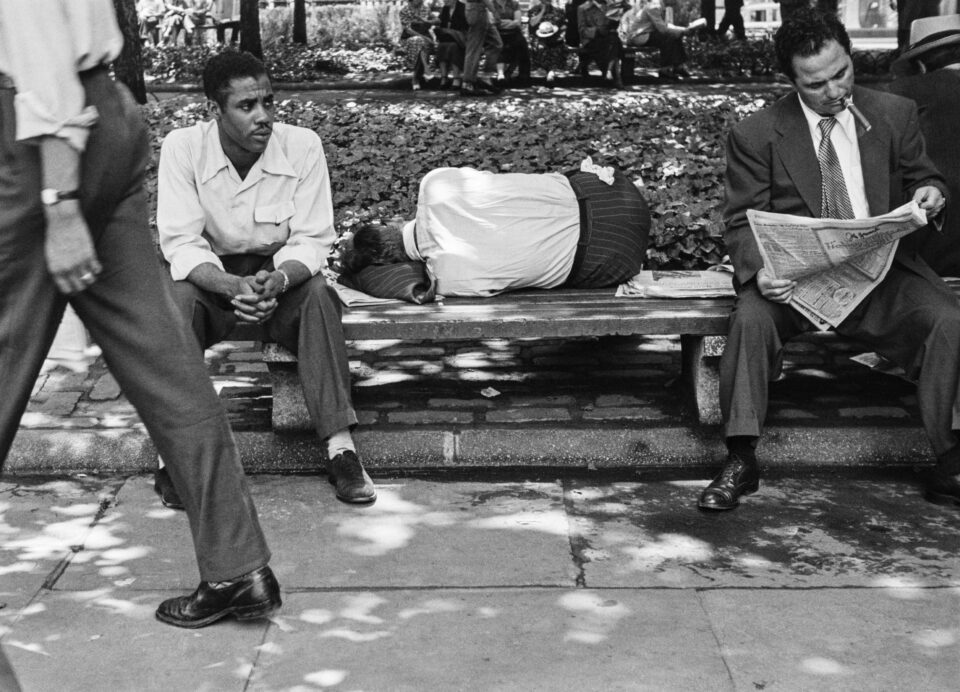
In New York, Baer returned to his life but continued to photograph. He brings to life a city bursting with optimism, the centre of postwar capitalism – men and women stride through Midtown, where even the nuns carry shopping bags; office workers take their lunch in Bryant Park; an asphalt crew paves Fifth Avenues; skaters glide on the rink at Rockefeller Center. As Andrew writes: “In 1948, John and Louise moved to New York City and rented a fifth-floor walk-up at 215 Second Avenue in the East Village. Their world was changing, and I imagine them experiencing the city as a revelation of possibilities.”
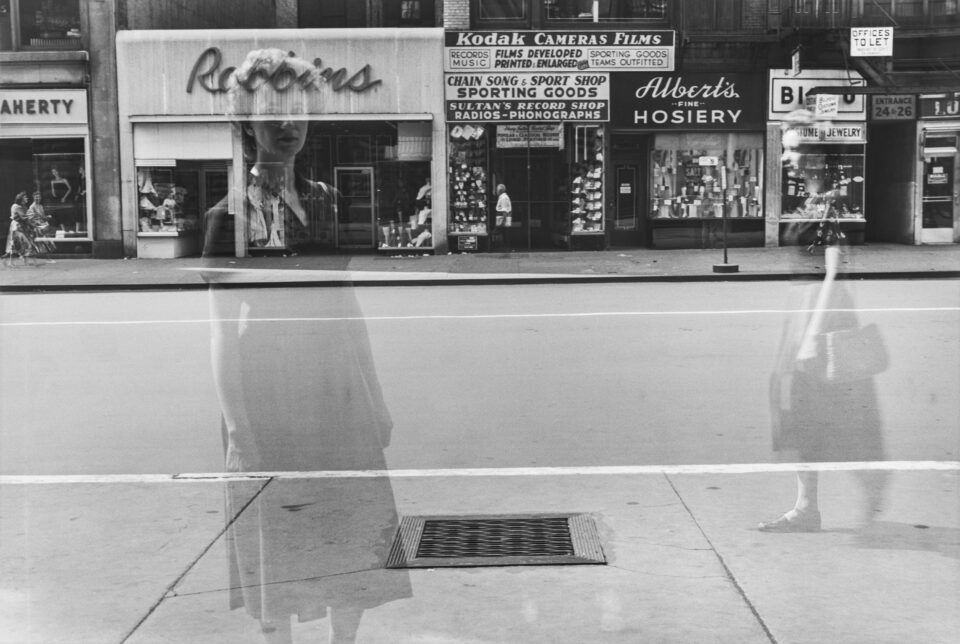
The reemergence of Baer’s archive places him alongside other 20th century practitioners who came to light after their death. Think Vivian Maier or Francesca Woodman. They’re vital historical documents, recording the everyday moments that are often overshadowed my major world events or iconic figures. Here, the painting is coloured in, the outlines filled to reveal a full and vibrant portrait of a bygone era.
John Baer The Extraordinary Ordinary: A Memoir in Photographs is published by the John Baer Archive: johnbaerarchive.com
Words: Emma Jacob
Image Credits:
1. John Baer, Couple, Washington Square Park, from JOHN BAER The Extraordinary Ordinary: A Memoir in Photographs 1945-1954.
2. John Baer, Cyclists in Traffic, Munich,1951, from JOHN BAER The Extraordinary Ordinary: A Memoir in Photographs 1945-1954.
3. John Baer, Passing Time, Bryant Park, Manhattan, 1953, from JOHN BAER The Extraordinary Ordinary: A Memoir in Photographs 1945-1954.
4. John Baer, O!Kay Bar, Montpellier,1951, from JOHN BAER The Extraordinary Ordinary: A Memoir in Photographs 1945-1954.
5. John Baer, Louise Twice, from JOHN BAER The Extraordinary Ordinary: A Memoir in Photographs 1945-1954.
The post Rediscovered Archives appeared first on Aesthetica Magazine.


