

A blue plaque has been unveiled on the London home of Julia Margaret Cameron, celebrating the pioneering photographer who took up a camera at the age of 48. She went on to create iconic portraits of famous contemporaries including Alfred Tennyson, Charles Darwin and Thomas Carlyle—while immortalising her family, servants and neighbours as angels, saints and figures from Arthurian legend.
Many descendants of her enormous family circle are still involved in the arts through her six sisters in the Pattle family—born in India and all celebrated for their charm, eccentricity and wide circle of artistic and intellectual friends—and her own family of 11 children with her much older husband Charles Hay Cameron, adopted orphan nieces and a child they found begging in London.
Family members gathered for the unveiling included her great-great-great-granddaughter, the musician and DJ Jules Cameron, her great-great-great-niece, the singer Jasmine van den Bogaerde (Birdy), and her great-great-nephew, the artist Julian Bell. Her Bloomsbury Group relatives included her great-nieces, the artist Vanessa Bell and the author Virginia Woolf.
Julia Margaret Cameron’s blue plaque Image courtesy of English Heritage
In advance of the unveiling, Jules Cameron—who is also vice-president of the museum at Dimbola Lodge on the Isle of Wight, where Julia Margaret Cameron launched her career with a dark room in the coal shed and a studio in the hen house—said she would have relished the honour of the English Heritage blue plaque. “Julia Margaret Cameron saw photography not simply as a record, but as a way of revealing the soul,” she said. “To have her honoured with a blue plaque feels like a quiet continuation of her work fixing her presence once more in light and memory. She wasn’t interested in perfection, but in truth, in feeling, in humanity. A blue plaque feels entirely fitting for someone so gloriously unconventional, and I think she would have absolutely loved it.”
The English Heritage blue plaque historian Rebecca Preston says it had been tricky to find a site in London for the plaque. The handsome Victorian house at 10 Chesham Place in Belgravia was probably only her rented home for a year, where her fourth son was born when she and her husband returned from his unprofitable coffee and rubber plantations in Ceylon.
Although magnificently connected, the Camerons were never wealthy, and moved repeatedly before settling to become Tennyson’s neighbours on the Isle of Wight.
“She was absolutely not a Victorian lady of leisure with a photography hobby —she was very serious about earning a living from it,” Preston says. When she contacted Henry Cole, the founder of London’s Victoria and Albert Museum (V&A), proposing to sell him dozens of photographs that she promised would “electrify you with delight and startle the world”, she wrote, “a woman with four sons to educate cannot live on fame alone!”
Although Cameron had discussed photography with her friend and mentor, the scientist John Herschel—who became one of her most memorable subjects—she first took up a camera, a gift from her daughter, in December 1863, “in my 49th year”. Within a month, developing and making albumen prints herself from toxic wet collodion glass negatives, she created what she regarded as her first successful photograph, a portrait of Annie Philpot, the nine-year-old motherless daughter of a local family. Preston describes it as “captivating … it has a freshness and modernity which is all the more striking for being 160 years old.”
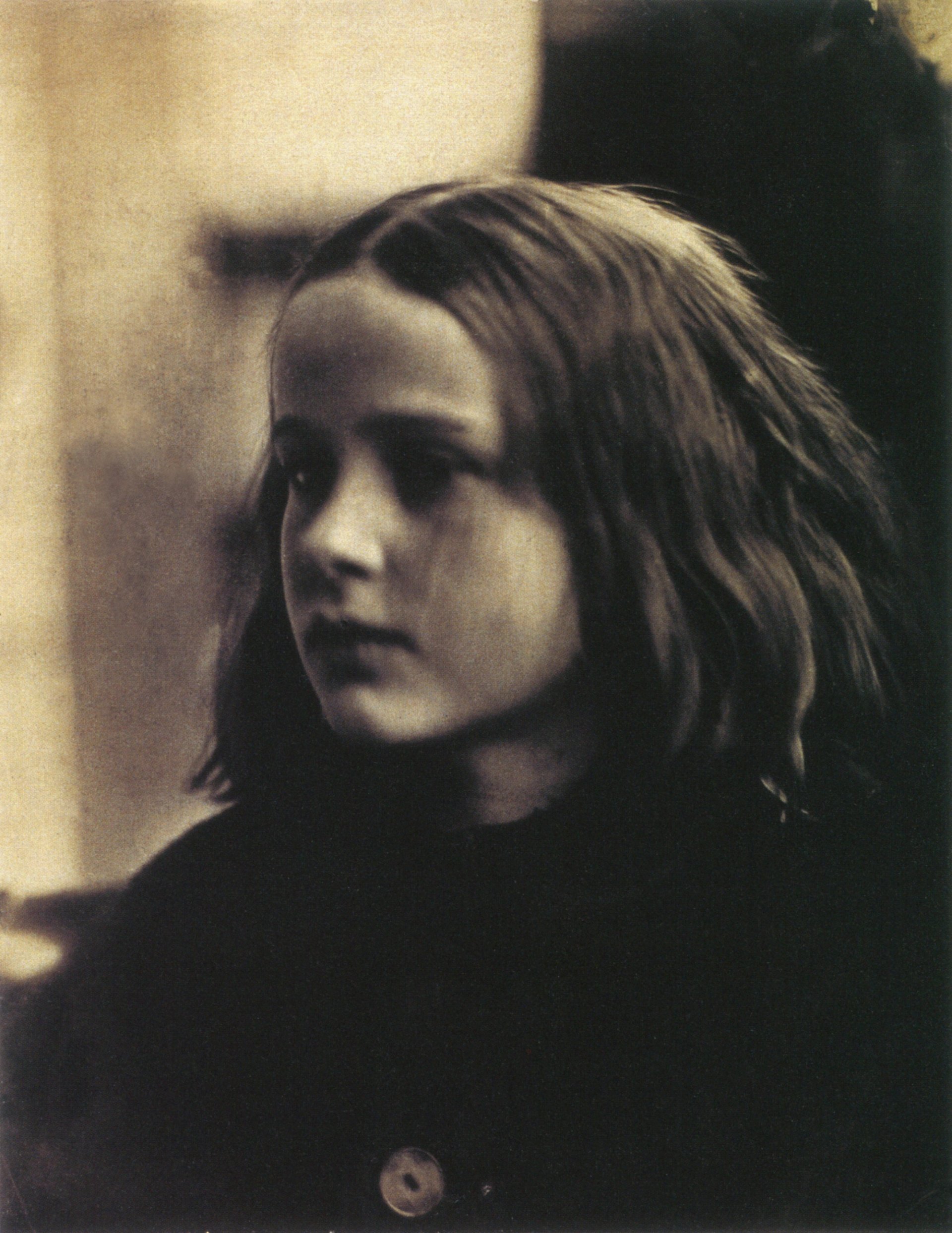
Julia Margaret Cameron, Annie (1864) Photo: © Victoria and Albert Museum
One of her most famous photographs was of Tennyson, the poet laureate, wrapped in a long cloak. Although like many of her sitters he grumbled at the long enforced stillness, and described the image as “the Dirty Monk”, it was his favourite portrait.
She went on to register copyright for her work, hold a solo exhibition at the British Museum, sell 80 photographs and be granted her own portrait studio space at the V&A. She also became a member of the Photographic Societies of London and Scotland, winning a bronze and then a gold medal at their annual exhibitions.
Although some critics were harsh about her trademark misty focus, in 1867 she was included in the Paris Exposition Universelle, where her work won honourable mention and a place next to the celebrated photographers Henry Peach Robinson and the Swedish Oscar Gustave Rejlander.
Her career was brief. In 1875 she and her husband sailed to Ceylon, taking two coffins and their own cow. Although she continued to take photographs, only 30 are known from the few years before she died and was buried in Ceylon in 1879, joined a year later by her husband.
Despite Cameron’s many travels, Preston says the site of the blue plaque was important in Cameron’s life. “Chesham Place, her first London base, marks the beginning of a journey that would lead her to redefine the medium and influence generations of photographers,” she says.


