

For two weeks in February, there was an explosion in the Palais de Tokyo in Paris. Not a combustible one, but a huge, dynamic vortex made of 5,000 individual pieces of wood, that seemed to be shooting upwards through the top of the grand staircase towards the glazed ceiling. “It could stay there forever,” mused the institution’s president, Guillaume Désanges, gazing at the sculpture, which was like a kinetic force frozen in time. Circumstances, however, would not allow.
The installation was the work of Tadashi Kawamata, a Japanese artist who has lived in the French capital for 18 years and loves to insert his work either into or on the outside of architecture. “Architecture is stable, static, maths,” he says. “What I do is accidental and depends on the day. I make drawings and I make maquettes, but once I’m up on the cherry picker assembling the work, it’s about the conditions right then and how I feel. It’s about texture and touch, and I’ve a lot of experience now. I know when to stop and when to add more.”
Kawamata’s show at the Palais de Tokyo, which was supported by Ruinart, included Nest at Palais de Tokyo Victoria Paterno
This particular installation, called Tornado, was supported by Ruinart, the French champagne house, and occupied a part of the building usually not open to the public, hence its brief stay. Ruinart commissions a new artist each year to create a major work in a series called Conversations with Nature, presenting the piece first in Paris before installing it permanently at its headquarters in Reims. Recent names have included Eva Jospin in 2023 and Julian Charrière in 2025.
“There is nothing rigid or prescribed about the commission,” says Fabien Vallérian, Ruinart’s stylishly quiffed director of arts and culture. “But Tadashi has been on my list for a while, and I sensed he would do something very organic, very natural. My attraction to the work? That he uses very simple, basic materials to create very monumental and impressive but also very inviting sculptures.”
Architecture is stable and static. What I do is accidental and depends on the day
Tadashi Kawamata
Kawamata started working with found materials when he was an art student in Tokyo in the 1970s. Originally from Hokkaido, where he lived close to nature, the pace of the city unsettled and provoked him, while the painting he was expected to do offered little excitement. Instead, he started working with the wooden frames constructed to hold the canvas, and a trail of disruption was born.
In the 1980s, he travelled to New York. “There was so much frailty and movement there: scrap materials everywhere, people without jobs,” Kawamata says. Graffiti, however, made sense in the urban landscape and he began to do the same with batons of wood, creating something out of almost nothing on the street.
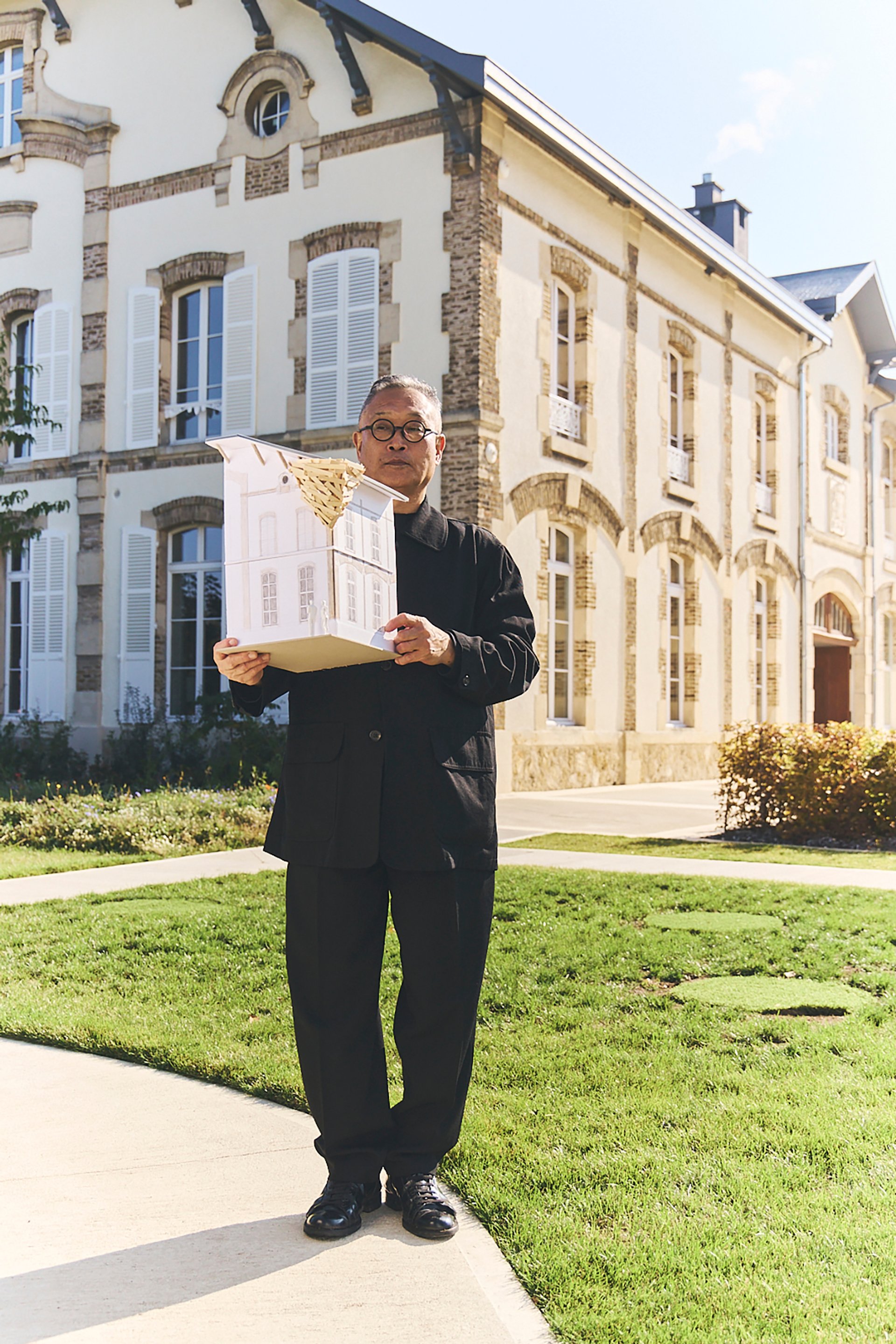
Kawamata with a model of the Nest to be installed on Ruinart’s historic building in Reims Florie Berger
In Toronto in 1989, he assembled a shower of wood on a municipal building and the neighbours complained: “They said it created danger, it spoiled their neighbourhood. I guess they didn’t like art much.” He left it as long he could, but Kawamata’s intention is for the work to be temporary. “It’s like the natural world. Nothing lasts forever,” he says. “Ten weeks, ten years, a hundred years. But not forever.”
A magical world of maquettes
There is a natural recyclability in Kawamata’s practice and the materials from the Palais de Tokyo will not be wasted. They will be taken to Reims where, later this year, he will start constructing three large-scale works in Ruinart’s sculpture park, which opened in 2024 at 4 Rue des Crayères. They will join 110 works by 36 artists, who include Nils-Udo, Jeppe Hein and Cornelia Konrads. Representing one of his largest works, an 8m-high observation tower will allow visitors to climb up to a platform at 6m and survey the landscape from a new, lofty angle. “It’s inspired by the shape of the chalk cellars where the champagne is stored and stands on top of one, like a mirror form of the void below,” the artist explains. He will also be creating ephemeral works for Ruinart at a handful of events, including Berlin Gallery Weekend and Art Basel in Miami Beach.
People said that my work created danger and spoiled the neighbourhood
Tadashi Kawamata
Kawamata, a very youthful 72-year-old, lives and works in the 15th arrondissement of Paris, in an old industrial building at the end of a courtyard with a studio on the ground floor and his home above. “The studio is full of objects and maquettes; it’s magical,” says Kamel Mennour, the Parisian gallerist who has worked with Kawamata for 15 years. “It suits him to live upstairs because most nights he can’t sleep and goes downstairs to make models.”
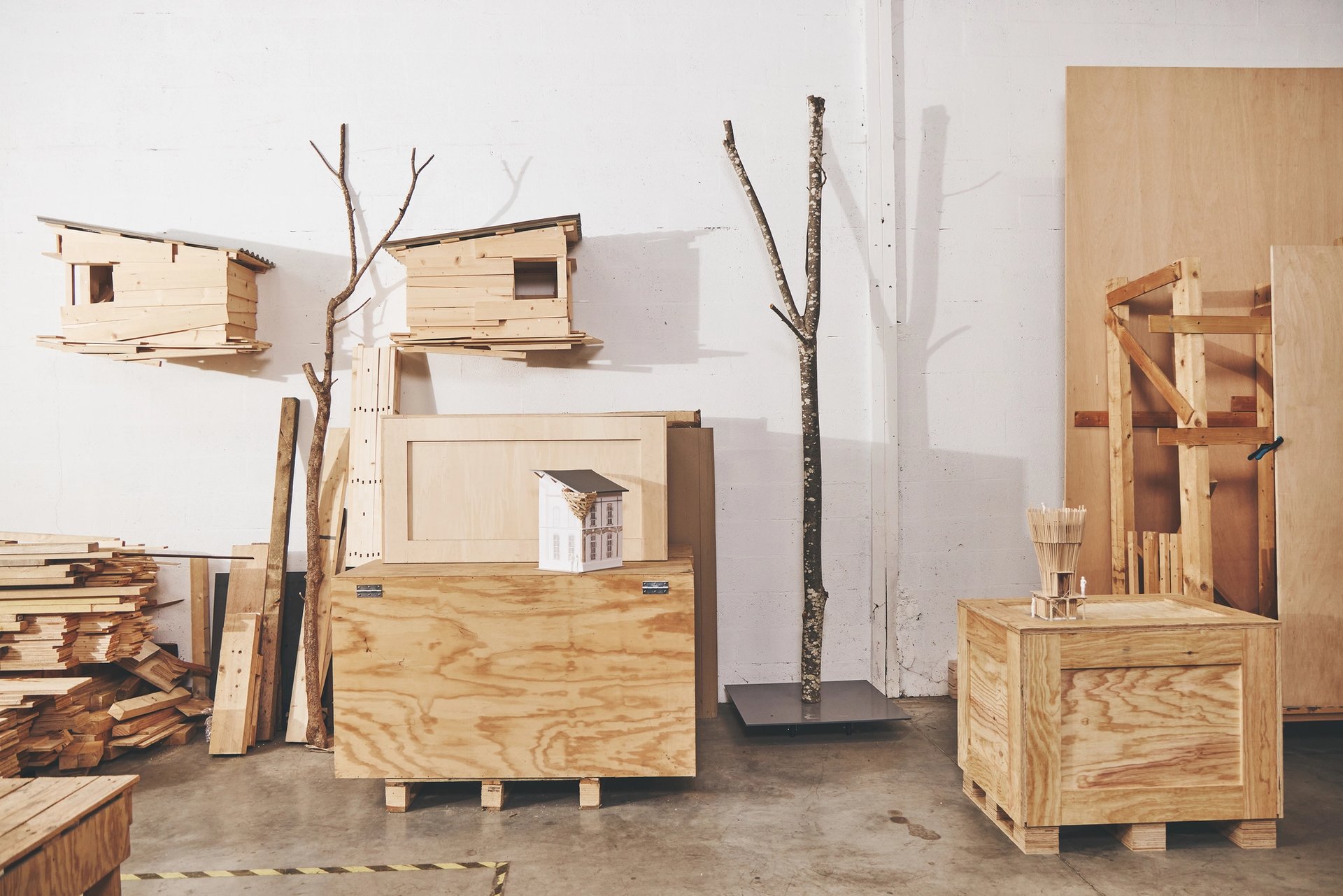
Kawamata’s studio—and home—is in an old industrial building in Paris’s 15th arrondissement Florie Berger
Mennour recently showed a series of delicate works called Bonsai, where tiny huts or nests are built around the tops of branches, 20cm high. “He loves the idea of ‘utopies’: things that aren’t common,” says Mennour of Kawamata’s idealised environments.
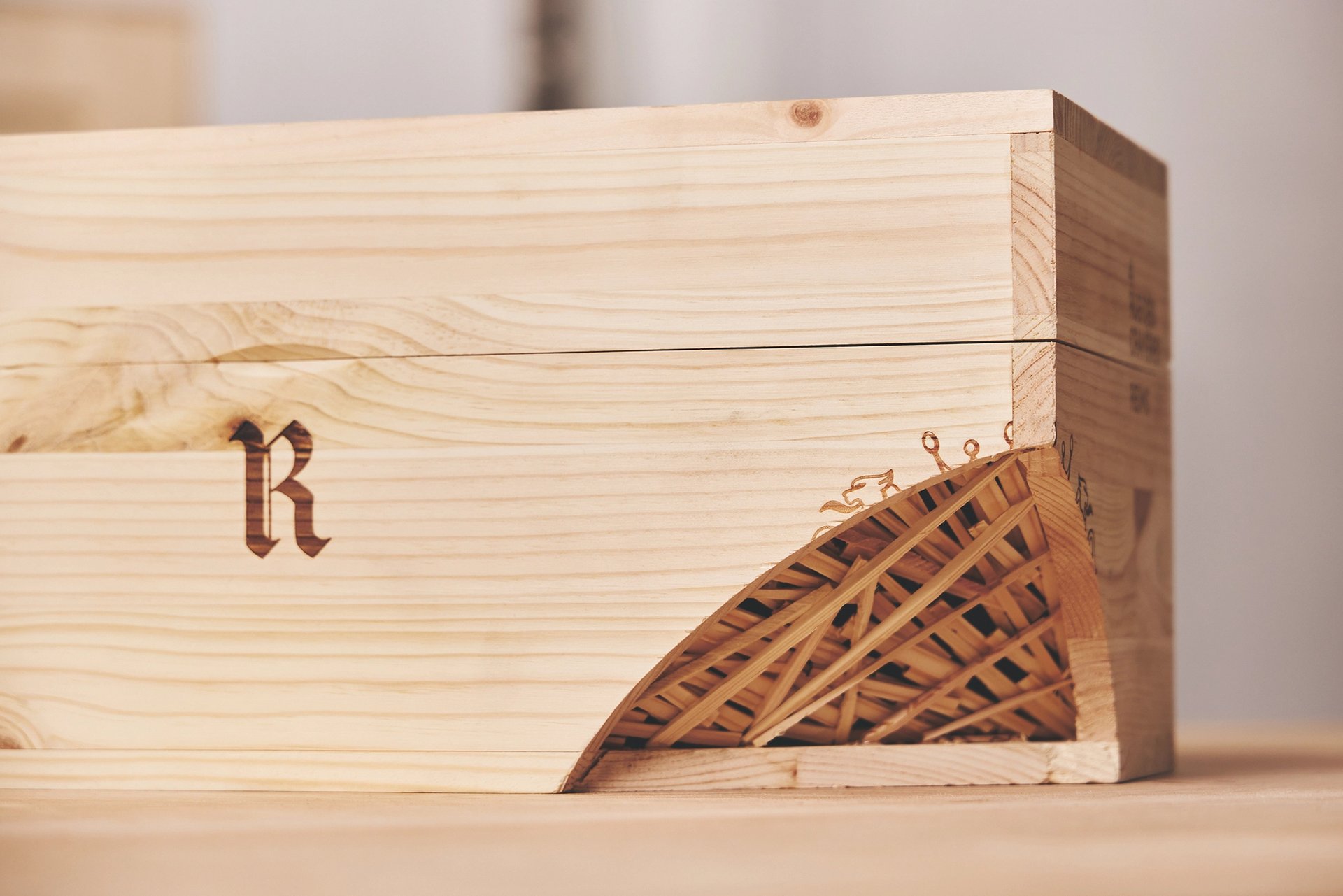
The artist has created a limited-edition champagne box Florie Berger
Whether it is hundreds of chairs that gush from a window like a fractured wooden wave—an installation he has created all over the world—or a nest of wooden batons on the outside of a building that will one day fall apart, Kawamata’s perfectly conceived yet spontaneous interventions reframe both material and space, but it is somehow nature that prevails. The nests are often taken over by insects and birds, and, looking up through the explosive vortex at the Palais de Tokyo, all you could think about was the sky.


