

A new play by the Ojibway playwright Drew Hayden Taylor about art fraud and identity politics could have been subtitled “Norval Morrisseau as metaphor”. The play, The Undeniable Accusations of Red Cadmium Light, opens and closes with an expert in Indigenous art examining a painting by Morrisseau, the late “Picasso of the North” whose work was at the centre of what investigators in Canada said was the biggest art fraud in history.
The play is framed by Morrisseau’s work, with the set design by Charlie Beaver imagined as a torn canvas and lighting designer Rebekah Johnson projecting Morrisseau-like imagery onto the stage throughout. Like past dramatic works based on art fraud stories, Hayden Taylor’s play (which concluded its run at Vancouver’s Firehall Arts Centre on 3 May) examines the grey areas between real and fake, and the quest for truth.
The play centres on three characters: Nazhi (played with a certain sang froid and grace under pressure by Anita Wittenberg), an art dealer, curator and expert in Indigenous art whose late husband was a renowned artist; her adopted daughter Beverly (Kaitlyn Yott), who works as an educator at a Toronto university; and a young reporter named Martine Marten (Tyson Night, with just the right mix of innocence and creepiness), whose interview with Nazhi about Morrisseau changes all their lives irrevocably.
A scene from The Undeniable Accusations of Red Cadmium Light, with Anita Wittenberg (left) and Tyson Night (centre) Photo: Jon Benjamin Photography
“[Morrisseau] had favourite images and colours he liked to use,” Nazhi tells Martine. “See that colour there? I believe that could be described as red cadmium light, used only later in his life in the 1980s.Back in the 70’s, he was more of a red oxide kind of guy. And this painting is dated 1976. Suspicious.” Martine’s subsequent question about the “whole Norval Morrisseau fiasco” elicits Nazhi’s reply that “it’s as bad as the Buffy incident”, a poignant reference to Buffy Sainte-Marie, the singer-songwriter whose decades-long claims of Indigenous ancestry were debunked by a 2023 CBC investigation.
Sure enough, in the two-act play’s third scene, Martine returns to tell Nazhi that her rather vague responses to his questions about her origins prompted further research into her origins. In a bittersweet “gotcha” moment, the formerly admiring journalist calls out the dealer as a fake and lays bare complicated issues of belonging, identity, status and colonialism. In the second act, after Martine’s story breaks and the beleaguered Nazhi is crushed by the condemnation and abandonment of friends and colleagues, Beverly takes on the journalist’s dual role of interrogator and executioner. Also at stake are the tensions between generational attitudes toward cultural hybridity.
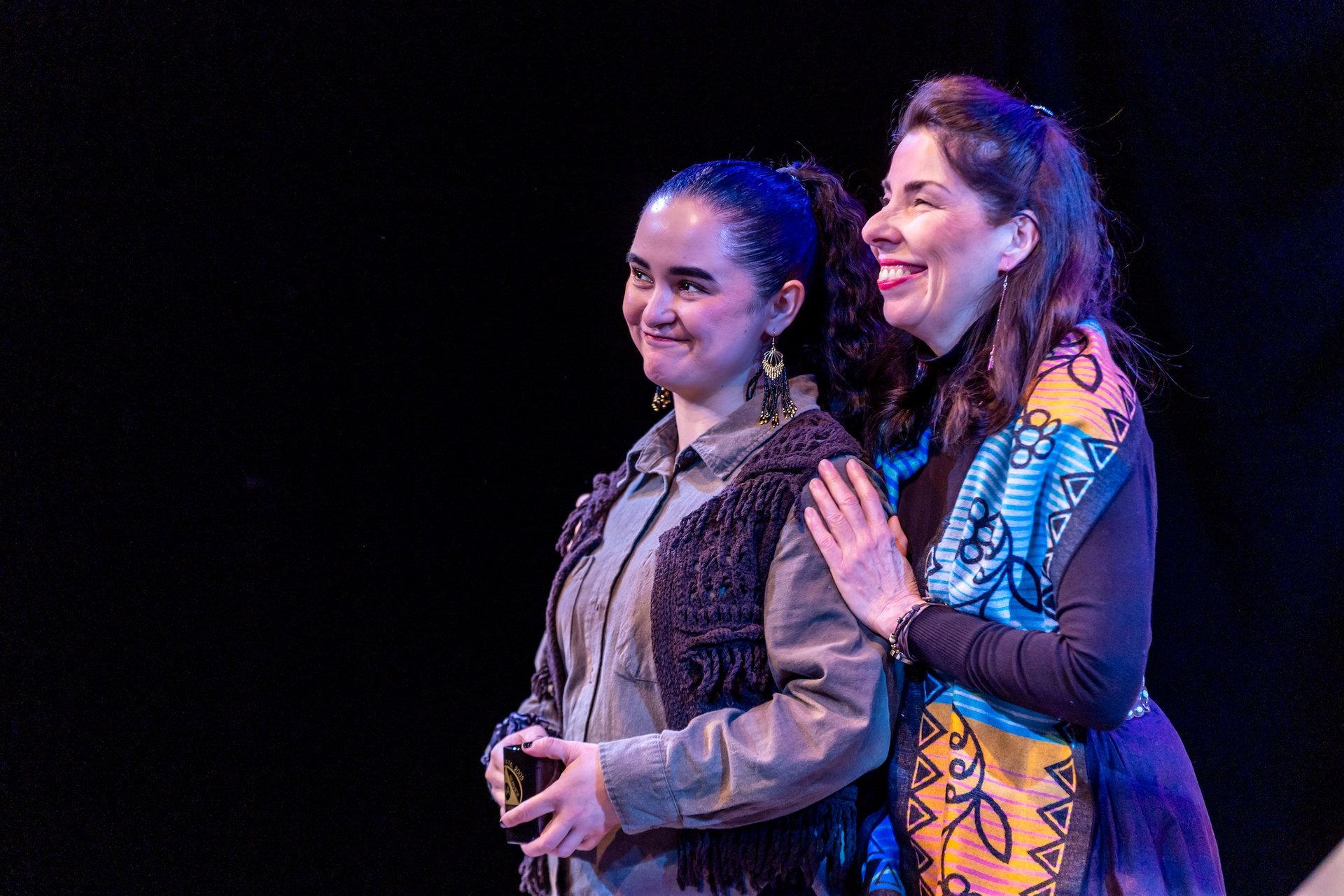
A scene from The Undeniable Accusations of Red Cadmium Light, with Kaitlyn Yott (centre) and Anita Wittenberg (right) Photo: Jon Benjamin Photography
“The play is really about the relationship between mother and daughter,” Hayden Taylor tells The Art Newspaper. He traces his love of Morrisseau’s work to his teenage summer job at an on-reserve gallery and was he was inspired to write the play after meeting Jonathan Sommer, a Morrisseau expert at the McMichael Gallery. He sees art as a “springboard” for larger discussions about Indigenous identity.
In the play’s second act, we learn that Nazhi has First Nations status through marriage, a legal status that ended in 1985, after her marriage. Hayden Taylor says that this status was common in the 1970s and 80s when there were even several “white women band leaders” who had status through marriage. But now such status is regarded with derision by younger generations; the tormented Nazhi, an expert in Indigenous art who is fluent in Anishinaabe, is derided as “Indian by ejaculation”.
Another issue Hayden Taylor raises in the play is that of First Nations enfranchisement, a historical Canadian legal process that unfolded primarily from 1857 to 1985, which forced or coerced Indigenous people to give up their legal Indian status, treaty rights and band membership to gain full Canadian citizenship, vote or own property. Ultimately the play asks more questions than it answers, leaving viewers to ponder why, as director Columpa Bobb notes, “we are the only ‘ethnic group’ in Canada that has been marked to provide evidence and prove our ethnicity to the colonial construct”.
- The Undeniable Accusations of Red Cadmium Light, 18 April-3 May, Firehall Arts Centre, Vancouver


