

Several historic murals inside a recently closed shelter for unhoused people in Manhattan could be lost forever as New York City evaluates whether the dilapidated building can be restored or whether it will be demolished. The Bellevue Men’s Shelter has been in disrepair for decades and closed earlier this year after mayor Zohran Mamdani’s administration announced that it would work on a long-term redevelopment plan for the building and would temporarily relocate its residents.
The building was designed in the Italian Renaissance style by Charles B. Meyers and opened in 1933 as the Bellevue Psychiatric Hospital, becoming part of the larger Bellevue Hospital complex. It was converted into a shelter for men experiencing homelessness in the mid-1980s. Starting in the mid-1930s, archival records show that several murals were painted on its walls as part of the Works Progress Administration’s Federal Art Project (WPA/FAP). But the murals have since been painted over.
Murals by Emilio Amero in the entrance lobby of the psychiatric building of Bellevue Hospital, photographed by the WPA/FAP Photographic Division Courtesy the Public Design Commission of the City of New York
According to archival photographs published by the Public Design Commission of the City of New York, there were at least six WPA mural projects in the building by the artists Emilio Amero, Luis Arenal, Agnes Tait, Ryah Ludins, Lily Furedi and Nunzio LaSpina.
The city’s Department of Design and Construction (DDC) commissioned the architecture firm Marvel to redesign the campus in 2017. The firm’s proposal entails the construction of a green roof, the overhaul of facilities and public spaces, and the restoration of an auditorium to its “historic use and grandeur”. But the project never received the funding needed to gain ground and the building remained in continuous use. A representative for Marvel confirmed that the firm has not been engaged to work on the project since then.
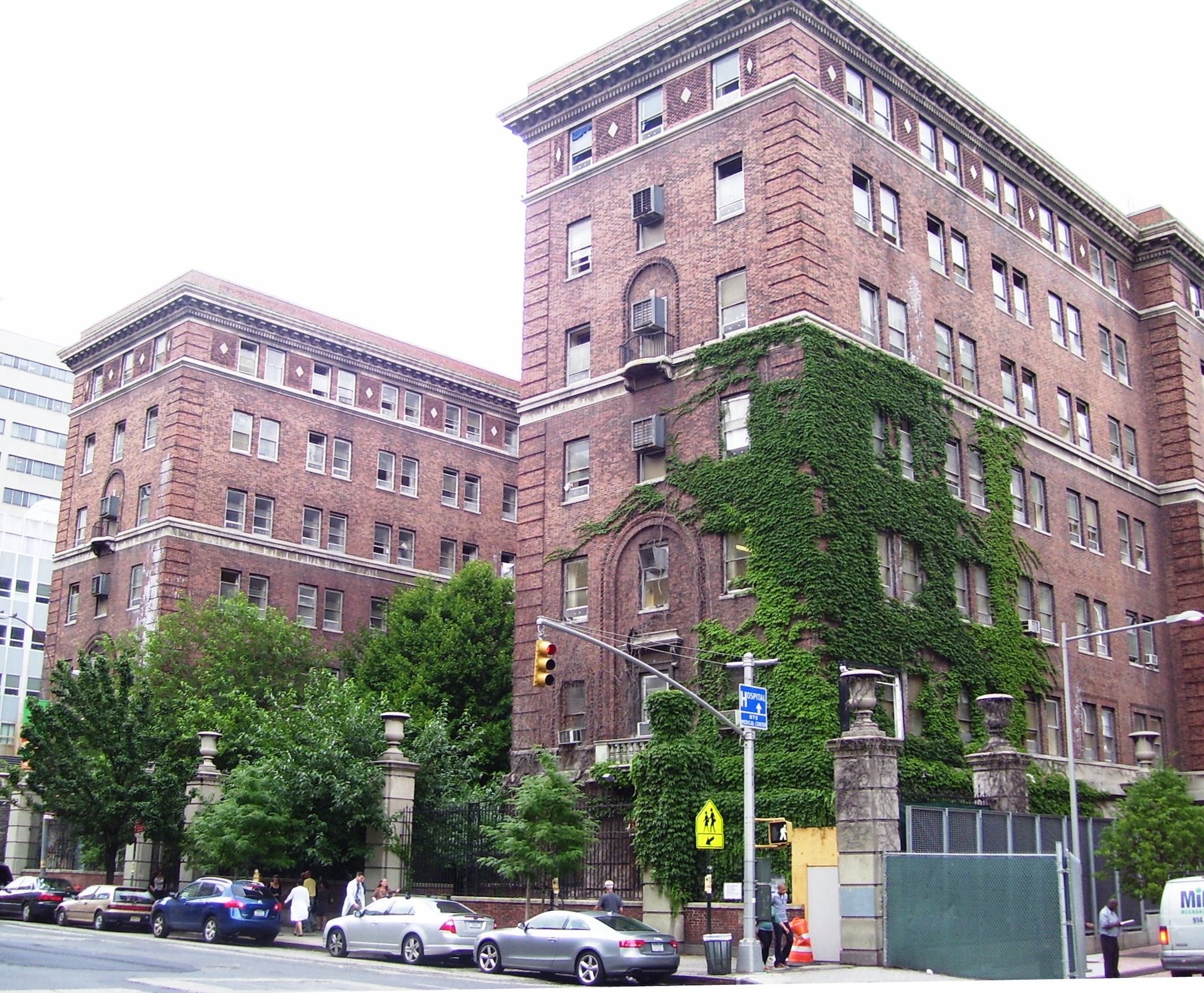
The exterior of the former Bellevue Men’s Shelter, previously the Bellevue Psychiatric Hospital Photo by Beyond My Ken, via Wikimedia Commons
The Building Conservation Associates (BCA) was commissioned to produce a report on the historic fabric of the building, which had mostly disappeared. The building is not a designated historic landmark and therefore had not been subject to the typically rigorous consultation and compliance processes required to make changes to a listed site or that guide how it must be preserved.
“At the time, there were no visible murals at all in the building—whether they had been painted over or removed,” Michele Boyd, the director of the BCA, tells The Art Newspaper. “Because it was a hospital, the building was altered over time to improve it and change its function. This may have happened long before the murals had historic status, so reconfigurations and renovations were just part of a normal building lifecycle.”
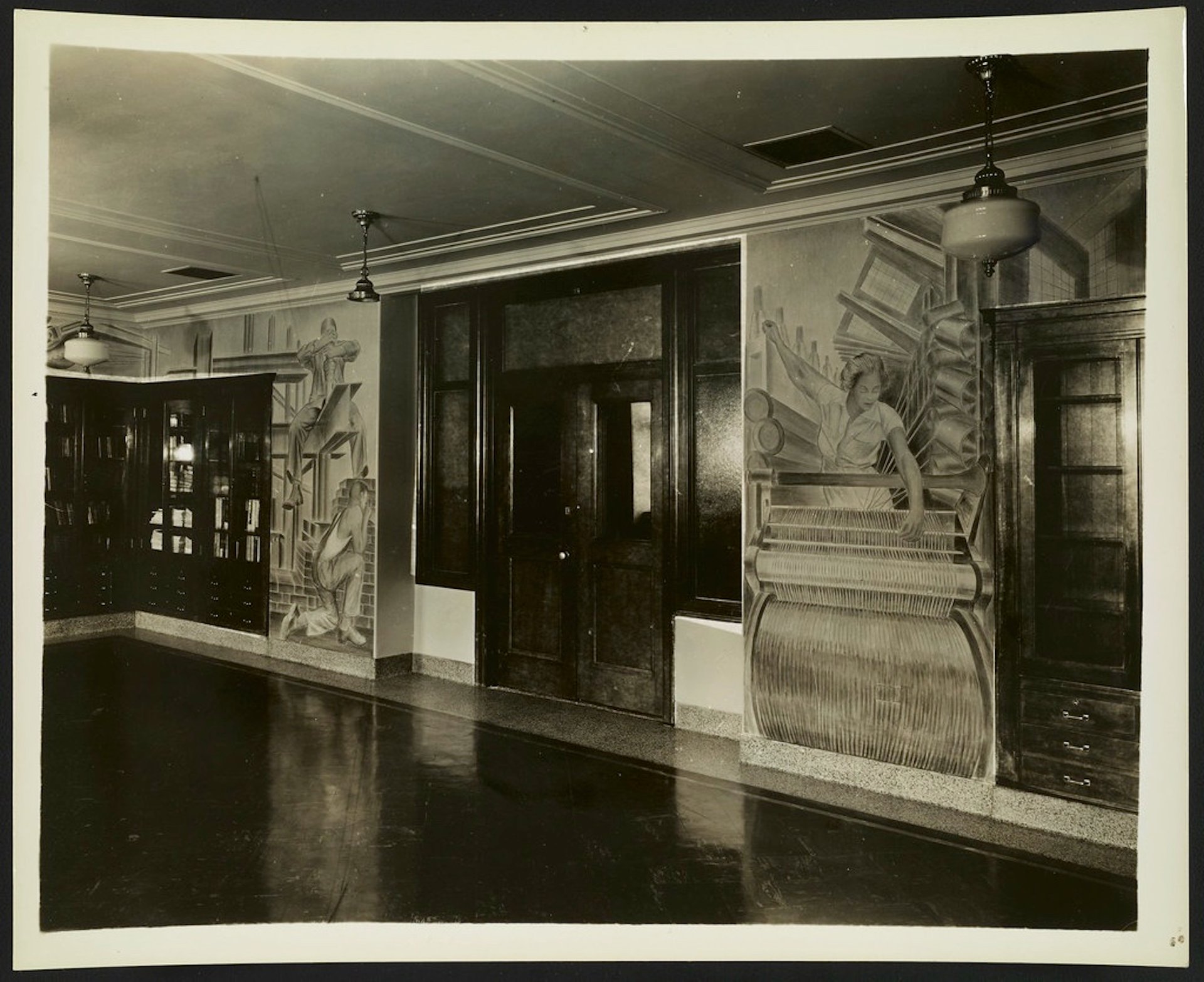
Partial view of the mural Normal Pursuits of Man by William Karp in the occupational therapy exhibition room of the psychiatric building of Bellevue Hospital, photographed by Nadir for the WPA/FAP Photographic Division on 19 March 1937 Photo courtesy the Public Design Commission of the City of New York
During its research, the BCA faced some challenges, including the fact that the murals were not digitised. Researchers worked from a series of historic photographs that showed the murals in situ when the building opened, and had access to materials that explained that murals had existed in certain spaces. There were other limitations, including a lack of access to the interior spaces and a restricted budget and timeframe.
“We could obviously see the entire exterior but had limited access to the interior because it was actively being used as a shelter at the time. There were people sleeping there, so we couldn’t study the entire building in depth,” Boyd says. “As consultants, we’re engaged to work on a specific project for a specific time and a specific, prescribed scope of work. Unlike an art historian who may have three years to devote to a project, we may have three months.”
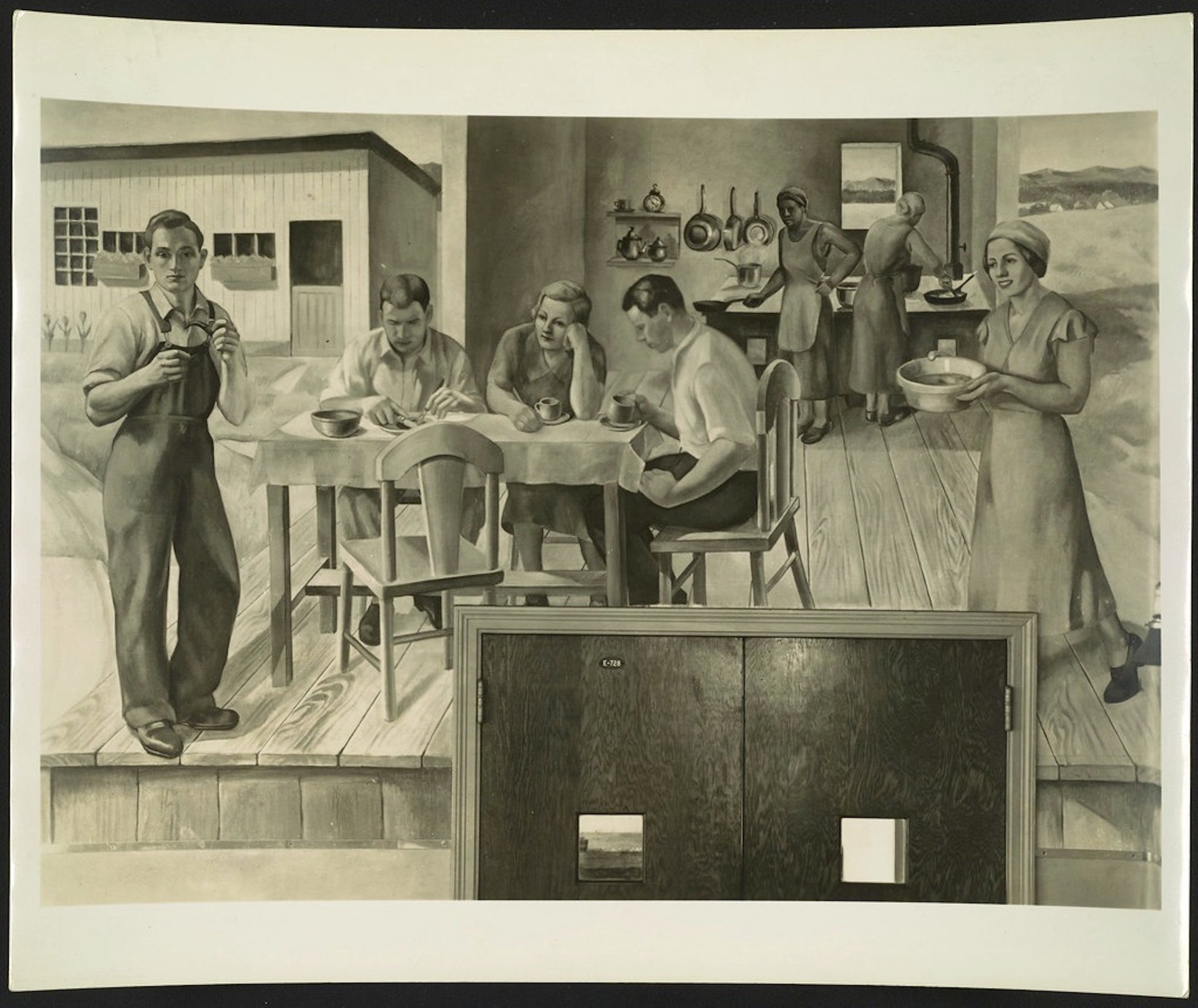
Detail of the mural Simple Way of Life by Lily Furedi in the women’s large occupational therapy room of the psychiatric building of Bellevue Hospital, photographed by Horvath for the WPA/FAP Photographic Division on 7 March 1939 Courtesy the Public Design Commission of the City of New York
She adds that only a small part of the BCA’s research focused on the art, and that the report more broadly looked at masonry and other decorative elements. The firm’s recommendations on the murals ultimately centred on the idea that to understand the extent and condition of the artworks, a more detailed and specialised analysis would need to be conducted.
“Sometimes the project proposal changes to better accommodate preservation approaches, but sometimes it is not possible to preserve something to its highest level and still achieve the goals of the project,” Boyd says. “If a mural was painted on canvas and applied to a wall, it may be possible to remove and conserve it. But it would be very time-consuming and expensive, and you still might not recover an authentic artwork depending on how the paint has aged or been altered over time.”
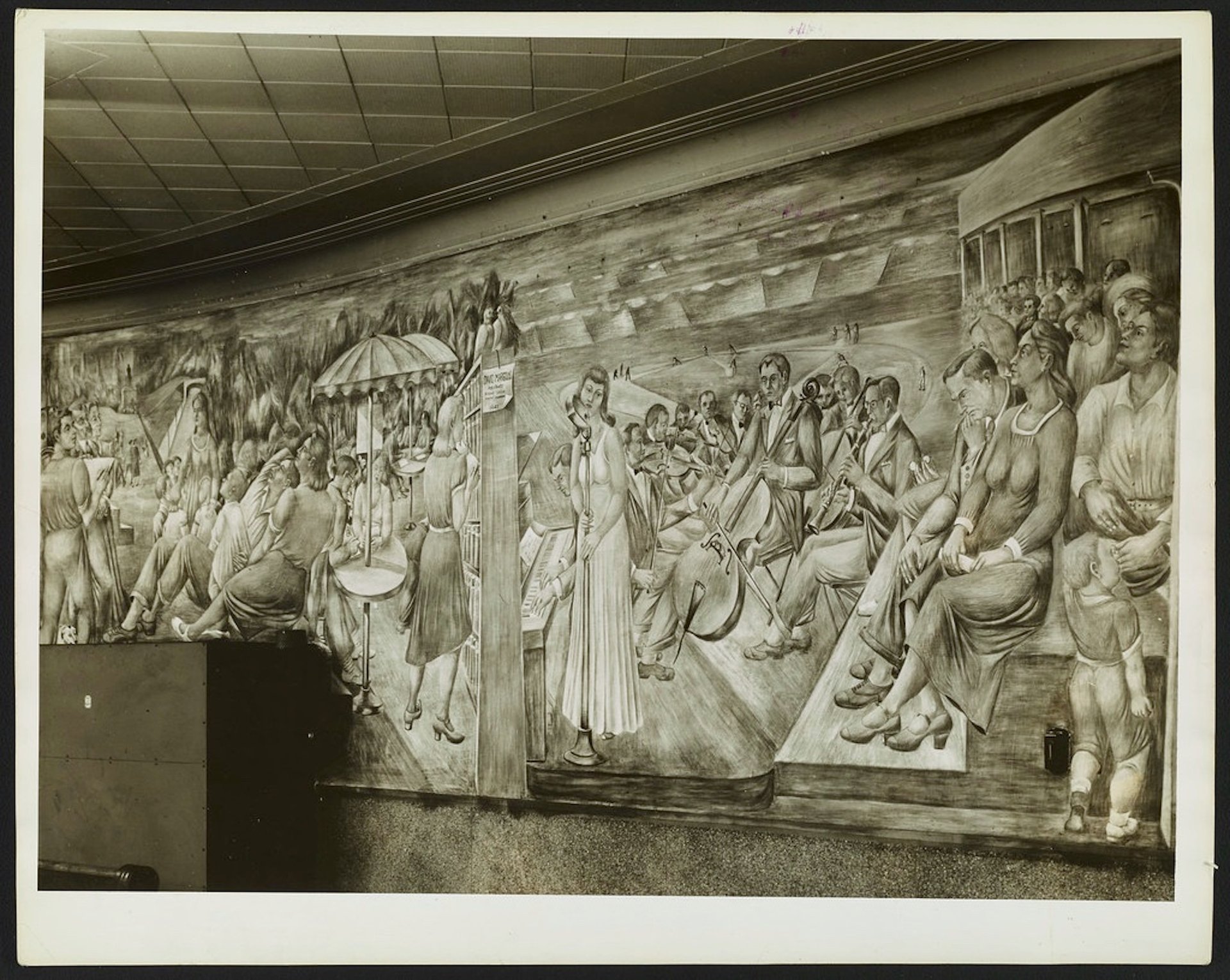
Detail of the mural Materials of Relaxation by David Margolis, pavilions C and D of the tuberculosis building of Bellevue Hospital, photographed by Max Yavno for the WPA/FAP Photographic Division on 14 January 1941 Photo courtesy Public Design Commission of the City of New York
After working with Marvel and BCA ahead of the failed capital project, the city contracted Superstructures Engineers and Architects in 2019 to develop a temporary stabilisation programme for the building. The company recorded extensive deterioration and emergency conditions. More recently, Acheson Doyle Partners Architects conducted a forensic investigation, which found “severely corroded steel columns and other widespread deterioration”, which suggested that “demolition and replacement was the most cost-effective long-term solution”.
In an oversight report in 2015, the city’s comptroller’s office found that the Bellevue shelter, which housed nearly 400 people when it closed, had not been certified due to its inability to meet requirements since 2004. The certification was not renewed because the building was in “such poor condition, having deteriorated to such a state that conditions could not be addressed by a traditional plan of corrective action”, according to the report. It also stated that, due to the size of the population it served, closing the shelter was not a viable option at the time. Although the building had received several upgrades since losing certification, it never reached the level to regain it.
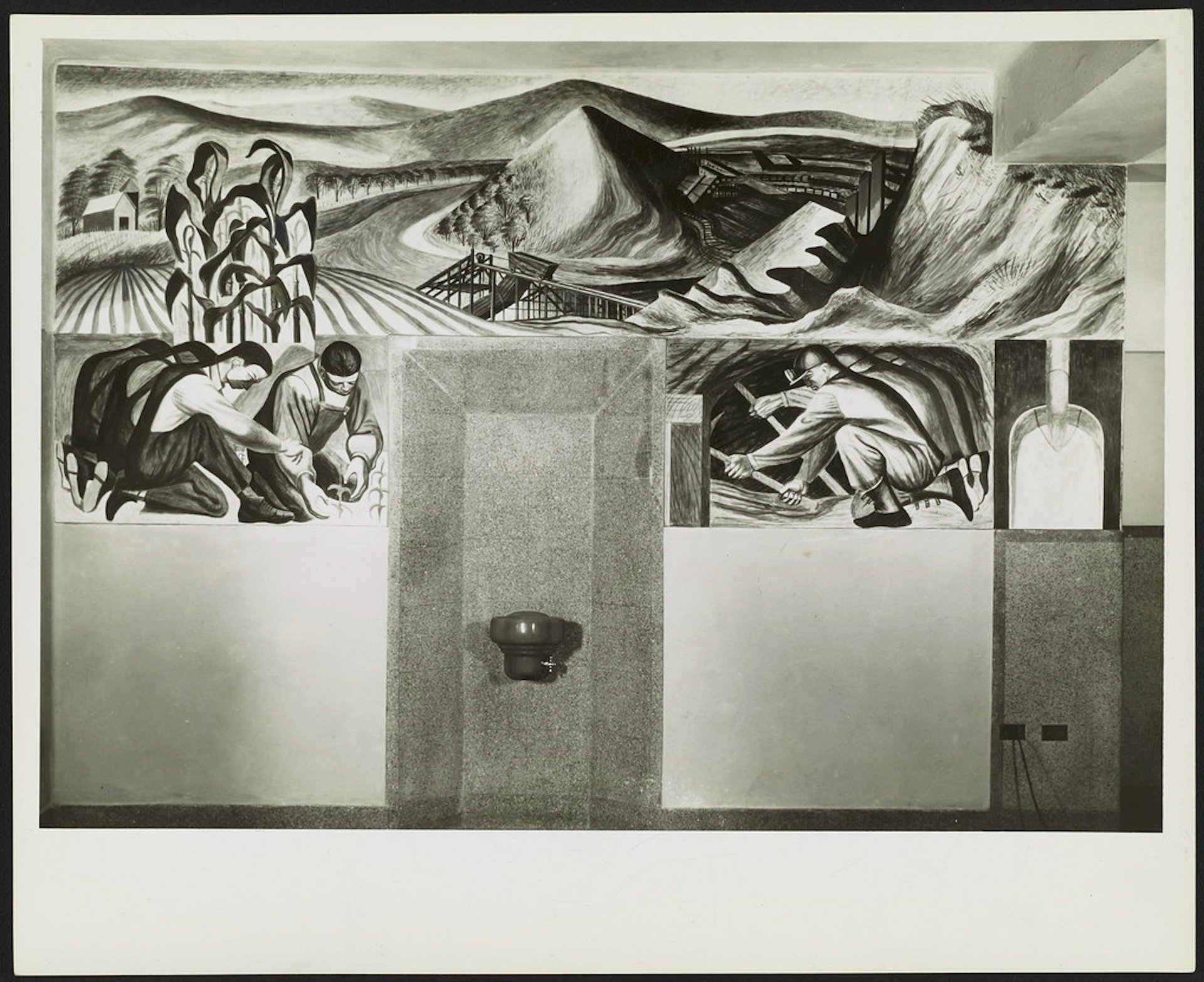
The mural Industrial Landscape by Axel Horr in the first floor waiting room in the psychiatric building of Bellevue Hospital, photographed by Levy for the WPA/FAP Photographic Division on 25 January 1940 Courtesy the Public Design Commission of the City of New York
The NYC Health + Hospitals (NYCHH) manages the building and has not released further details on its redevelopment plans. “The city is aware of the WPA murals at the 30th Street Intake Shelter and is working with conservationists to determine which ones can be salvaged,” a representative for the NYCHH said in a statement. “We understand their historic importance and value to the heritage of the city.”
In the 1990s, the city similarly oversaw the redesign of another Bellevue Hospital building, which contained a monumental fresco mural by the artist David Margolis titled Materials of Relaxation (1939-41) that had been covered sometime after the space was abandoned in the mid-1940s. Because Margolis had coated the mural with a protective wax, the work could be fully restored. Further investigation from the city will be needed to determine whether the same could be true for the art inside the former Bellevue shelter.


