

An exhibition opening this weekend sets out to chart the influence of Van Gogh on Japanese art, a story little known outside the country. A Renewal of Passion: The Impact of Van Gogh (31 May-30 November) is at the Pola Museum of Art at Hakone, which is almost hidden on a forested mountainside 100 kilometres west of Tokyo. On entering the dramatic building visitors descend by a deep escalator into underground galleries.
Aerial view of Pola Museum of Art, Hakone
Pola Museum of Art, Hakone
The Pola Museum of Art, set up in 2002 by the eponymous cosmetic company, has three of its own Van Gogh oil paintings—more than any other Japanese collection. Acquired in the last decades of the 20th century by the company’s founder, Suzuki Tsuneshi, they are all works from the artist’s sought-after French period: The Gleize Bridge over the Vigueirat Canal (March 1888), Clumps of Grass (April 1889) and Flower Vase with Thistles (June 1890).
Three selected Van Gogh paintings from other Japanese collections will be in the exhibition, including Peasant Woman (December 1884-January 1885), on loan from the Morohashi Museum of Modern Art, Kitashiobara. Two others will be coming from the Kuboso Memorial Museum of Arts, Izumi.
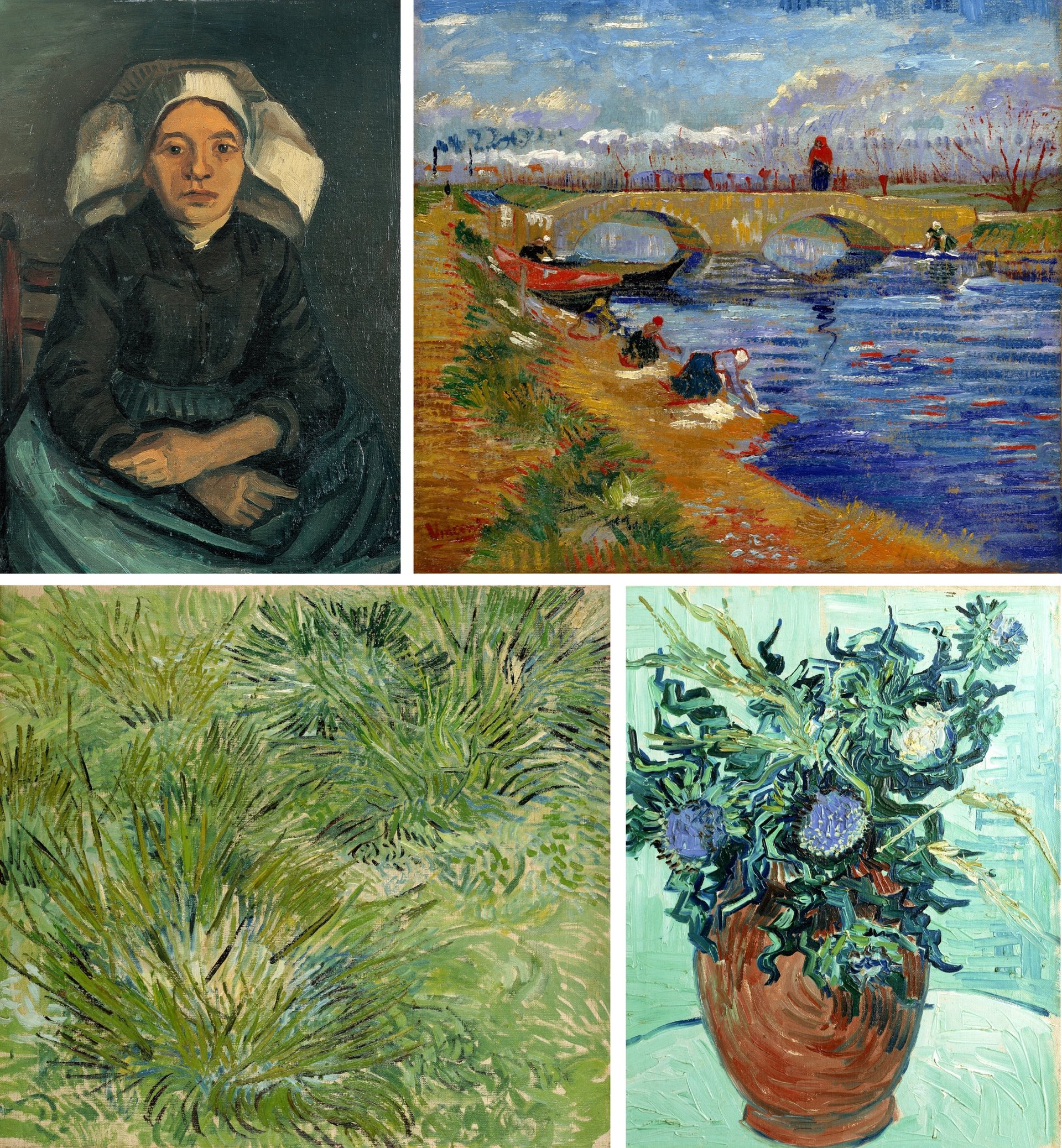
Van Gogh’s Peasant Woman (December 1884-January 1885), The Gleize Bridge over the Vigueirat Canal (March 1888), Clumps of Grass (April 1889) and Flower Vase with Thistles (June 1890)
Morohashi Museum of Modern Art, Kitashiobara (Peasant Woman) and Pola Museum of Art, Hakone
The Pola exhibition sets out to examine the impact of Van Gogh on Japanese artists. “Passion”, in the title, refers both to “emotional intensity” and “agony” (as in Christ’s suffering), a reflection of how Van Gogh has been long been regarded in Japan.
Van Gogh began to be appreciated by Japanese avant-garde artists and writers from around 1910, with the establishment of the Shirakaba (White Birch) group. Among its key early supporters was Kishida Ryusei (1891-1929), an admirer of the Dutch artist, who painted his own self-portrait as a homage, echoing Van Gogh’s energetic brushwork and strong colouring.
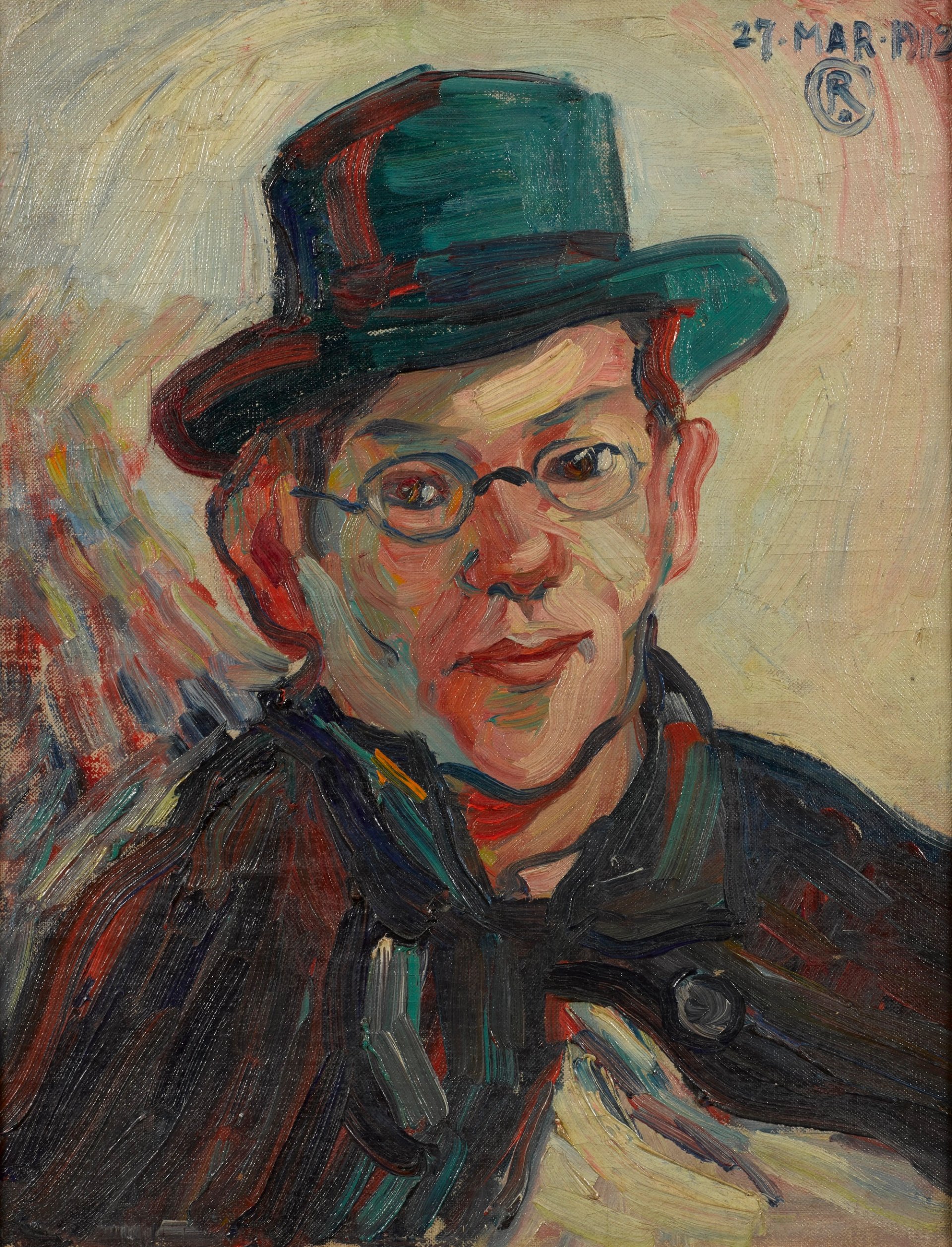
Kishida Ryusei’s Self-portrait wearing a Coat (1912)
National Museum of Modern Art, Kyoto
Two notable works in the Pola exhibition date from 1923. Maeta Kanji (1896-1930) made a Van Gogh pilgrimage during his three-year stay in France, visiting Auvers-sur-Oise, where Vincent and his brother Theo are buried. There he created a painting of the two headstones, side by side, and this represents one of the earliest images of the graves.
The flowering greenery seems like a blanket covering and uniting the brothers. Intensely moved by the sight, Maeta added some petals from flowers growing on the graves into his paint.
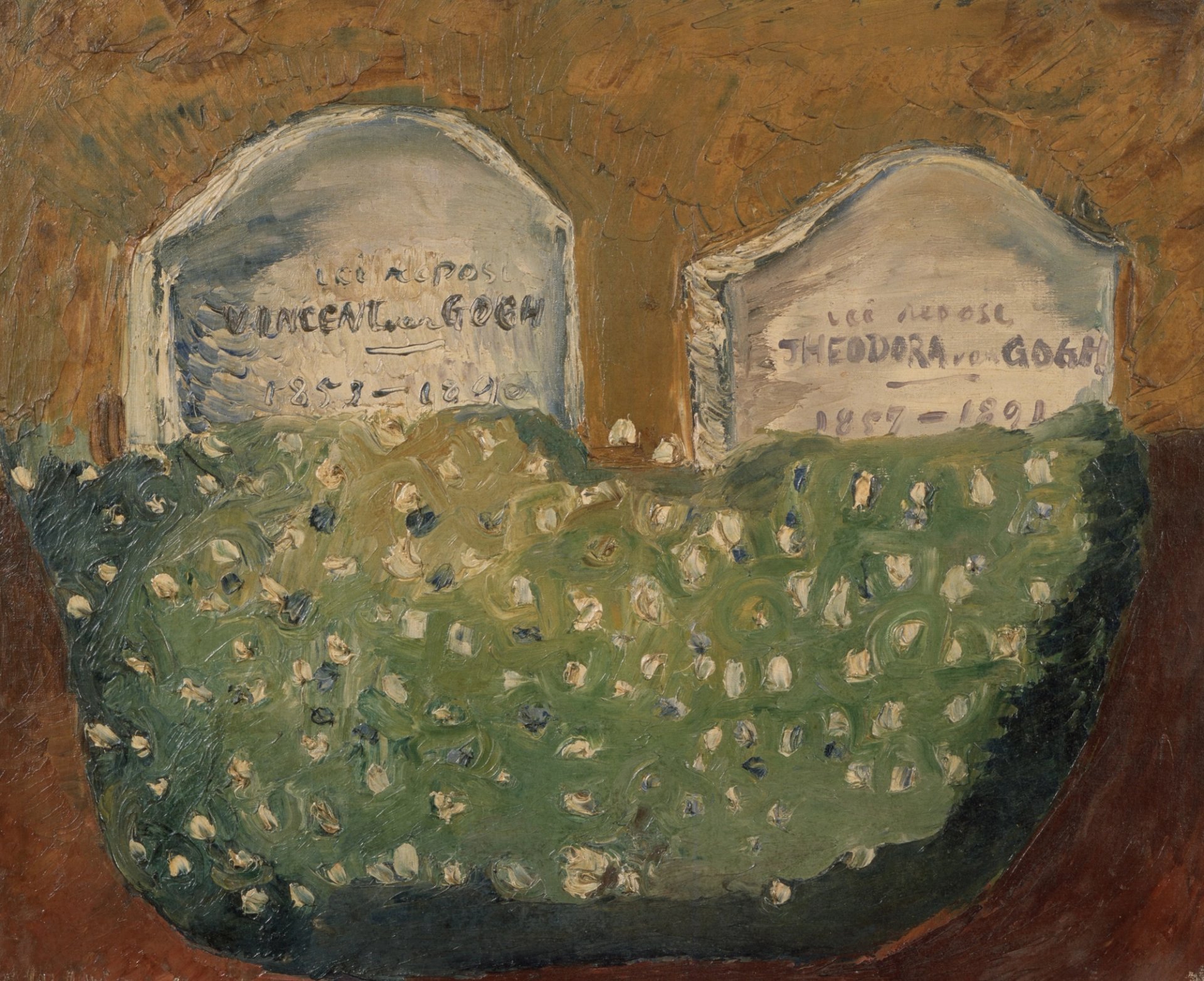
Maeta Kanji’s Graves of the Van Gogh Brothers (1923)
Private collection
Van Gogh’s Sunflowers became the Dutchman’s signature motif, inspiring his followers. This was particularly so in Japan, since the industrialist Koyata Yamamoto had bought Six Sunflowers (August 1888) in 1920, making it the first Van Gogh to go to a local collector. It was then much admired by avant-garde Japanese artists. Sadly, the painting was destroyed by fire during American bombing in August 1945, at the end of the Second World War.
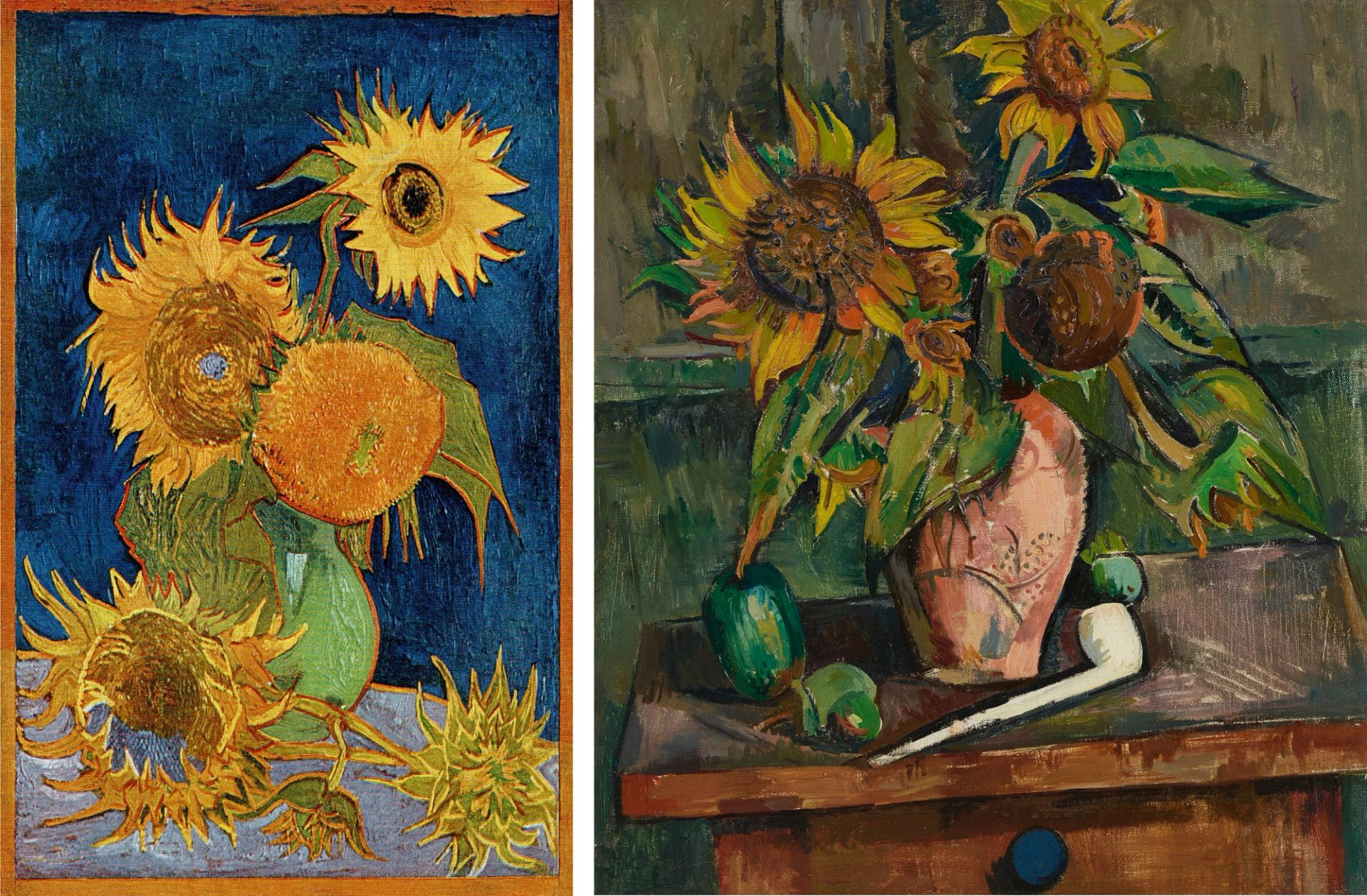
Van Gogh’s Six Sunflowers (August 1888, destroyed in 1945) and Nakamura Tsune’s Sunflowers (1923)
Mushanokoji Saneatsu Memorial Museum, Chofu, Tokyo and Artizon Museum, Ishibashi Foundation, Tokyo
In 1923 Nakamura Tsune (1887-1924) painted his own Sunflowers, inspired by the motif. He added a prominent pipe, in a homage to the Dutchman, who had included it in the painting Van Gogh’s Chair (December 1888-January 1889, now at the National Gallery, London).
The Pola exhibition also includes contemporary works inspired by Van Gogh. A striking example is the set of photographs entitled Ascent (2016), by Fiona Tan, who was born in Indonesia and now lives in the Netherlands. With landscapes set around Mount Fuji, some of her images are reminiscent of traditional Japanese prints.
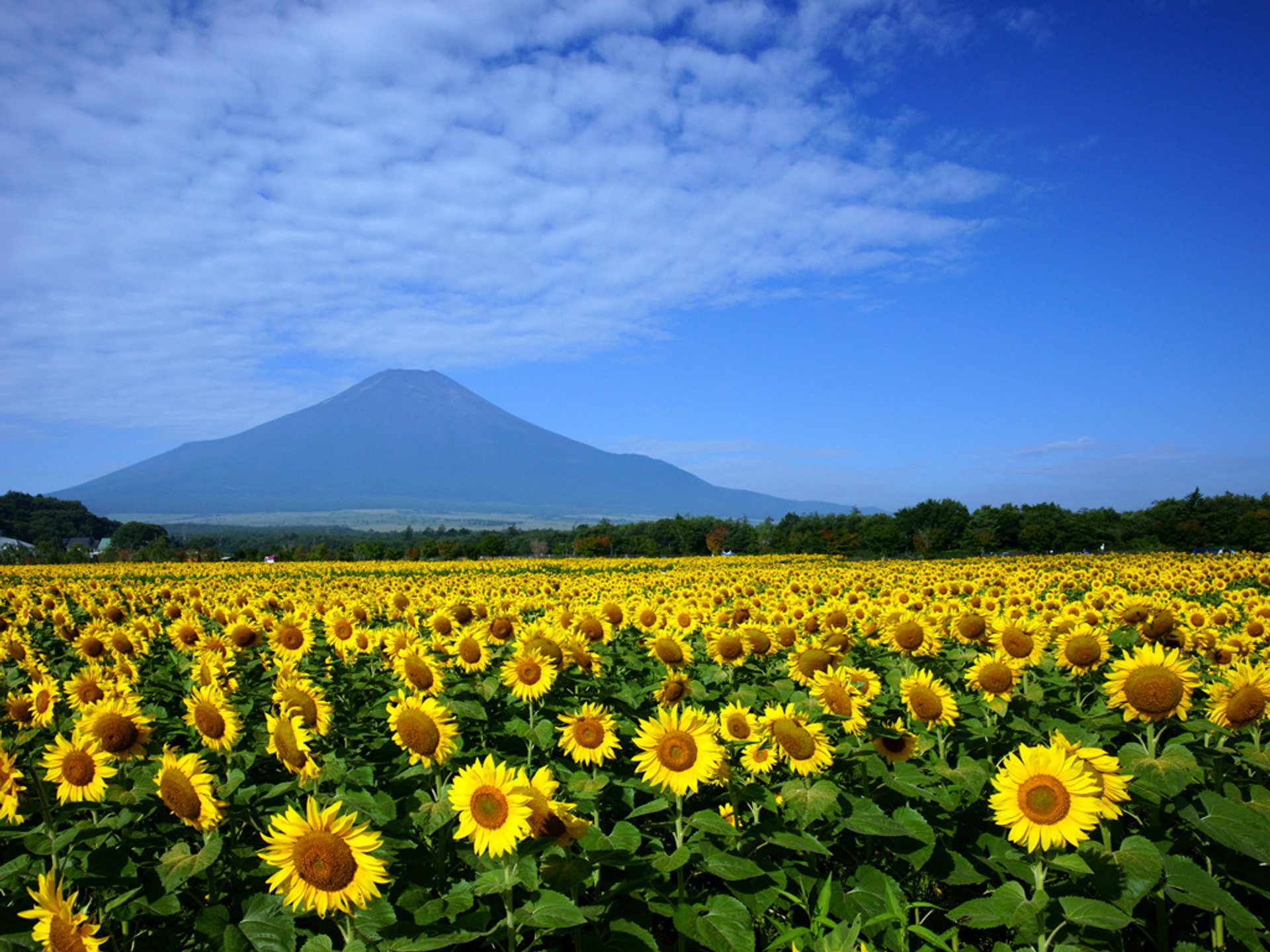
Fiona Tan’s Ascent (2016), from the group of photographs
Bernard Buffet Museum, Clematis no Oka (Japan)
Tan’s Ascent is a reminder of Van Gogh’s passion for Japanese prints. As the Pola exhibition so vividly expresses, Japanese artists have in turn fallen in love with Van Gogh.
Martin Bailey is a leading Van Gogh specialist and special correspondent for The Art Newspaper. He has curated exhibitions at the Barbican Art Gallery, Compton Verney/National Gallery of Scotland and Tate Britain.
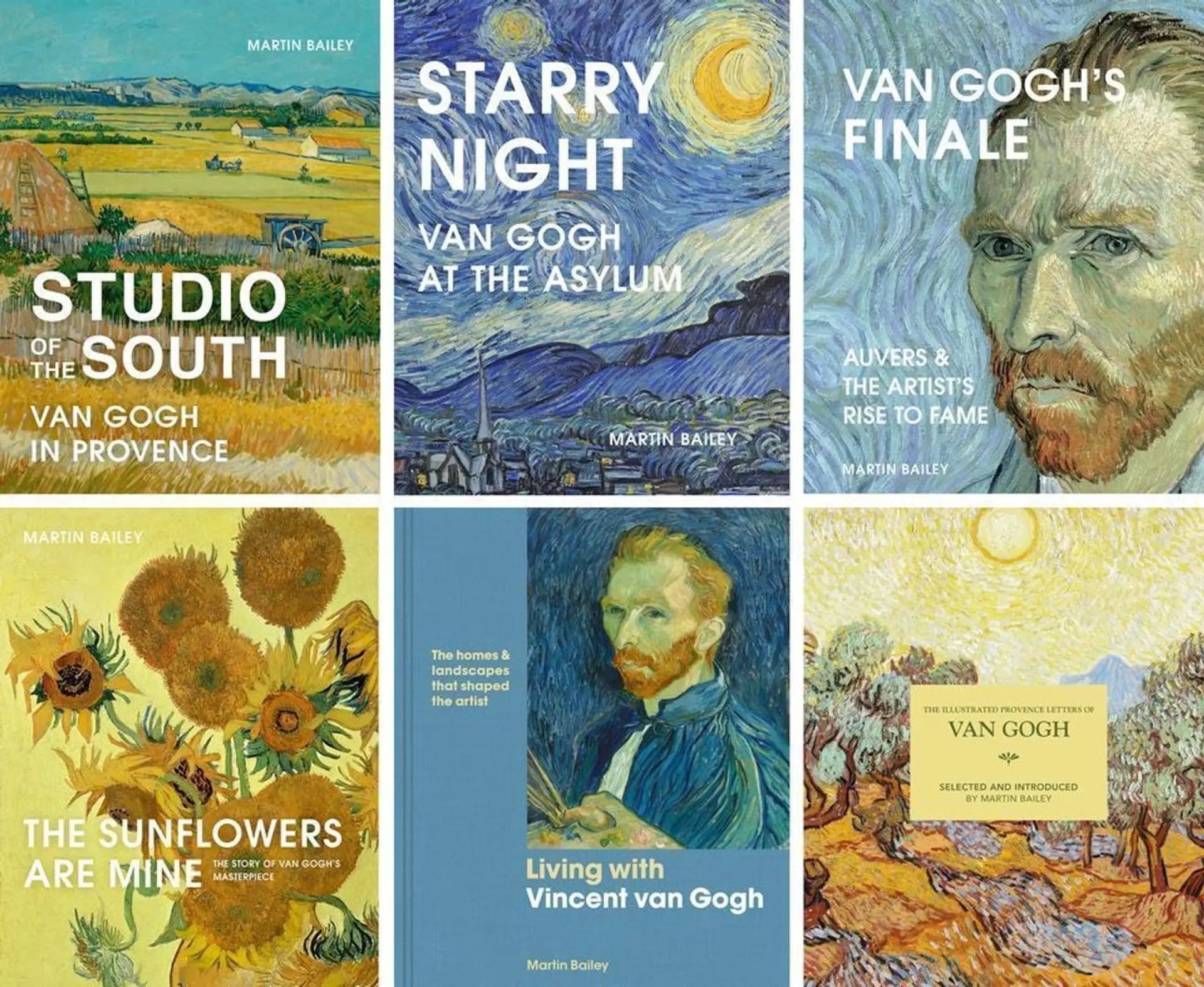
Martin Bailey’s recent Van Gogh books
Martin has written a number of bestselling books on Van Gogh’s years in France: The Sunflowers Are Mine: The Story of Van Gogh’s Masterpiece (Frances Lincoln 2013, UK and US), Studio of the South: Van Gogh in Provence (Frances Lincoln 2016, UK and US), Starry Night: Van Gogh at the Asylum (White Lion Publishing 2018, UK and US) and Van Gogh’s Finale: Auvers and the Artist’s Rise to Fame (Frances Lincoln 2021, UK and US). The Sunflowers are Mine (2024, UK and US) and Van Gogh’s Finale (2024, UK and US) are also now available in a more compact paperback format.
His other recent books include Living with Vincent van Gogh: The Homes & Landscapes that shaped the Artist (White Lion Publishing 2019, UK and US), which provides an overview of the artist’s life. The Illustrated Provence Letters of Van Gogh has been reissued (Batsford 2021, UK and US). My Friend Van Gogh/Emile Bernard provides the first English translation of Bernard’s writings on Van Gogh (David Zwirner Books 2023, UKand US).
To contact Martin Bailey, please email vangogh@theartnewspaper.com
Please note that he does not undertake authentications.


