

2025 was the fiftieth anniversary of the start of the Lebanese Civil War (1975-1990). As the milestone passes, the country is still feeling its lasting consequences, whilst grappling with recent economic crisis, the Covid-19 pandemic, Beirut Port Explosion and further escalating conflict. In Where Do I Go, on view at the new Robert Klein Gallery x Sea-Dar exhibition space in Boston, photographer Rania Matar collaborates with women from the region, making portraits that visualise their stories, which are often shaped by the difficult question of whether to stay or go. Matar sees her younger self in the women she photographs. As a Lebanese-born, American-Palestinian woman, the artist’s cultural background and life experience continually informs her practice. She was 20 when she left Lebanon in 1984 to study in the US, during the largest wave of emigration up to that point. “Many find themselves at that same juncture,” she says.
The series evolved from seeing graffiti on a wall that said, in Arabic, “Where Do I Go?”. Since then, the project has grown to involve more collaborators, who each tell a different story: some of communities, some of land, others of architecture. “They climb on rocks and trees, jump fully dressed into dirty water and waterfalls, crawl under thorns, trespass into abandoned buildings … Just like living in Lebanon, we embrace the element of risk-taking and danger. It is part of who we are. It’s in our DNA.” Featured sitters include Rhea S, who sits alone amidst a sea of empty red chairs at the Piccadilly Theatre in Beirut. It was a major concert venue during the 1960s and 1970s, but has since been abandoned following a devastating fire. Then there’s Tara, whose dress is camouflaged amongst the flowers of the mountain village of Bekaakat Kanaan, and Rianna, who holds a mirror to the sky, submerged in Amchit’s seaside waters.
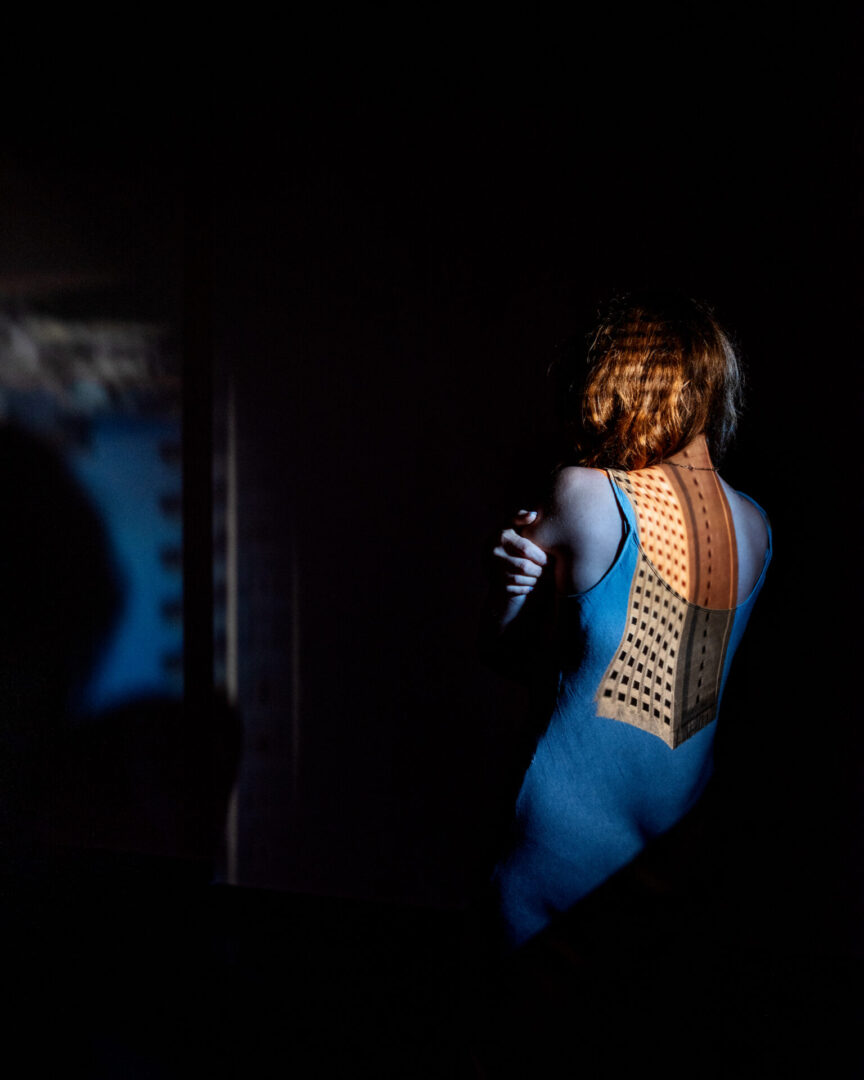
These locations add further layers of meaning to every photograph. Architecture is particularly potent; featured buildings include grand abandoned mansions, former hotels and ordinary interiors bearing signs of conflict. One example depicts Tamara (above), who appears half-drenched in shadow, with an image of the Burj El Murr Tower on her back. As Matar explains: “The tower rises along the former Green Line that divided East and West Beirut during the Lebanese Civil War – a hulking, unfinished monument that the war claimed before it could be completed. Snipers nested in its empty floors, shooting at anyone who passed on the streets below. All forty stories still stand today, looming over the city as they always have, neither demolished nor repaired. I was never able to enter the building, but Burj El Murr is too powerful a symbol to leave out. From her apartment, Tamara can see the tower. It was from this vantage point that she constructed a camera obscura and we projected the building’s image directly onto her body – the tower imprinted on her spine, like something carried rather than simply seen. Tamara and the other women in this work did not live through the war. But they live with it. It runs through their collective memory the way the tower runs through the skyline – unresolved, immovable, impossible to look away from.”
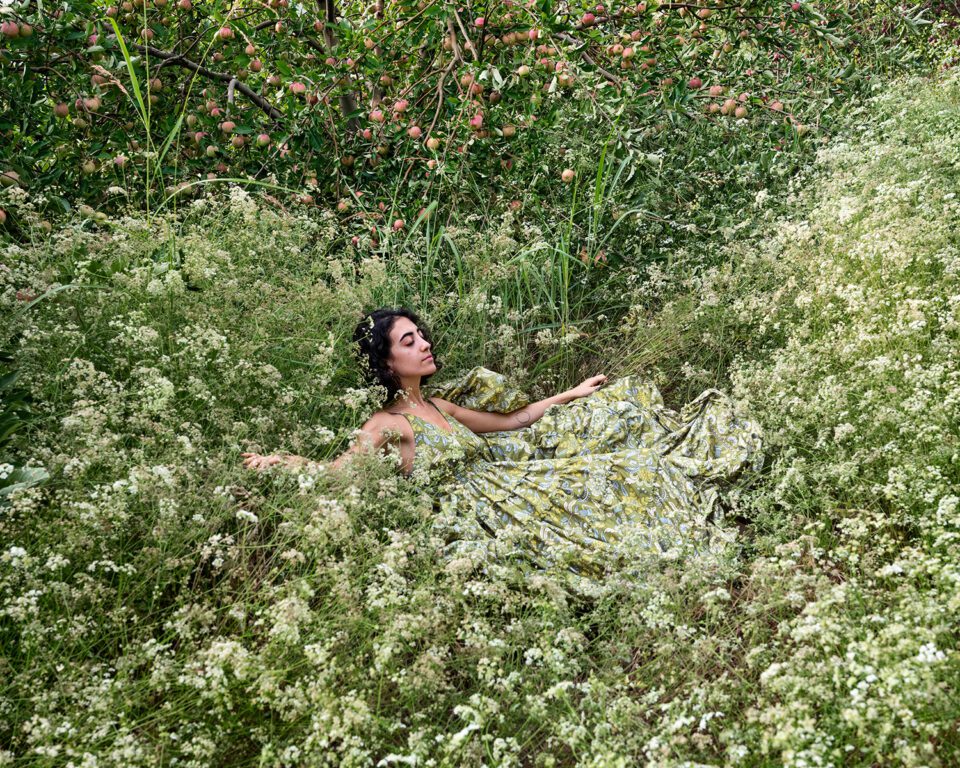
The pictures on display in Boston are now available as a photobook, published by Kaph Books and comprising approximately 128 colour portraits. The collection includes, amongst several texts, an essay by writer and editor Youmna Melhem Chamieh, who addresses the politics of representation and frames Matar’s work as a deliberate refusal of erasure. “Arab life is, ultimately, disposable,” she writes. “It is never the central story. It is rarely the story at all.” At a time when women from the region are too often reduced to symbols of victimhood in Western discourse, Matar redresses the balance. These portraits insist on presence, complexity and self-determination. The artist sees each image as a shared act of authorship, and it’s this approach – rooted in agency – that makes the images so successful. “They are my love letters to the women of Lebanon – those who stayed, and those who left but can never leave.”
Rania Matar: Where Do I Go? is at Robert Klein Gallery, Boston, until 19 September.
Words: Eleanor Sutherland
All images © Rania Matar


