

There are exhibitions that revisit history, and there are exhibitions that reactivate it. Ten.8 afterimage belongs firmly to the latter category. More than a survey of photographs or an exercise in nostalgia, the exhibition excavates the spirit of Ten.8, the groundbreaking photography journal published between 1979 and 1992, and asks what it means to look again at a publication that fundamentally changed the way photography was discussed in the UK. In returning to the pages, politics and personalities that shaped Ten.8, the exhibition reveals how urgently relevant its questions remain today: who gets represented, who controls the image, and what responsibilities does photography carry in times of social fracture?
To understand the significance of Ten.8 afterimage, it is necessary to understand the Birmingham from which Ten.8 emerged. Between 1979 and 1992, Birmingham was a city undergoing enormous political, cultural and economic transformation. The decline of industries reshaped the Midlands economically and psychologically, while unemployment and social unrest altered the texture of everyday life. However, this period also saw a flowering of Black British cultural production, radical publishing, music, activism and experimental art practices. Handsworth became a crucible for political debate and artistic innovation.
The Birmingham of the 1980s was not the polished, investment-friendly city promoted in later decades. It was a place marked by Thatcherite austerity, racial tension, police surveillance and deep class divisions. The Handsworth uprisings of 1981 and 1985 exposed the anger and disenfranchisement felt by many Black Britons living in Britain’s inner cities, while the broader climate of neoliberal reform transformed public life across the country. Simultaneously, Birmingham was alive with anti-racist organising, feminist activism, queer cultural movements and community-led artistic experimentation. In music, sound system culture and post-punk collided. In visual culture, artists and photographers were beginning to challenge dominant representations of race, gender and sexuality in Britain.
It was in this atmosphere that Ten.8 became one of the most influential photography journals of its era. Originally founded in Handsworth in 1979, the magazine rejected the idea of photography as a neutral or purely aesthetic medium. Instead, it insisted that photography was political — shaped by structures of power and capable of reinforcing or dismantling social hierarchies. Long before terms such as “representation politics” became part of mainstream discourse, Ten.8 was interrogating how images construct identity, reinforce exclusion and mediate social reality.
Magazine culture itself was central to this moment. Before digital platforms transformed the circulation of images and ideas, magazines functioned as critical spaces for debate, experimentation and community-building. Publications like The Face, i-D and Arena shaped fashion and youth culture during the 1980s, while journals connected to activist movements became intellectual lifelines for artists and writers working outside institutional centres. Ten.8 occupied a unique position within this ecology. It combined rigorous political analysis with visual experimentation, bringing together photographers, theorists and cultural critics in a publication that felt urgent and alive.
Unlike glossy commercial magazines that often treated photography as style or commodity, Ten.8 approached the image as evidence, argument and intervention. The journal’s landmark 1988 issue Critical Decade: Black British Photography in the 80s remains particularly influential. It foregrounded Black British photographers and interrogated the absence and distortion of Black lives within mainstream British media. At a time when Black photographers were routinely marginalised by institutions, Ten.8 created a platform for artists who would later become central figures in British photography.
The publication also expanded conversations around feminist practice, queer identity and postcolonial critique. Its pages reflected global struggles against apartheid, colonialism and state violence, situating British photography within broader international political movements. This was not photography isolated within galleries and museums; it was photography embedded in social life. Ten.8 recognised that images shape public consciousness, and therefore artistic practice could never be detached from political reality.
What makes Ten.8 afterimage so compelling is the way it places works from the 1980s and 1990s into dialogue with contemporary practices. Rather than treating the past as complete, the exhibition reveals continuities between earlier debates and present concerns around visibility, surveillance, race, sexuality and power. The questions Ten.8 posed remain unresolved. Indeed, in an era dominated by algorithmic image culture, misinformation and digital hypervisibility, they may be more pressing than ever.
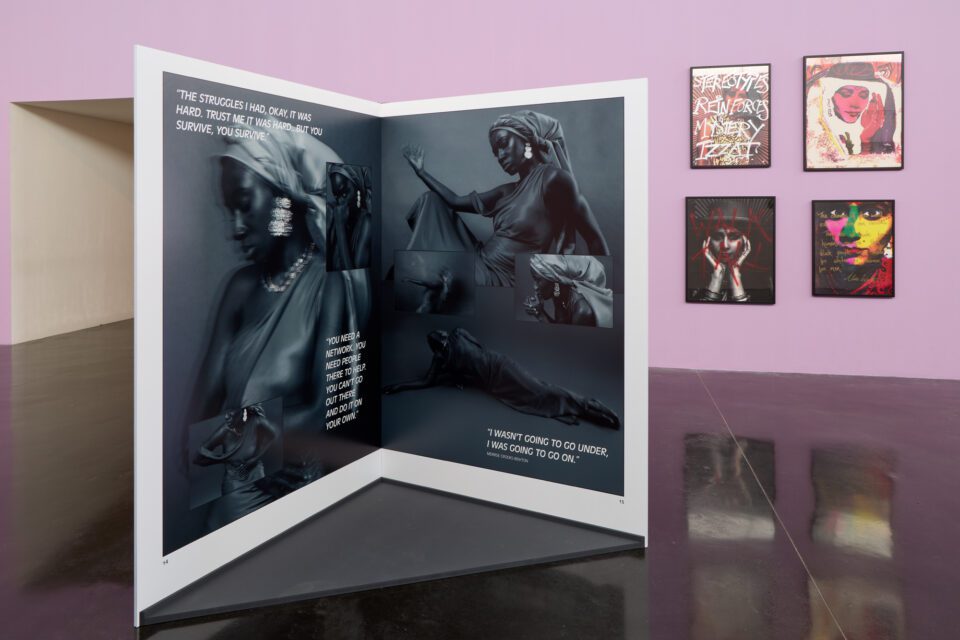
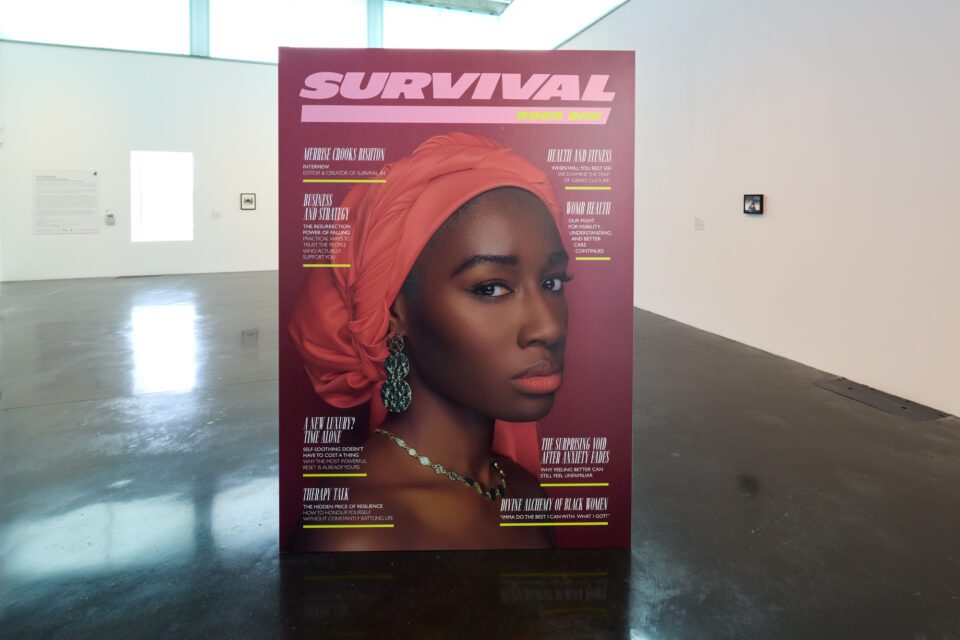
Central to the exhibition is a newly commissioned work by British Ghanaian visual artist Heather Agyepong, an Aesthetica Art Prize alumnus whose interdisciplinary practice examines mental health, performance, diaspora and the archive. Agyepong’s work often uses photography and staged self-portraiture to interrogate inherited histories and systems of representation. Her presence in Ten.8 afterimage feels especially significant because her practice embodies the exhibition’s central argument: that photography is never passive, and that revisiting archives can become a radical act.
Agyepong belongs to a generation of artists expanding photographic practice beyond documentary conventions. Her work frequently incorporates performance and theatricality, challenging simplistic notions of authenticity in portraiture. In the context of Ten.8 afterimage, her commission acts as a reminder that the conversations initiated by Ten.8 are still unfolding through Black British artistic practice.
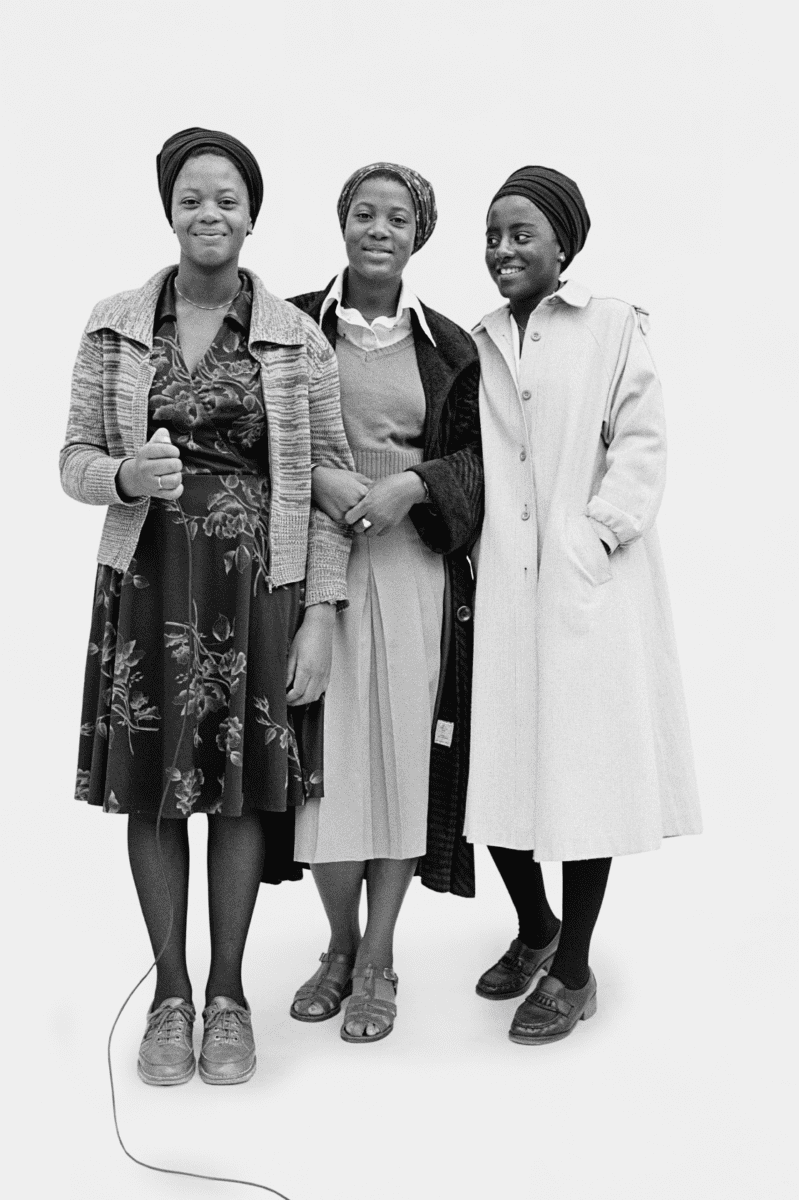
The exhibition also brings together an extraordinary roster of artists whose work helped redefine photography internationally. Vanley Burke’s images of Birmingham’s Black communities remain among the most important visual records of postwar Black British life. Burke photographed everyday moments with immense sensitivity and political awareness, creating an archive that challenged mainstream media portrayals of Black Britain as either invisible or threatening. His photographs preserve community histories often excluded from official narratives, instead placing them centre stage.
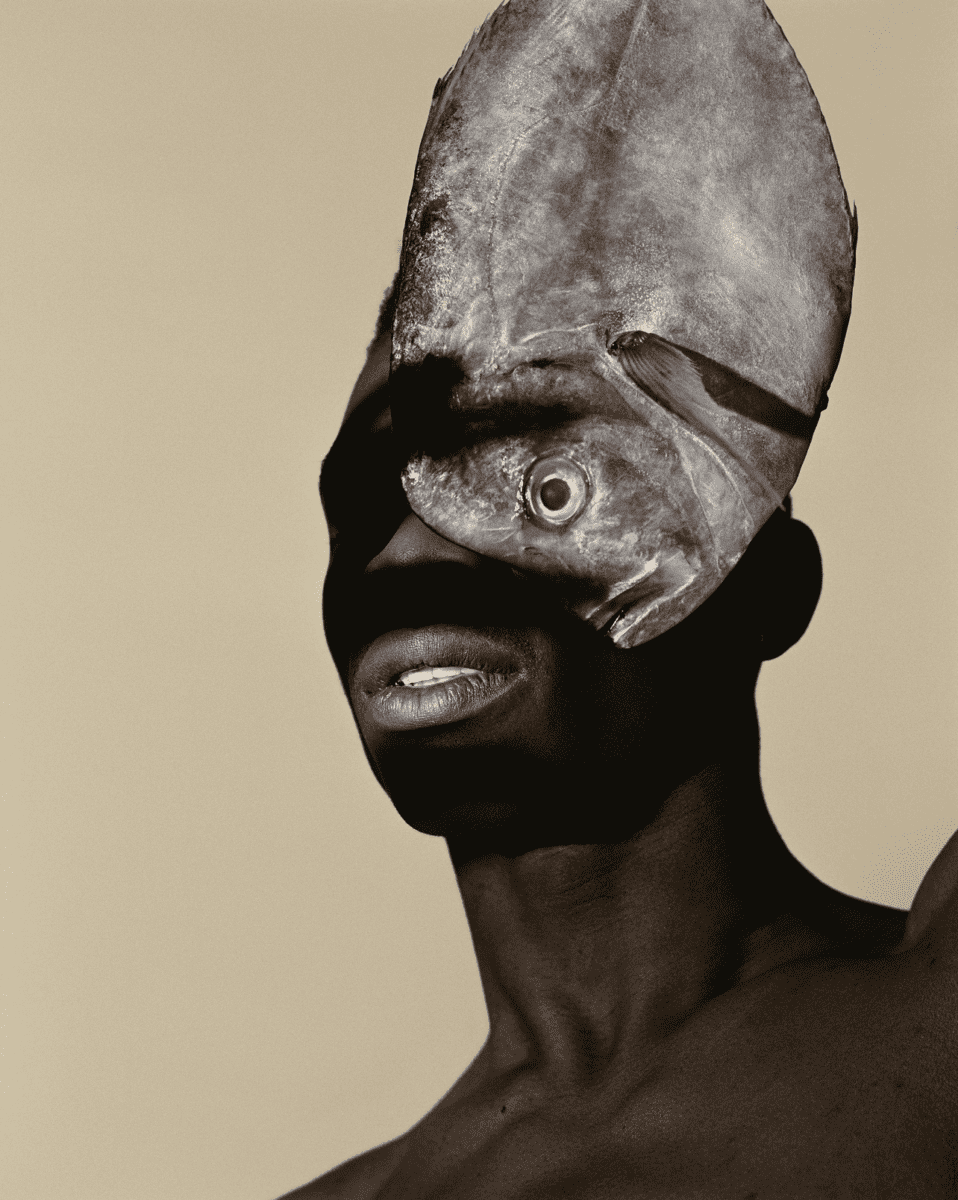
Rotimi Fani-Kayode’s work remains startlingly powerful decades after it was made. Combining Yoruba spirituality, queer desire and highly stylised portraiture, Fani-Kayode transformed photography into a site of resistance against racial and sexual oppression. At a time when Black queer representation was extraordinarily limited, his images confronted viewers with unapologetic sensuality. His influence can be seen across generations of contemporary artists exploring identity, intimacy and diasporic memory.
Lorna Simpson, another major figure included in the exhibition, revolutionised conceptual photography through works that combine image and text to expose the politics of looking. Simpson’s practice interrogates race and gender through fragmentation, withholding and ambiguity, refusing easy consumption of Black female identity. Her work has had a profound impact on contemporary visual culture, influencing artists far beyond photography. Carrie Mae Weems similarly transformed the possibilities of storytelling. Through works such as The Kitchen Table Series, Weems explored race, domesticity, power and intimacy. Her ability to merge autobiography, performance and social critique helped redefine what photography could achieve as an artistic medium. Weems’ inclusion in the exhibition underscores the international conversations in which Ten.8 participated.
Sunil Gupta’s photography offers another vital perspective within the exhibition. Gupta’s work documenting queer life, intimacy and activism challenged both heteronormative and racialised exclusions within visual culture. His practice has consistently examined how sexuality intersects with migration, memory and public space. Particularly during the AIDS crisis, Gupta’s work became politically urgent, insisting on queer visibility at a moment of fear and stigma. Finally, Ingrid Pollard’s work remains foundational to discussions around landscape, race and belonging in Britain. Pollard’s photographs repeatedly question who is imagined within the British countryside and who remains excluded from national identity. By inserting Black presence into spaces traditionally coded as white, her work dismantles romantic myths surrounding Englishness and heritage. Pollard’s practice resonates strongly within a Midlands context, where questions of belonging and visibility continue to shape cultural life.
What distinguishes Ten.8 afterimage from many historical exhibitions is its refusal to flatten radical practices into safe institutional memory. Too often, exhibitions about politically engaged art neutralise the urgency of the work they present. Here, however, the curatorial approach insists on friction and continuity. The exhibition, curated with a clear awareness of the journal’s intellectual and political complexity, treats Ten.8 not as a living methodology — a framework for thinking critically about images and power.
That curatorial approach is particularly important at a moment when museums and galleries are increasingly reckoning with questions of representation, institutional bias and public responsibility. Ten.8 afterimage demonstrates that many of these debates were already being articulated decades earlier by artists, photographers and writers operating outside dominant cultural centres.
There is also something profoundly important about staging an exhibition like this outside London or other major metropolitan art capitals. Britain’s cultural narrative is too often filtered through a narrow geography in which creative innovation appears to emanate exclusively from a handful of large cities. Yet, Ten.8 itself emerged precisely because Birmingham fostered a unique intersection of political urgency and cultural experimentation. Birmingham is not a peripheral backdrop to British art history and creative innovation, but an active and enduring engine of its most critical interventions.
Here, Birmingham is experienced not as a peripheral backdrop to British art history, but as an active engine of its most critical interventions. The exhibition therefore does more than revisit a legacy; it returns it to its origin point, where the pressures of race, class, migration and resistance were not abstract themes but lived realities shaping every image, page and argument. In doing so, Ten.8 afterimage insists that the past is not settled, and that the questions once posed in Handsworth continue to demand attention in the present.
Ten.8 Afterimage is at The New Art Gallery Walsall until 13 September: thenewartgallerywalsall.org.uk
Words: Simon Cartwright
Image Credits:
1&6. Norma Antonio, Joyce Antonio and Marcia James.
2. Roshini Kempadoo. Who do they expect me to be today? From the series Identity in Production (1990). Silver gelatine print. Courtesy of the artist.
3. (Left) Heather Agyepong, Survival ’26, 2026, commissioned by The New Art Gallery Walsall and International Curators Forum. (Right) Chila Kumari Singh Burman, Body Weapons, 1992, The New Art Gallery Walsall, Permanent Collection. Ten.8 afterimage exhibition installation shot, The New Art Gallery Walsall in partnership with International Curators Forum (ICF), 2026. Photos: David Rowan.
4. Davis – Monolith One 1992 © Franklyn Rodgers.
5. Heather Agyepong, Survival ’26, 2026, commissioned by The New Art Gallery Walsall and International Curators Forum. Ten.8 afterimage exhibition installation shot, The New Art Gallery Walsall in partnership with International Curators Forum (ICF), 2026. Photos: David Rowan.


