

In Deborah Turbeville – Photocollage and Ikram Abdulkadir – Soft Focus, presented side by side at Moderna Museet Malmö, the image is not fixed but constantly in negotiation with time, material and gaze. Fashion and portrait photography provide the point of departure, yet both practices quickly exceed their commercial origins. Instead, they unfold into meditations on presence – how a body occupies space, and how that space might be withheld, transformed or dissolved over time. Across both exhibitions, softness becomes a structural principle rather than a purely aesthetic choice.
Turbeville’s work establishes a language of atmospheric resistance, where the photograph resists clarity in favour of psychological depth. Working between New York, Paris and Mexico, she developed a visual vocabulary that destabilised the expectations of fashion imagery. Women appear in interiors that feel suspended – corridors, bathhouses, and abandoned rooms that seem to hold their own logic. Her images are often scratched, overexposed, or deliberately damaged; as the exhibition traces her practice over four decades, it reveals how she moved from editorial fashion contexts into an increasingly experimental field.
The materiality of Turbeville’s practice is central to understanding her contribution to photographic history. In Photocollage, images are cut, torn, pinned, and recombined into layered compositions that resist linear reading. These works hover between photograph, painting, and storyboard, suggesting narrative without ever fully resolving it, inviting the viewer to piece together meaning through fragments, associations, and visual cues. The body is present but fragmented, often obscured by fog-like exposures or compositional interruptions. Rather than offering fashion as surface spectacle, Turbeville transforms it into a site of ambiguity and introspection where mood, memory and atmosphere take precedence over clarity or display. Her work suggests that the image is not an endpoint but a surface under continual revision.
If Turbeville constructs distance through theatrical staging and deliberate fragmentation, Ikram Abdulkadir begins from proximity. Her practice is rooted in friendship, family, and the textures of everyday environments in Malmö, where she documents those closest to her. Working across digital platforms, exhibitions, and publications, she represents a generation for whom the image is inherently fluid and circulatory. Her archive – now containing thousands of photographs – becomes a living organism, continually revisited and reinterpreted. In Soft Focus, earlier and new works are placed in dialogue.
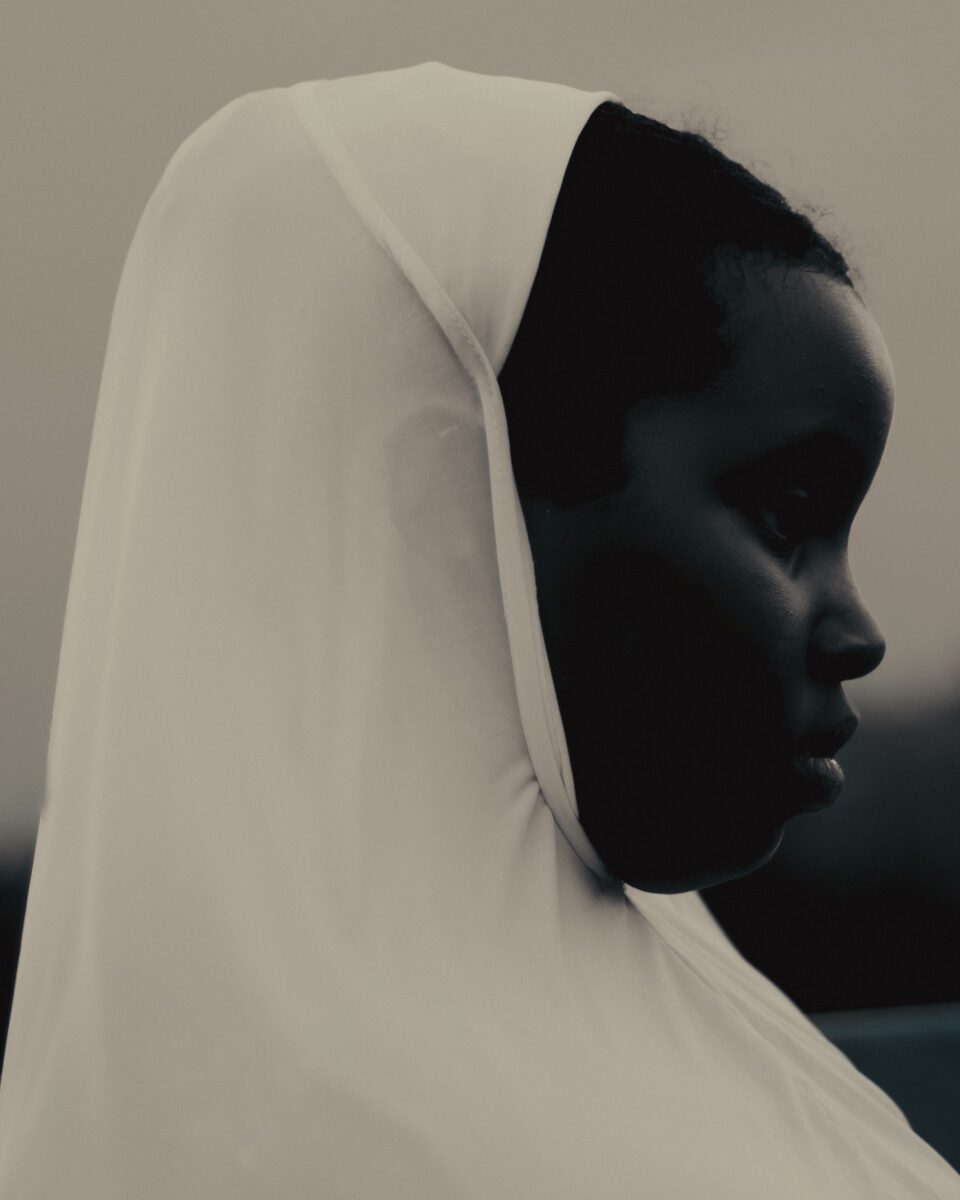
Abdulkadir’s visual language is defined by intimacy, yet it is never purely documentary. Colour becomes a carrier of emotion – muted greens and browns sit alongside saturated reds, pinks, and purples, producing a rhythm that shifts between restraint and intensity. Technical experimentation, including double exposure and overexposure, introduces moments of slippage where the image resists fixity. Within these compositions, figures appear both grounded and fleeting, as if caught between states of visibility. Her focus on Black Muslim womanhood in Sweden raises questions of belonging, spirituality, and cultural positioning.
Across both practices, fashion photography shifts from commercial readability to emotional and conceptual exploration. Though their settings differ, both Turbeville and Abdulkadir reject the idea of fashion images as immediate or consumable, instead emphasising atmosphere, duration, and ambiguity. In both cases, the body is not simply displayed but negotiated – partially hidden, partially revealed, always mediated through light, texture and composition. The exhibitions suggest that fashion photography, at its most critical, is less about clothing than about the conditions of looking itself.
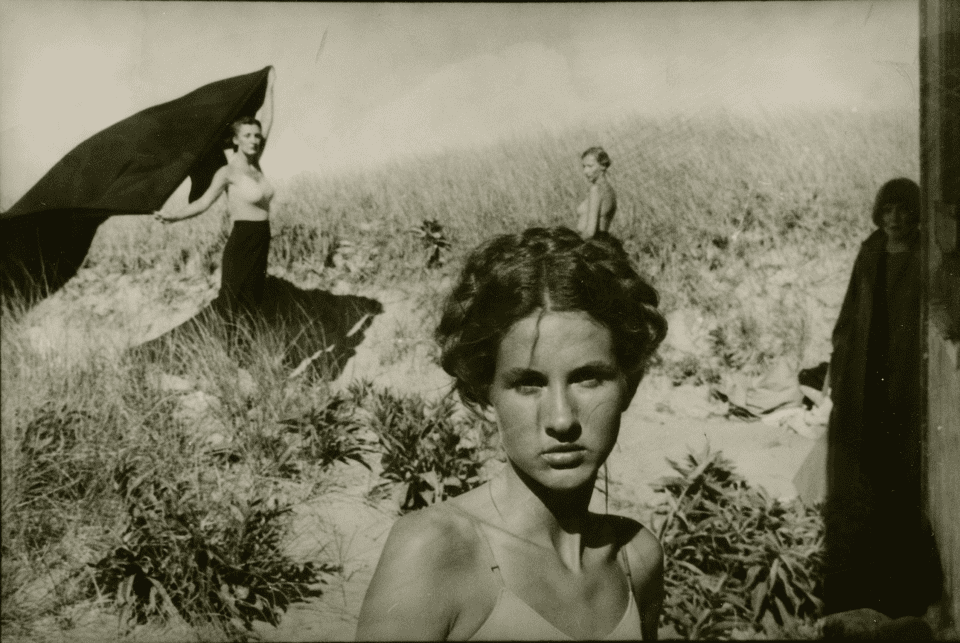
The dialogue between Turbeville and Abdulkadir becomes particularly resonant when viewed through the lens of pictorialism, where softness, blur, and painterly composition historically challenged photography’s claim to objectivity. Turbeville’s manipulated prints and photocollages extend this lineage into late twentieth-century fashion culture, while Abdulkadir reworks it within a contemporary digital ecology. Light becomes diffuse and narrative is distributed across fragments rather than anchored in resolution. The result is a shared visual grammar that privileges sensation over certainty.
What emerges most clearly in this curatorial pairing is a generational continuity shaped by resonance. Turbeville’s melancholic interiors and Abdulkadir’s intimate domestic and urban scenes both articulate a resistance to singular meaning. Where one constructs distance through staging and material alteration, the other constructs proximity through documentation and archival return. Yet both ultimately refuse closure, allowing images to exist in states of suspension. This suspension becomes a form of ethical attention. In this sense, their practices speak across time as parallel inquiries into what an image can hold.
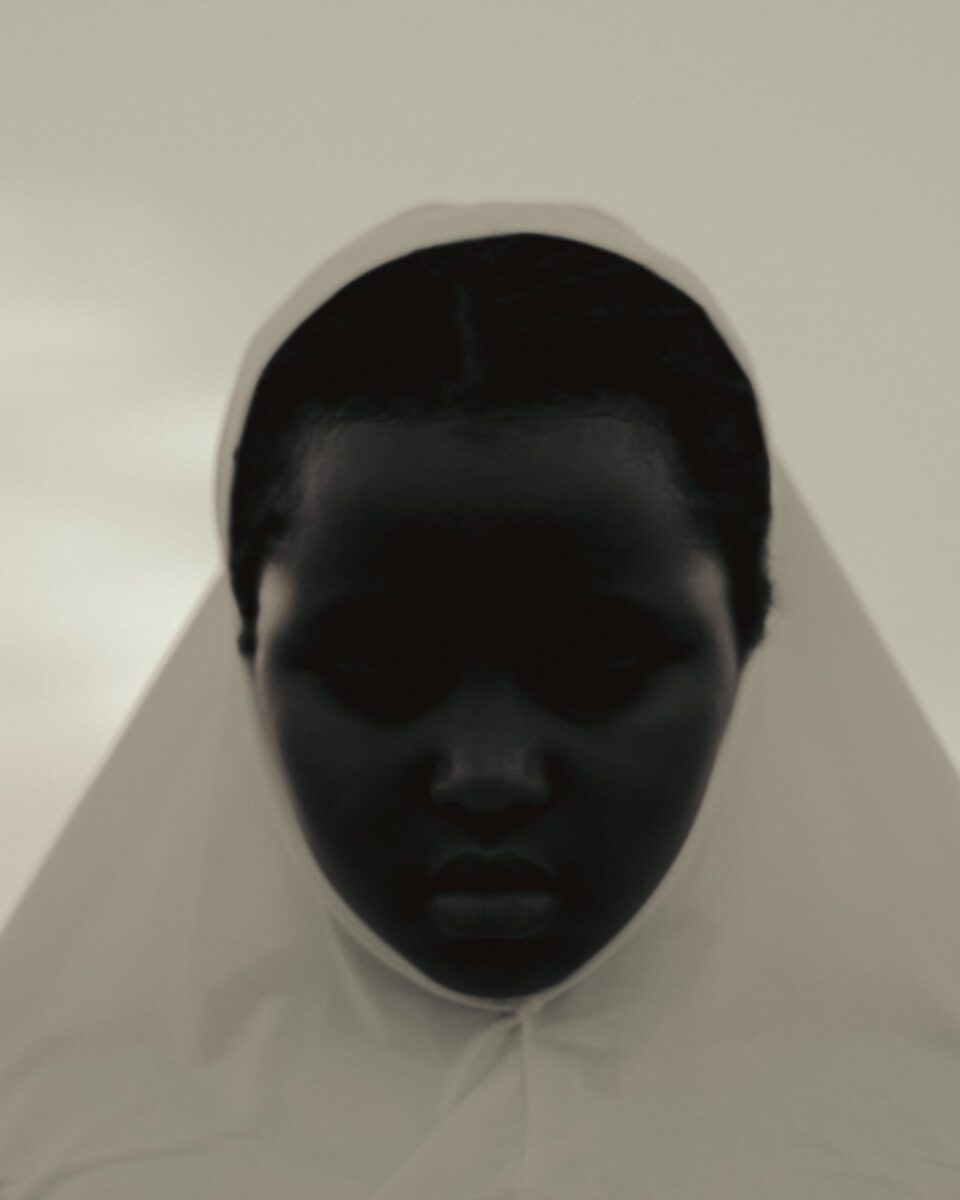
Photocollage and Soft Focus propose that photography is most powerful when it resists definition. At Moderna Museet Malmö, the encounter between these two artists reveals how the medium can oscillate between opacity and intimacy, construction and observation. The works do not resolve into a unified narrative but instead maintain a tension between distance and closeness. Across generations, they suggest that the image is never neutral, but shaped by memory, labour, and context. Turbeville and Abdulkadir open a space where photography becomes less about representation and more about relation.
Ikram Abdulkadir: Soft Focus and Deborah Turbeville: Photocollage is at Moderna Museet, Malmö from 2 May – 27 September: modernamuseet.se
Words: Anna Müller
Image Credits:
1&3. Ikram Abdulkadir, Salma Cadeey, 2018 © Ikram Abdulkadir 2025 Bildupphovsrätt 2026.
2. Deborah Turbeville, Comme des Garçons, Escalier dans Passage Vivienne From the series “Comme des Garçons,” Paris, France, November 1980. © Deborah Turbeville/MUUS Collection 2025.
4. Deborah Turbeville, Untitled, from the series “Block Island,” Block Island, Rhode Island, 1976 Courtesy of MUUS Collection. © Deborah Turbeville/MUUS Collection.
5. Ikram Abdulkadir, Yariseey, 2019 © Ikram Abdulkadir Bildupphovsrätt 2026.


