

La Belle Êpqoue – French for Beautiful Era – conjures up images of glittering theatres, excessive parties and flowing champagne. The term defines the years before WWI, when France experienced a period of economic growth that produced a wealth of artistic and cultural developments. In 1913, Galeries Lafayette unveiled its flagship department store, whilst architect Auguste Perret completed the Theatre des Champs-Elysees. The country was the world’s biggest exporter of cars, as well as leading the way in the skies, with Bleriot crossing the channel in 1908. Names like Gaumont and Pathe drove the flourishing cinematic industry forwards, whilst Pablo Picasso and Georges Braque captured this rapid modernising with the new idea of cubism. Artist Jacques Henri Lartigue (1894 – 1986) was at the heart of this movement. His black-and-white photographs capturing the elegance and joie de vivre of high society and modern life. The artist operated at the centre of France’s golden era of creativity, moving within a social circle that included cultural icons like Jean Cocteau, Grace Kelly and Pablo Picasso.
Now, MK Gallery showcases the work of Lartigue, a major presentation featuring over 150 photographs and drawings. Audiences encounter a new side to the photographer, who is largely remembered for his black and white work. Instead, the early 20th century is rendered in vivid technicolour. Until recently, the majority of Lartigue’s colour photographs had never been seen, despite representing a third of the 120,000 images in his archive. Life in Colour is uniquely wide-reaching, showcasing the breadth of his career, from drawings he made as a child in the 1900s to his work in the fashion world of the 1960s, and his abstract floral photographs of the 1970s. The exhibition includes early experimental stereoscopic images, which produce three-dimensional effects, as well as vintage prints, works on paper and archival documents.
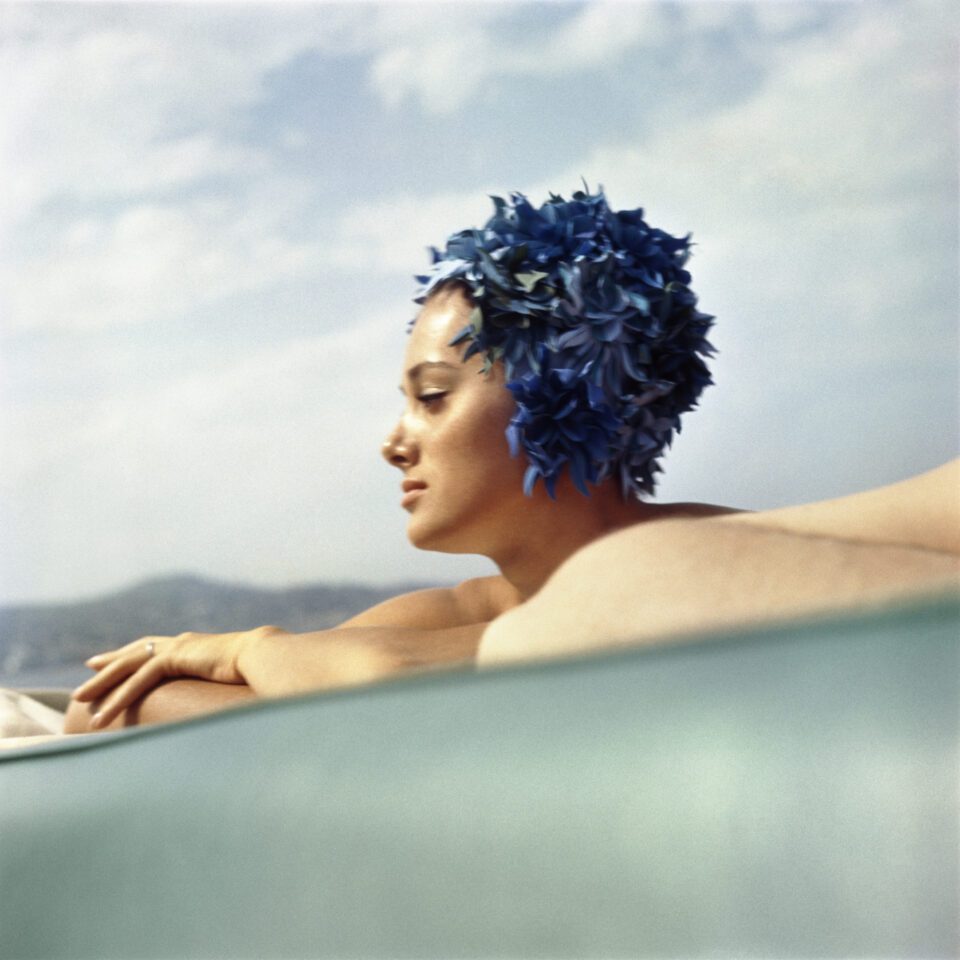
Born in Courvevoie, in western Paris, to an affluent family, who were deeply embedded in the development of cutting-edge technologies. His grandfather was one of the inventors of the monorail system, whilst his brother, Maurice, designed and built gliders and powered airplanes as early as 1908. Lartigue began taking black-and-white photographs as a child after receiving a camera from his father. His first image was taken in 1900, at the age of just six. It was the beginning of a lifelong love affair with the artistic medium. He once said: “I have never taken a picture for any other reason than that at that moment, it made me happy to do so.” It’s a sentiment that runs through his entire practice, photography for the sake of photography, joy for the sake of joy. Lartigue began experimenting with colour as a teenager, at a time when the process was still technically demanding and rarely used. His colour photography from this period show intimate portraits of his family, friends and everyday life. However, the long exposure times and cumbersome equipment led him to focus on painting throughout the 1930s.
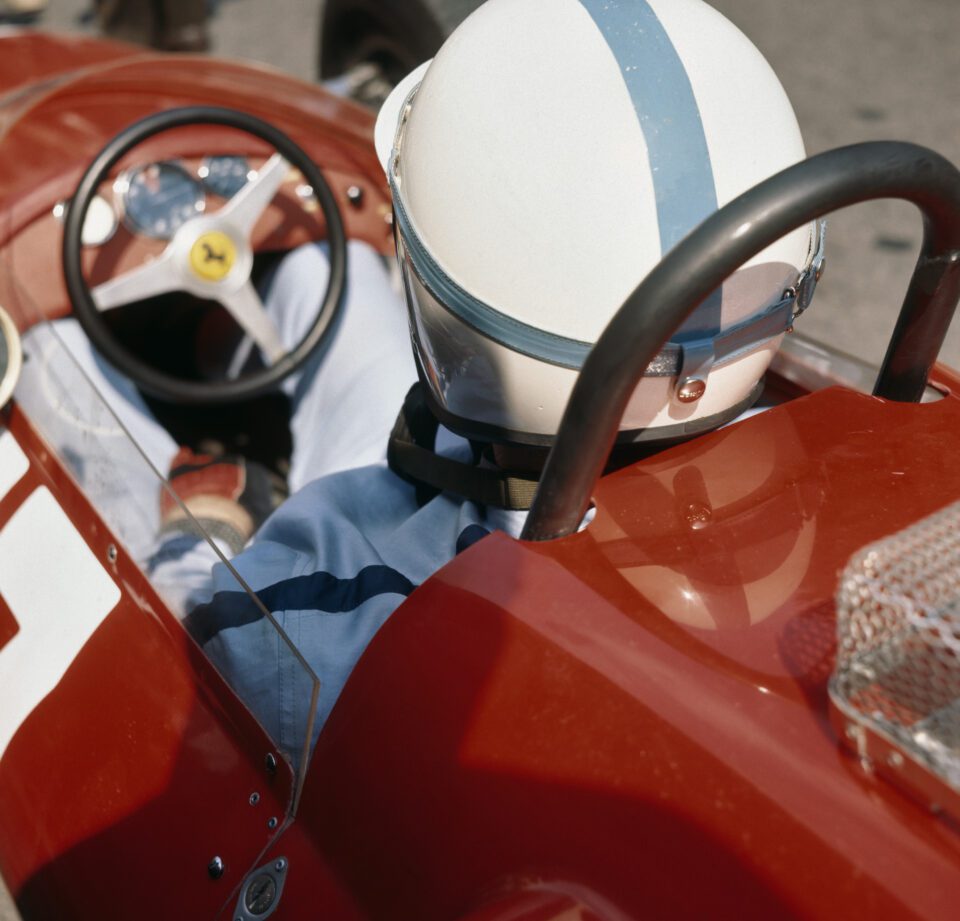
It wasn’t until after WWII that Lartigue returned to the camera, receiving commissions from illustrated magazines and the Rapho press agency. In the early 1960s, his work was introduced to John Szarkowski, Director of Photography at the Museum of Modern Art in New York, culminating in a major solo exhibition in 1963 and propelling him into an internationally recognised figure. There’s one thing that makes Lartigue’s work truly distinct: movement. Each shot has a vitality and dynamism that are rare to find in such early photography. This truly comes to the fore with his interest in documenting the speed of new innovations, such as motor racing and aviation. Here, the spray of gravel is caught in mid-air as a bobsled race gets underway, or wheels blur during the Grand Prix of the Automobile Club of France. The colours make it all the more vibrant, with the cherry red of a racecar glistening in the sun. Lartigue is regarded as a pioneer of the “spontaneous” snapshot – a departure from the formal portraits that were typical of the time – which would later become known as street photography.
In a 1963 book published by the Museum of Modern Art on Lartigue’s practice, John Szarkowski writes: “The vigor and freedom of Lartigue’s photographs grew from a commitment not to photography, but to life…Lartigue looked into the eyes of a changing world, and what he saw there he recorded with a prophetic freshness of vision.” It’s an apt summary of a creative life dedicated to the fast-paced momentum of the 20th century. Life in Colour is a fitting retrospective of an artist driven by an insatiable appetite for life.
Jacques Henri Lartigue: Life in Colour is at MK Gallery, Milton Keynes from 20 June – 4 October.
Words: Emma Jacob
Image Credit:
1&4. Jacques Henri Lartigue, Monaco Grand Prix (1956) © Ministère de la Culture France / Association des Amis de Jacques Henri Lartigue.
2. Jacques Henri Lartigue, Silvana Empain (1961) © Ministère de la Culture France / Association des Amis de Jacques Henri Lartigue.
3.Jacques Henri Lartigue, Florette Lartigue, Vence (1954) © Ministère de la Culture France / Association des Amis de Jacques Henri Lartigue.


