

Food is integral to the history of art. In the 17th century, Dutch still life artists depicted humble meals, like platters of cheese and bread, with a reverence that bordered on the divine. Abundant displays of food, or spoiled fruits and vegetables, were common in “memento mori” paintings. They functioned as symbols of wealth and abundance, as well as a reminder of the fleeting nature of life. Fast forward to the latter half of the 20th century, and the act of cooking became a site of protest and activism. Examples include feminist artist Judy Chicago’s installation The Dinner Party (1974 – 1979), a triangular table with 39 place settings for mythical and historic women. Here, the dinner table is a powerful metaphor for misogyny and inequality. In a similar vein, Martha Rosler’s video piece, Semiotics of the Kitchen (1975), features the artist in the role of an apron-clad housewife, reciting the alphabet using kitchen tools – which she wields aggressively. The piece is a blistering critique of domestic roles and oppression. At the same time, other modern artists were addressing waste, food deserts and sustainable agriculture. Gordon Matta-Clark was a pioneer of socially engaged art. He, along with Carol Goodden and Tina Girouard, co-founded FOOD in 1971, a restaurant that welcomed creatives to meet, ideate and enjoy meals together.
Yet, food has also been a source of joy for contemporary artists – an opportunity for playfulness and experimentation. Marcel Broodthaers commonly used mussel shells in his work as a nod to Belgium, his home country, where “moules” are the national dish. Andy Warhol’s Campbell’s Soup Cans (1962) is one of the most famous works of all time. It elevated commercial food packaging to art, commenting on mass production and branding. In 2001, a giant “dropped” ice-cream appeared on the roof of a shopping gallery in Neumarkt, Germany. It was the work of Swedish-American artist Claes Oldenburg and Coosje van Bruggen. Oldenburg was a veteran of Pop Art, known for creating a series of large-scale food-based sculptures, including a cherry-topped spoon, human-sized apple core and stuffed burger.
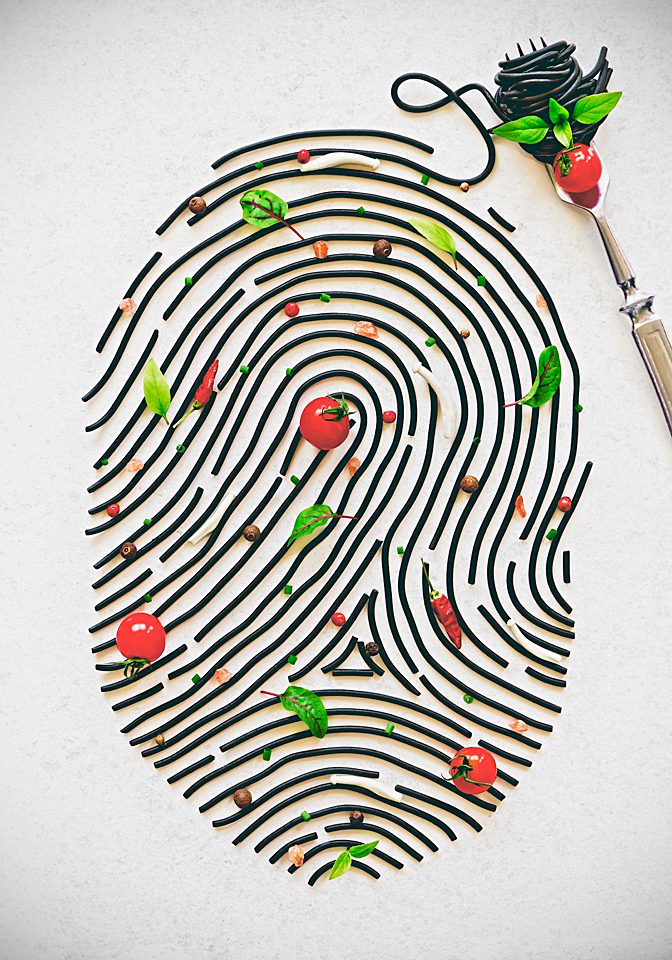
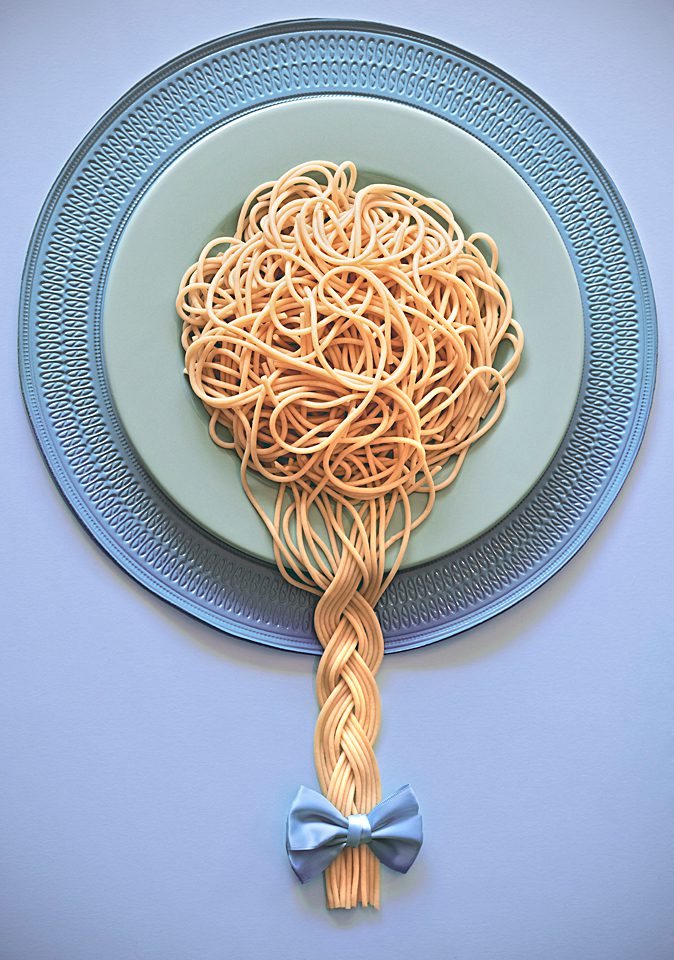
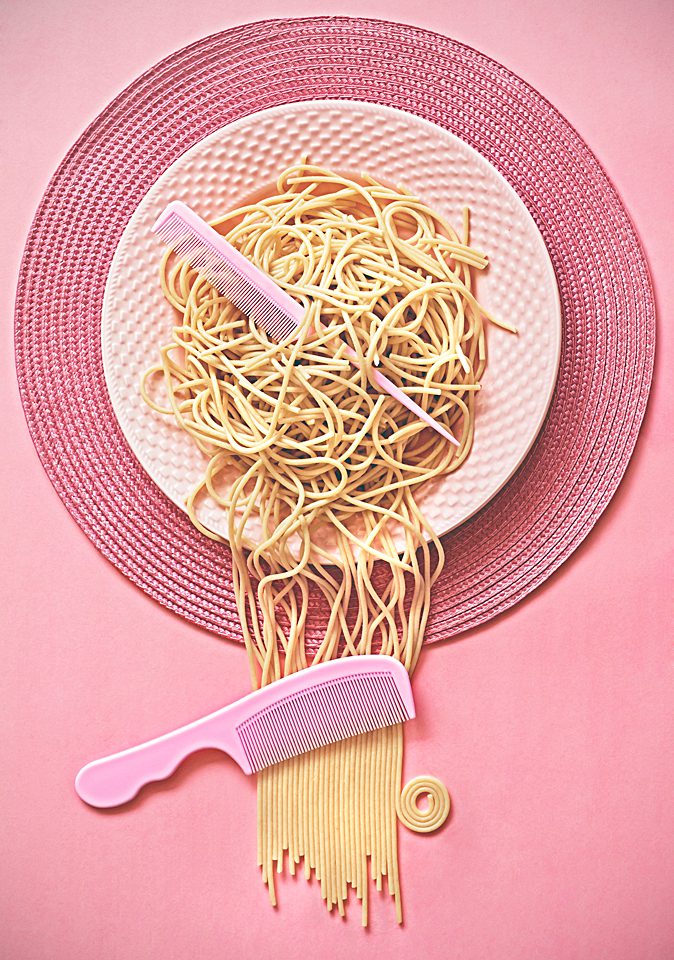
Fast forward to today, and food photography is its own distinct genre. Yuily Vasilev (b. 1985) offers a whimsical take on the tradition. Uniform stalks of asparagus form the bristles of a paintbrush. A tangle of spaghetti transforms into a neat plait, secured with a pale blue bow. The Bulgarian artist discovered the joy to be found in culinary image-making after working in hospitality, and has found inspiration in the kitchen ever since. The artist explains: “Anything can become an inspiration. It just happens. I am walking around, and then an idea pops up. I quickly write it down on my phone. It usually takes a few months, sometimes even a year, to execute those ideas. I think about how it will look best, gather the props, or sometimes create them. It’s only when I am absolutely sure of what and how I want to make it, that I do the shooting.”
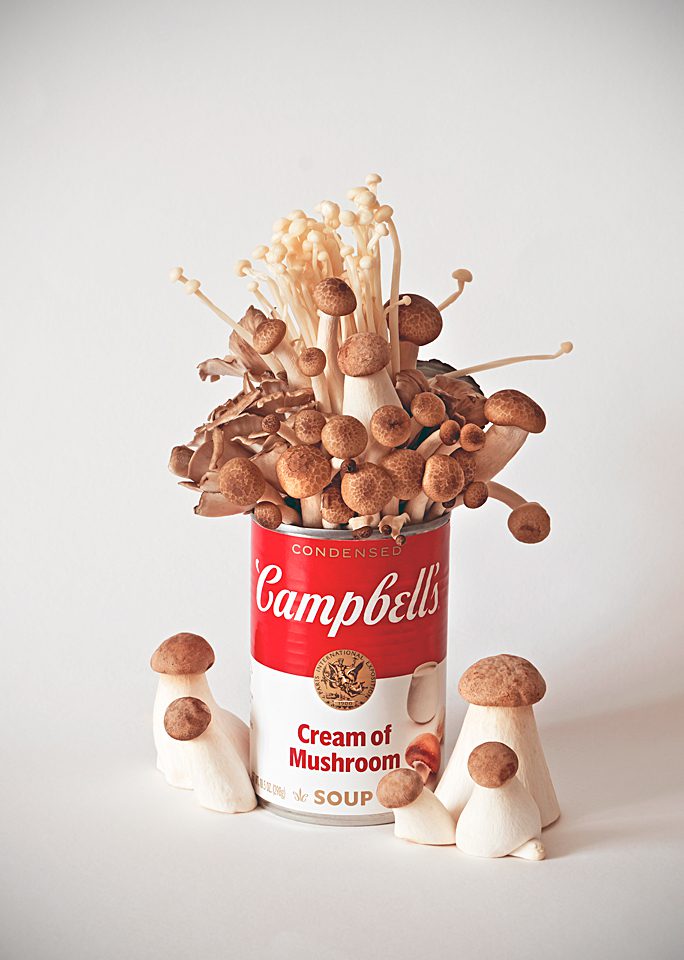
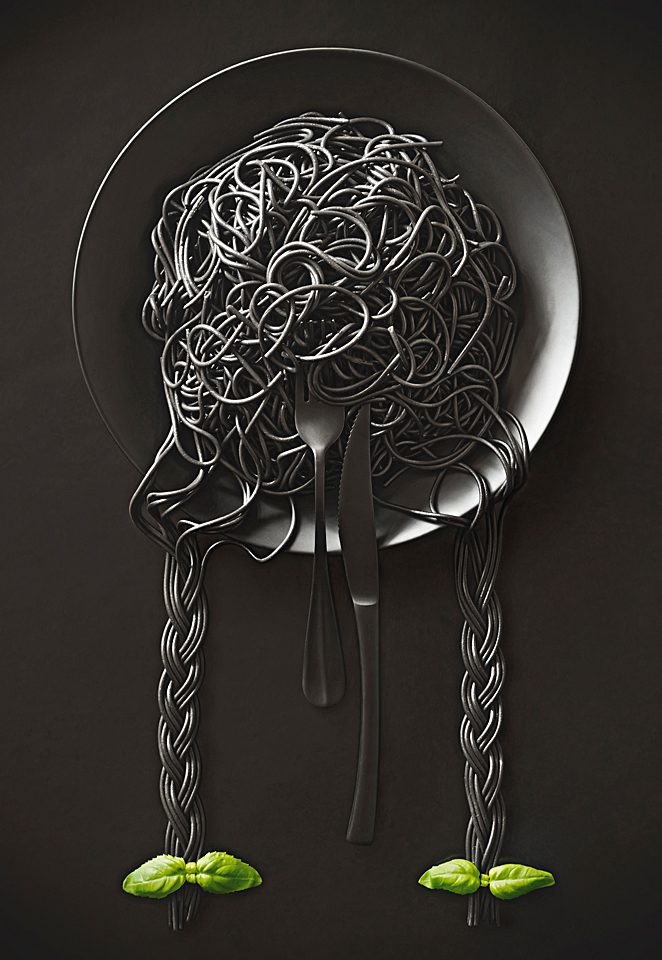
Vasilev only makes a handful of images a year, waiting for the perfect moment to capture his fantastical plans. He continues: “If a concept is easy to execute, it has probably been done before by somebody else. So I am not afraid of something that at first seems impossible. I love the challenges that my brain puts me through. Sometimes it takes a lot of time, but the final result is worth it.” He has shot in over 40 countries across four continents, and his work has been exhibited around the world, including as part of the Sienna Creative Photo Awards, The Society of Photographers and Prix de la Photographie Paris.
@yuliy.vasilev | yuliyvasilev.wixsite.com
Words: Emma Jacob
Image credits:
All images courtesy of the artist.


