

Between 2010 and 2023, more than 1,243 council-run youth centres closed, according to UNISON. Meanwhile, one in three people in the UK say their local areas are in decline, with 13,000 high street shops closing in 2024. Across the country, council restrictions, diminishing spaces, gentrification and enduring prejudices see many communities under threat of erasure. Photographer Sophie Green presents a vivid portrait of the communities, subcultures and social gatherings that shape contemporary Britain, forming a vital archive of a changing nation. For over a decade, she has documented how rituals and traditions build connection, belonging and shared identity. From the adrenaline thrill of banger racing, to the vibrant chaos of traveller horse fairs and Aladura Spiritualist African Church congregation, Green’s images are rooted in sustained engagement and collaboration. Now, an ambitious display of her celebratory and emotional work is at Martin Parr Foundation. Tangerine Dreams showcases Britain through its idiosyncrasies, eccentricities and deeply human landscape, challenging stereotypes of British identity while highlighting communities that exist at the edges of mainstream narratives. We caught up with the artist ahead of the show’s opening.
A: Where did you get your first camera? What drew you to photography?
SG: Photography was a unit on my art course at school, and I immediately connected with it. I unearthed a 35mm film camera in my grandad’s attic and started developing black-and-white prints in the darkroom. I remember thinking, “this is it.” I was 16, naive, hopeful and curious. For me, it’s always been about the feeling. There was something about photography that completely grabbed me. It felt exciting. I still have that same glint in my eye now. I realised quite early on in my career that every shoot seemed to unravel into a series of unique encounters and excursions. It’s an adventure every time. Behind every image is a memory, conversation, journey, story, challenge or unexpected moment. That creates a lot of meaning for me. Photography has given me access to worlds I would never otherwise have encountered. I’ve been able to meet people from all walks of life, explore different communities and learn about cultures and experiences beyond my own. Every day I get to exercise creativity, whilst making work that continues to challenge, stimulate and motivate me. I feel incredibly lucky that this is what I get to practice daily.
A: Why do you choose to focus your lens on Britain’s subcultures and communal rituals?
SG: I’m drawn to places where identity is most visibly expressed. Whether it’s a Traveller horse fair, an Aladura spiritualist church service or a banger racing track, these are spaces where people come together around a shared set of values, traditions, beliefs or passions. There’s an intensity to them that I find both visually and emotionally compelling. What interests me most is the sense of belonging that exists within these communities. They’re participating in something that genuinely matters to them. There is pride, devotion, commitment and a strong sense of collective identity. That’s what I’m trying to photograph. I’m also interested in challenging narrow ideas of modern Britain, bringing visibility to ways of life that are often overlooked, while creating a sense of proximity for the viewer. Ultimately, I photograph these gatherings because they remind us of the continued importance of community. In a time when many people feel increasingly disconnected, they reveal the enduring human need for belonging, ritual and collective experience. They’re rich, visually exciting environments, but they’re also places where people find meaning, connection and identity and that’s something I keep returning to in my work.
A: What role do you see photography playing in preserving cultures that are at risk of erasure?
SG: I don’t see the camera as a tool for preservation in the strict sense, but as a form of documentation and remembrance. Communities, traditions and ways of life are constantly evolving. Photography can create a visual record of people, places and rituals at a particular moment in time, ensuring they are not forgotten. My project Bangers and Smash, for example, has documented the world of banger racing for over 12 years. It is a subculture built around engineering and a shared passion for motorsport, where cars are meticulously built, raced, smashed to pieces and repaired again for the following week. Since I started the series, major circuits including Wimbledon Stadium and Arena Essex have closed due to redevelopment and changing land use, permanently altering the landscape of the community. In South London, several of the Afro hair salons and Aladura White Garment Churches I photographed have also disappeared under the pressures of gentrification. Similarly, while studying Traveller horse fairs between 2015 and 2016, I documented Kenilworth Horse Fair before it ceased operating in 2018 due to council restrictions. When places like these disappear, people lose more than buildings or event sites. They lose spaces where relationships are nurtured, traditions are maintained and cultural knowledge is passed between generations. For me, photography becomes a way of recognising the significance of these communities and creating a record of their existence. I’m interested in conveying something of what these places felt like – the atmosphere, pride, devotion, spectacle and sense of togetherness that existed within them. It cannot stop change, but it can ensure that these stories, places and ways of life remain visible and remembered.
A: What role does colour play in your work?
SG: For me, photography has always been about translating a feeling, and colour is one of the most immediate and powerful ways of doing that. I’m naturally drawn to vibrant, visually rich environments and I often amplify what is already visually present, whether that’s the elaborate costumes of Irish dance competitors; the decorated cars at modified streetcar race meets; or the vivid visual culture of British seaside spaces. Colour becomes a way of conveying the energy, atmosphere and character of people and place. At the same time, there is a persistent stereotype of Britain as muted or grey, but my experience has often been the opposite. Britain can be eccentric, theatrical and visually overloaded. Colour also sits at the emotional core of Tangerine Dreams. The title itself references colour because it embodies many of the qualities I’m drawn to in these communities: warmth, optimism, humour, spectacle and shared joy.
A: How does collaboration shape your approach to image-making?
SG: The images I make are ultimately shaped by the people who allow me into their lives, communities and spaces. Without their trust, openness and participation, the work simply wouldn’t exist. I think of the process as collaborative because those I photograph often influence the direction of the work. They introduce me to stories, traditions, perspectives and places that I would never have discovered on my own. The project evolves through those encounters, and the final shots become a reflection of that shared process. I think that’s what gives them their humanity. Building trust, particularly with insular or protective communities, comes from sustained presence. It takes love, patience, discipline and time. I approach every space with humility and respect – listening, observing and showing up consistently over many years. Participation is always voluntary, and people’s pride in how they represent themselves becomes an important part of the work. In Congregation, for example, I photographed many church congregants multiple times over several years. By returning to communities over long periods of time, I begin to understand their rhythms, values and emotional texture more deeply, and that shapes the final piece.
A: Tangerine Dreams is huge in its scope. Do you have a particular favourite shot from the exhibition?
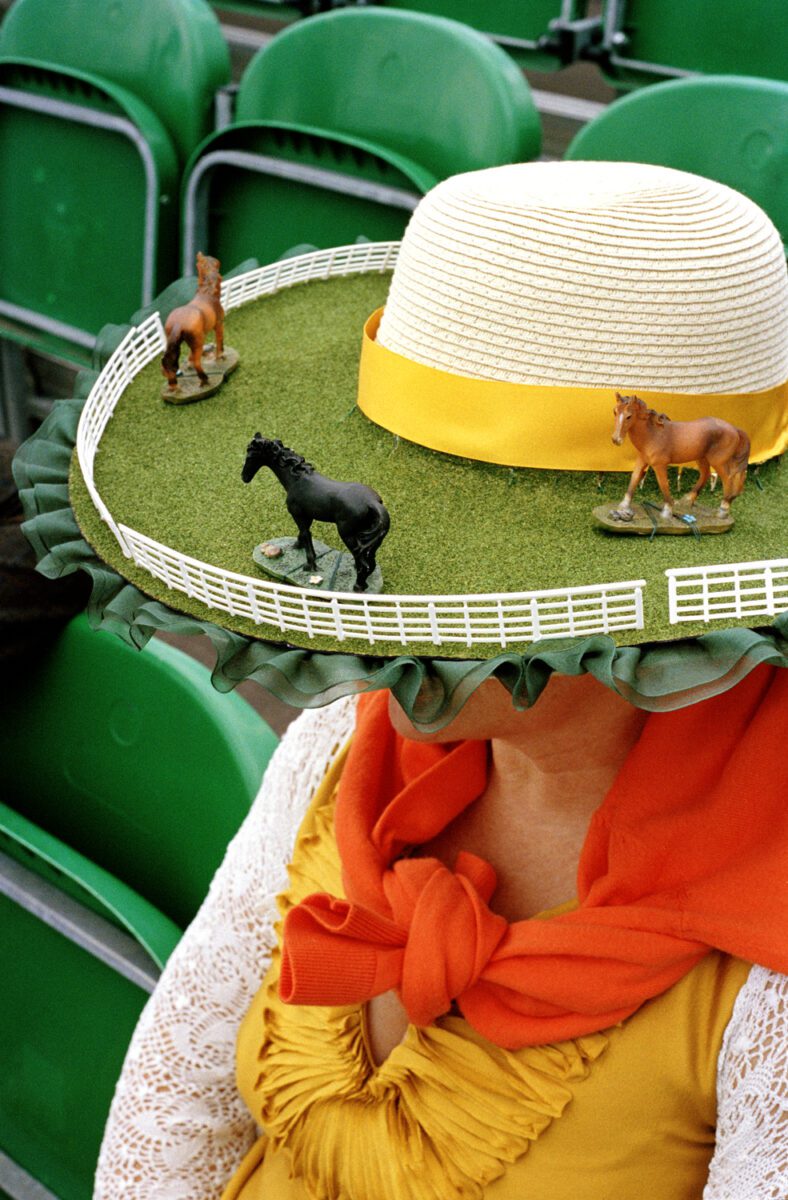
SG: It’s hard to choose a favourite image because each one carries its own story for me. But there are definitely some that make me smile. One is the Horsey Hat image. For most people at Ascot, the adrenaline rush comes from seeing their horse win. For me, it was spotting this woman’s extraordinary hat. I photographed her at the Ascot races wearing what felt like a self-made sculpture – complete with astroturf, plastic horses and a miniature grazing scene. To dress for the races is often a form of eccentric performance in itself, and I liked the subtle humour in her outfit. It felt like she was gently playing with, or even poking fun at, the pomposity of the event while fully participating in it at the same time.
A: What does the title – Tangerine Dreams – mean to you?
SG: Tangerine Dreams evokes the visual and emotional world of the project. There’s something magnetic about the bright shade of orange, somewhere between a warning sign and a sunset. It’s excessive, euphoric and full of life. So much of Tangerine Dreams is about communities coming together and orange somehow holds all of that for me. It mirrors the heightened energy running through the photographs: the chaos of banger racing, the theatricality of Traveller horse fairs, the warmth of Aladura spiritualist church gatherings and the vibrancy of seaside crowds. The title also reflects the Britain I encountered: a country that is layered, expressive, alive and full of unexpected stories. There is something optimistic about Tangerine Dreams. It speaks to possibility, curiosity and the joy of discovery.
A: The series include your photographs of funerals, including Martin Parr’s funeral earlier this year. What has documenting these events taught you about community and connection?
SG: The project captures funerals across the UK, from traditional religious ceremonies to highly personalised acts of remembrance. It looks at how ritual shapes the ways people mourn, remember and mark moments of transition, revealing practices that often remain outside public view. In doing so, it shows how faith, culture and identity influence the ways people say goodbye. What has stayed with me most is how funerals function as some of the most intense collective gatherings we experience today. They bring together family, friends and wider communities, yet this complexity is rarely visually represented. For me, the death rituals project sits within the same broader themes explored in Tangerine Dreams. Across both bodies of work, I’m interested in how people come together through shared experience, and how these moments reveal something about contemporary life in Britain.
A: Why do you think funeral photography is still relatively absent from visual culture?
SG: I think there are a few reasons behind it, and they sit somewhere between cultural discomfort, industry structure and social convention. In Britain especially, there’s a long-standing reluctance around talking about and addressing death – it’s often treated as something private, formal and slightly awkward rather than something openly discussed or visually documented. Unlike weddings or births, which are photographed and shared, funerals sit in a more restrained space. There’s a kind of social etiquette around not “looking too closely” at grief, which naturally extends into photography.
A: After all these years documenting Britain, what still gives you hope?
SG: My years spent photographing communities across Britain has shown me that, despite the divisions and challenges that often dominate public conversation, people still have a deep desire to come together. Across the country, people are gathering, celebrating, worshipping and finding ways to maintain meaningful connections. These acts might seem ordinary, but they are incredibly important. The longer I make work, the more I appreciate Britain’s diversity. There is an extraordinary range of cultures, histories and ways of life coexisting alongside one another. Ultimately, my work has left me with a belief that, even in a rapidly changing world, the need for connection remains constant. Again and again, I’ve witnessed people finding joy, support and meaning through shared experiences, and that is something I’m optimistic about.
Tangerine Dreams is at Martin Parr Foundation, Bristol until 6 September: martinparrfoundation.org
Words: Emma Jacob & Sophie Green
Image Credits:
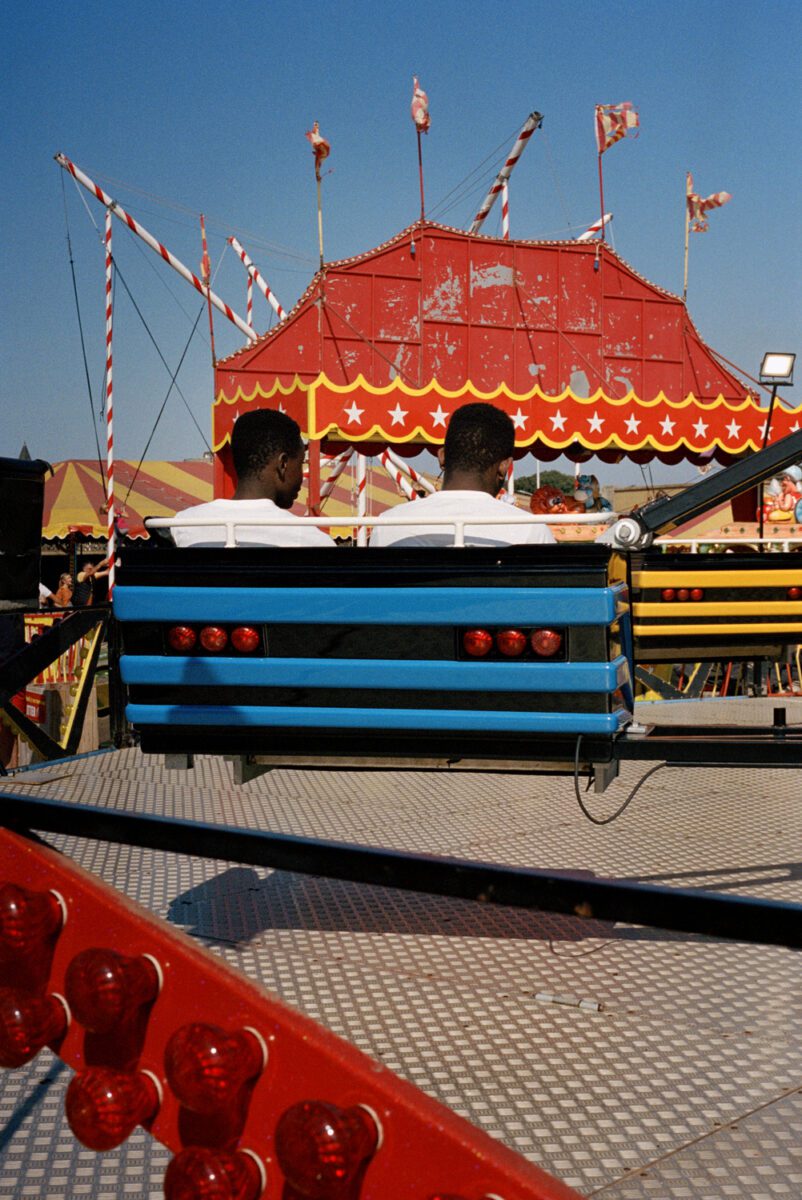
1&6. Sophie Green, Fair Ride Twins, Weston-Super-Mare Beach, Weston Super Mare, UK. From the series Beachology, 2020. © Sophie Green. Courtesy Martin Parr Foundation.
2. Sophie Green, Red Handbrake, Modified Nationals, Lincolnshire Showground, Lincolnshire, UK. From the series A Day At The Races, 2014. © Sophie Green. Courtesy Martin Parr Foundation.
3. Sophie Green, Horsey Hat, Ascot Racecourse, Ascot, UK. From the series Pedigree Power, 2016 © Sophie Green. Courtesy Martin Parr Foundation.
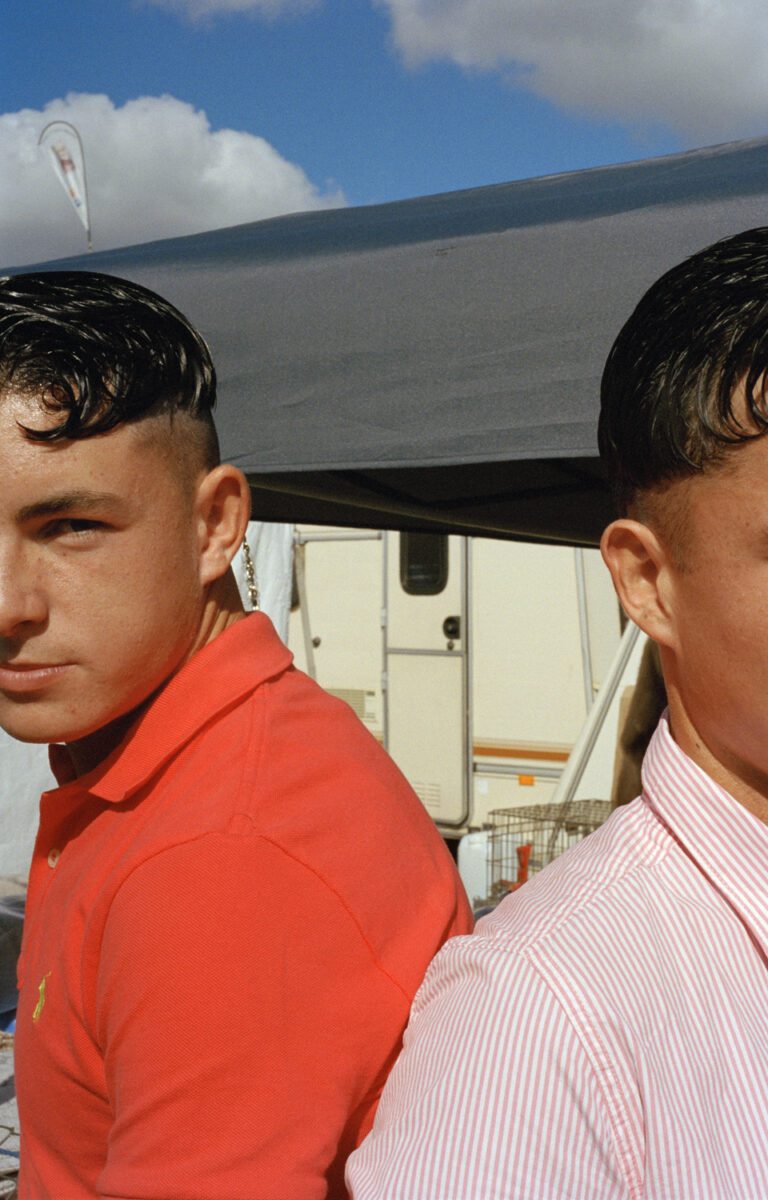
4. Sophie Green, Hair Match, Kenilworth Horse Fair, Warwickshire, UK. From the series Gypsy Gold, 2015. © Sophie Green. Courtesy Martin Parr Foundation.
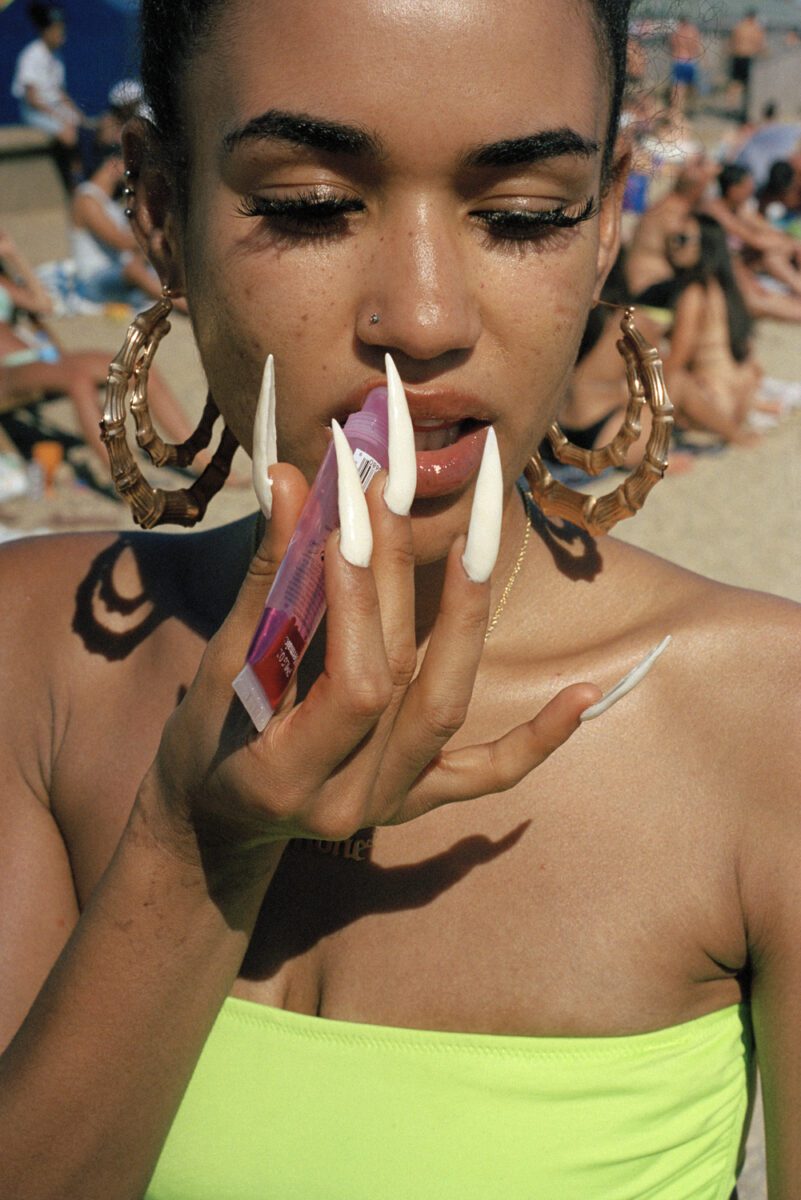
5. Sophie Green, Simone’s Nails, Southend-on-sea Beach, Essex, UK. From the series Beachology, 2020. © Sophie Green. Courtesy Martin Parr Foundation.


