

Fashion designer Yinghan Qian is profoundly influenced by Zen philosophy. The Buddhist practice literally means “meditation,” teaching that enlightenment is achieved through the realisation that we are already enlightened beings. In Qian’s designs, this concept comes to the fore as a foundational way of understanding existence and transformation, informing how she works with materials and symbols, and allowing new contexts to emerge throughout the making process. This approach sets her work apart from other artists, transforming fashion design into a form of self-examination. As Harpaar’s Bazaar China writes: “Lacrynette is reminding us that in the future fashion world, it may not be the loudest brands that are heard first, but those who quietly construct the grammar of authenticity.”
Born in China, Qian relocated to the US to pursue fashion design. She received her Bachelor of Science in Textile and Fashion Design from the University of Wisconsin-Madison, before furthering her technical training at the Fashion Institute of Technology in New York. She later earned her MFA in Fashion Design and Society at Parsons School of Design, where her practice expanded beyond garment functionality into philosophical and symbolic investigation. It was during this period that her work began to articulate fashion as a metaphorical structure rather than merely a product category. The artist received the 2025 Gold Award at the French Design Awards for Spatial Anchor Point, as well as the 2025 Gold Award in the American Good Design. Her piece A Second Without Inertia was presented at Not Year Art Runway in New York, featured in ELLE China, and formed part of a show at Purist Gallery London, covered by ArtDaily.
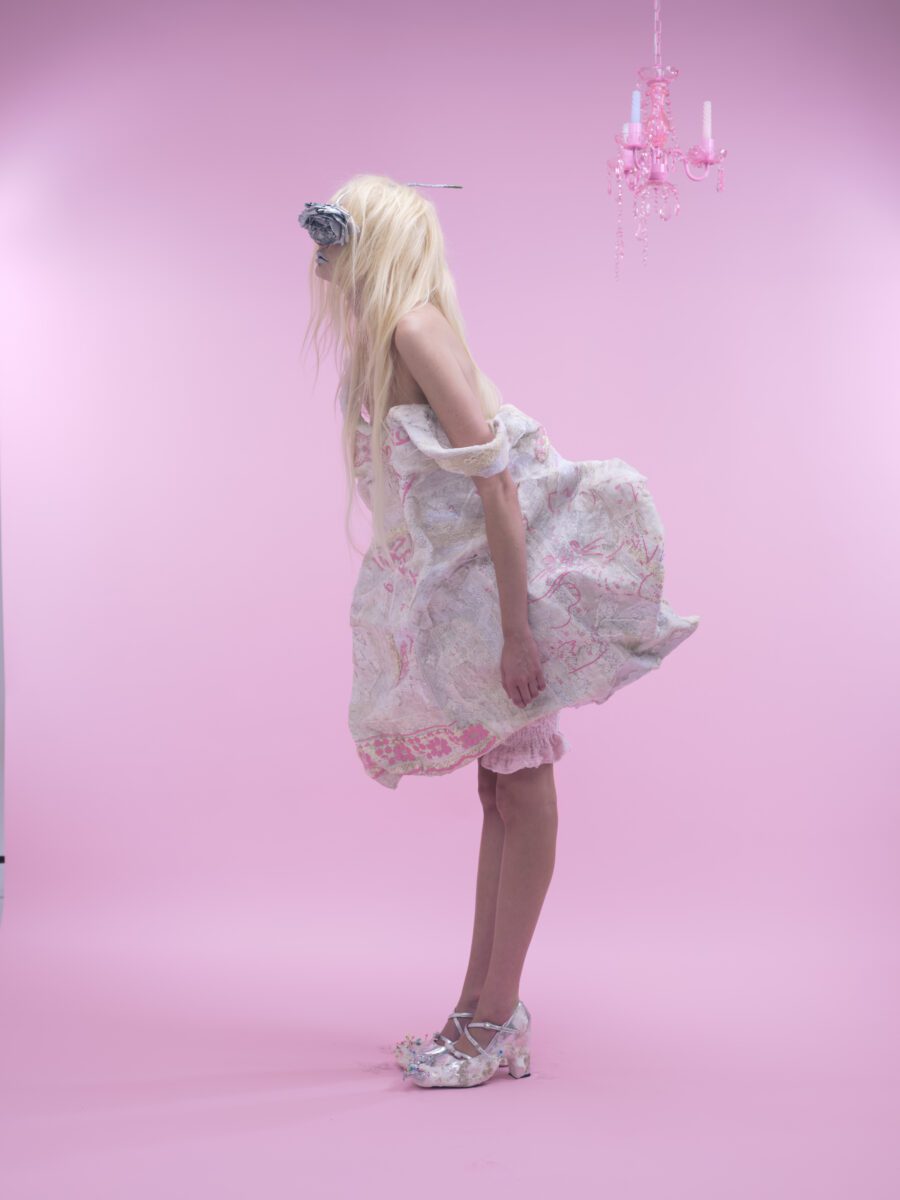
In 2025, Qian began formally developing her own fashion label, Lacrynette. Her aim was to create a brand that brought together conceptual inquiry and wearable structures. The first capsule collection for the line, A Toy, A Spell, explores the tension between childhood memory and adult structure. It responds to emotions that were never fully processed whilst growing up, remaining stored in the body and resurfacing at unexpected moments. The real appeal of the collection lies in its structure. Paper-doll dressing and the folded logic of origami create distinct, geometric shapes. Elements from childhood wardrobes are deconstructed and taken from their original context to produce something like lies between the innocence of youth and the realities of adulthood. Baby dresses are transformed into halter tops, lace bloomers reveal themselves beneath structures suiting, pumpkin shorts layer over fitted pieces. The collection debuted in an experimental runway presentation at Ovary Space in Shanghai, combining elements of performance art and a fashion show. It later received media coverage from Harper’s Bazaar China (Online) on July 20, 2025.
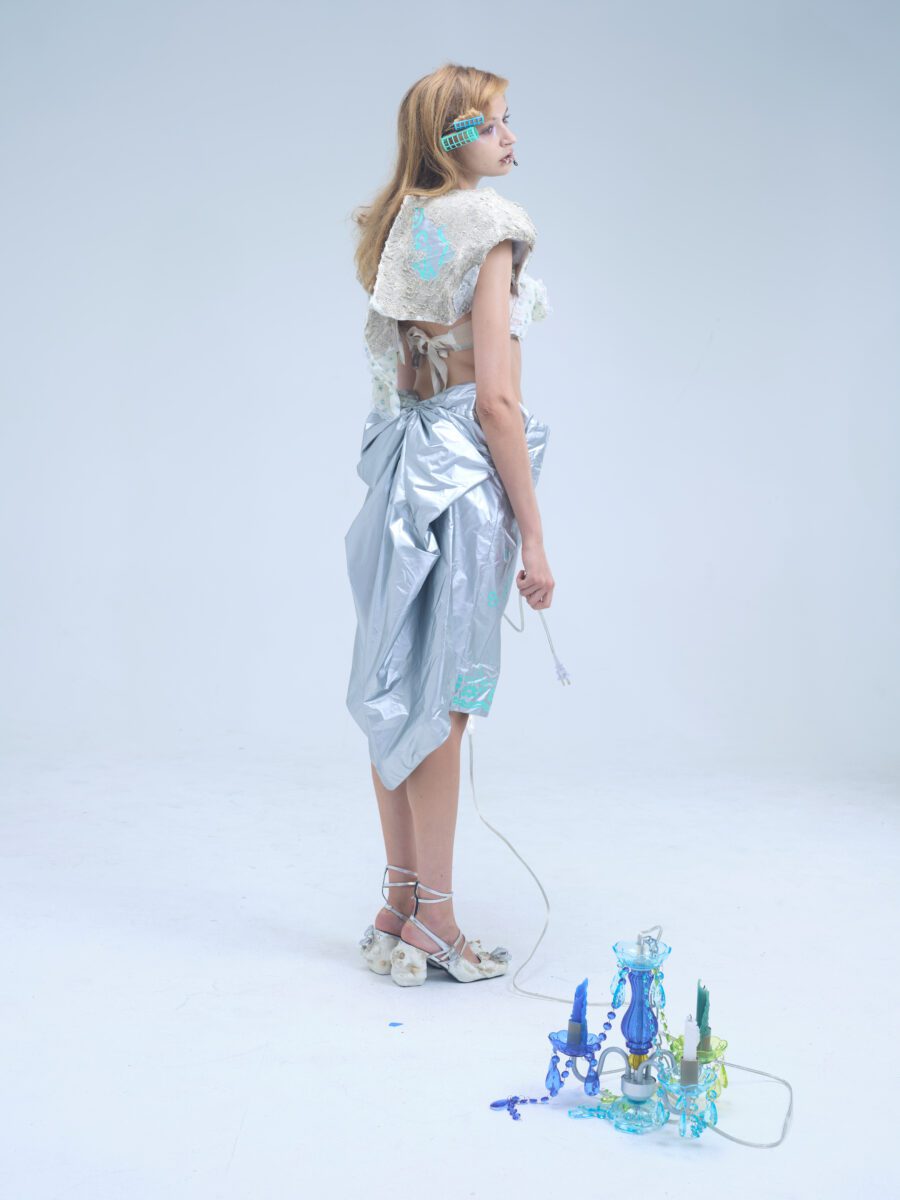
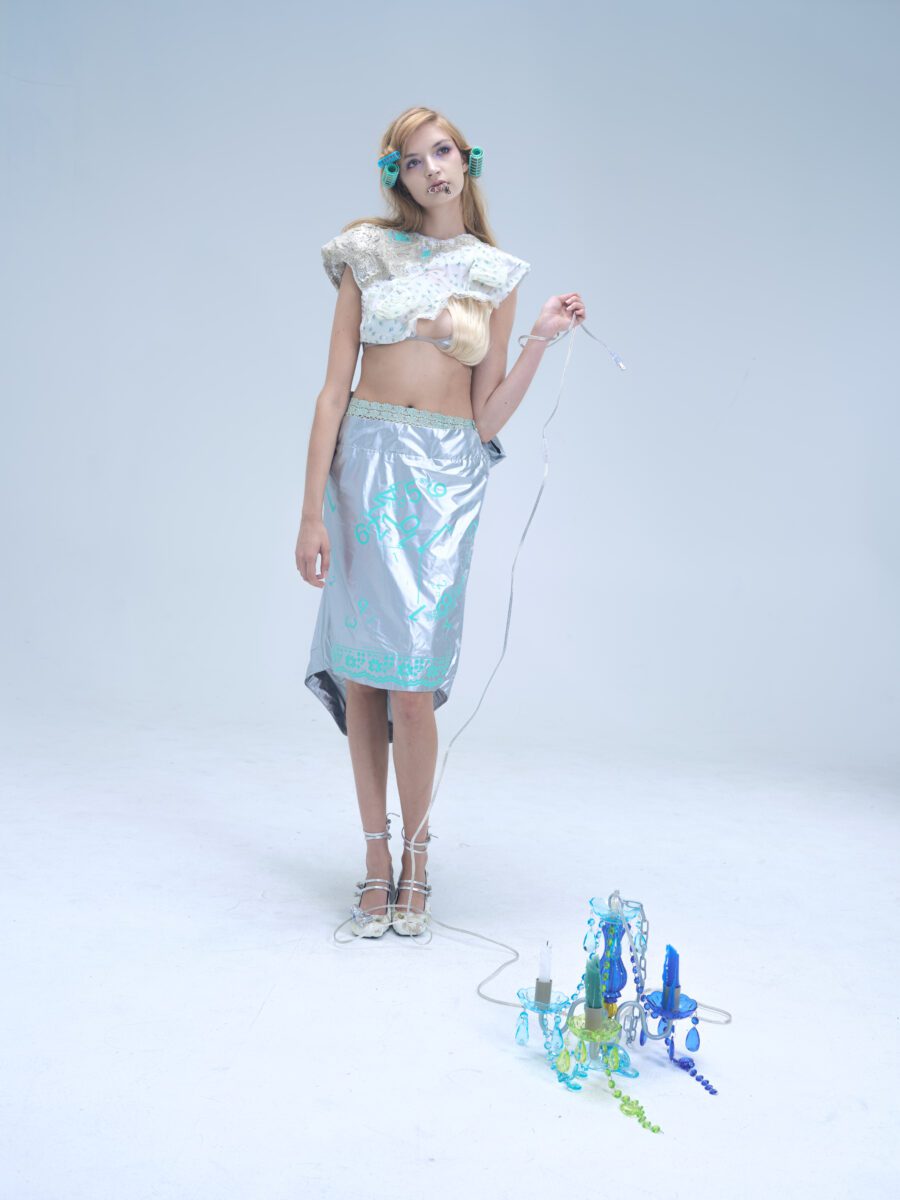
Qian’s concern with Zen is the focal point of XIANG, which draws from the worship of Buddha as its inspiration. The artist writes: “On the one hand, the broken statues and murals made me think about time and history in the real and digital worlds. On the other hand, the act of worshipping Buddha, one of the core rituals, made me think about the wholeness of body and mind.” Designs take inspiration from ancient broken frescoes, as well as 3D voxels and point clouds. Here, ancient rituals collide with digital objects, offering a contemplation on the passage of time. Qian continues: “In Buddhism, hair symbolises corporeal bindings and connections in the real world, and its growth bears the historicity of time. Therefore, I included hair as an element in my fabric design. At the same time, cables and earphones wires appear as another form of binding – connecting the body and digital space.” The piece was featured in an editorial for SICKY Magazine in March 2026, a platform known for spotlighting the next generation of tastemakers.
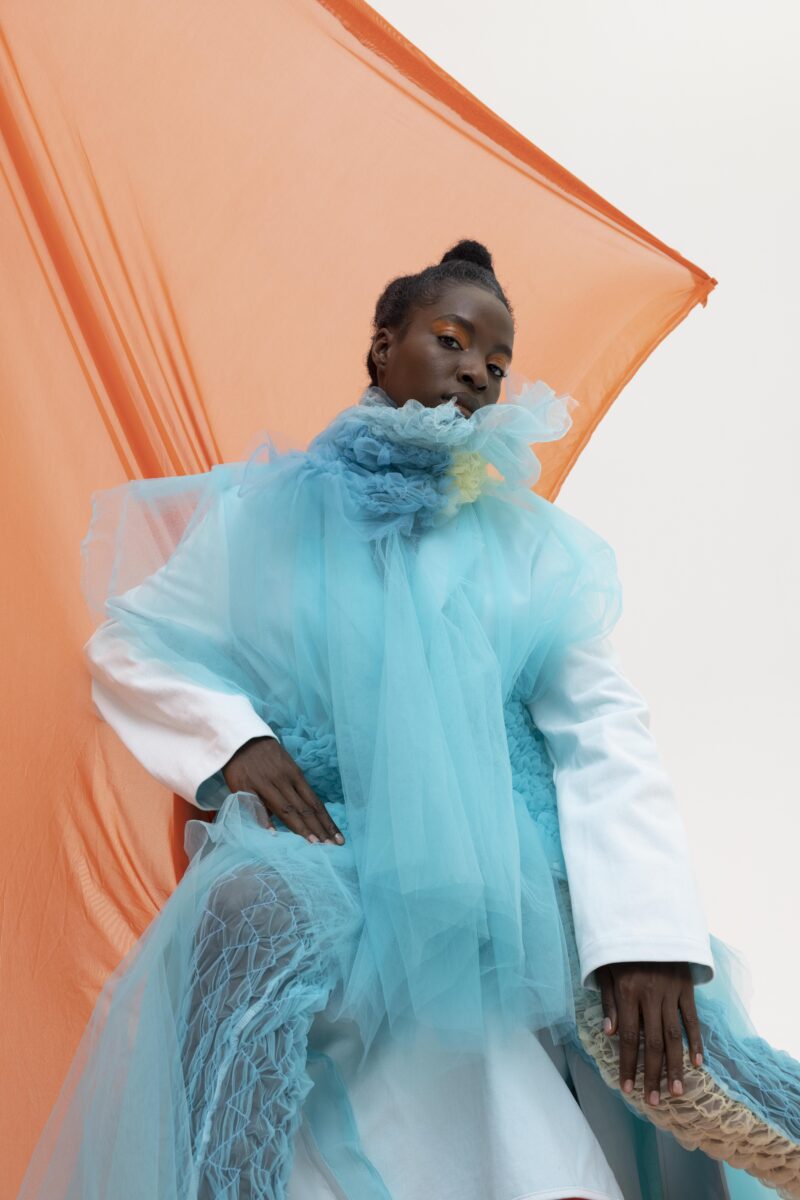
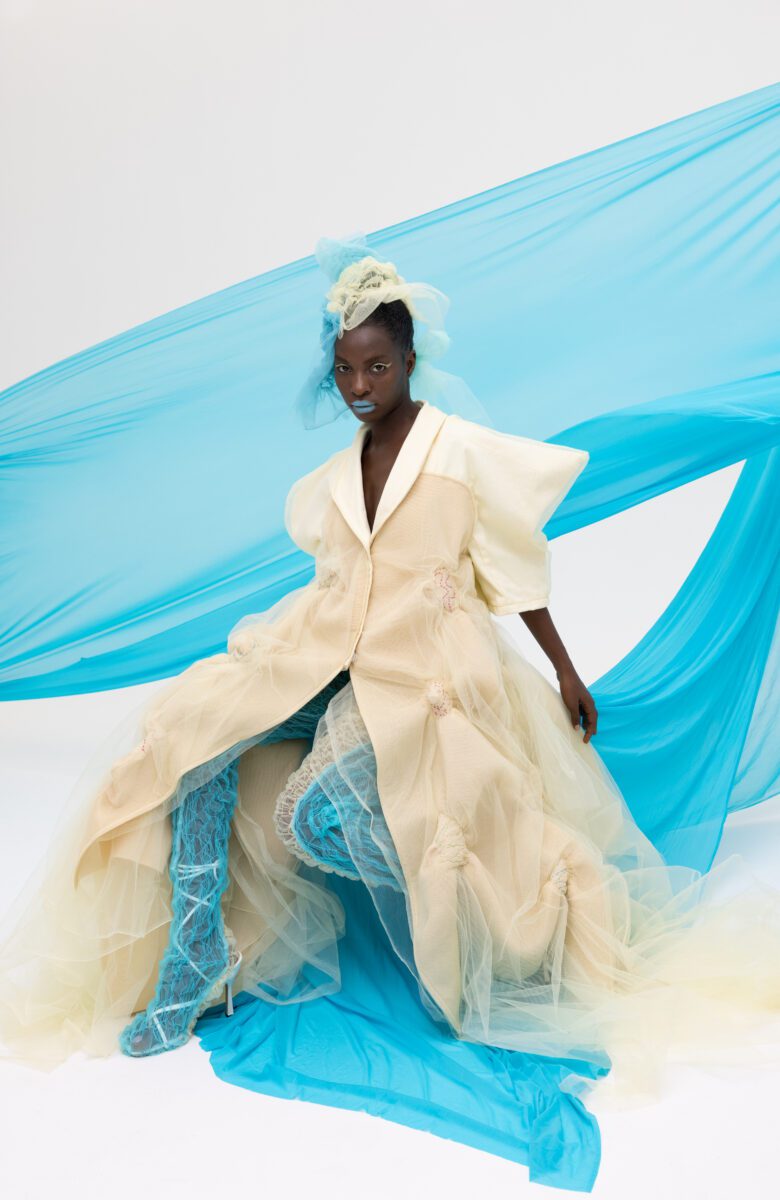
Dissonant Chord, a fashion line created in 2021, takes a more intimate and personal stance. It stemmed from a car accident that the artist was involved in. She explains: “Our bodies, even though they have evolved for thousands of years, remain extremely vulnerable when hit in a crash. I was confronted with the absurdity of this vulnerability. I wanted to explore the boundary between harmony and disharmony, distortion and smoothness, normal and grotesque.” The project was inspired by “Graham,” a lifelike figure depicting what a human would look like if the species evolved to survive car accidents. Qian combines his enlarged skull, strengthened ribs, extra joints and airbag-like torso with cushion impacts that mirror American football players’ protective clothing. “I applied geometric gathering patterns on bright-coloured mesh to simulate deformed and mutated body parts evolved after collision. Through distortion and displacement, the garment becomes a speculative body – hovering between protection and rupture.”
Qian’s practice is, undoubtedly, varied and far reaching. Yet, it maintains a harmony through its focus on one key question: how can fashion tell us something essential about the human condition? The designer’s visual language is distinct, sharp and incisive – bringing aspects of modern life into her sartorial creations. Outfits go beyond the decorative, examining how we construct, present and reckon with identity.
Words: Emma Jacob
All images courtesy of Yinghan Qian.


