

Exploration and absence form the twin axes of Sophie Calle’s (b. 1953) compelling body of work. From the delicate interplay of text and image to her investigations into the seen and unseen, her art occupies a space between intimacy and universality, curiosity and revelation. Themes of love, memory, longing, beauty, and mortality pulse throughout her practice, inviting viewers to reconsider the boundaries of perception. In her latest exhibition, Something Missing?, opening 26 March at the Louisiana Museum of Modern Art in Denmark, Calle presents seven major series alongside additional works spanning nearly four decades. Totalling more than 300 individual pieces of photographs, texts and videos, the exhibition fills the museum’s West Wing, tracing the subtle but profound impact of her investigations on the human condition. The exhibition’s very title gestures toward the gaps and absences that underpin our experiences.
Understanding Calle’s work demands attention to her methodology, which blends autobiographical narrative with conceptual rigour. She first gained attention in the late 1970s through projects that blurred private and public life, deploying photography and text as a means of storytelling. Over five decades, she has cultivated a prodigious oeuvre that navigates interpersonal relationships, memory, and perception, often with warmth, incisive humour, and poetry. Working in both French and English, her works interrogate the banal and the philosophical alike. Her practice positions the everyday as a lens through which the extraordinary can be apprehended, and the ordinary as the scaffold of profound insight.
Born in Paris, Calle initially pursued literary studies before turning to photography and performance in her early 20s. Her first notable works involved tracking strangers in the streets and documenting their lives in meticulous photographic and textual detail. These early experiments established her signature approach: an intertwining of narrative and observation, the subjective and the objective. Calle’s work has been widely exhibited, with solo shows including Take Care of Yourself (2010) at the Louisiana Museum, which transformed a personal experience into a communal reflection. Her ongoing collaboration with institutions across Europe and the United States has solidified her reputation as one of the most influential contemporary conceptual artists, whose practice resonates across generations.
Recent exhibitions and institutional acquisitions underscore Calle’s enduring relevance. In 2024, the Louisiana Museum acquired The Blind (1986), an early work that explores the visual imaginations of people born without sight, marking its first display at the museum in Something Missing?. This inclusion reinforces her longstanding engagement with perception and absence. Over the years, Calle has consistently probed the relationship between the visible and invisible, as well as the inner and outer worlds, situating the viewer at the intersection of empathy, curiosity, and aesthetic contemplation. Her capacity to render private experience public, while retaining a profound respect for her subjects.
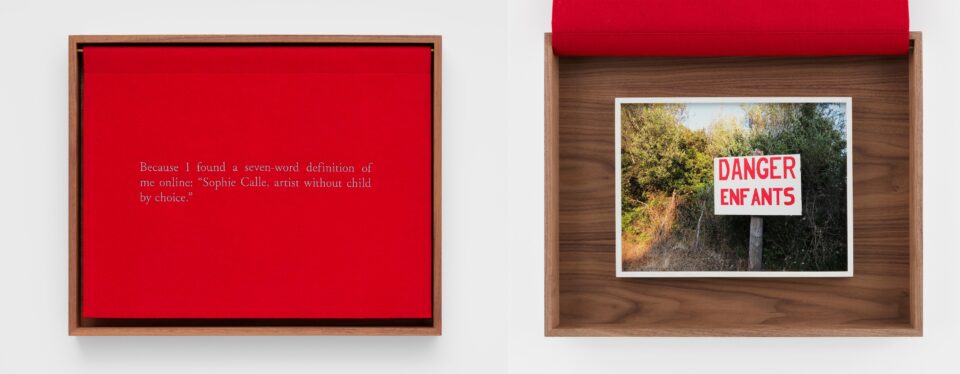
Careful attention to the featured works reveals the thematic breadth of the exhibition. Because (2018–2023) layers embroidered text over photographs, allowing narratives to emerge from concealed imagery. In Picassos in Lockdown (2022), Calle documented paintings covered during the covid pandemic, transforming the obscured masterpieces into ghostly presences she immediately photographed. On the Hunt (2017–2024) juxtaposes images of hunting stands and nocturnal wildlife with texts drawn from personal ads spanning over a century, interrogating desire, pursuit, and the ethics of observation. Calle’s Hunter and Prey? What do you see? (2013) references the aftermath of the Isabella Stewart Gardner Museum theft, inviting others to interpret the empty frames left behind, while Voir la mer (2011) records the first encounter of individuals who had never seen the sea. Finally, her ongoing reflection on mortality is crystallised in Catalogue raisonné of the unfinished (2023) and The End (2013–2023), which collectively examine the unfinished, the ephemeral, and the inevitability of absence.
Influence and dialogue animate Calle’s position within the broader contemporary landscape. Artists such as Sophie Calle’s conceptual predecessor Cindy Sherman, who reimagines identity through photographic self-portraiture, resonate with Calle’s own blending of fiction and reality. Similarly, Walid Raad’s investigations into history and perception parallel Calle’s fascination with narrative construction, while Ragnar Kjartansson’s performative works exploring endurance and memory echo her attentiveness to human vulnerability. Each of these artists engages with questions of presence, absence, and mediated experience, yet Calle’s work remains distinctive for its combination of intimacy, humour, and an almost literary sensibility. Collectively, this constellation of practitioners illuminates the ways contemporary art can interrogate life’s complexities through both meticulous documentation and poetic licence.

Memory and absence are recurring motifs that permeate Calle’s practice and resonate with audiences across cultural contexts. Her art challenges conventional hierarchies of significance, demonstrating that even the most banal experiences can carry profound insight. The interplay of image and text, public and private, sight and blindness, encourages viewers to participate actively in meaning-making. This commitment to perception as an ethical as well as aesthetic practice has influenced generations of contemporary artists and has ensured her place within the conceptual canon. Something Missing? consolidates these concerns, offering a retrospective yet forward-looking encounter with her work, situating Calle’s oeuvre within ongoing dialogues around presence, loss, and human empathy.
Returning to the exhibition itself, visitors will encounter works not previously shown in Denmark, including those produced between 1986 and 2024. The English-language versions of her texts allow a broader audience to access the nuances of her narrative strategies. Central to the exhibition, The Blind (1986) exemplifies Calle’s capacity to merge human empathy with conceptual rigor, while Picassos in Lockdown transforms temporary absence into a potent visual meditation. Curated by Tine Colstrup, the exhibition is accompanied by an English-language catalogue with essays by Laurie Anderson and Yve-Alain Bois, alongside a new interview by Édouard Louis, each text drawing viewers closer to Calle’s artistic vision. The Louisiana Channel’s recent studio interview with Calle offers further insight into her process, highlighting the intimacy and thoughtfulness with which she approaches her practice.
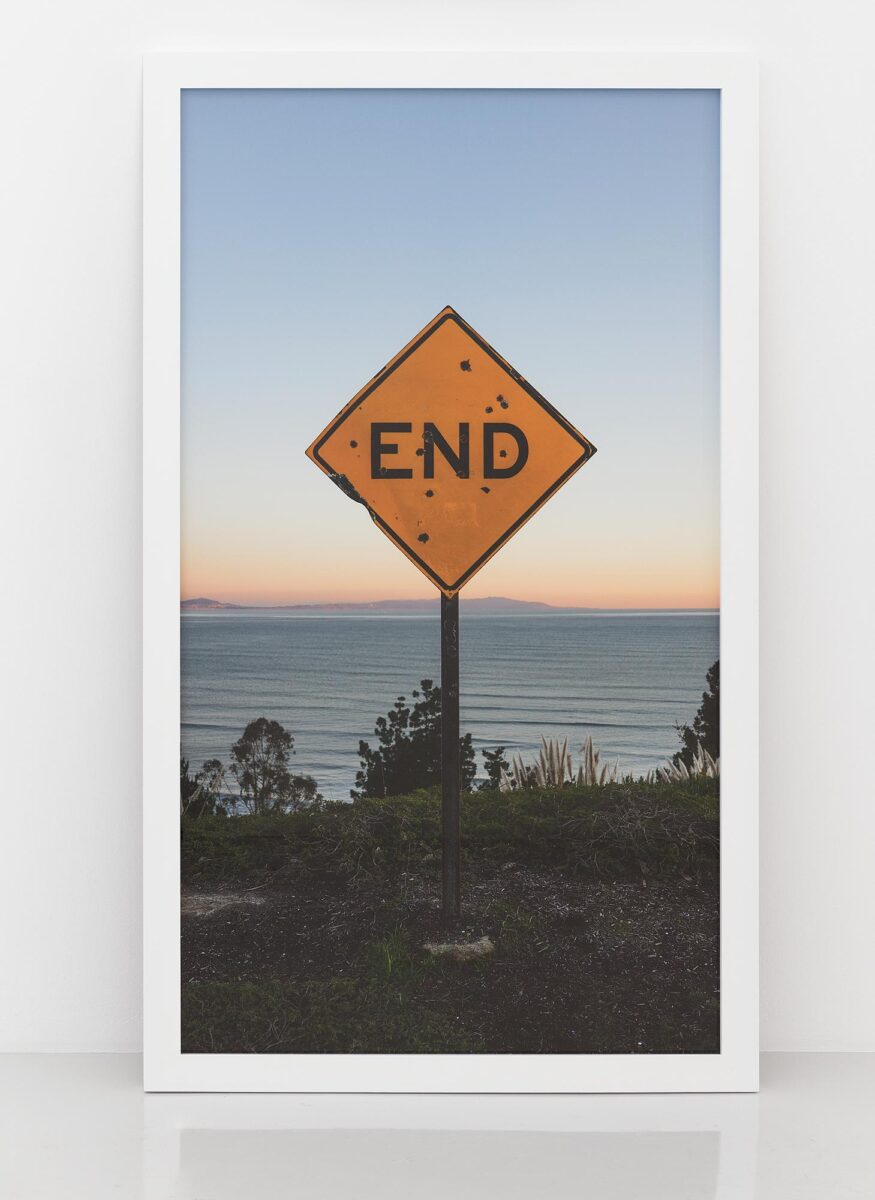
Something Missing? affirms Sophie Calle’s extraordinary ability to render the imperceptible perceptible, to map the unseen territories of emotion, memory, and imagination. Over decades, her work has consistently demonstrated that art can be a bridge between the individual and the collective, the private and the public, the banal and the profound. With its careful curation, rich historical context, and novel presentation of lesser-seen works, this exhibition offers both loyal followers and new audiences a singular opportunity to encounter the full sweep of her artistic inquiry. Calle’s legacy is one of attentiveness, empathy, and subtle revelation, reminding viewers that even in absence, something essential always persists. Ultimately, the exhibition is a testament to the human impulse to make sense of the world through art.
Sophie Calle is at Louisiana Museum of Modern Art, Copenhagen from 26 March – 6 September: louisiana.dk
Words: Shirley Stevenson
Image Credits:
All images Sophie Calle at Louisana Museum of Modern Art. Courtesy of the artist.


