

“More is more” is the phrase most associated with Maximalism – a design philosophy defined by its celebration of bold colours, layered patterns and rich textures. It has roots in 17th century Baroque and Rococo, resurfacing in the 1980s with the Memphis Group’s rejection of minimalism. Today, it’s experiencing a renaissance in the form of so-called “dopamine décor” and is being picked up by a new vanguard of creatives. Enter Precious Seronga, an emerging Tanzanian artist whose new book, Afro Maximalism, “celebrates an aesthetic of excess, women of colour and African textiles.” Right now, it’s being stocked in an array of “non-traditional” creative spaces, such as London salons and tattoo studios.
The title is organised by hue. “Colour psychology plays a huge part in my work,” Seronga explains. “I’m using the illustrative style of maximalism as a form of art therapy.” There are chapters on blue and its feeling of calmness; red, which represents passion and anger; and pink, which “provides contentment”. An array of patterns come together here, from Moroccan tiles to flora native to the African continent, as well as original textile prints, star-filled skies and glistening oceans. Some compositions are adorned with jewels.
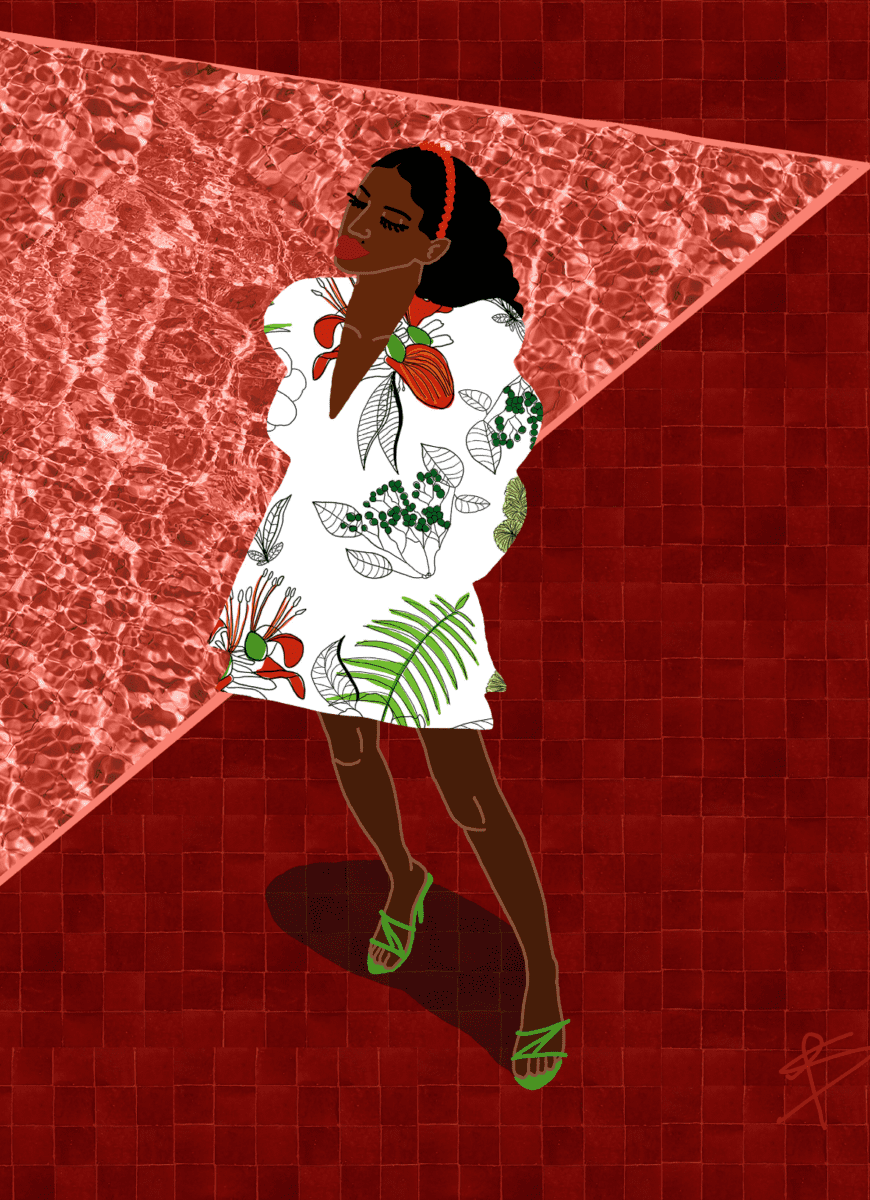
What’s perhaps most powerful is how Seronga uses the visual language of maximalism to represent women of colour. Afro Maximalism opens with a chapter on green, which Seronga cites as being associated with “balance and harmony.” Inside, readers encounter works such as Mint Green Sea, a contemporary take on Norman Parkinson and Grace Coddington’s sartorial photography. The original image, shot for British Vogue in 1975, features Jerry Hall, a white model, poised to jump headfirst into Lake Sevan in Armenia. In Seronga’s interpretation, Hall is replaced with a Black subject, also ready to dive, surrounded by layered shades of green. The artist’s use of collage is masterful, with the flatness of the tiles contrasting with radiant light glinting across the water – redressing the balance in terms of both composition and history.
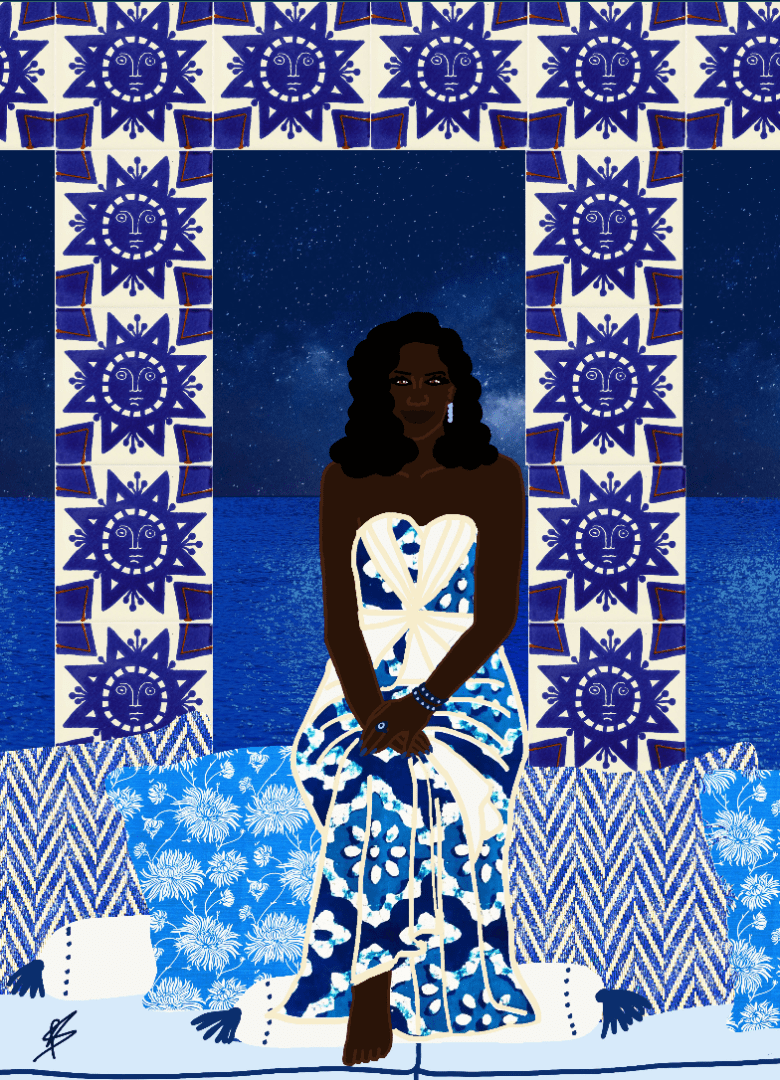
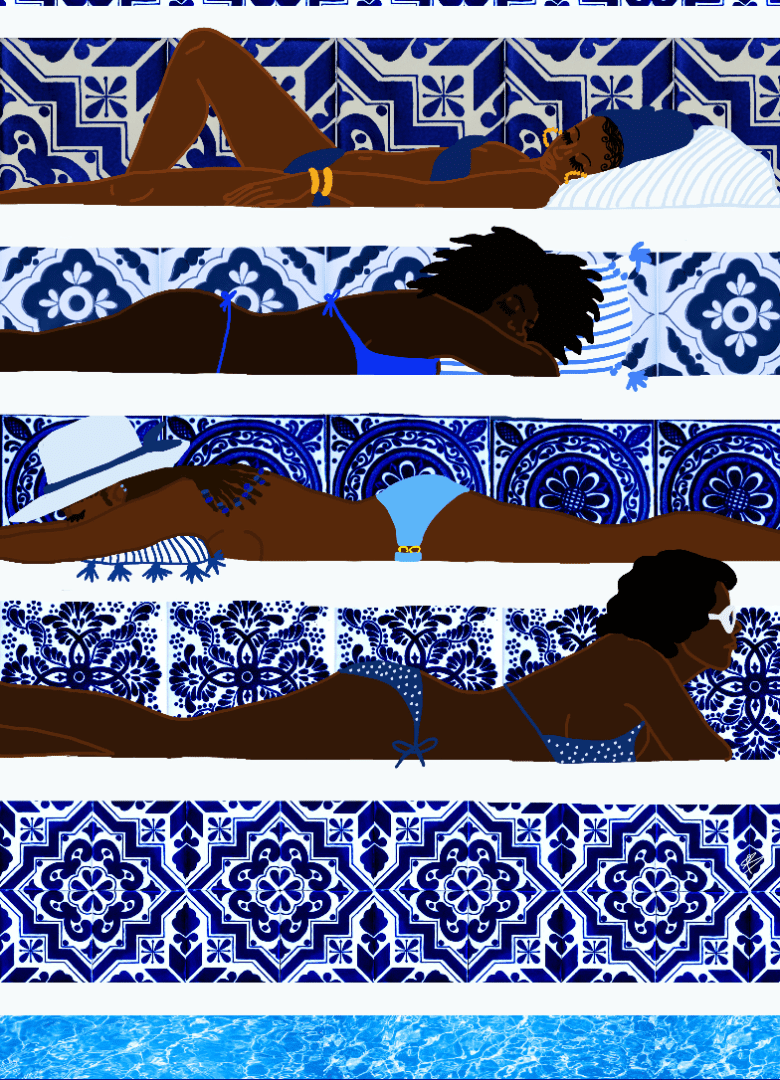
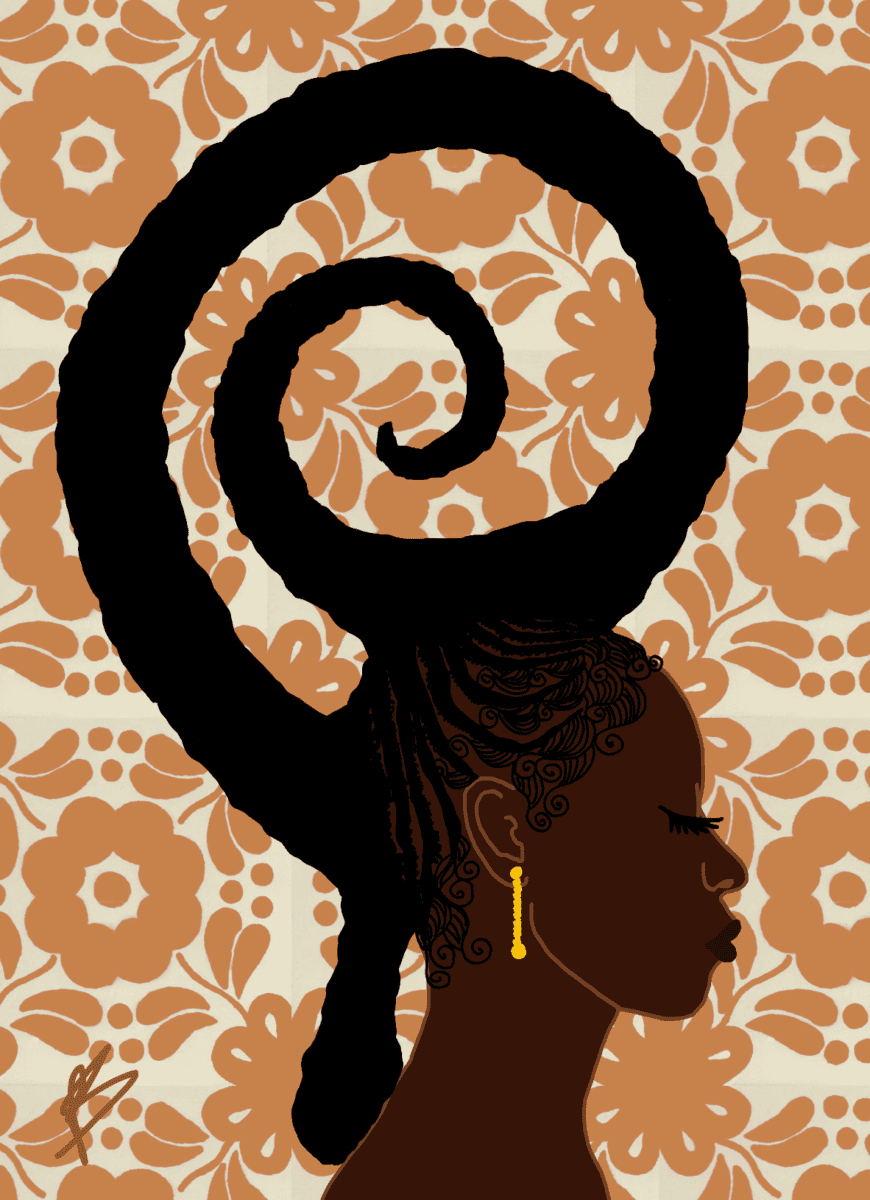
Mint Green Sea isn’t the only time Seronga reinvents the canon. In Black Venus, she depicts the Roman goddess of love, sex, beauty and fertility as a woman of colour, adopting a Sandro Botticelli-esque pose. Works like these are vital for representation, offering fresh perspectives on familiar art historical icons. What Seronga is doing feels particularly urgent right now, when art institutions are still grappling with legacies of exclusion. Black women are front-and-centre throughout the entirety of Seronga’s book. There is a celebration of the “versatility and creativity” of Black hair in Afro Coco, as well as Golden Hour, which champions “the glow of Black skin.” Later in the collection, in the Purple section, Seronga addresses the “Angry Black Woman” narrative via Wrath – a powerful subversion of harmful stereotypes as part of a series on the seven deadly sins. All of this is communicated through Seronga’s signature maximalist style, where colours pop, patterns collide and subjects meet the viewer’s gaze with power and agency.
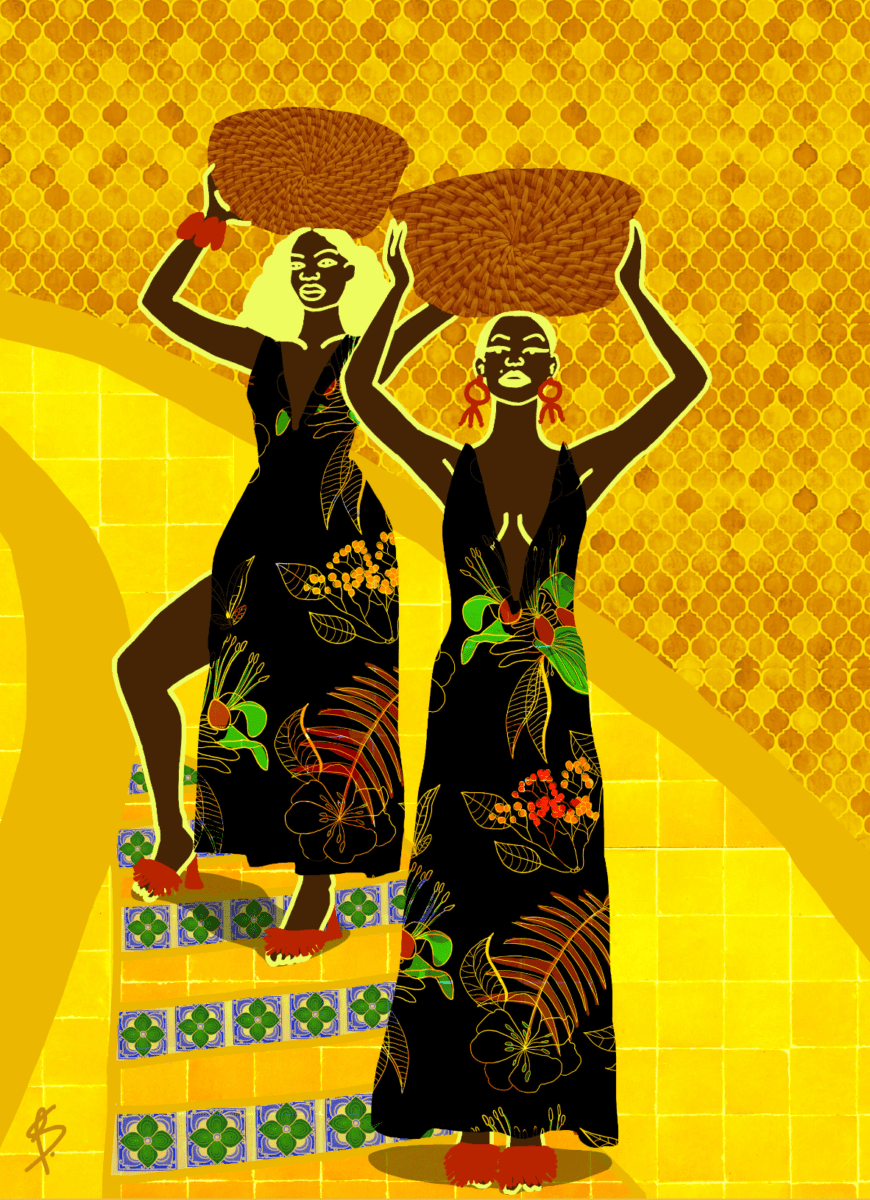
Seronga’s work can be read within the tradition of contemporary icons like Kerry James Marshall, whose paintings place Black figures at the forefront, making visible those who are absent from the Western canon. Her use of collage, meanwhile, suggests Mickalene Thomas, who is continually expanding the representation of Black women in art history through mixed media photo collages and bejewelled paintings set within elaborately decorated interiors. In Thomas’ work, themes of desire, memory, sexuality and transformation come to the fore. Seronga likewise “shows the female form as sensual and beautiful, rather than in an objectifying and sexual way.” Readers might also be reminded of photographic duo Cooper and Corfer, dedicated to foregrounding women’s stories through dense multilayered compositions.
Precious Seronga is fast becoming one-to-watch, with recognition from La Guarimba International Film Festival, Meliá Hotels and Monzo in just the past couple of years. She’s gaining momentum, laying the groundwork for future collaborations across business, culture and hospitality. Beyond this, Seronga is making inroads in the art world, exhibiting internationally and publishing books and prints. There is clearly a demand for her voice – and it’s only getting louder. By abandoning restraint in favour of layered narratives, saturated colour and heritage patterns, Seronga is building a new maximalism that mirrors the complexity of Black womanhood. These works are designed to “evoke joy” – and they do so, in abundance.
Words: Eleanor Sutherland
Afro Maximalism is stocked in London at:
The Blue Tit, Brixton; Parliament Tattoo, Finsbury Park;
Rye Lanez Tattooing, Peckham; The Bohemians, Deptford.
Image Credits:
1. Image courtesy Precious Seronga.
2. MINT GREEN SEA, image courtesy Precious Seronga.
3. NYEKUNDU, image courtesy Precious Seronga.
4. CASA AZURE, image courtesy Precious Seronga.
5. CASA AZURE, image courtesy Precious Seronga.
6. AFRO COCO, image courtesy Precious Seronga.
7. Image courtesy Precious Seronga.


