

One of Gaza’s most esteemed art spaces, housing a collection of more than 20,000 works, was completely destroyed by Israeli forces during a two-week raid on Al-Shifa hospital and the surrounding neighbourhood in Gaza City. Shababeek for Contemporary Art, known as Shababeek (which means ‘windows’ in Arabic), served as a cornerstone for the visual arts in Gaza.
Israeli forces left Al-Shifa hospital—the biggest in Gaza—on 1 April after the two-week operation by special forces, who detained hundreds of suspected Palestinian militants and destroyed buildings. Israel said it killed hundreds of Hamas fighters who had based themselves there; Hamas and medical staff deny fighters were present.
As Israel’s military withdrew, images laid bare the destruction to the hospital and its neighbourhood.
“I have photographed many wars in Gaza but I have never seen images like this,” Shareef Sarhan, one of Shababeek’s co-founders, tells The Art Newspaper from Istanbul, Turkey. “Every building in this area is gone.”
The centre held a rich variety of works, including paintings, sculptures and prints Shababeek for Contemporary Art
“This war is the first time I am not there,” says Sarhan, an artist, who had travelled with his family to see his son in Istanbul when the war broke out in Gaza. He has photographed several previous wars for international organisations such as the UN.
The centre housed a rich variety of works, featuring paintings, sculptures and photographs, including around 5,000 by Sarhan, who says he was heartbroken when videos and images of Shababeek’s destruction emerged. “All my artwork, my archives, all my memories are in this place,” he says. “My wife called it my second home, but actually it was my first home; every day from morning until night I was there.”
Through the arts you can make everything: hope, love, peace, dreams
Shareef Sarhan, co-founder, Shababeek
The seeds for Shababeek were sown in 2003, when Sarhan and two other artists, Basel El Maqosui and Majed Shala, returned to Gaza following a group exhibition in Ramallah and began to organise art activities in public spaces.
“We established the first arts workshop in Gaza in 2005 and we obtained funding for small projects, workshops and exhibitions,” El Maqosui tells The Art Newspaper. Since the war he has been displaced several times and is now living in a tent in Rafah, in the south of the strip.
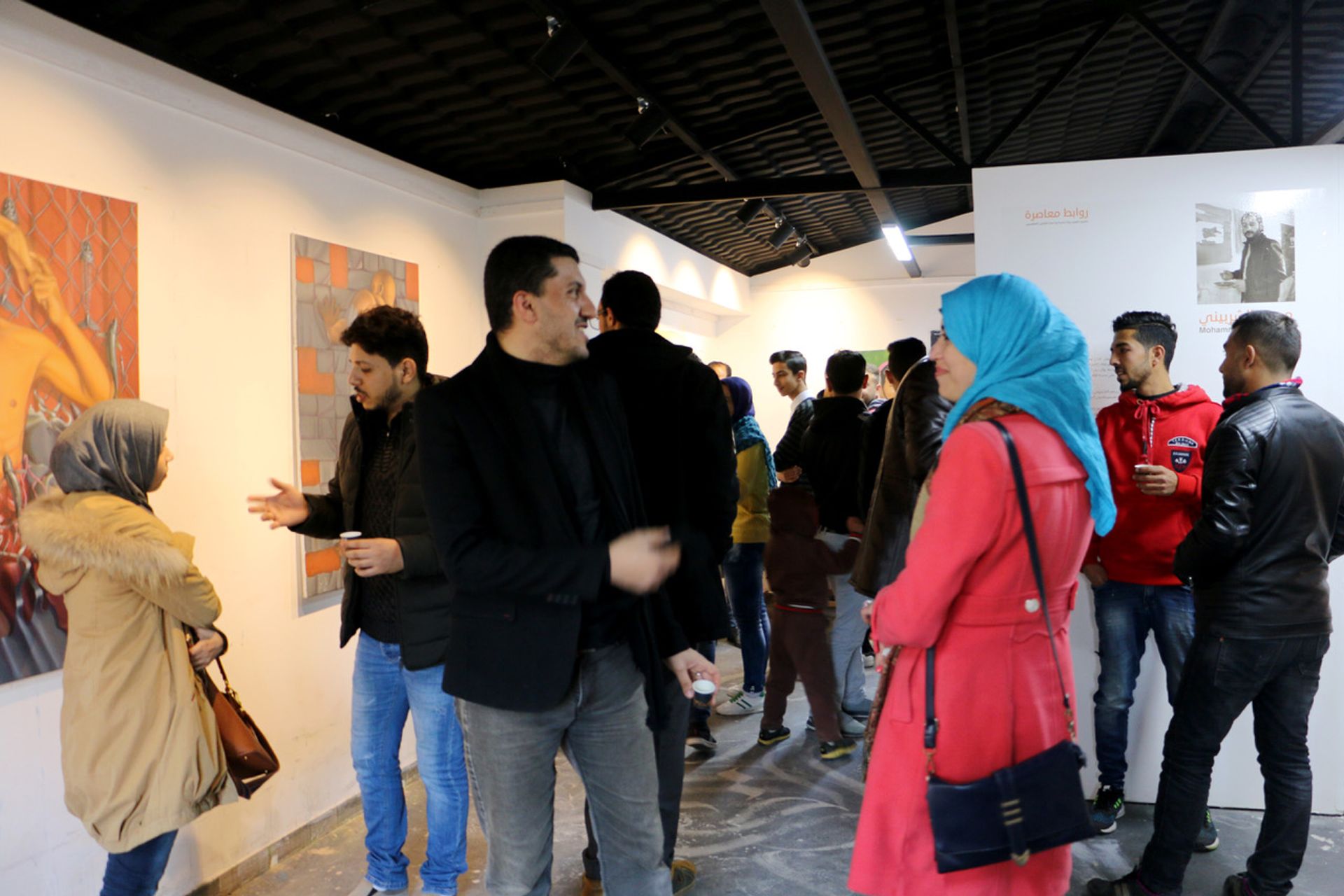
Shababeek was a thriving arts hub for the local Gazan community Shababeek for Contemporary Art
After Hamas took control of Gaza in 2007, Israel and Egypt tightened the blockade of the territory, restricting the flow of goods to basic daily necessities. Sarhan says this shift resulted in a dearth of funding and support for the cultural sector, especially the visual arts, as the international community severed ties with Gaza.
Nurturing the arts
In 2009 Shababeek was formally established when Sarhan, El Maqosui and Shala rented an old house in Gaza City. The centre’s mission was to cultivate the arts and nurture artists from diverse backgrounds and age groups across Gaza.
Despite funding constraints and the challenges of daily life—including a lack of art materials, which were entirely banned by Israel at one point—the group organised numerous exhibitions, workshops and seminars for artists between 2009 and 2017. The centre also focused on supporting the mental health and development of children dealing with the trauma of recurring wars and the restrictions of living under a blockade.
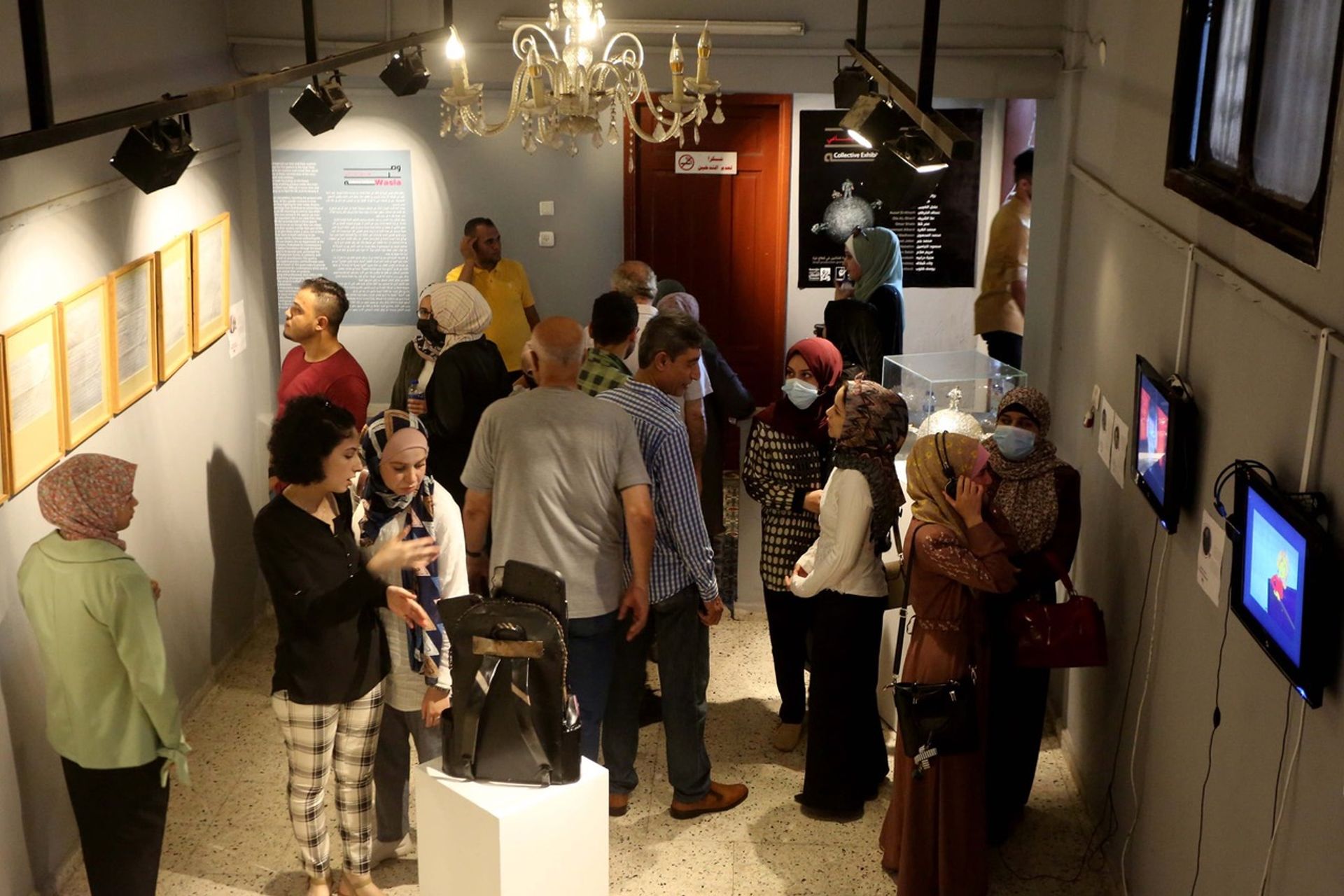
An opening at Shababeek; the centre ran numerous events, workshops and education programmes Shababeek for Contemporary Art
“If you want to change any community you have to use culture and art. It is a soft power, [a] soft resistance for change,” Sarhan says. “Through the arts you can make everything: hope, love, peace, dreams. You can rebuild the community and people”
In 2017 Shababeek moved to its first permanent location. The following year, a generous visual arts grant, funded by the Swedish government and administered by the Al-Qattan Foundation, enabled the expansion of its programme, supporting established artists, nurturing young artists and students, and launching Gaza’s first artist residency programme.
“We supported a lot of artists. We gave them [art materials] and funds to produce artwork,” Sarhan says. “We helped train [students] in how to make new material, new mediums. We gave them space.”
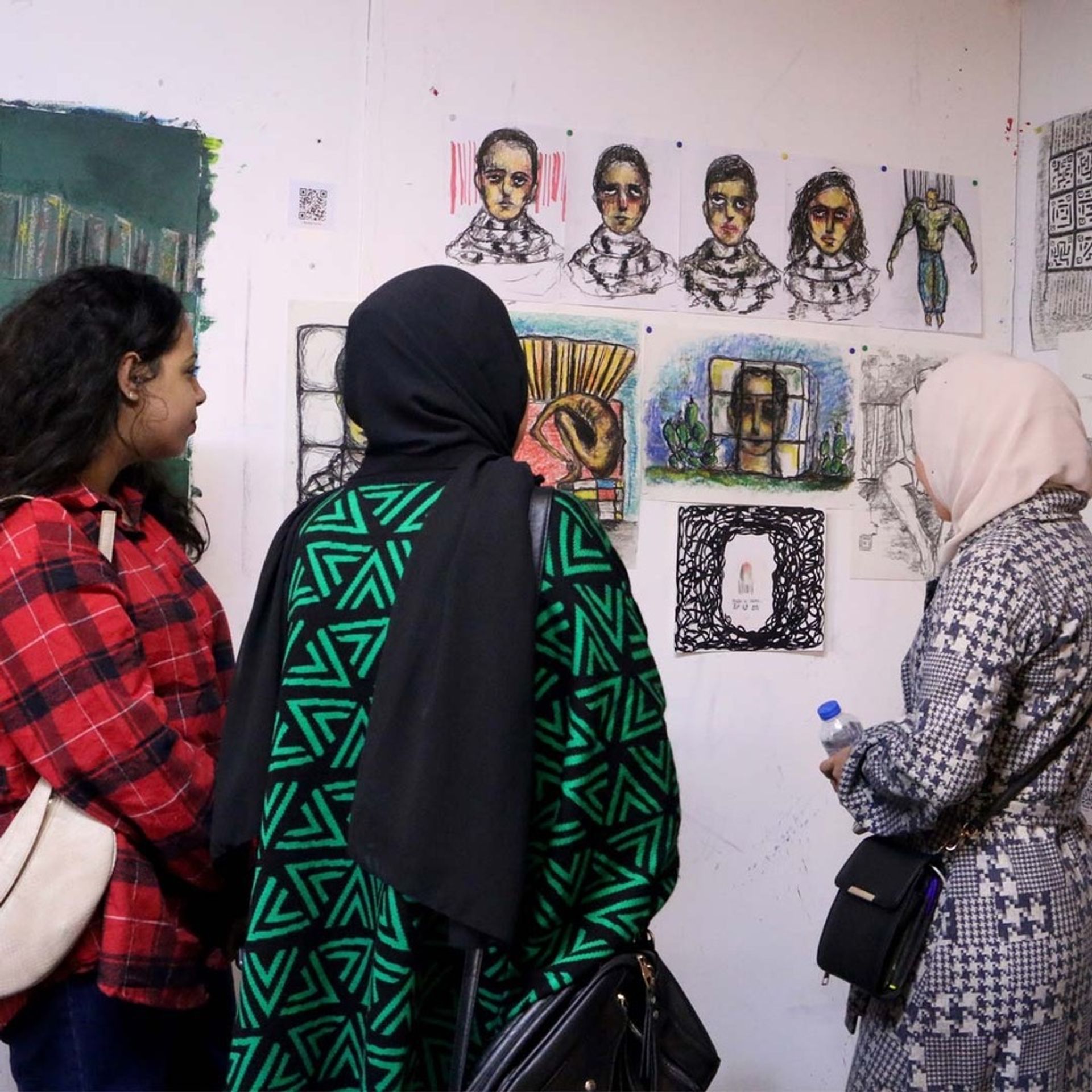
Funding from the Swedish government, administered by the Al-Qattan Foundation, enabled Shababeek to expand its programme Shababeek for Contemporary Art
Sarhan estimates that during its lifespan Shababeek collaborated with more than 500 artists. “Maybe I did not make a lot of money personally [doing this work] but I made history,” Sarhan says, adding that he has no plans to return to his homeland after the war. Instead, he intends to collaborate with fellow Palestinian artists residing outside Gaza on an initiative to provide emergency salaries for artists, many of whom have lost their livelihoods and possessions. “Shababeek is not just a place; it is an idea,” Sarhan says.
The centre was one of two established spaces for visual arts in Gaza; the other was Eltiqa Group for Contemporary Art, which was destroyed in December by an Israeli airstrike.
UN experts issued a statement condemning the destruction and killing at Al-Shifa Hospital, urging UN member states “to implement all possible diplomatic, political and economic measures, and legal processes, to stop this horror”.


