

One of the central challenges facing the museum field is the question of how to best share collections, especially historical ones, in ways that are inspiring, relevant and reflective of changing audiences’ wants and needs. While museums have been around for centuries, the fact that most still operate like their precursors is surprising in today’s shifting landscape. We need disruptive takes on the museum model in order to have the greatest impact well into the future.
The physical encounter with an object is, without doubt, a time-honoured and powerful way for museum visitors to engage with artistic ideas, and social and historical contexts. No digital experience can ever fully replace that. But we must acknowledge that the model where each museum runs a bricks-and-mortar building absorbs significant resources, and by design is limited in scale and ability to serve a broader public. Research projects like Remuseum are assessing how much organisations are spending on objects versus the public they serve and aim to spur innovation with a focus on impact for people.
How do we define the public?
For museums questioning how to make a sustained and long-term impact, the key factor is access. How do we define the public we’re aiming to serve, and is the current definition sufficiently equitable and global? For individuals who have not been able to benefit from the traditional museum model, based on geographic constraints, financial barriers and more, how can we better address their needs? Can we think differently, and more collaboratively, about serving the public in full pursuit of our missions?
The Rubin Museum’s Gateway to Himalayan Art exhibition at Lehigh University Art Galleries in 2023 Photo by Ryan Hulvat, courtesy of the Rubin Museum of Art
It is also critical to question the financial models that museums are built on. Funding streams might look very different in decades to come, considering long-term trends in visitation and philanthropy. It’s important for museum leaders to have the freedom and courage to experiment and pass on new operational and financial models to the next generation, models that allow for future experimentation.
We are already seeing more fluidity between the commercial and non-profit sectors, as well as the emergence of organisations or spaces that embrace multiple types of artistic expressions under one roof—the Shed in New York, for instance, hosts both performing and visual arts events. This is, I believe, in recognition that people seek cultural experiences that transcend traditional institutional typologies. Some museums have created offshoots in places where people gather, including malls, such as the Mori Art Museum in Tokyo, or have focused more on openly accessible programming in public spaces around them.
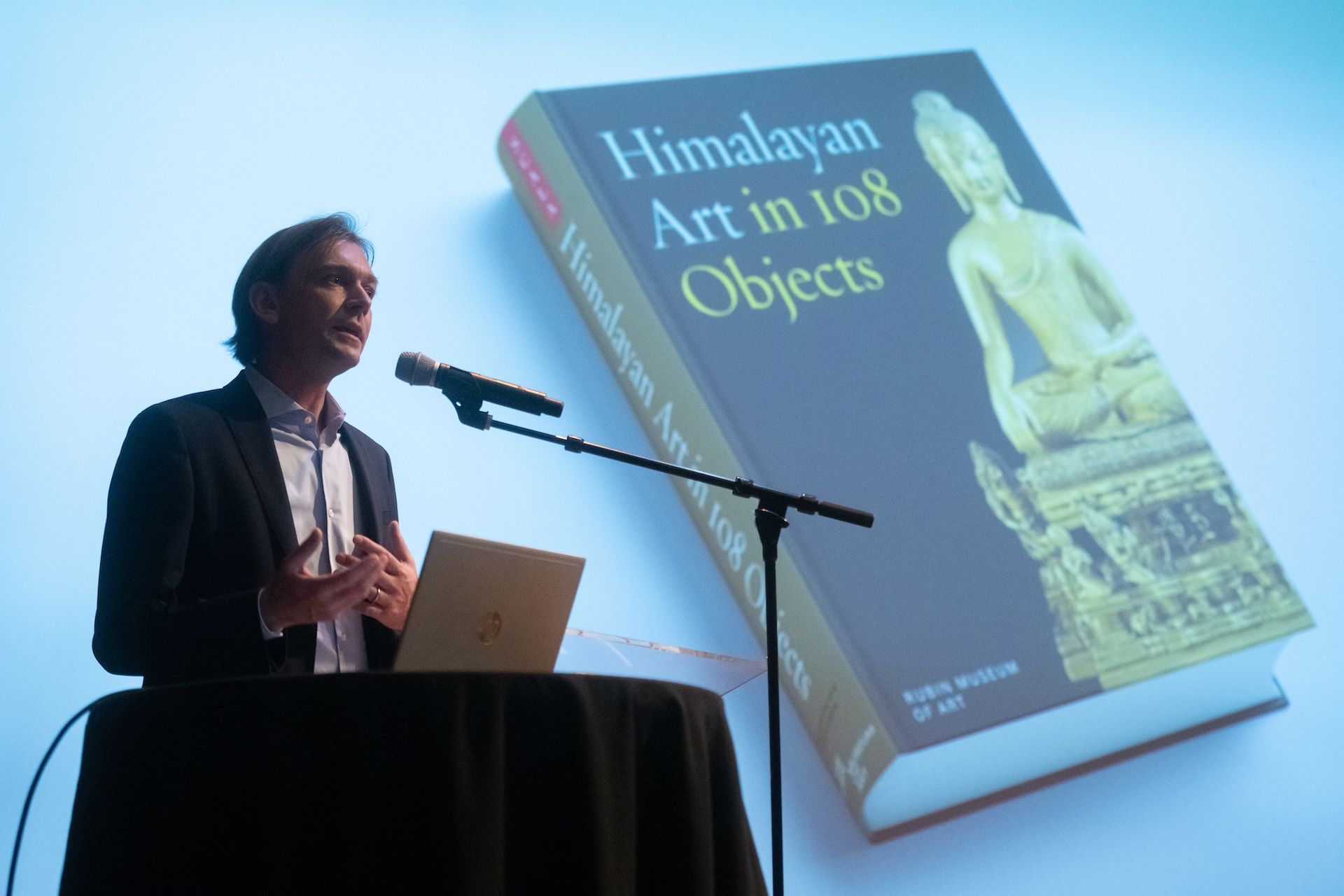
The Rubin Museum’s executive director, Jorrit Britschgi, presenting on Project Himalayan Art Photo by Filip Wolak, courtesy of the Rubin Museum of Art
Operating outside the walls of the museum is a proven strategy to overcome intrinsic barriers to visitation. But there are other ways to fulfil a mission, and a radical transformation was taken by the Terra Museum 20 years ago. It closed its museum building in Chicago and became a globally active foundation promoting American art by leveraging its collection and providing funding to the field. Benchmarked against its former visitor numbers, the Terra Foundation has found new and effective ways to maximise its resources in service of its mission and the public.
What changes has The Rubin made?
The Rubin Museum has also developed a new operational model. For two decades, we’ve expanded the awareness and appreciation of Himalayan art, primarily from our home in Manhattan. But like many institutions, our mission is not tied to place—in fact, our unique geographic focus requires us to think beyond serving a singular location. The way to reach and serve people around the world, to most impactfully use our resources, is to pursue a global and decentralised model that builds on sharing assets and entering partnerships with other cultural organisations. This is less about operating a beautiful space, but more about global collaborative thinking with the goal of, as historian Steven Mintz put it, “Freeing [the] collection and educational resources to reach a much bigger public.”
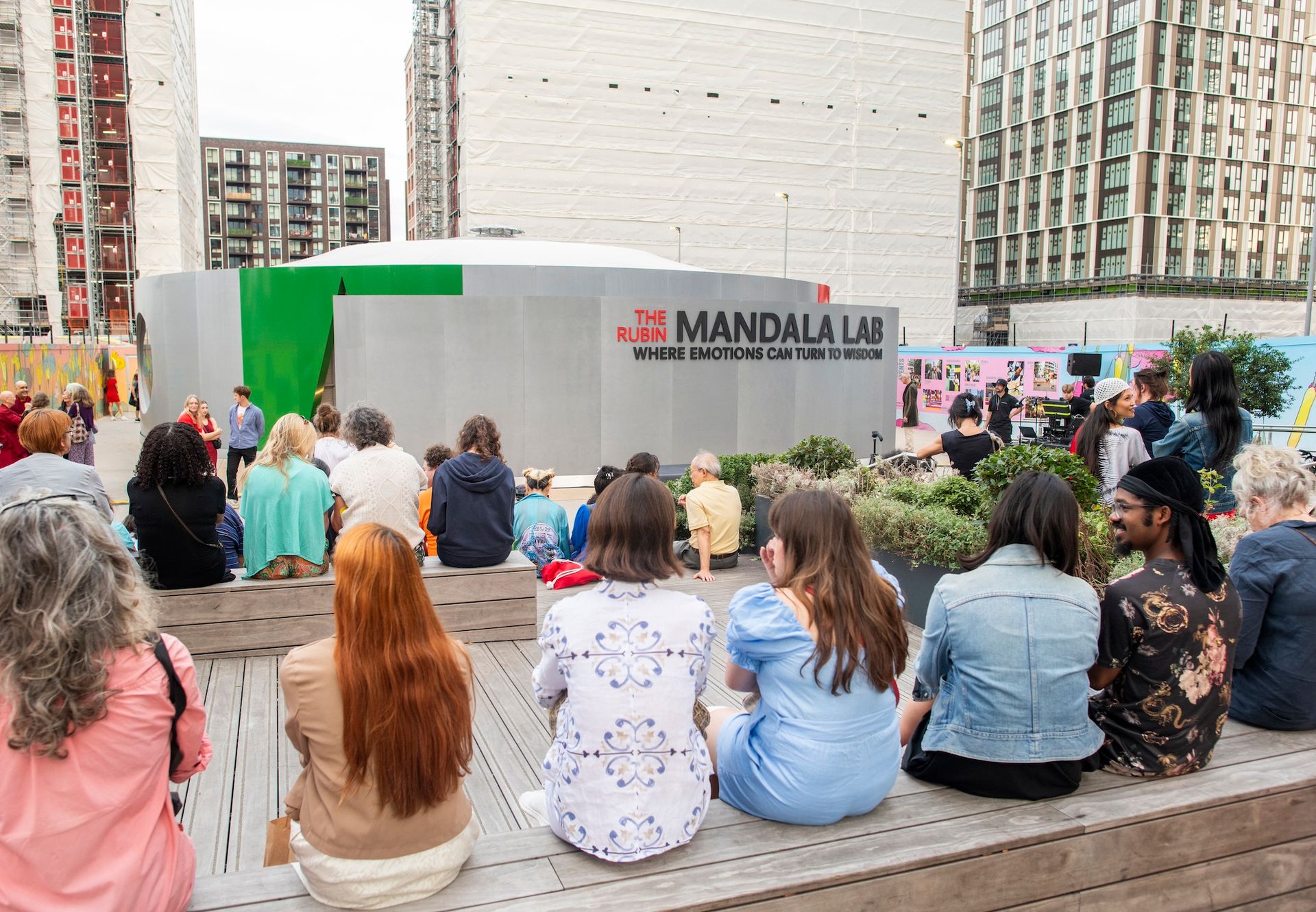
The Rubin Museum’s Mandala Lab, presented as part of the London Design Festival 2023 Photo by Ali Smith, courtesy of the Rubin Museum of Art
The Rubin’s public now extends from New York to Utah, from Bilbao to London, from Thimphu to Kathmandu, and is served through travelling projects such as Gateway to Himalayan Art; the Rubin’s Mandala Lab; digital resources such as curriculum guides for educators and multimedia publications; support for artists and scholars; partnerships with public spaces, cultural organisations and art fairs; collection-sharing programmes and a Himalayan art prize. Letting go of a museum building has freed the organisation to think and act locally, nationally and globally all at once. It is a bold step for a small organisation, and not without risks, but the Rubin is embracing non-attachment and impermanence.
Our path forward is one possible scenario for sharing our collection in ways that consider our changed environment. We aim to build a community of collaborators who are fearlessly embracing new models and strategies and collectively redefine how museums in the 21st century can operate in pursuit of their missions for the benefit of a broader public.
- Jorrit Britschgi, PhD, is the executive director of the Rubin Museum of Art


