

A new report from Unesco warns that artificial intelligence (AI) threatens Holocaust memory, as AI-generated content can fabricate or distort historic records and magnify biases. Malicious individuals and hate groups will continue to exploit these weaknesses to spread disinformation, and young learners are especially vulnerable, because they increasingly rely on generative tools to search the web and complete assignments.
“If we allow the horrific facts of the Holocaust to be diluted, distorted or falsified through the irresponsible use of AI, we risk the explosive spread of antisemitism and the gradual diminution of our understanding about the causes and consequences of these atrocities,” Unesco Director-General Audrey Azoulay said in a statement. Azoulay urges governments and AI collaborators to adopt ethics guidelines.
With the median age of Holocaust survivors at 86, the living connection to this genocide will continue to decline. Educational and cultural institutions are tasked with protecting historical records and preserving testimonies for future generations in the fight against hatred and antisemitism.
AI-powered tools can help researchers process and mine vast troves of Holocaust data that span years, languages and mediums from photos and text, to video and audio recordings. An example is the work being done in the Arolsen Archives, the world’s most comprehensive collection of original documents and personal items for 17.5 million people affected by Nazi persecution. AI helps the Arolsen mine and crosscheck millions of documents and field 20,000 queries annually. And Yad Vashem, the world Holocaust remembrance centre in Jerusalem, is using natural-language processing and generative AI to identify previously unknown victims.
Courtesy Arolsen Archives
Cultural institutions are tapping generative AI for educational purposes too. The USC Shoah Foundation’s Dimensions in Testimony is a travelling museum experience that simulates discussions between museum visitors and genocide survivors using recorded interviews enhanced by high-definition holographic display and voice-recognition technology. And the Illinois Holocaust Museum & Education Center has created virtual-reality films for immersive storytelling.
But Unesco warns that these same technologies can be used to amplify messages of hate and disinformation or oversimplify a complex history. It cites how leading chatbots have responded to prompts about the Holocaust with historically incorrect responses. And it explains how algorithms that instruct search engines and social-media platforms to favour attention-grabbing and engagement-focused content may perpetuate lies and reinforce regional biases. The report found that generative AI can “hallucinate” and completely invent false narratives and sources.
In the wrong hands, generative tools can become agents of deceit and hate in the form of deep fakes and deceptive digital images, videos or sound recordings that can promote harmful ideology. Well-publicised examples include the controversial app that simulated conversations with historic figures including Adolf Hitler and a widely circulated fake of the actress Emma Watson reading Mein Kampf.
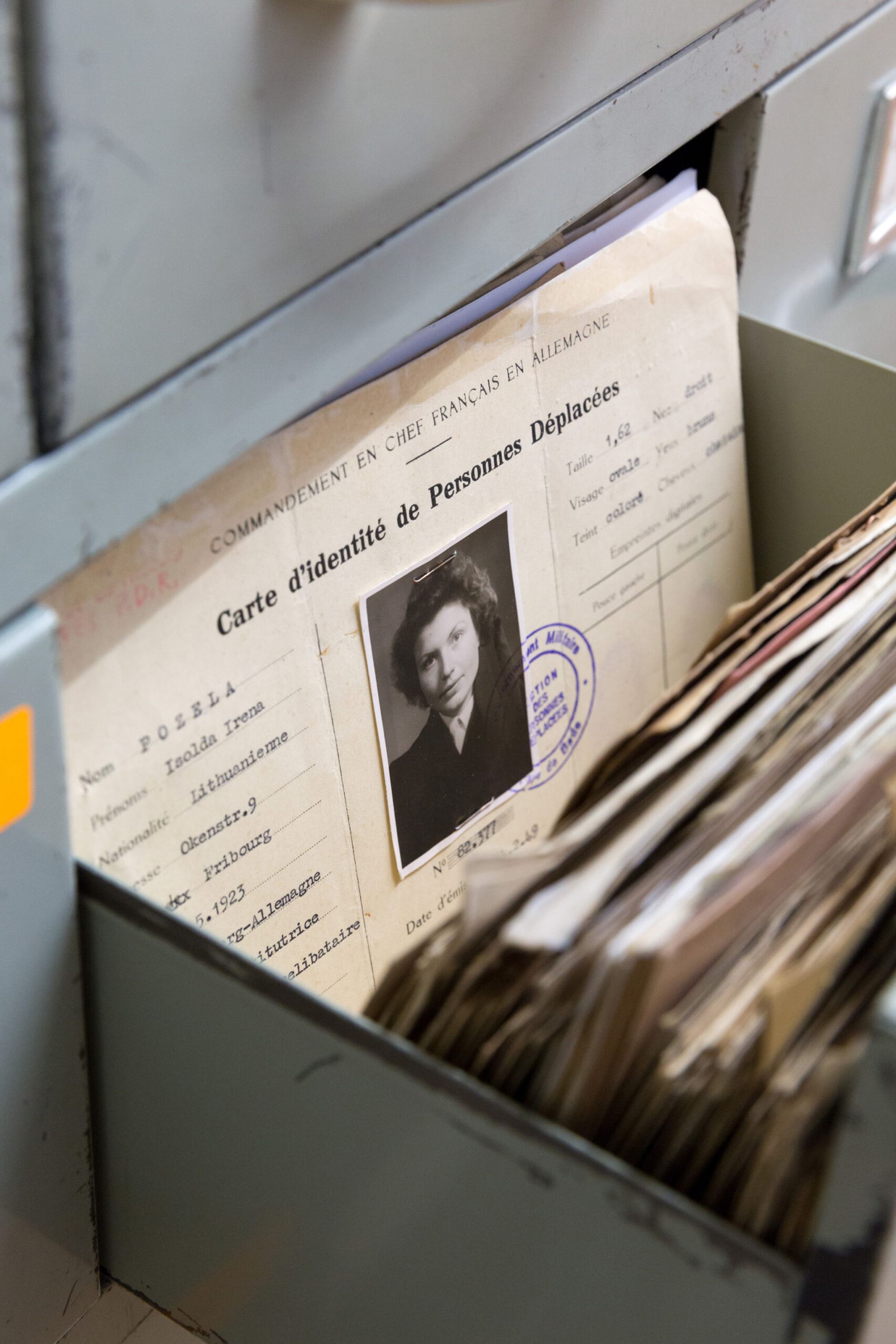
Documents from Displaced Persons Photo: Cornelis Gollhardt, courtesy Arolsen Archives
These abuses are not going unnoticed by the general public. In 2023, an Anti-Defamation League study found that 84% of Americans are concerned that generative-AI tools will be used to spread false or misleading information and that 70% think it will make extremism, hate or antisemitism worse in the US.
The Unesco report, published in partnership with the World Jewish Congress, implores tech companies to work closely with Holocaust survivors and their descendants, as well as experts in antisemitism and historians, when developing AI tools, and for AI collaborators and policymakers to establish ethical guidelines.
How can museums, archives and memorials defend against this threat to Holocaust memory? The answer may be more data. The Unesco report tasks these institutions with continuing to digitise and expand historical collections and partnering with technology companies in training AI models and providing context on the sensitivities and risks of using this data.
Until policymakers and developers adopt ethical standards, the burden of determining the legitimacy of Holocaust content rests with educators and individuals—including school-aged children.


