

Parks. Railway stations. City halls. Hotels. Theatres. Abstract artist Tada Minami (1924-2014) was committed to practice that spanned beyond the confines of the museum. She often left her creations in urban spaces, where they have since formed an integral part of everyday life. Across an almost 70-year career, she covered huge ground, varying her approach to both material and scale. Her works include massive, stainless-steel sculptures that appear to rise sharply skywards; glass and acrylic constructions that reflect the environment; and “Illuminated Walls,” which contain richly-coloured light. Tada is emblematic of a postwar Japan that was rapidly modernising, transforming itself into the nation of innovation and prosperity we know today. More than 10 years on from her death, Museum of Contemporary Art Tokyo has announced a major retrospective, a move that is emblematic of her enduring influence over contemporary art. Tada Minami: Still, Shimmering Light, set to open in August, presents over 70 works, across paintings, sculptures and lighting, alongside architectural works and photographs.
Born in Kaohsiung, Taiwan, and raised in Korea, it wasn’t until Tada attended the Joshini University of Art and Design that she began to engage with Japan’s rapidly-evolving art scene. The artist emerged at a moment when Japanese creatives began to move away from traditional figurative sculpture, and towards abstraction, new materials and environmental art. Tada’s practice is firmly rooted in this shift, which occurred during a period of rapid economic expansion in the country. The years between 1955 and 1973, often called the “economic miracle”, saw Japan transform from wartime devastation into the world’s second-largest economy. The era also included the 1964 Tokyo Olympics and 1970 Osaka Expo, showcasing the nation as a beacon of modernity and innovation. Tada responded to this changing landscape, with pieces that feature smooth, inorganic surfaces that conceal traces of manual labour, whilst integrating organic elements such as light’s reflection, transmission, refraction and fluctuation.
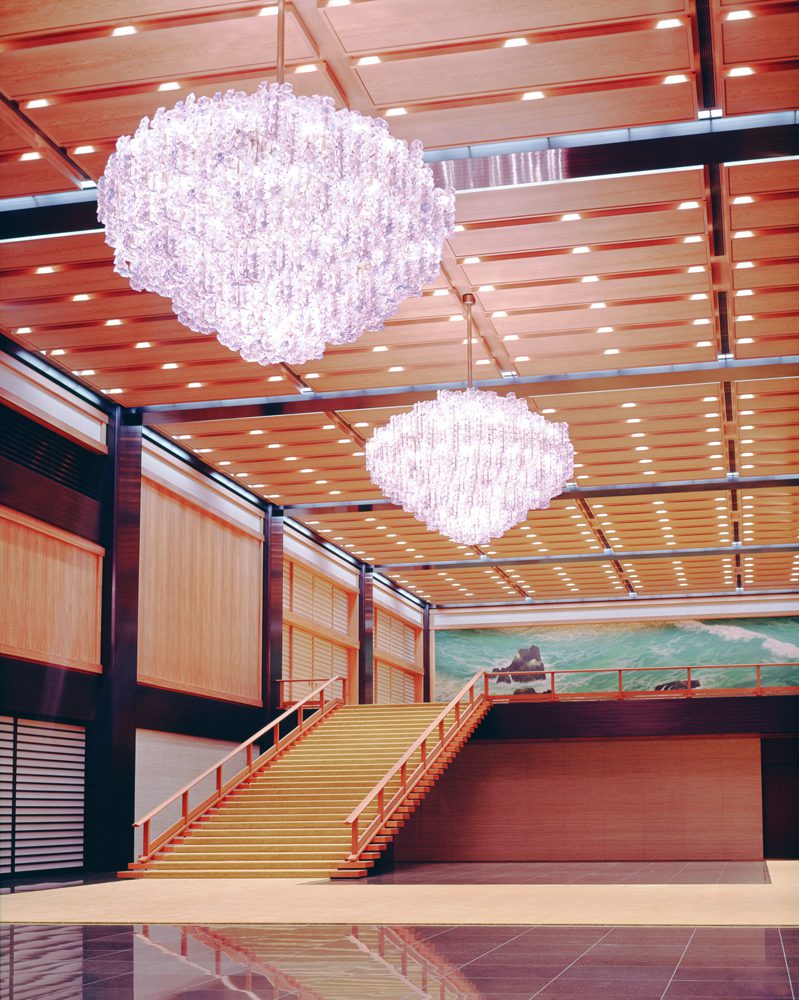
Tada moved from painting into sculpture in the late 1950s, often playing with composites of iron and plastic. In 1964, she began Frequency, a series that established her reputation and set her career on the path it would follow for the next several decades. The sculptural works utilised polished aluminum, acrylic resin and steel to create distorted, reflective surfaces. The mirror-like forms distort the viewer’s image, exploring ideas of light, space and multiple existences. In this, Tada echoes earlier practitioners like Isamu Noguchi, who integrated sculpture with landscape and architecture, establishing the idea that sculpture could shape environments. Meanwhile, fellow contemporaries like Susumu Shingu and Kishio Suga share Tada’s focus on raw materials and highly fabricated industrial surfaces.
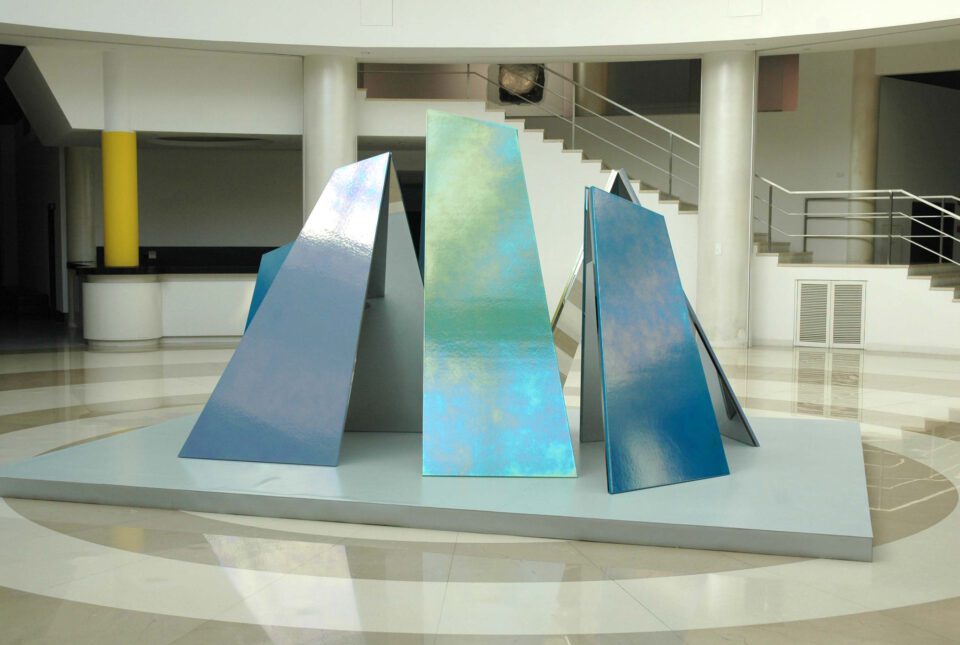
In the years that followed, Tada’s installations grew larger and more ambitious. Several works were designed to be shown outdoors, activated by the landscape rather than separate from it. These works respond to changing environments and the movement of viewers, continually transforming their appearance. At Museum of Contemporary Art Tokyo, visitors encounter Chiaroscuro (1979), made of stainless-steel bent into a conical shape. It’s a staple of the institution’s permanent display, recognisable to the thousands of visitors who attend each year. The piece’s title is derived from the Italian for “light and dark,” using in painting to illustrate the technique of capturing three dimensions. The curvature of the steel concentrates light in a single spot, mimicking the traditional artform and reimagines it for a modern world.
Tada Minami often goes under the radar in the grand and sweeping history of contemporary sculpture, yet her work has left a remarkable legacy on the medium. Her glittering designs, placed in urban hubs and communal areas, are part of the visual language of post-war Japan. In this, she literally and figurative leaves work that reflects the ever-changing and evolving nature of 20th century society.
Tada Minami: Still, Shimmering Light opens at Museum of Contemporary Art Tokyo on 29 August: mot-art-museum.jp
Words: Emma Jacob
Image Credits:
1. Coordinates, 2009. Stainless steel, Collection of Minami Tada Associates Photo: Mareo Suemasa.
2. Lighting Sculpture: Auspicious Clouds, 1973. Crystal glass, ball chain, RIHGA Royal Hotel. Osaka, Vignette Collection. Photo: Kuniharu Sakumoto.
3. Lighting Sculpture, 1968, Crystal glass, metal. New Imperial Palace, Tokyo, Photo: Shigeyoshi Nobori.
4. Mirage, 1989. Ceramic plate, stainless steel. Collection of Minami Tada Associates. Photo: Minami Tada Associates.
The post Reflecting Landscapes appeared first on Aesthetica Magazine.


