

Adventures with Van Gogh has just marked its 300th post since the weekly blog was launched in 2018. For the 200th, in February 2023, we ran a compilation of what had then been the ten most popular posts. This week, starting with the most popular, we look back at the posts which have attracted most readers since then. Some of the topics were predictable, others came as quite a surprise. All have recently been updated with new information for this latest compilation.
1. Ten most expensive
Everyone is intrigued by how an artist who failed to sell his work has now become one of the biggest hitters in the market. We record the ten highest auction prices for Van Gogh paintings, with first place going to the Arles landscape Orchard with Cypresses (April 1888). It sold for $117m at Christie’s in 2022. Read more
Van Gogh’s Orchard with Cypresses (April 1888)
Christie’s Images Limited 2022
2. Bizarre mountains
A quirky subject was the second most popular: the story of a geological feature in the mountains near the asylum where Van Gogh lived for a year outside Saint-Rémy-de-Provence. The artist painted a ridge in Les Alpilles (the Little Alps) which has two holes through it that were weathered in the limestone. This strange sight appears in The Olive Trees (June 1889) at New York’s Museum of Modern Art. Sometimes people assume that the artist imagined the curious voids in the ridge when he was ill. Not so: the two holes are indeed there. Read more
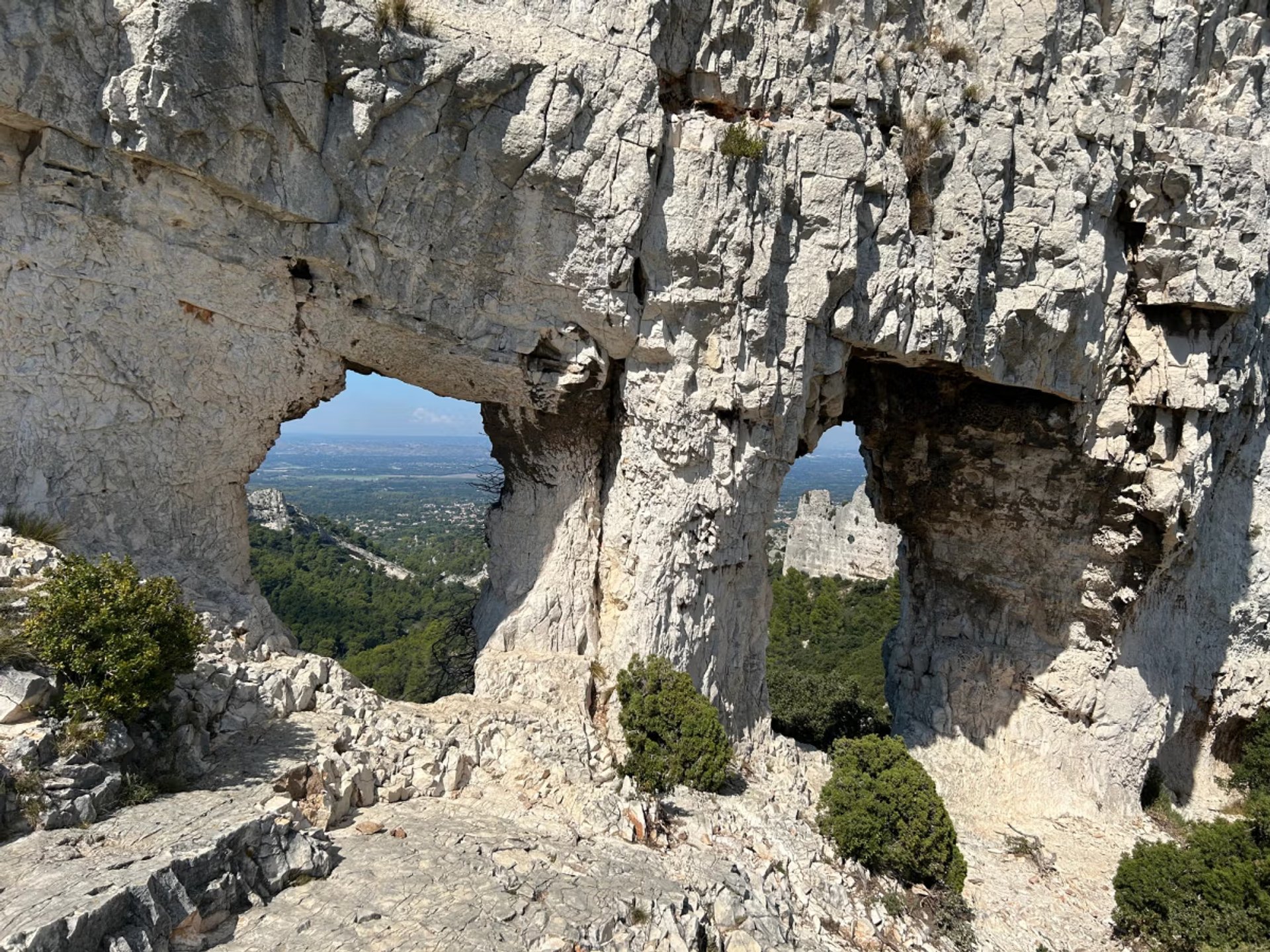
Le Rocher des Deux Trous (seen from the south), Les Alpilles, near Saint-Rémy-de-Provence
The Art Newspaper
3. It was suicide, not murder
The question I now get asked most often is whether Van Gogh died by suicide (the traditional explanation) or murder (a theory propounded in a recent biography). I am convinced it was suicide, and give ten reasons for my conclusion. Most importantly, everyone around Van Gogh at the time believed that he took his own life. Had they thought it was murder, they would certainly have raised concerns. Read more
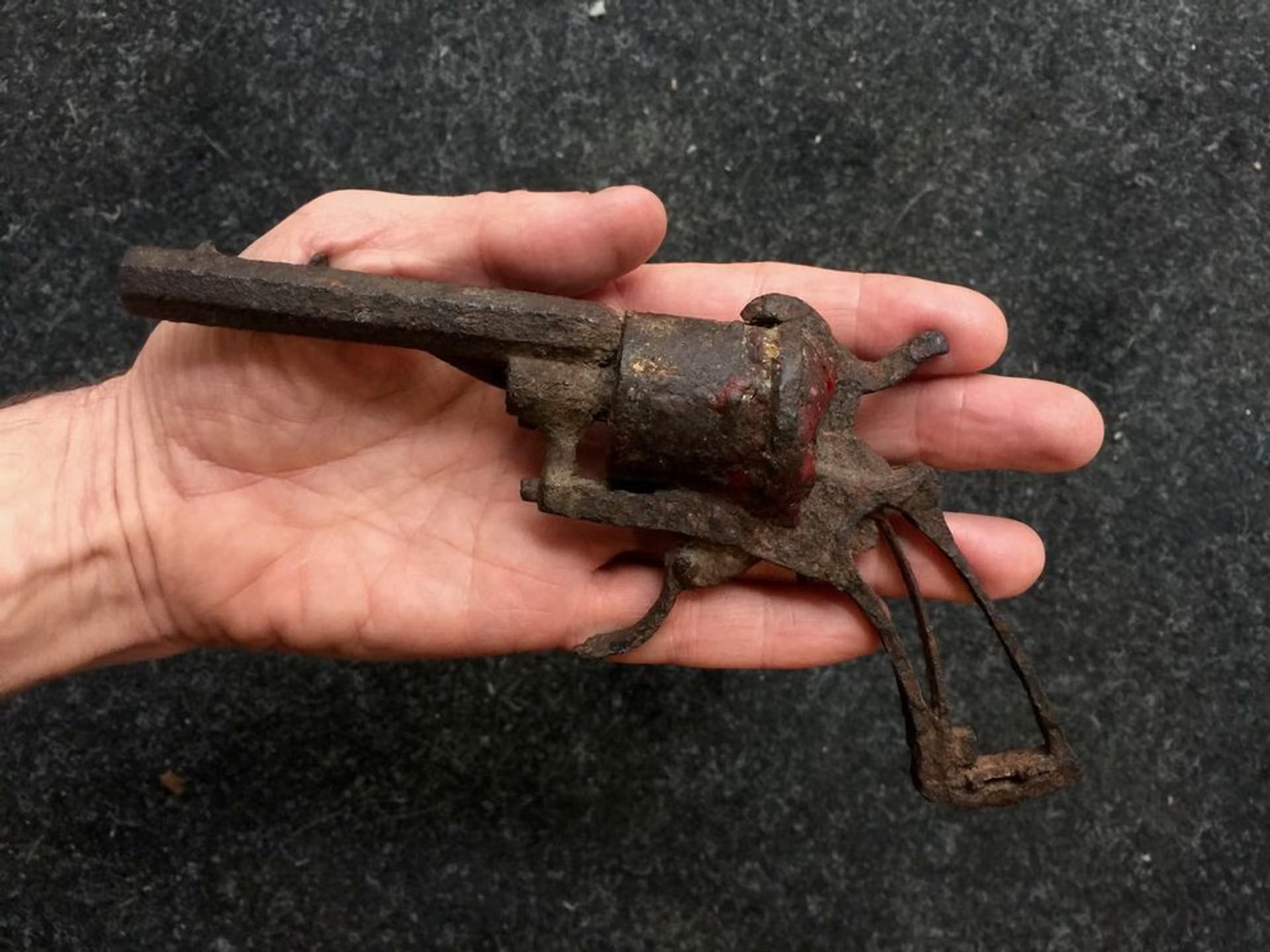
In my hand: the Lefaucheux revolver which probably killed Van Gogh, sold by AuctionArt Rémy le Fur & Associés, Paris on 19 June 2019
© Martin Bailey
4. Starry Night in Arles
Starry Night over the Rhône (September 1888) gives a marvellous insight into the artist’s life and work in Arles, in Provence. Seeing both the painting, now at the Musée d’Orsay in Paris, and the place where it was created offers an opportunity to work out what came from the actual view—and, importantly, what emerged from Van Gogh’s artistic imagination. Read more
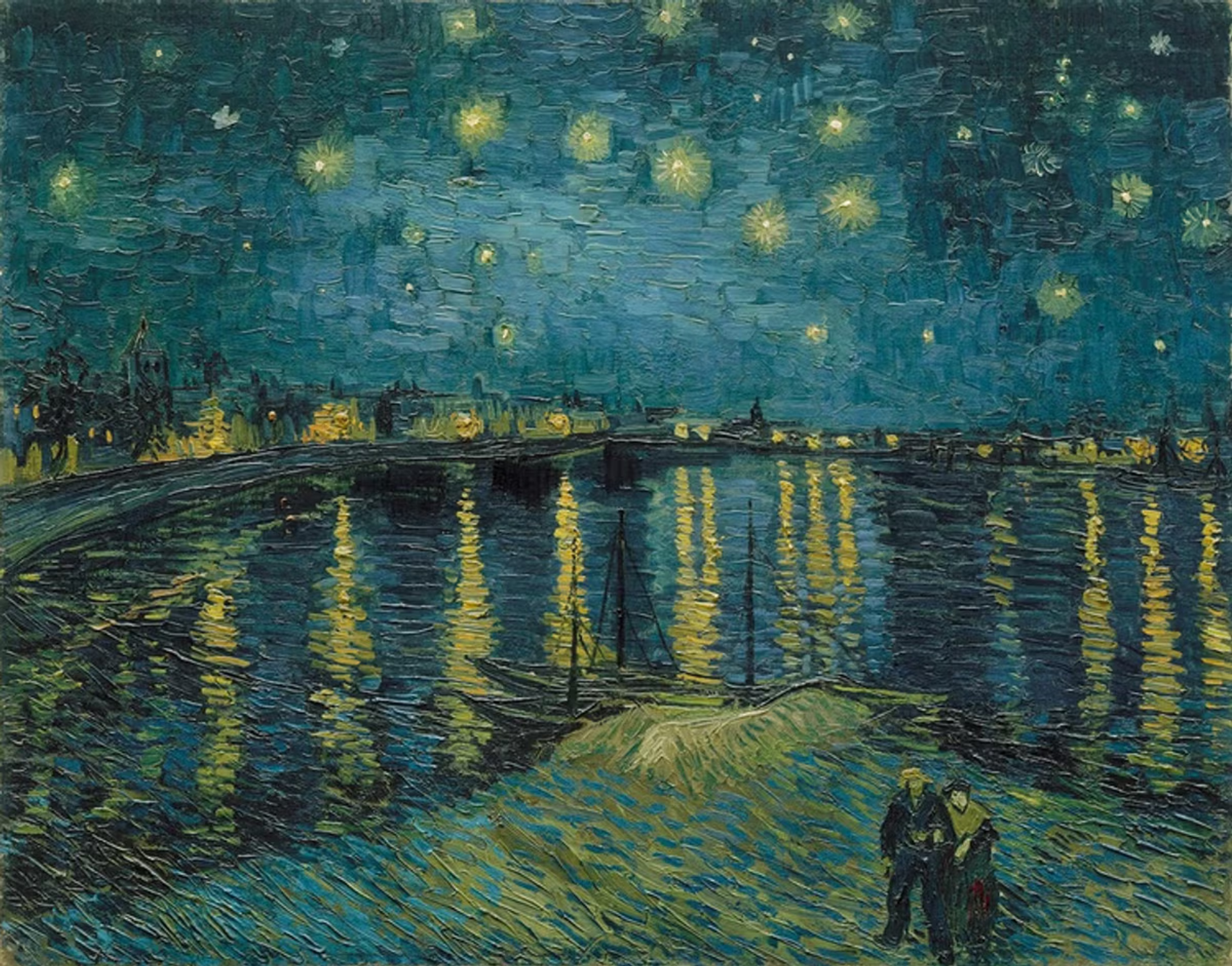
Van Gogh’s Starry Night over the Rhône (September 1888)
Musée d’Orsay, Paris
5. Picasso’s granddaughter
One of Picasso’s granddaughters quietly bought a Van Gogh, after receiving a huge bequest from her illustrious ancestor. In 1987 Marina Picasso acquired the early watercolour Woman in a Wood (September-October 1882). Her ownership only emerged when she sold the work in May at Sotheby’s, where it fetched nearly $1m. Read more
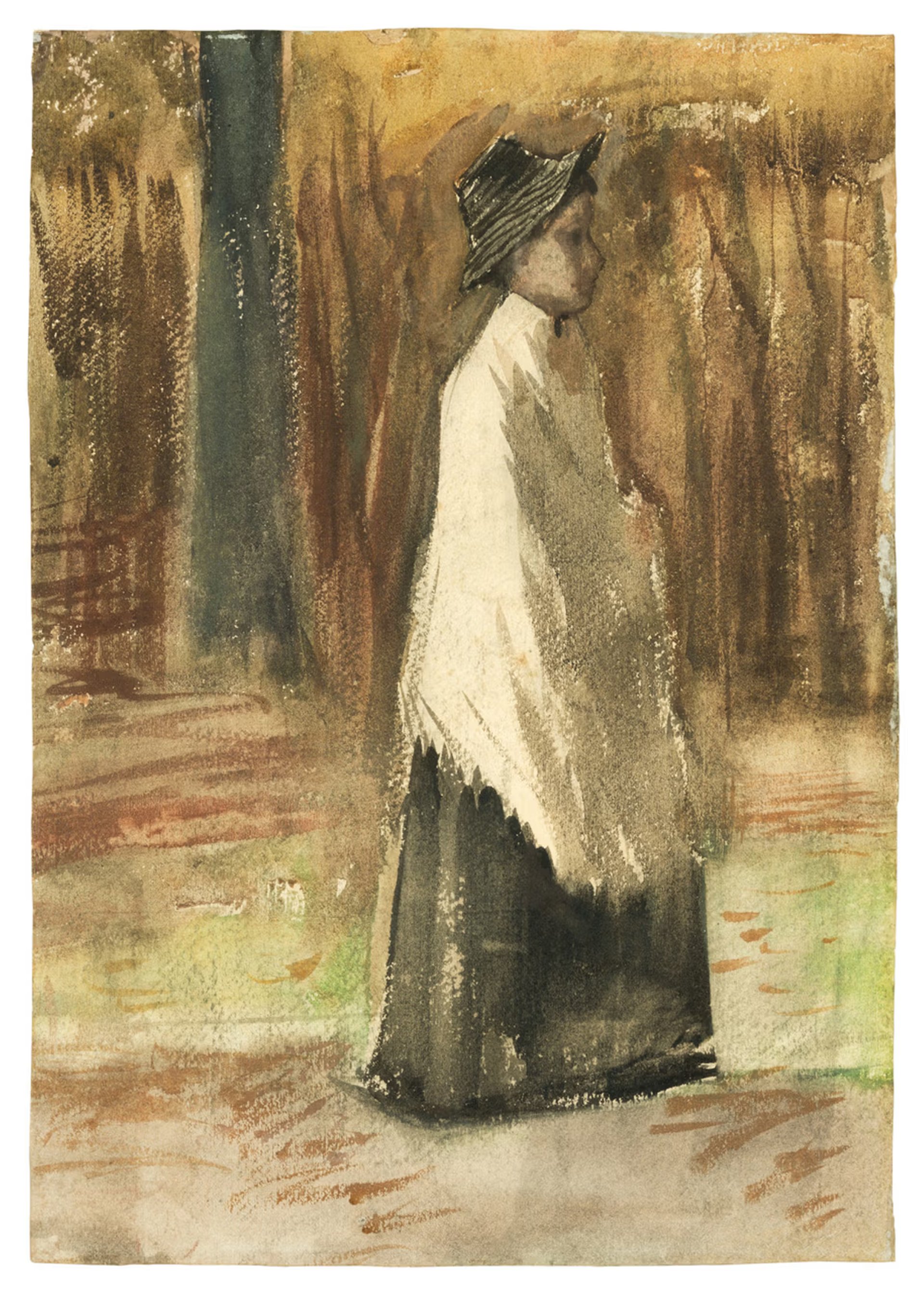
Van Gogh’s Woman in a Wood (September-October 1882)
Sotheby’s
6. Framing Van Gogh
Most owners of Van Gogh paintings now display them in ornate gold frames—but this is not what the artist intended. He liked simple wooden framing, which he felt worked best. Although gallery goers rarely notice frames, they do subtly impact on the way that we experience pictures. The recent exhibition at London’s National Gallery, Van Gogh: Poets & Lovers (closed on 19 January), provided some intriguing examples. Among these was the reframing of the Philadelphia Sunflowers (January 1889). Read more
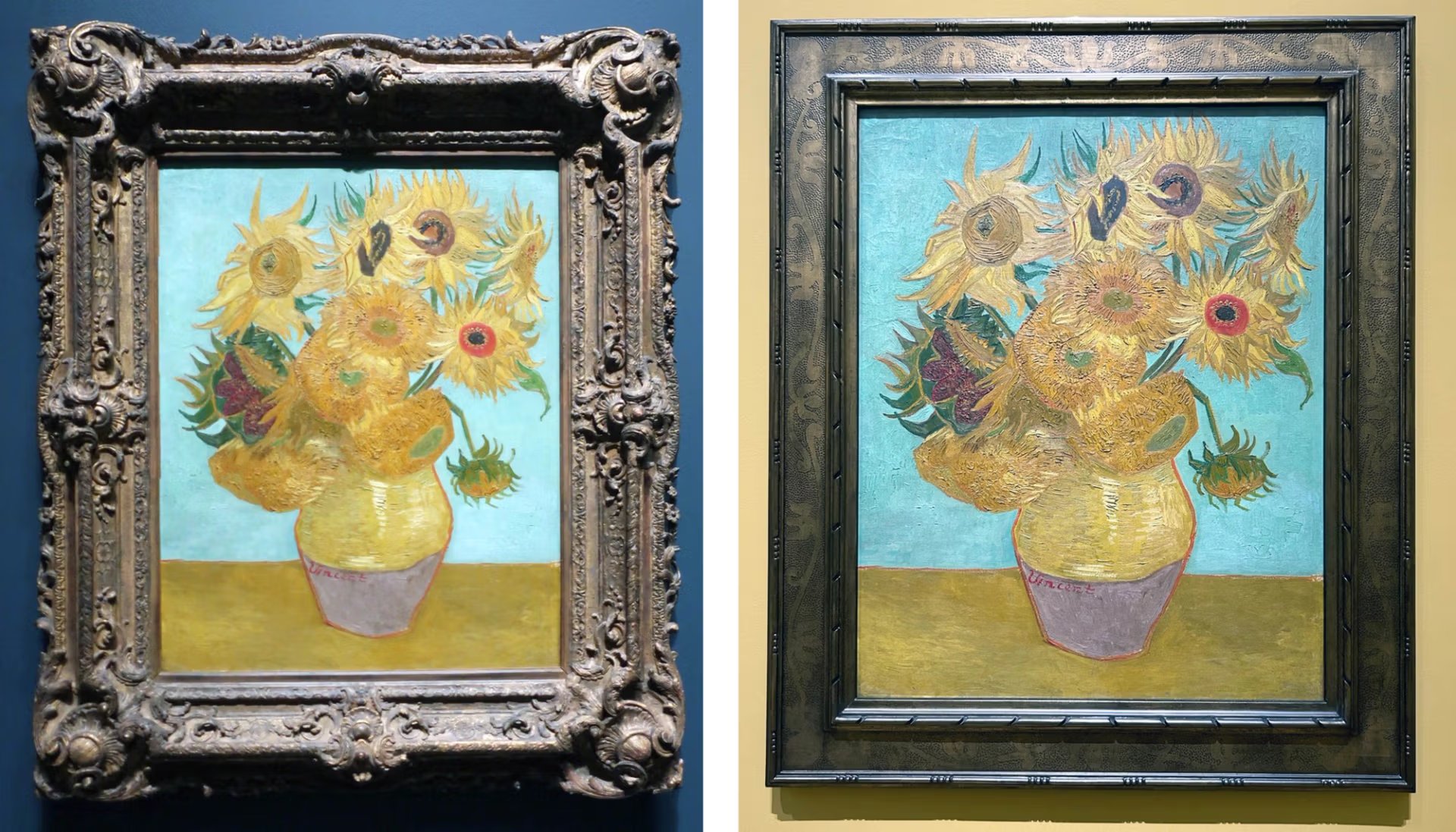
Van Gogh’s Sunflowers: Philadelphia’s version (January 1889) in its earlier French Baroque gilded frame and in the new simpler frame in the National Gallery exhibition
Philadelphia Museum of Art (London frame photographed by The Art Newspaper)
7. A pair of hospital paintings
After mutilating his ear, Van Gogh was sent to the hospital in Arles, where he stayed for most of the time before he left for an asylum in May 1890. By chance, the only two paintings he made of the hospital both ended up with the same Swiss collector, Winterthur-based Oskar Reinhart (who later set up a museum with his collection). Both pictures were lent for an exhibition at London’s Courtauld Gallery, which closed last May, in what was their first trip outside Switzerland for a century. Read more
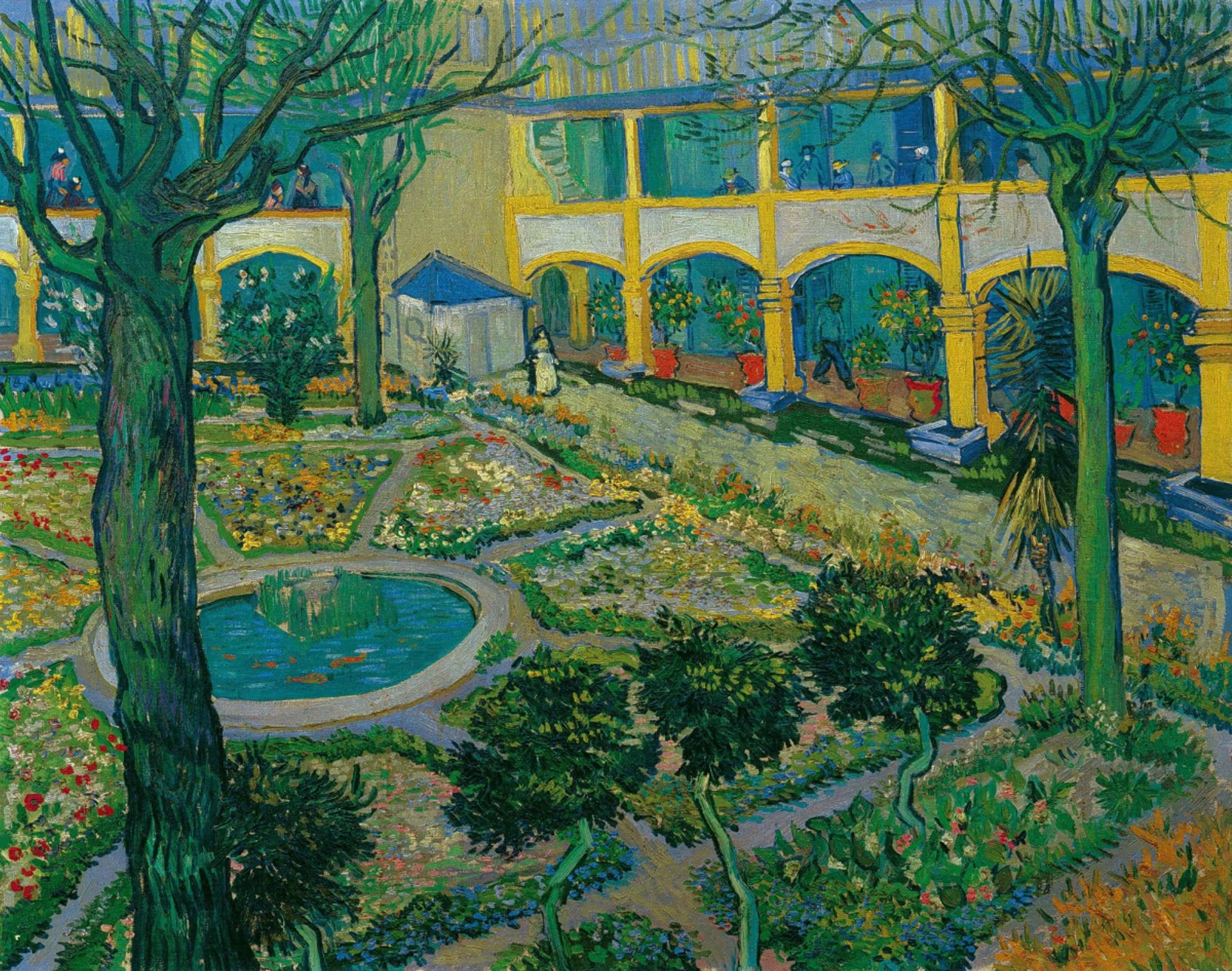
Van Gogh’s The Courtyard of the Hospital at Arles (April-May 1889)
Oskar Reinhart Collection “Am Römerholz”, Winterthur
8. Ending up in Russia
There is only one painting which Van Gogh is certain to have sold during his lifetime: The Red Vineyard (November 1888). It was bought at an exhibition in Brussels in March 1890, selling for the equivalent of £16. In 1909 it was acquired by the Moscow collector and textile factory owner Ivan Morozov. Seized after the communist revolution, it was recently conserved and is at the Pushkin Museum in Moscow. Read more
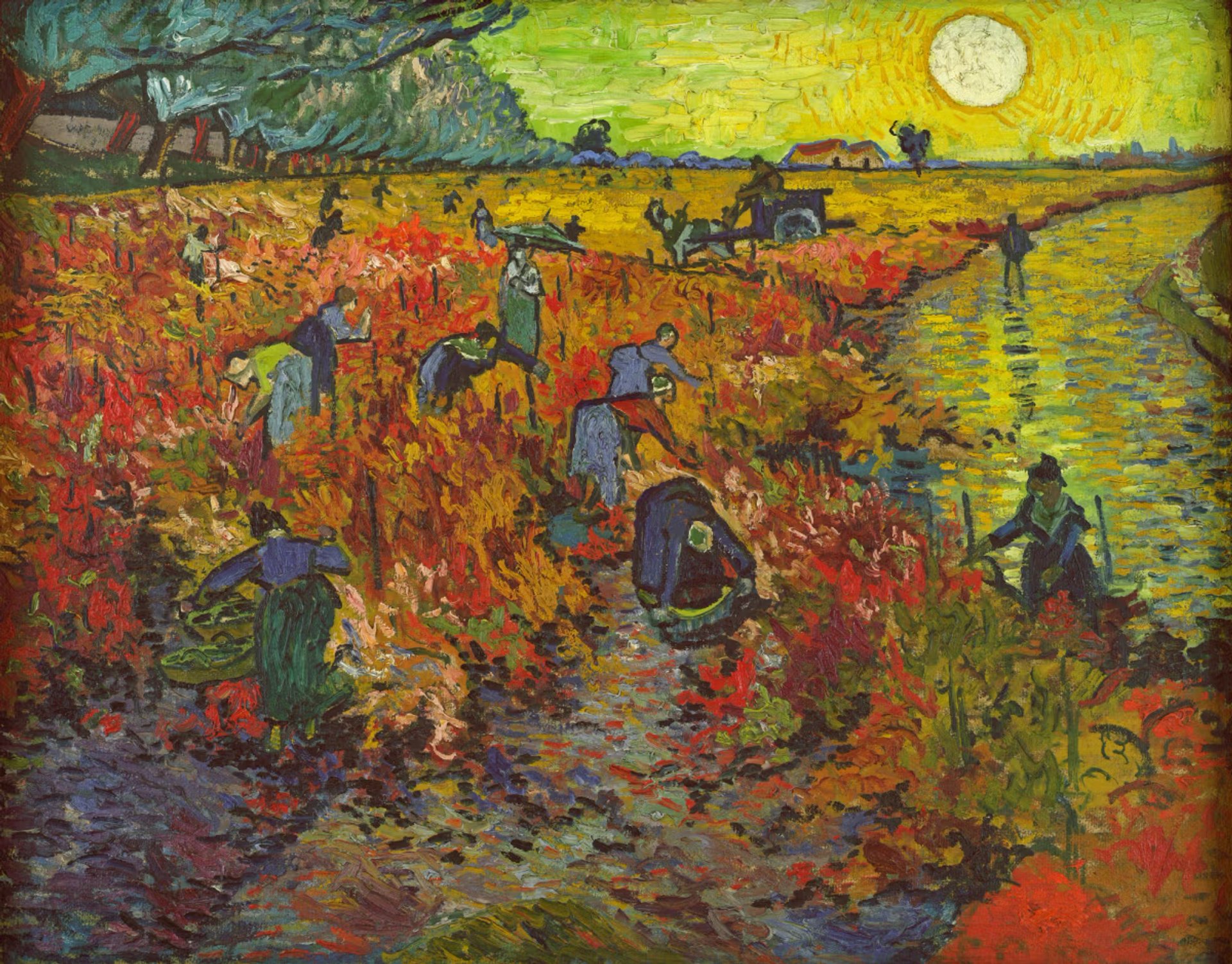
Van Gogh’s The Red Vineyard (Red Vineyard at Arles, Montmajour) (November 1888)
Pushkin Museum, Moscow
9. Surprises in London
The National Gallery’s exhibition Van Gogh: Poets & Lovers (closed on 19 January) was greeted with five-star reviews. We discover ten surprises about individual paintings: a grasshopper in the paint, a Louis Vuitton-owned picture, a painting on a tea towel, a self-portrait which hung in Regent’s Park and a work belonging to casino boss Steve Wynn. Read more
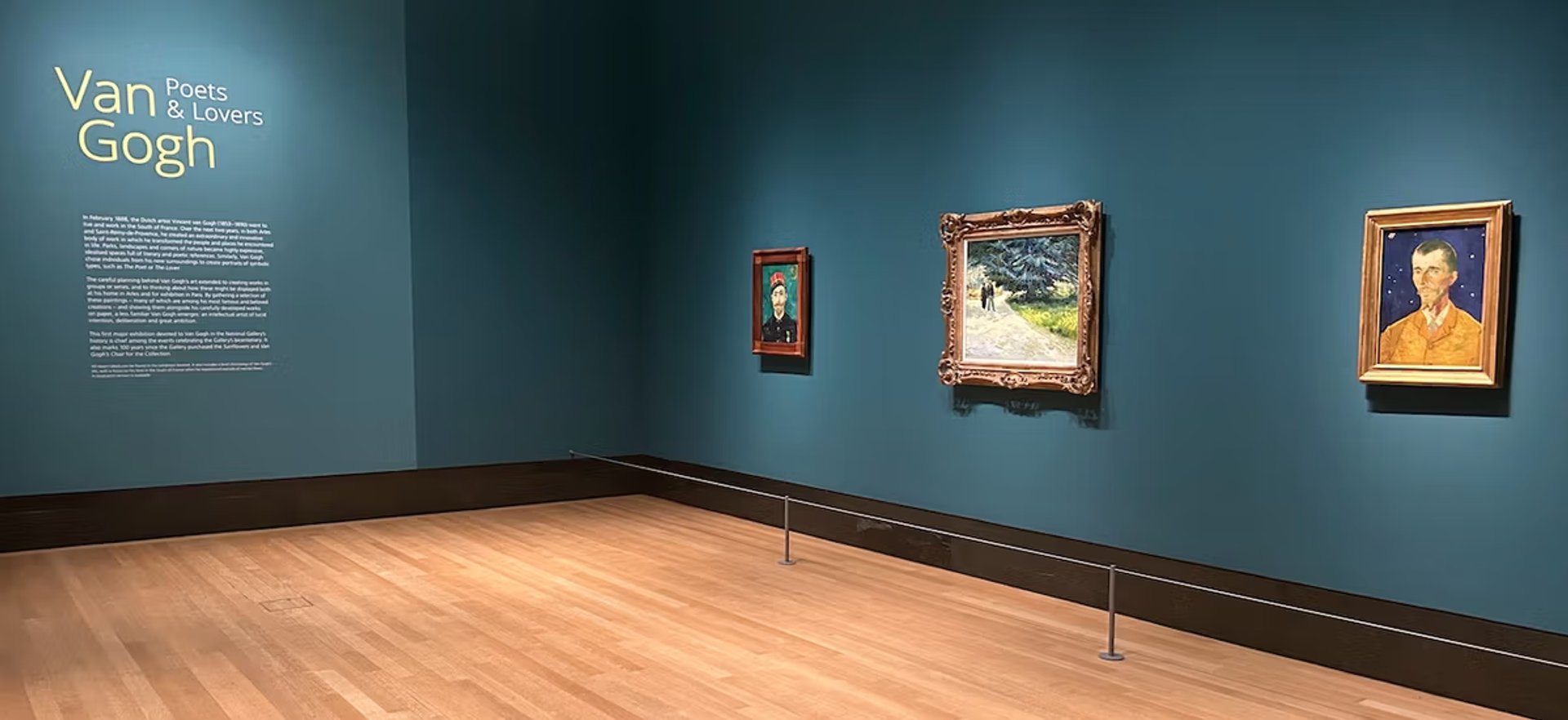
An installation view of Van Gogh: Poets & Lovers (14 September 2024-19 January 2025)
The Art Newspaper
10. Inspiration from Hiroshige
Van Gogh loved Japanese prints, particularly the work of Hiroshige, who is the subject of a British Museum exhibition (until 7 September). The Dutch artist made two paintings inspired by the Japanese master, including Flowering Plum Orchard (October-November 1887). This was lent to London, along with his rarely-displayed tracing of the Hiroshige print. Read more
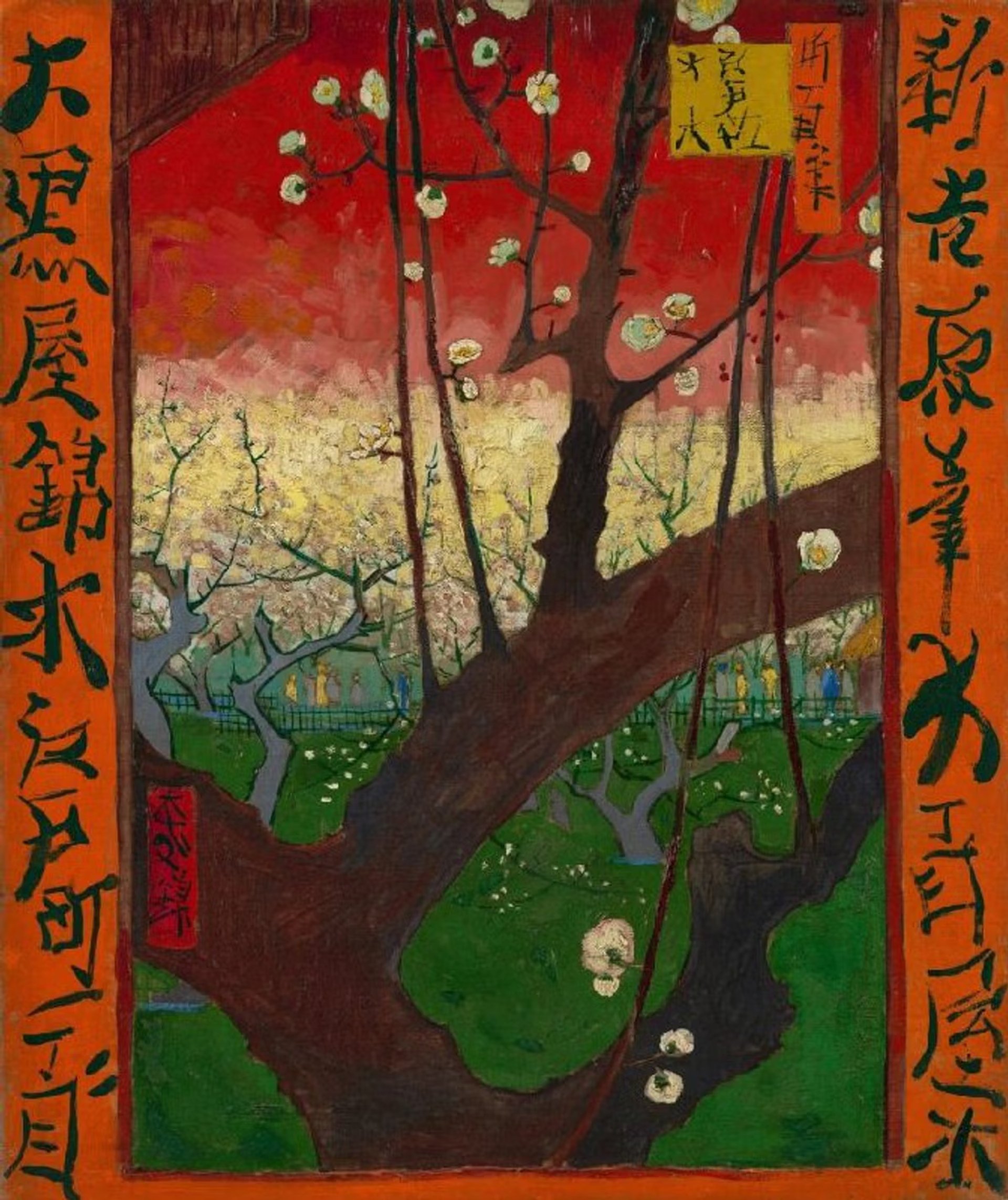
Van Gogh’s Flowering Plum Orchard (October-November 1887), based on a Hiroshige print
Other Van Gogh news
- Amsterdam’s Van Gogh Museum claims it could be forced to close, unless the Dutch government provides more funds to upgrade its building. If money is not forthcoming, director Emilie Gordenker says they “will not be able to guarantee the safety of the collection, visitors and staff”. The museum will be taking the culture ministry to court next February, arguing that it is breaching a 1962 agreement between the Van Gogh family and the government.
- London’s National Gallery has opened its substantial display Millet: Life on the Land (until 19 October), centred around L’Angelus (1859), an exceptional loan from the Musée d’Orsay, Paris. Van Gogh was a great admirer of L’Angelus, referring to it in 11 of his letters. It provided an inspiration for his early peasant paintings in Brabant.
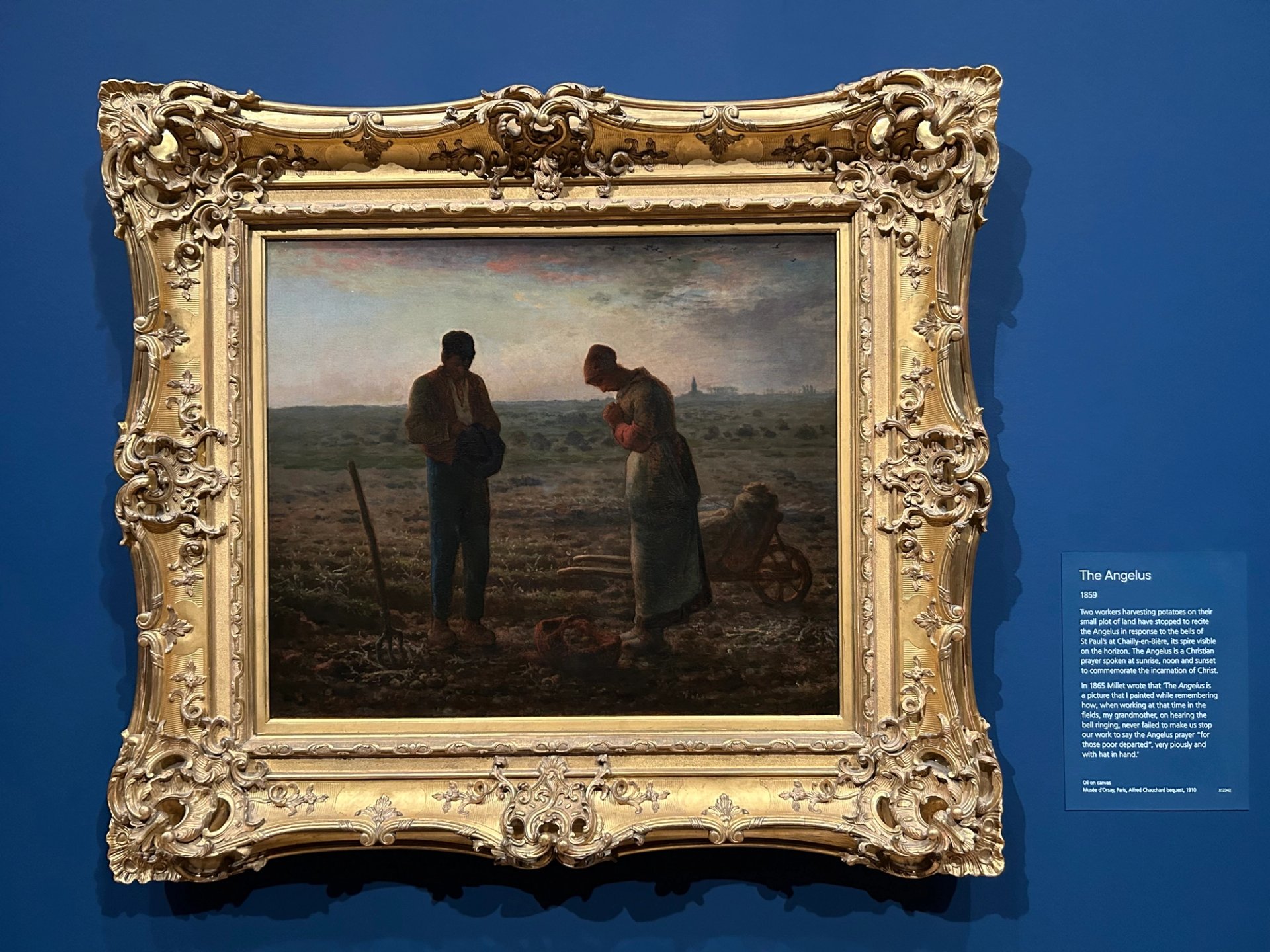
Jean-Francois Millet’s L’Angelus (1859)
Musée d’Orsay, Paris
Martin Bailey is a leading Van Gogh specialist and special correspondent for The Art Newspaper. He has curated exhibitions at the Barbican Art Gallery, Compton Verney/National Gallery of Scotland and Tate Britain.
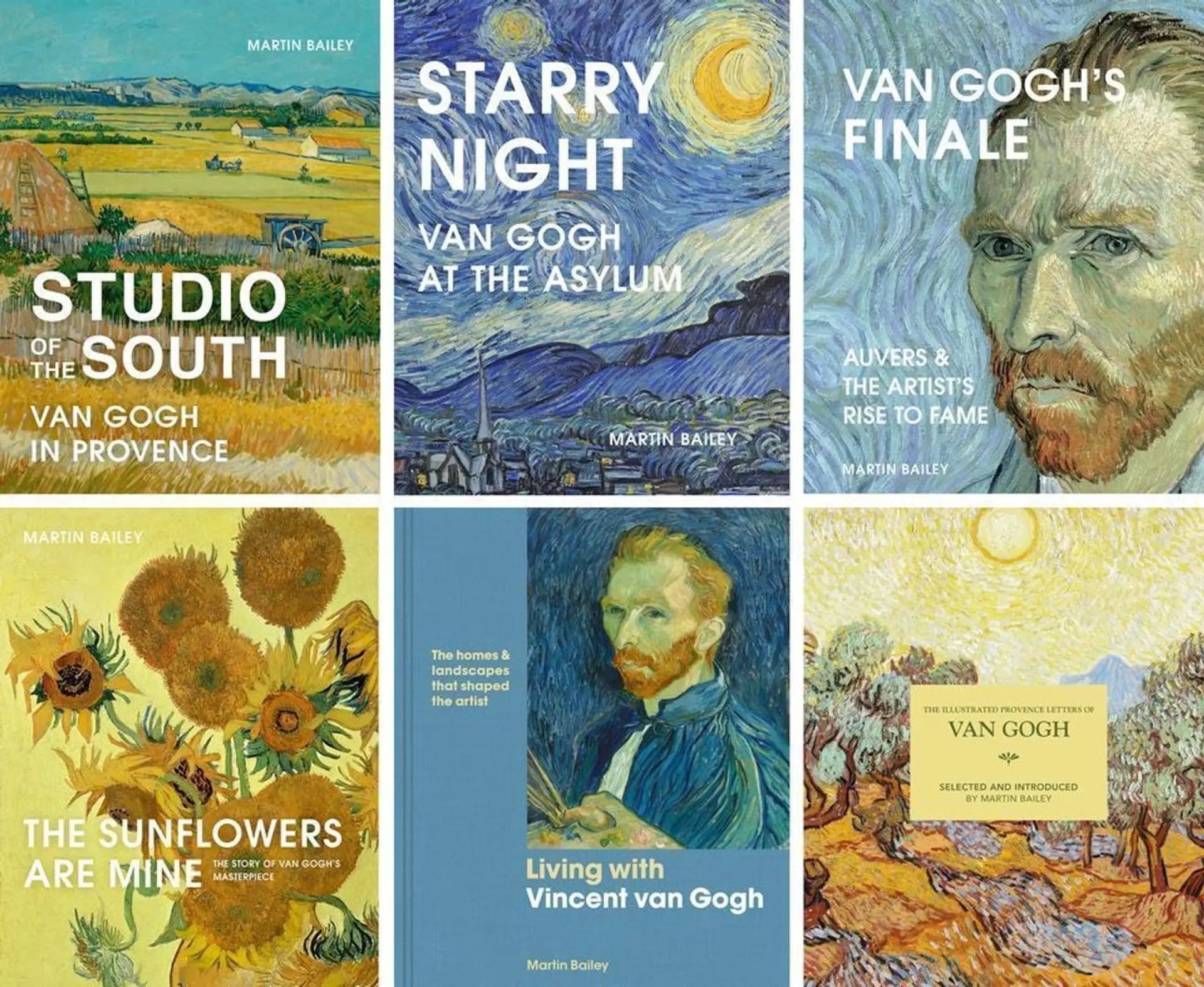
Martin Bailey’s recent Van Gogh books
Martin has written a number of bestselling books on Van Gogh’s years in France: The Sunflowers Are Mine: The Story of Van Gogh’s Masterpiece (Frances Lincoln 2013, UK and US), Studio of the South: Van Gogh in Provence (Frances Lincoln 2016, UK and US), Starry Night: Van Gogh at the Asylum (White Lion Publishing 2018, UK and US) and Van Gogh’s Finale: Auvers and the Artist’s Rise to Fame (Frances Lincoln 2021, UK and US). The Sunflowers are Mine (2024, UK and US) and Van Gogh’s Finale (2024, UK and US) are also now available in a more compact paperback format.
His other recent books include Living with Vincent van Gogh: The Homes & Landscapes that shaped the Artist (White Lion Publishing 2019, UK and US), which provides an overview of the artist’s life. The Illustrated Provence Letters of Van Gogh has been reissued (Batsford 2021, UK and US). My Friend Van Gogh/Emile Bernard provides the first English translation of Bernard’s writings on Van Gogh (David Zwirner Books 2023, UKand US).
To contact Martin Bailey, please email vangogh@theartnewspaper.com
Please note that he does not undertake authentications.


