

Henry Moore’s reputation in the UK’s public imagination is easily described as monumental. This applies to his work as much as his name, with the British sculptor known globally for large-scale public works, from The Arch (1979-80) in London’s Kensington Gardens to Nuclear Energy (1964-66), outside the University of Chicago.
And yet, as a new exhibition at the Holburne Museum in Bath will show, working on a small scale was just as critical to him. Henry Moore in Miniature brings together works from across the artist’s career, none of them more than 30cm in size. They show “an intimacy and a creative imagination that we forget when we think of Moore as the artist of grand metropolitan spaces,” says Chris Stephens, the curator of the show and director of the Holburne Museum.
The story begins in the 1920s, when Moore (1898-1986) forged his skills as an opportunist, searching for materials wherever he could. These included wood, Stephens says, adding that one of the very earliest works on view is a boxwood sculpture, Small Animal Head (1921). A decade later, Moore carved Head (1931) from alabaster stone that he collected from fields in Cumbria, while Mother and Child (1930) is an example of a work made from ironstone pebbles gathered on Norfolk beaches.
Moore’s Mother and Child (1930) Photo: Michel Muller. Reproduced by permission of The Henry Moore Foundation
The show will also feature models cast in lead, a material he began using “because it was quite easy to access and has a low melting point so can be melted in the kitchen”, Stephens says.
Moore saw his smaller sculptures as works of art in themselves, often casting them in bronze as separate editions. Indeed, for Moore the most important concern, Stephens says, was scale rather than size. “He talks about how you can have a large sculpture which is petty and similarly a small work which has a sort of grand scale. It’s about how he sees that, and then he can scale it up later on.”
This complex, symbiotic relationship Moore forged between his miniatures and his larger works is emphasised throughout the show. Other highlights will include nine terracotta Heads—never before seen in public—made in the early 1950s as planning for a pair of sculptures for his local church in Hertfordshire. “You can see him experimenting with different ideas,” Stephens says. “Some of them are classical looking, others quite Brutalist,” even recalling the images of graffiti taken by the photographer Brassaï in Paris, Stephens adds, which Moore had probably seen.
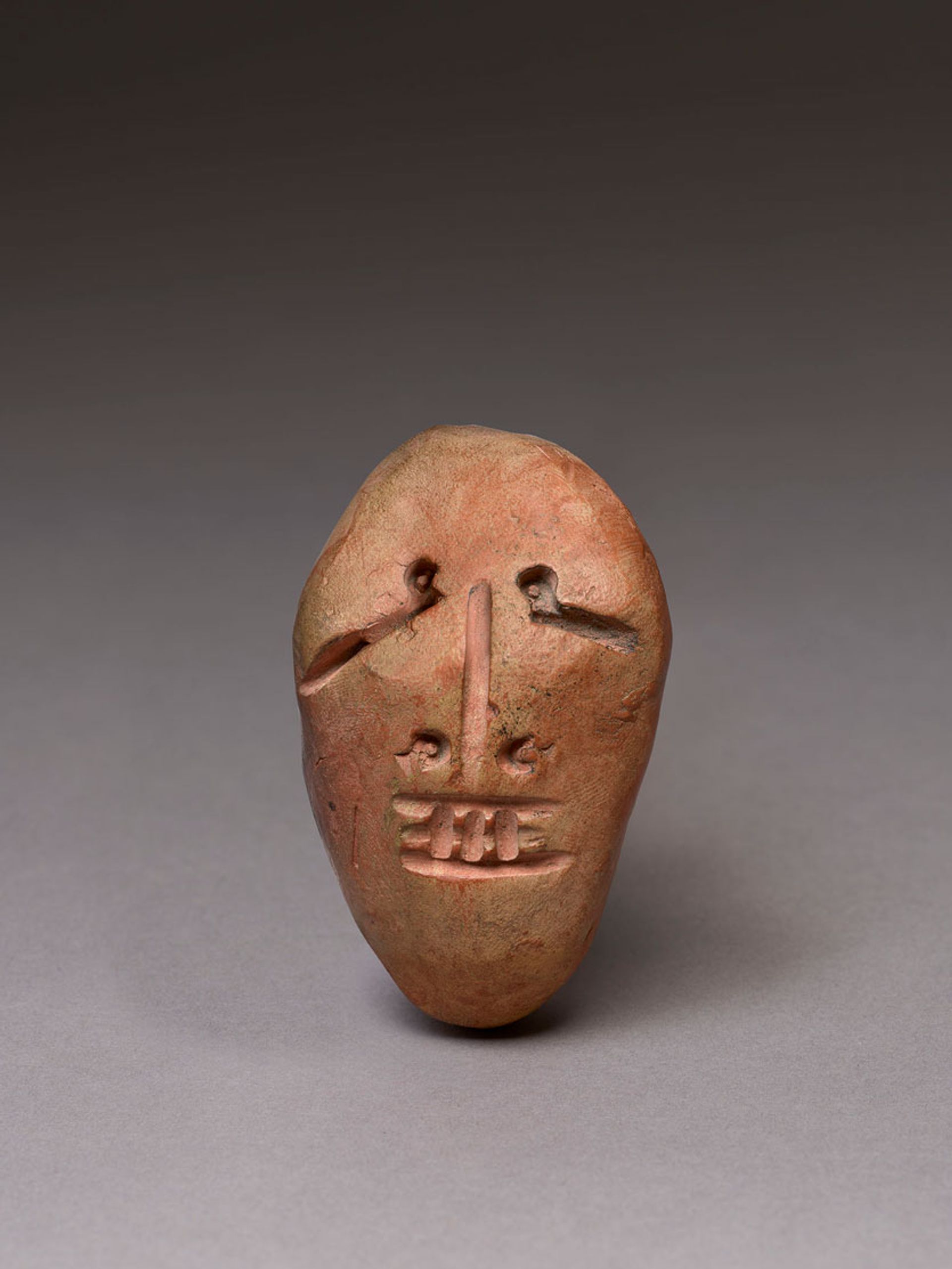
Moore’s Head 6 (1953) Photo: Prudence Cuming Associates. Reproduced by permission of The Henry Moore Foundation
As well as maquettes of works such as The Arch and Nuclear Energy, there will also be a collection of bones, sticks and stones that the artist used across different works. “There’s a nice moment in the mid-1950s when he makes what he calls upright motifs, which are sort of totem poles in bronze,” Stephens says. “One of the maquettes is just a walnut shell, and you then see the negative of it appearing on one of the faces of these totem poles.”
When seeing these works “you get a sense of that inventiveness of the artist just sitting tinkering in his shed,” Stephen says, “as opposed to the artist directing the grand bronze foundry in Berlin, which is often the image you get of Moore.”
• Henry Moore in Miniature, The Holburne Museum, Bath, 3 May-8 September


