

It is always tricky for a green-themed Biennale to garner credibility, given the intrinsic environmental unfriendliness of any large-scale international art show designed to attract artists and visitors from across the globe. The shipping! The carbon-belching air miles! The footfall! However, right from its inauguration in 2021, the Helsinki Biennial has not been afraid to grapple with the challenges of squaring sustainability with the cultural and economic benefits of biennialization.
Working in partnership with Helsinki Art Museum (HAM), the biennial made a founding pledge to honour the city of Helsinki’s commitment to carbon neutrality by 2030. At the same time, it was an early adopter of such practical measures as a carbon footprint calculator, the active promotion of slow travel and land transportation and the recycling and/or using up of all artwork materials. The biennial even rejected artificial forms of lighting so as not to disrupt the local bat population.
Foregrounding the non-human
The first iteration of Helsinki’s biennial went under the title From the Same Sea. This inaugural edition had the avowed aim of highlighting the interconnectedness of all things and the shared consequences of human actions on the planet. Then, in 2023, the underlying theme asked that we pay close attention to “animals, plants, the environment and other entities around us…” in the hope that, as per its title, New Directions May Emerge.
Gunzi Holmström: From the Dark into the Great Blue Yonder, 2025. Helsinki Biennial 8.6.–21.9.2025, Vallisaari Island
Photo: HAM / Helsinki Biennial / Sonja Hyytiäinen
Now this third Helsinki Biennial marks what is undoubtedly a new departure in eco-biennales by conspicuously foregrounding the non-human. In the work of its 37 participating artists and artist collectives, Homo Sapiens are relegated to the margins. Instead, flora, fauna and the natural environment take centre stage in a biennale that calls itself Shelter: Below and beyond, becoming and belonging.
“Our intention is for this edition of the Helsinki Biennial to encourage a shift in thinking, away from anthropocentrism and towards a better understanding of the delicate and severely imbalanced relationship between humankind and nature,” say the show’s co-curators, Blanca de la Torre, the recently appointed director of the Valencian Institute of Modern Art and Kati Kivinen, the head of exhibitions at HAM.
Under the slogan “Non-humans first!” the duo aim for this biennial to offer visibility to what they describe as “beyond-human realities” and to allow “non-human voices to enter into dialogue with human perspectives. “Through these exchanges we can begin to re-think our position in the more-than-human world,” they declare.
The biennale’s main venue is on Vallisaari Island, a protected nature reserve that is a 15-minute boat ride from the Helsinki city centre. Over the centuries Vallisaari has played host to seal hunters, seafarers, pilots, and both Russian military personnel and Finnish Defence Forces and their families. The last remaining inhabitants left the island in 1996. The site lay closed off until 2016, and is currently a home to a rich range of flora and fauna, including some rare bat and insect species.
Not only are the majority of the Biennial’s works sited here, but this year the island itself has also been given its own catalogue essay, Words of the Island. “I have many stories to tell,” the text declares, and certainly many of the works on show respond to Vallisaari’s rich natural and historical context.
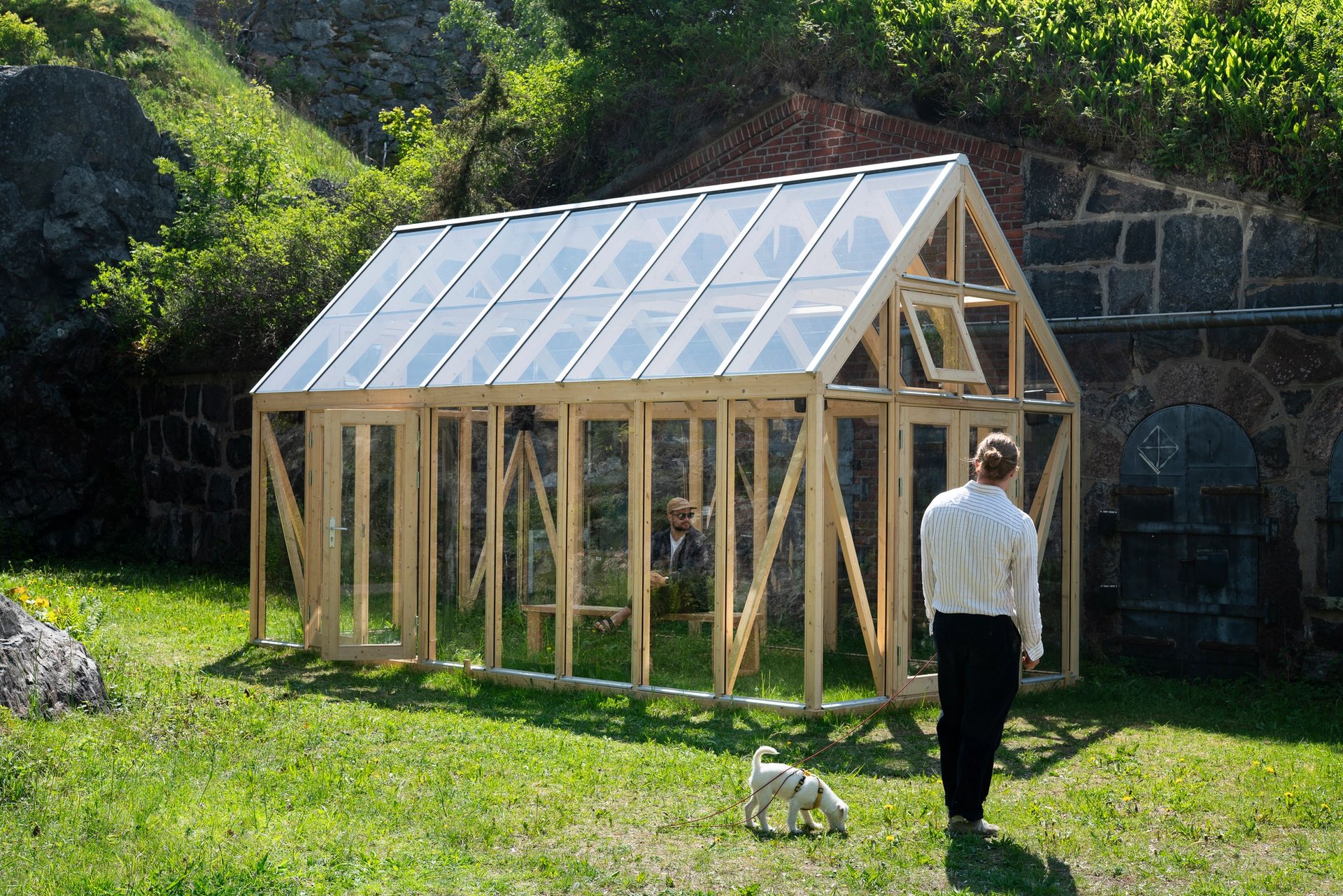
Band of Weeds: The Weep of Trees, 2021-23. Helsinki Biennial 8.6.–21.9.2025, Vallisaari Island
Photo: HAM / Helsinki Biennial / Sonja Hyytiäinen
Giving voice to flora and fauna
For instance, during its military occupation, all the trees on the island were felled. In their sound installation, The Weep of Trees, the Finnish art collective Band of Weeds pay tribute to humankind’s often casually cruel disregard of plant life. Inspired by a section of the Finnish epic poem Kalevala, which describes the lament of felled birch, this aural work converts vegetal stress into atmospheric music.
Plants are also given voice in Sonic Seeds and Subterra, a sound composition, video work and sculptural installation by Mexican artist Tania Candiani. The work is based on audio-visual scans of growing roots, as well as a series of custom made rattles inspired by traditional Mexican instruments made from seeds and butterfly cocoons. All of these elements combine to connect sound, movements and interspecies life cycles.
In Vallisaari’s Alexander Battery building, once a space where weapons were stored, Denmark’s Tue Greenfort has looked to the surrounding waters and created mouth blown, blue tinted glass sculptures that represent two species of jellyfish. One species, hundreds of millions of years old, now proliferates throughout the world’s oceans, including the Baltic Sea, as the climate changes. Outside, in the shallow coastal waters adjoining these military structures, Greenfort has installed a group of concrete-cast horseshoe crabs, another living fossil dating back to primeval times and recreated in a material that recalls the more recent fortification of the island.
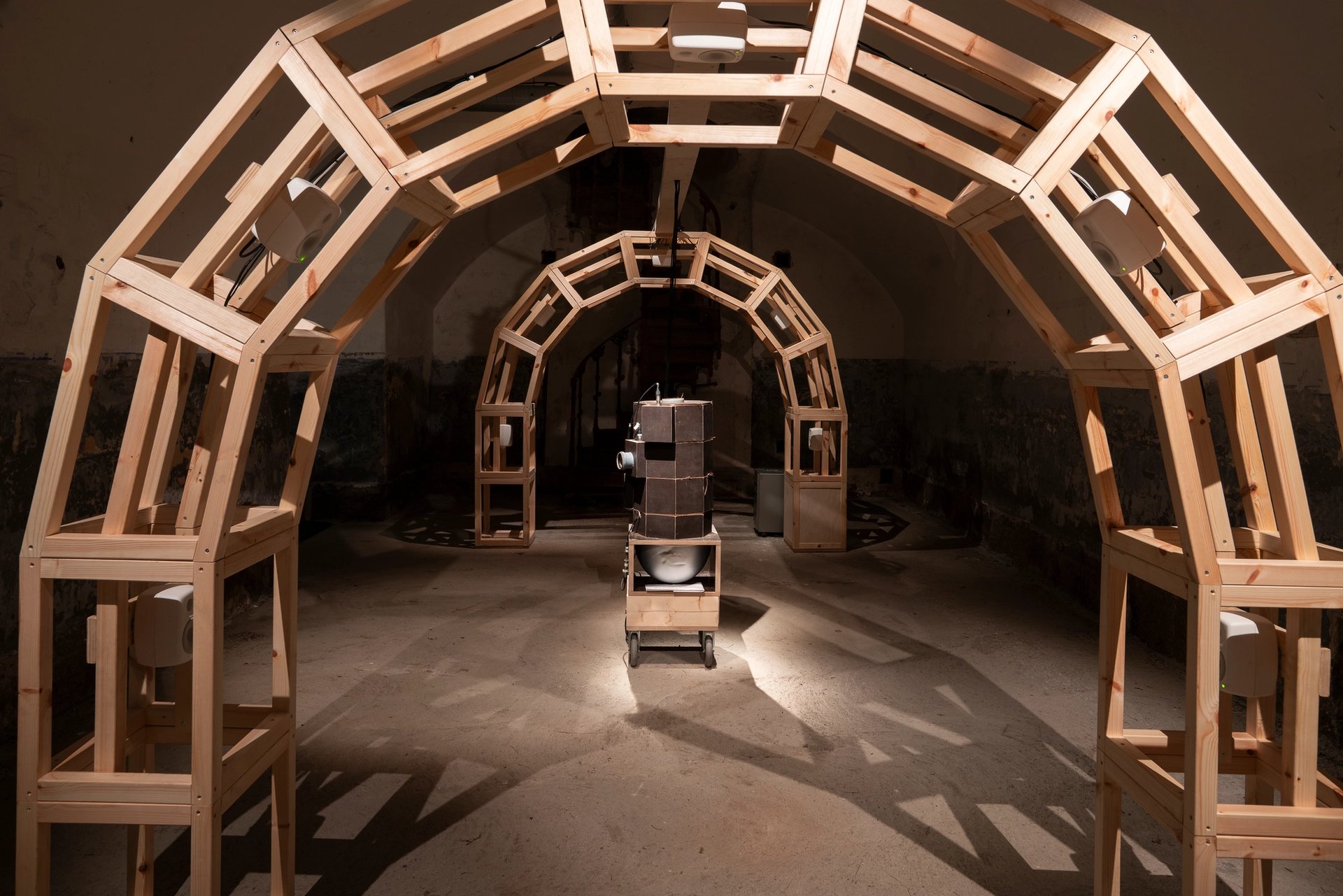
Tamara Henderson, Worm Affair, 2023. Helsinki Biennial 8.6.–21.9.2025, Vallisaari Island
Photo HAM, Helsinki Biennial, Sonja Hyytiäinen
The landscape as artwork
Elsewhere in the Battery building more-than-human species are the co-creators of another sound installation. Here Canadian/Australian artist Tamara Henderson’s Worm Affair delivers a live audio feed of the rhythmic munching and burbling digestion of compost worms as they transform death and decay into rebirth and growth through decomposing organic matter. As well as this subterranean soundscape, Henderson also celebrates the alchemical power of worms as shapers and creators of fertile soil in a series of paintings on display in the South galleries of HAM, the Biennale’s other main location.
The entire landscape of Vallisaari and beyond becomes the artwork in Danish-Icelandic Olafur Eliasson’s Viewing Machine, installed on the isthmus between Vallisaari and Kuninkaansaari. This multiply-reflective optical device can be rotated and shifted to focus on any chosen surrounding detail. This allows the work to suggest and celebrate plural points of view, both metaphorically and literally, with visitors free to choose whichever parts of the scenery they wish to set in their sights.
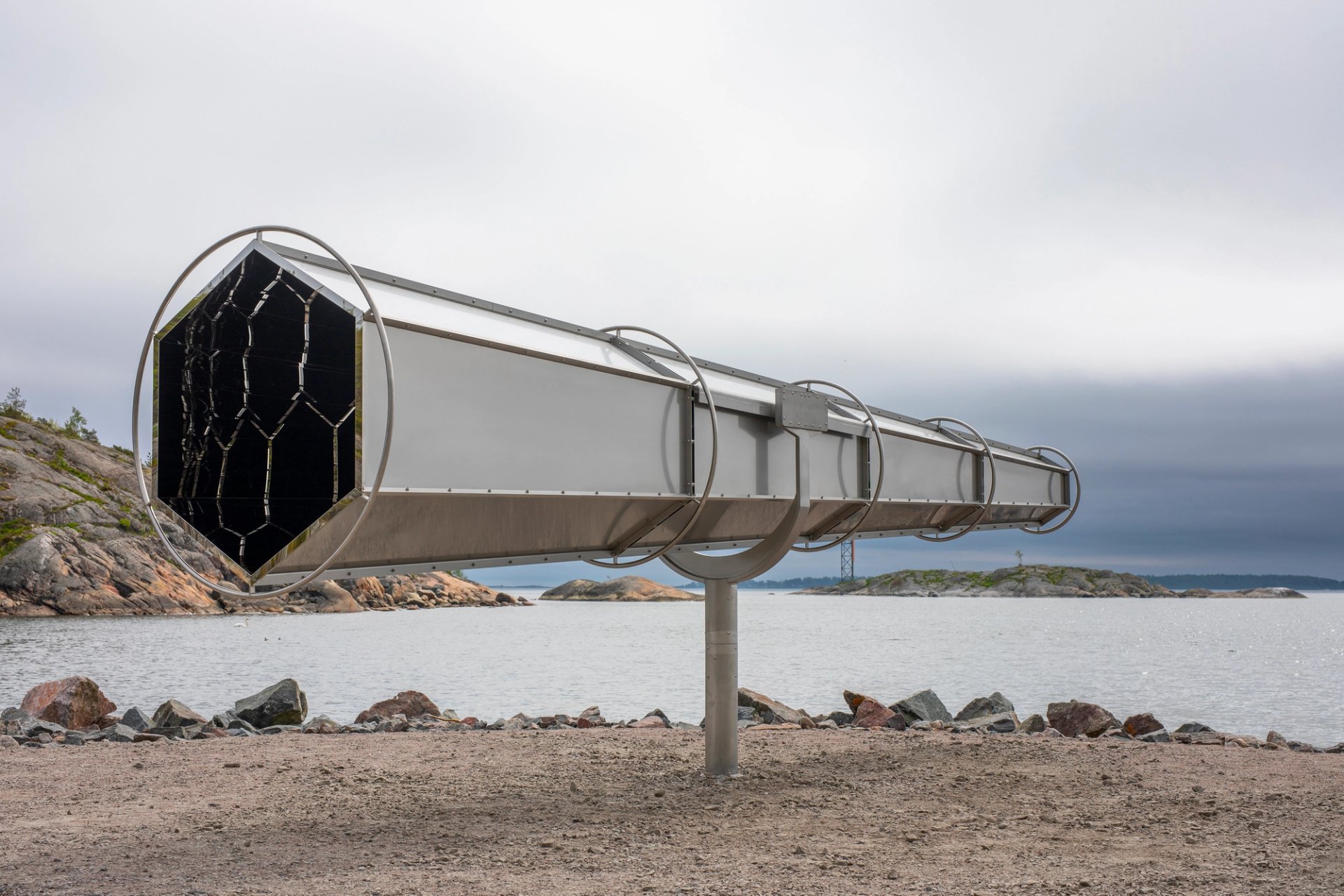
Olafur Eliasson, Viewing Machine. Helsinki Biennial 8.6.–21.9.2025, Vallisaari Island
Photo HAM, Helsinki Biennial, Sonja Hyytiäinen
Even more pervasive from a different sensory point of view is Finnish Raimo Saarinen’s Invasive Scent. The olfactory installation is designed around the volatile organic compounds released by plants to attract pollinators, defend against insects and parasites, and to serve as signals to neighboring species. Wafting invisibly from their concealed stashes in hollow tree trunks in three locations on Vallisaari, these aromas mix the fragrances of the island’s original endangered species with the scents of non-native plants to invite reflection on various forms of migration and often pejorative distinctions between ‘native’ and ‘invasive’ species.
Brazilian artist Ernesto Neto, meanwhile, regards the earth as a holistic body, describing his artworks as “animal landscapes”. For Vallisaari Island he has created SaariBird, a large bird-shaped tent of hand woven netting filled with stones and objects collected on site in tribute to the birds living on the island. Visitors are invited to enter the installation and imagine themselves swallowed by a large bird, and to blow on the whistles provided so that even the surrounding air becomes part of the work.
Threats to agriculture and ecology
Back on the mainland in HAM’s south gallery, the non-human also dominates—most notably in Swedish born Ingela Ihrman’s eight metre tall fabric and mixed media installation. The work is a representation of the herbaceous plant Heracleum mantegazzianum—also known as giant hogweed—which was introduced to Europe and North America as an exotic horticultural plant but is now classified as an invasive species, causing allergic reactions in humans and posing a threat to agriculture and ecology. Ihrman’s practice draws on interspecies entanglement and how humans simultaneously romanticise and exploit nature; and these complex natural interdependencies are also explored in Nigerian born, Belgium based Otobang Nkanga’s tapestry of abstracted plants, corals and human limbs floating in an aquatic landscape that hangs nearby in the same gallery.
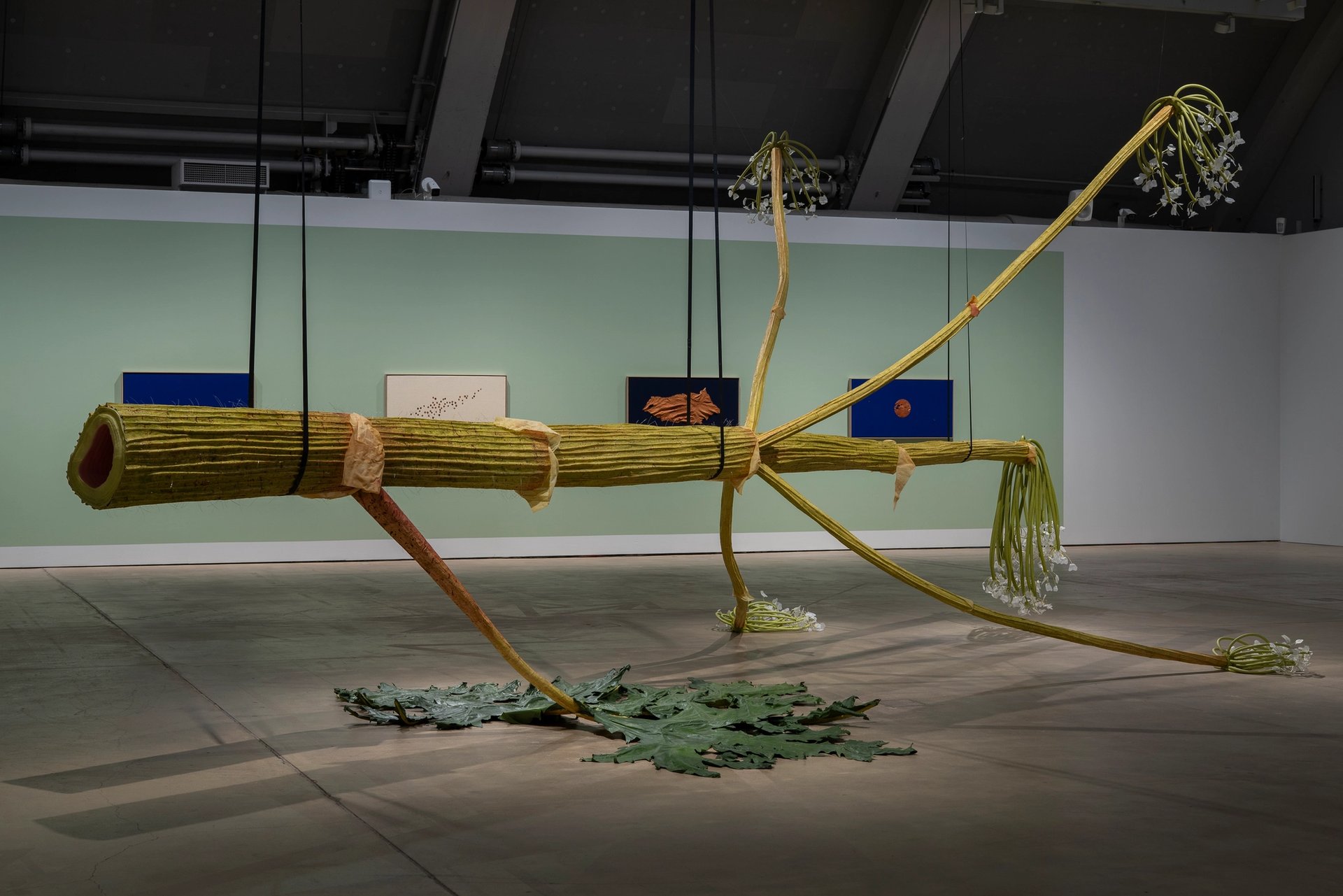
Ingela Ihrman: The Giant Hogweed, 2020, detail. Helsinki Biennial 8.6.–21.9.2025, HAM Helsinki Art Museum
Photo: HAM / Helsinki Biennial / Sonja Hyytiäinen
Many of the works on show at this biennial also put its Shelter theme into practice in their deliberate attempts to attract non-human as well as human audiences. In Esplanade Park, the biennial’s third venue, Helsinki-based artists Kalle Hamm and Dzamil Kamanger have installed Bug Rugs. The four giant insect hotel sculptures feature decorative patterns inspired by a traditional Finnish rya rug wool tapestry and a Kurdish kilim rug, both of which are unexpectedly similar in their geometric design. Made from sustainably produced wood stuffed with terracotta fragments and locally-foraged plant matter, these attractive bug boxes invite insects to make a home for themselves amid the human crowds in one of Helsinki’s busiest downtown parks.
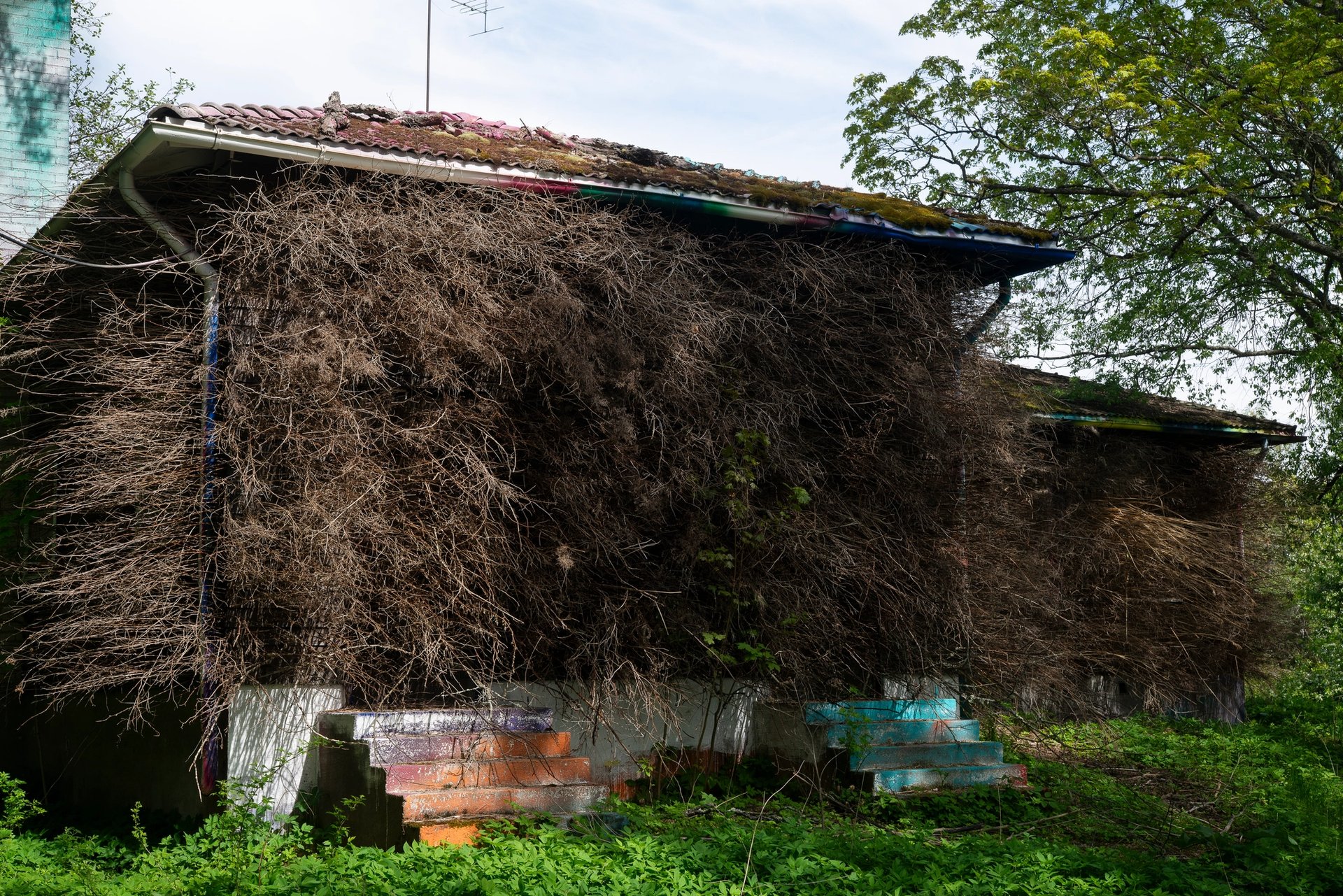
Back on Vallisaari, the Finnish artist collective nabbteeri have created a suitable host, made from fallen branches, dead perennials and other locally gathered plants which cover the exterior of the island’s dilapidated schoolhouse. Clinging to a building formerly occupied by the children of soldiers, this twiggy, leafy foraged melange evokes camouflage and self defence. It also includes some of the plant species—such as Turkish warty-cabbage and hoary alyssum—which were accidentally introduced to the island as human-imported fodder. Now, whether indigenous or alien, they all combine to form a multispecies shelter for the island’s diverse cohabitors.
“Sustainability is not a subject. It is an attitude, a way to live in the world,” declares co-curator Kati Kivinen. “It’s not only about carbon footprints and energy consumption. It’s a way of rethinking all aspects of an exhibition from how we use and how we involve local communities and avoid extractivist practices. Sustainability must be part of the curatorial DNA, not an afterthought.”
This Biennial seems to be closer than most others to putting this into practice.
- Helsinki Biennial – Shelter: Below and beyond, various venues, until 21 September


