

“This year’s exhibition is titled In the Shadows,” says Fatoş Üstek, the curator of this year’s Frieze Sculpture. “I was drawn to shadows because they are both origin and metaphor—the first paintings were said to be outlines of shadows, and sculpture itself is inseparable from the body’s shadow. In Regent’s Park, as autumn arrives, shadows lengthen, becoming quieter, more contemplative. I also think of shadows as the things we repress—guilt, shame or histories we’d rather forget. The sculptures here respond to those layers: human, animal, plant, material. They invite us to walk, pause and reflect, and to recognise the unseen presences shaping the world we inhabit.” Here, she tells us about six key works.
Andy Holden, Auguries (Lament) (2025)
Andy’s piece (above) visualises recordings of bird calls as 3D waveforms. The nightingale, the cuckoo and the crow are species whose populations are vanishing before our eyes; the nightingale has declined by more than 90% in Britain. In literature and myth, these birds were seen as guardians of time, destined to outlive us. Now their absence signals something darker. Andy freezes them in sculpture, so that we encounter them as both present and already disappearing. The work becomes an augury in itself: a lament for what we’re losing, but also a reminder of the shadows cast by human intervention in the natural world.
Photo: Linda Nylind; courtesy of Frieze
Jaune Quick-to-See Smith, King of the Mountain (2024–25)
Jaune was a pioneer of Native American contemporary art, and it’s very important to have her voice here. King of the Mountain is rooted in her community’s relationship with the buffalo—the animal that was both a spirit guide and a way of life until it was hunted to near extinction. The last buffalo in her Montana homeland was born in 1930. By placing the buffalo here in London, Jaune flips the colonial gaze: she relocates the “king” onto the coloniser’s land. It’s satirical, political and deeply autobiographical, bringing shadows of violence and resilience into dialogue with the park.
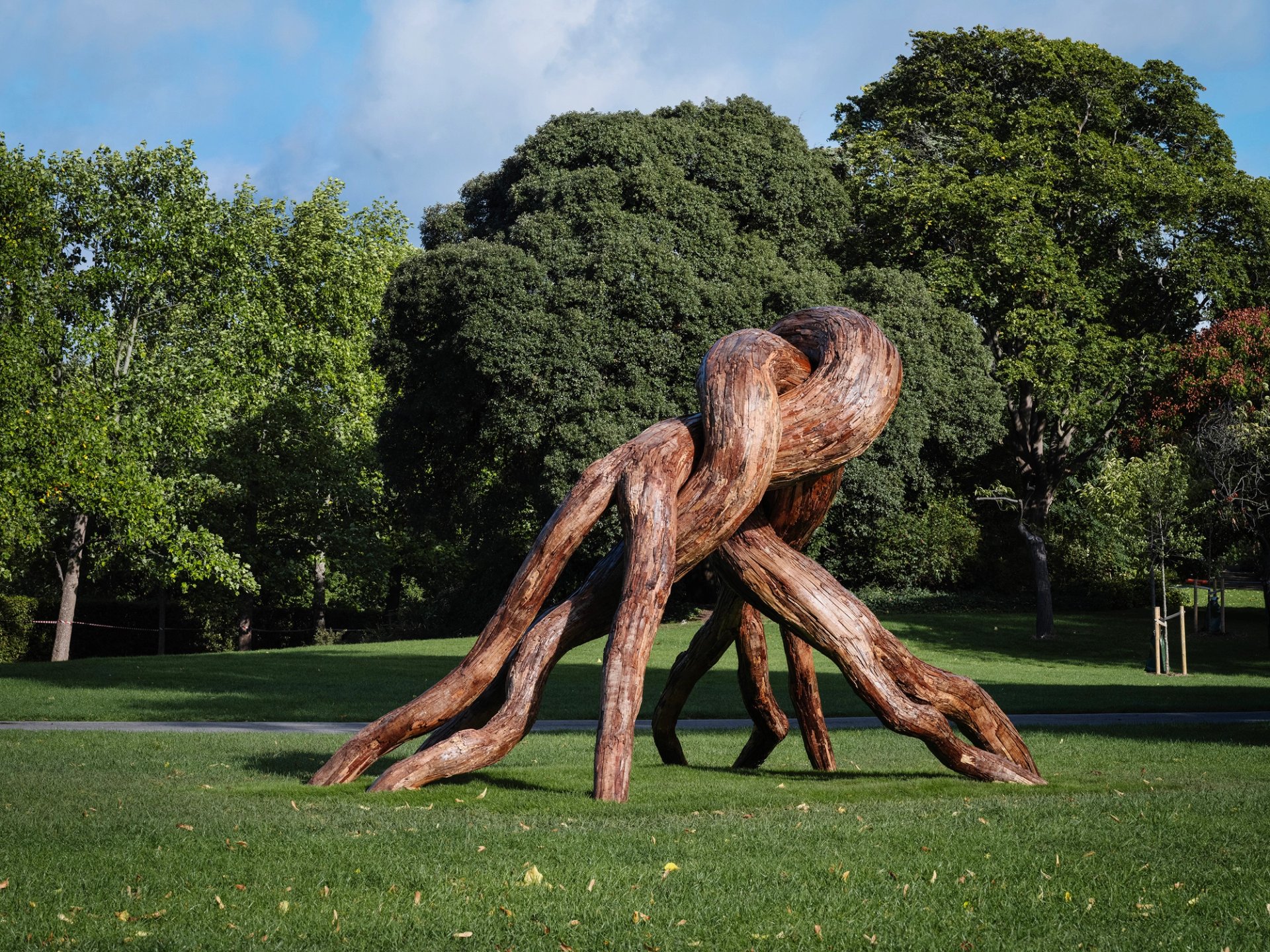
Photo: Linda Nylind; courtesy of Frieze
Henrique Oliveira, Desnatureza 8 (2025)
Henrique works with salvaged wood, timber that once served as furniture, cupboards, door frames. He reanimates these materials into twisting, root-like forms. Desnatureza 8 looks almost like an insect body, or a spider, or simply a natural root system, depending on how you view it. There’s a sense of metamorphosis, of materials carrying their previous lives into a new organic structure. I placed it near decaying logs in the park so the dialogue between lived and salvaged wood could unfold. For me, it embodies shadows as traces—objects that once belonged elsewhere, now given another, almost otherworldly, presence.
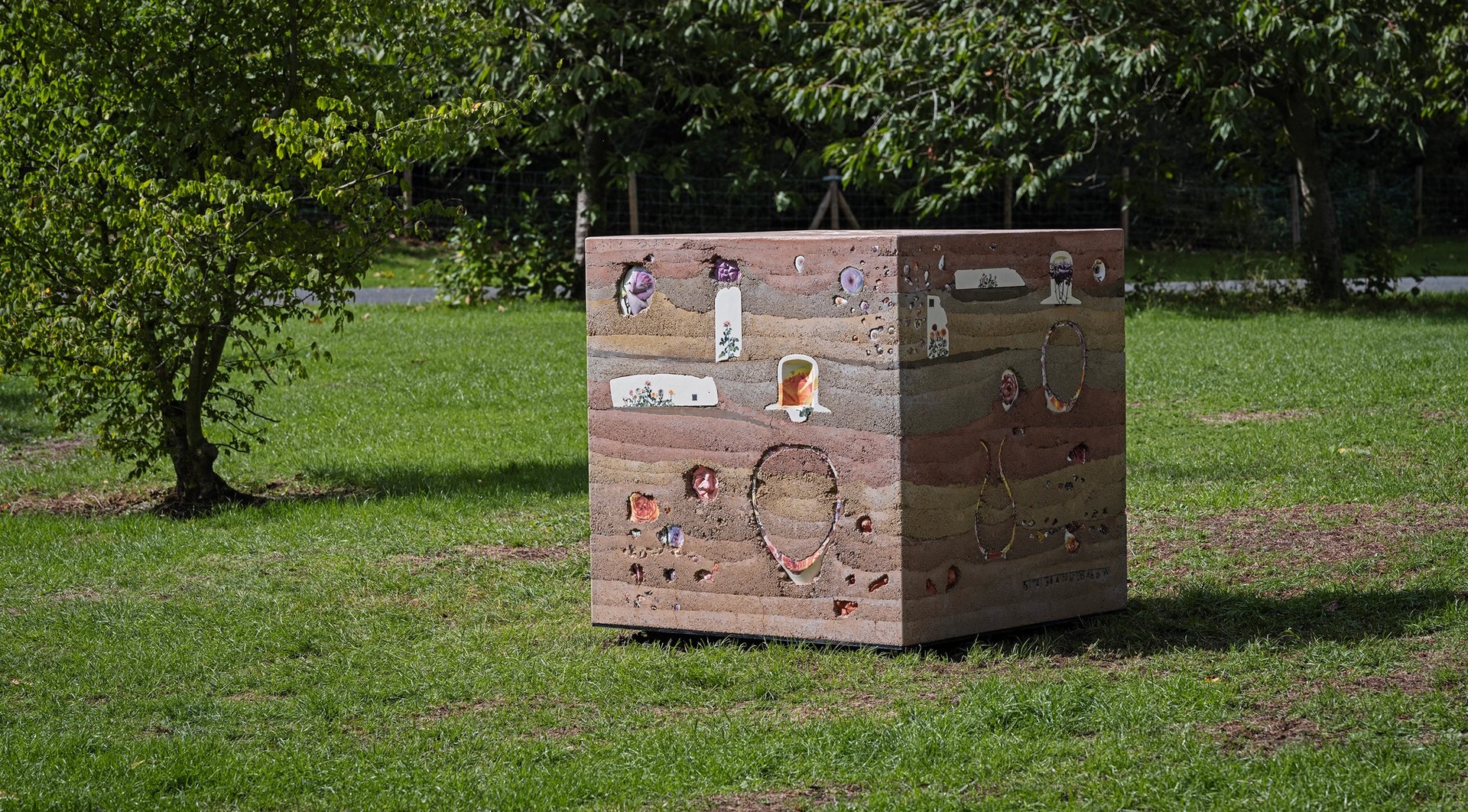
Photo: Linda Nylind; courtesy of Frieze
Burçak Bingöl, Unit Terrenum Rosa (2025)
Burçak has created what I see as a monument to debris, a kind of archaeology of the park. London soil is layered with history—you can find broken ceramics, shards, even pipes and plates from the Victorian era or the Second World War. Unit Terrenum Rosa captures that sense of stratification, of lived experiences sedimented over time. The rose prints on the ceramics draw from the Queen’s Rose Garden at Regent’s Park, the British Embassy and the Sufi Centre in Istanbul, while the clay itself was sourced from the soil of English gardens she uncovered during her research. It’s a reminder that Regent’s Park isn’t only a picturesque landscape, but also a dense record of civilisation, memory and loss. Her work really connects to the idea of shadows, because it illuminates the forgotten or buried remnants beneath our feet.
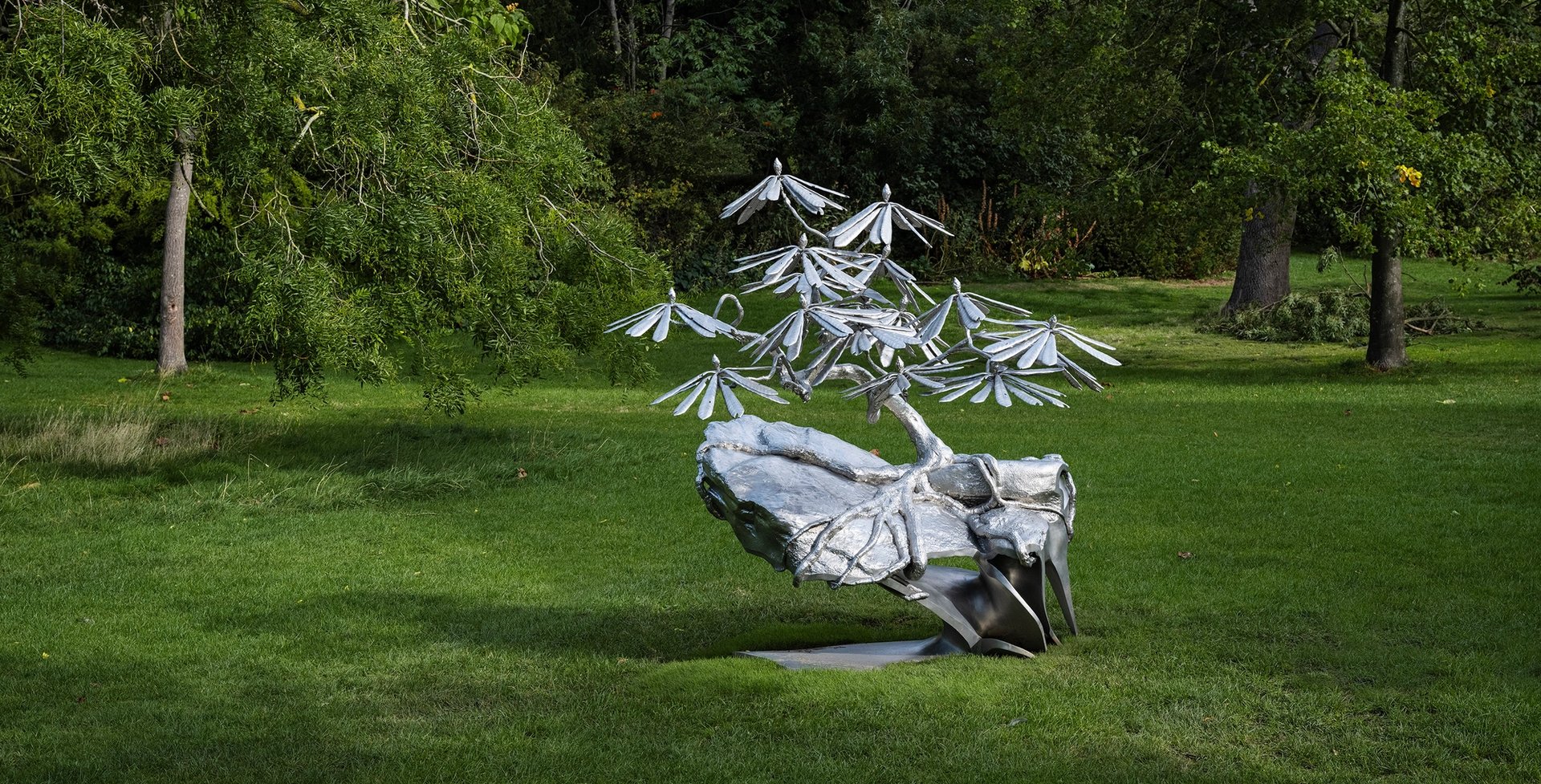
Photo: Linda Nylind; courtesy of Frieze
Timur Si-Qin, Last of the Wild and Free (Rhododendron calophytum) (2025)
Timur’s work is a hyper-real depiction of a wild rhododendron species that can’t be cultivated by humans. From a distance, it might look like a real plant, but when you approach it you realise it’s aluminium. That illusion, that play of shadow and surface, speaks directly to the theme. He is part of a younger generation of artists working with new materialism, where the question is not only what an object represents, but how it embodies relationships between human and non-human. His sculpture stands as a double: at once wild and artificial, fragile and enduring, free yet fabricated.
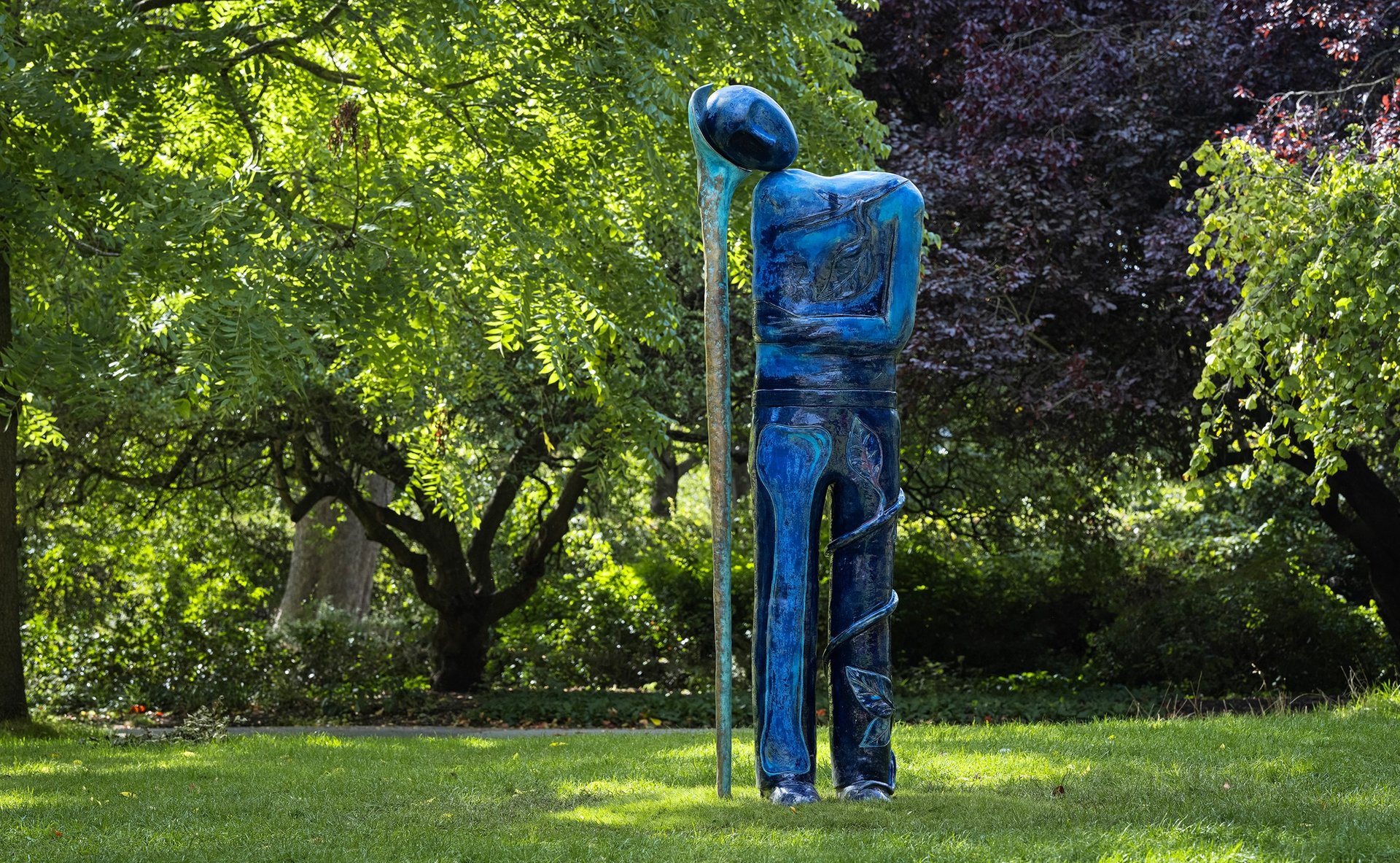
Photo: Linda Nylind; courtesy of Frieze
Grace Schwindt, When I Remember Through You (2025)
Grace’s work is about moving beyond a human-centred perspective. When I Remember Through You suggests that memory is not only stored in our minds or bodies but also in plants and in nature itself. She creates this transformation between human and vegetal bodies, asking us to imagine memory as something shared across species. It’s deeply tied to the theme of shadows: unseen histories and relations that we often overlook. Her sculpture becomes a kind of living reminder, a prompt to build more nourishing, reciprocal relationships with the environment rather than extractive or consumptive ones.


