

A 350-year-old fox the size of a thumb nail, a tiny intricately folded star, and a paper and silk chicken have emerged from under the floorboards of Sutton House, a National Trust property in Hackney, London.
In the 17th century, the house was a school, where the trust believes the girls may have learned the hobby of paper cutting from their teacher Hannah Woolley, who included it in her 1668 book of household management, A Guide to Ladies, Gentlewomen and Maids. She described “cutting of prints, and adorning rooms or cabinets, or stands with them” as skills which “I shall be willing to impart to them, who are desirous to learn”.
Hannah Woolley’s A Guide to Ladies, Gentlewomen and Maids
Photo: Folger Shakespeare Library
Woolley had her own school in Hackney, then a recognised centre of education for girls, but the trust believes she taught at Sutton House after she was widowed in 1661.
Elaborate rooms from the 18th century, decorated with cut and pasted prints by wealthy women with time on their hands, survive in several mansions, but the Hackney schoolgirls’ scraps from the earliest days of the hobby are exceptionally rare survivals.
Isabella Rosner, an expert in early modern material culture, identified the cuttings, and says they are almost identical to only two other known surviving examples, one of which is a decorative box dating to the 1680s held in a collection at Witney Antiques in Oxfordshire.
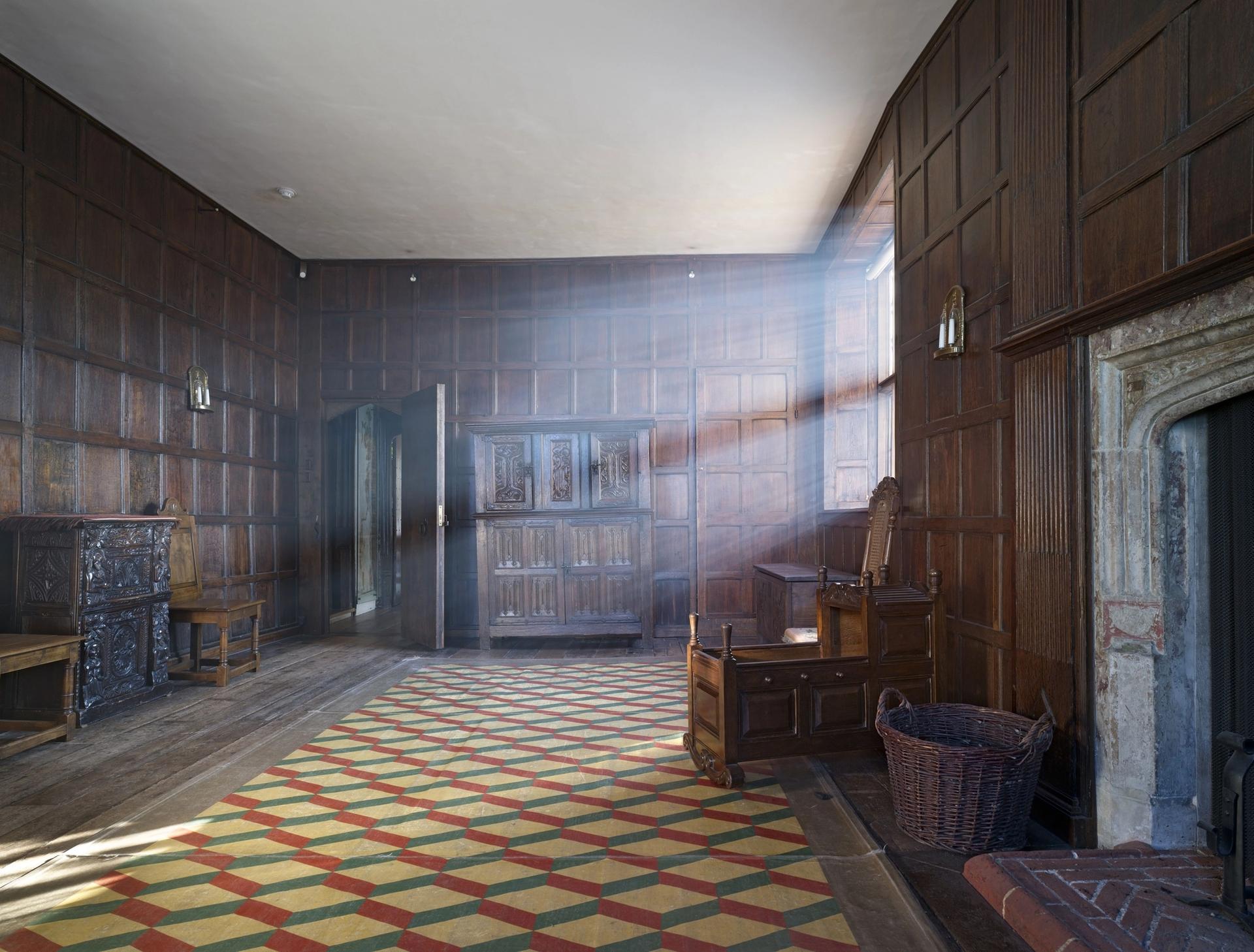
The Little Chamber at Sutton House, where the paper cuttings were found on a lintel during restoration. They are assumed to have fallen from the floor above
Photo: National Trust Images / Dennis Gilbert
The Sutton House cuttings were lost over centuries in the gaps between the floorboards, along with rubbish, food waste, and builders rubble. They were uncovered during a massive renovation job in the late 1980s when the house was rescued by the trust from near collapse, and have been stored in sacks since. Volunteers recently spent months searching through and cataloguing the mass of material, and found the fragile scraps of paper, including the hand made pieces and others cut from prints such as the couple in country clothing.
Each has a deeply personal feel. The chicken was made, for example, by a girl whose artistic talent was apparently greater than her spelling—she having labelled it “a hean”.
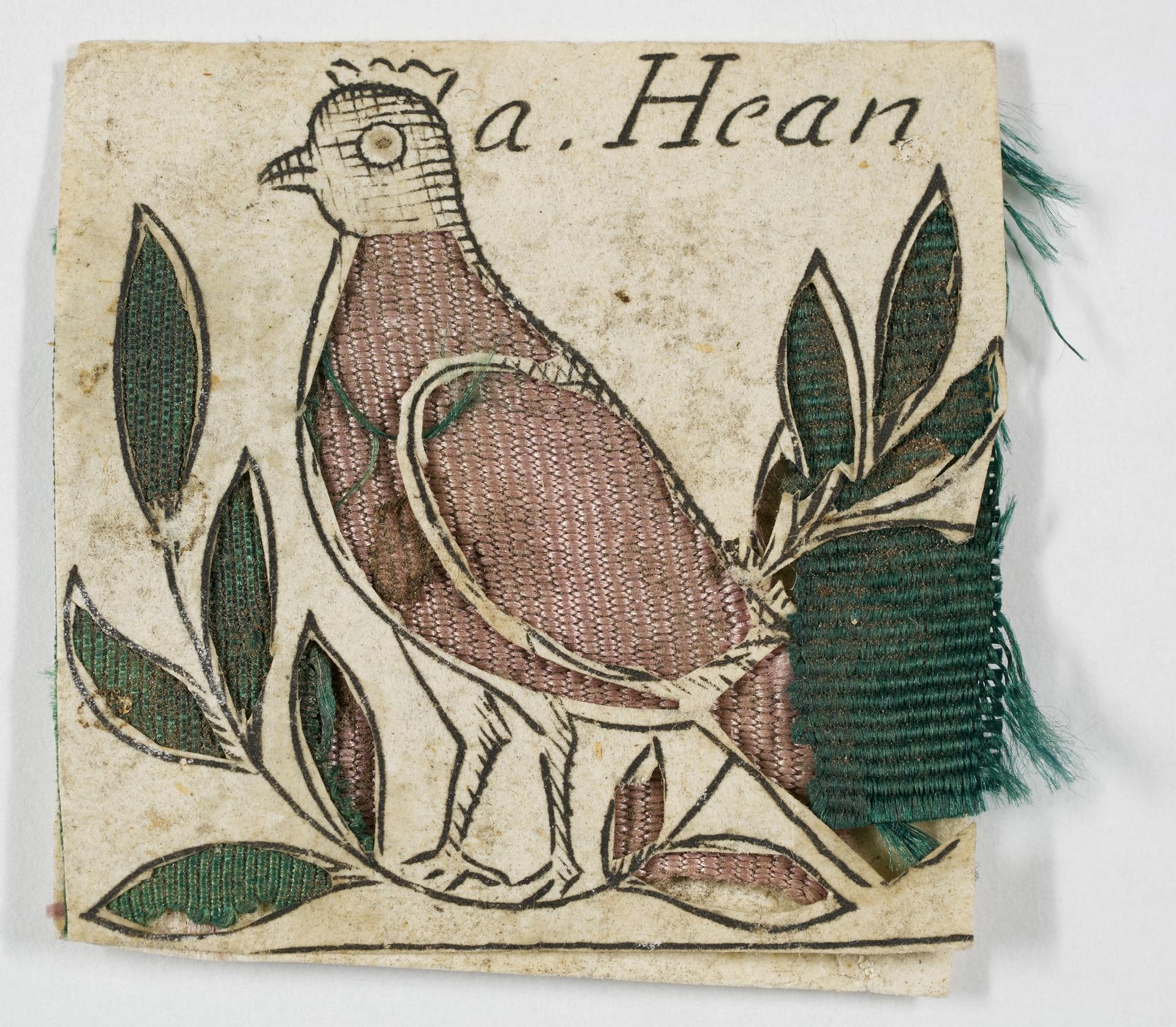
The hen (or hean)
Photo: National Trust / George Eksts
Kate Simpson, senior collections officer at the trust, described their discovery as thrilling. “We have long known about the role of Sutton House as a girls’ school over its lifetime but with few details about the classes, the pupils or teaching. This discovery brings to vivid life one of the skills that pupils were taught and the painstaking process of handling, cutting, and colouring such tiny pieces of paper. Yet this is an art form that is relatable today, it has lost none of its fascination, with paper crafts still popular among people of all ages.“
Sutton House was built in the 16th century, in what was then semi-rural Hackney, for Ralph Sadleir, a close aide of Thomas Cromwell in the court of Henry VIII. Its fortunes fluctuated through multiple owners and uses until by the early 1980s it was a squat, still fondly remembered locally for rock concerts and wild parties, a period commemorated in carefully preserved graffiti.
The paper scraps will be on display in a free exhibition at Sutton House, Lost by Schoolgirls, until December 2024.


