

A selection of Korea’s most exciting contemporary artists have been selected for this year’s Korean Artists Today, a long-term project which will see a cohort of artists chosen each year for their potential to make it on the global stage. See the full list here.
Byungjun Kwon challenges audiences to listen—and think—differently through works that bridge the realms of sound, technology and performance. His practice defies categorisation, ranging from immersive sound installations to custom-built instruments that seek to “expand the possibilities of sound”.
Kwon has been deeply interested in music from a young age, a passion that he says was likely influenced by his mother, a piano teacher. He began his musical career as a singer-songwriter in South Korea in the early 1990s, releasing six albums that span from minimalist house to alternative rock. In 2008, Kwon earned a degree in Art Science from the prestigious Royal Conservatoire in The Hague, Netherlands, having previously completed a sonology course there, and later worked as a hardware engineer at the Studio for Electro-Instrumental Music in Amsterdam, where he focused on developing sound-related devices and electronic instruments.
Byungjun Kwon, born in Seoul, 1971
Photo: © Park Seungki; courtesy the artist
His experience eventually led him to experiment with stage machinery and robotics. Technology is the “vital starting point” for his work, serving to “spark imagination through unexpected combinations and foundational principles”. While he sometimes sets out with goals, Kwon is “equally drawn to the intrinsic allure of the tools themselves, allowing their possibilities to shape my artistic direction”.
In his studio, Kwon handles drills and soldering irons “with the same mindset as playing an instrument”. He tends to arrive early in the morning—sometimes around dawn—and first focuses on computer-aided design (CAD) work, programming, artwork conceptualisation and scenario writing before shifting to hardware-related projects.
Kwon’s works are not “about outright invention”, but about years-long “contemplation and refinement”, he says. He adds that a core concept of his work is rooted in “freedom”, or “liberating both performances and audiences from conventional formats, instruments and theatrical spaces to redefine how art is experienced and shared”.
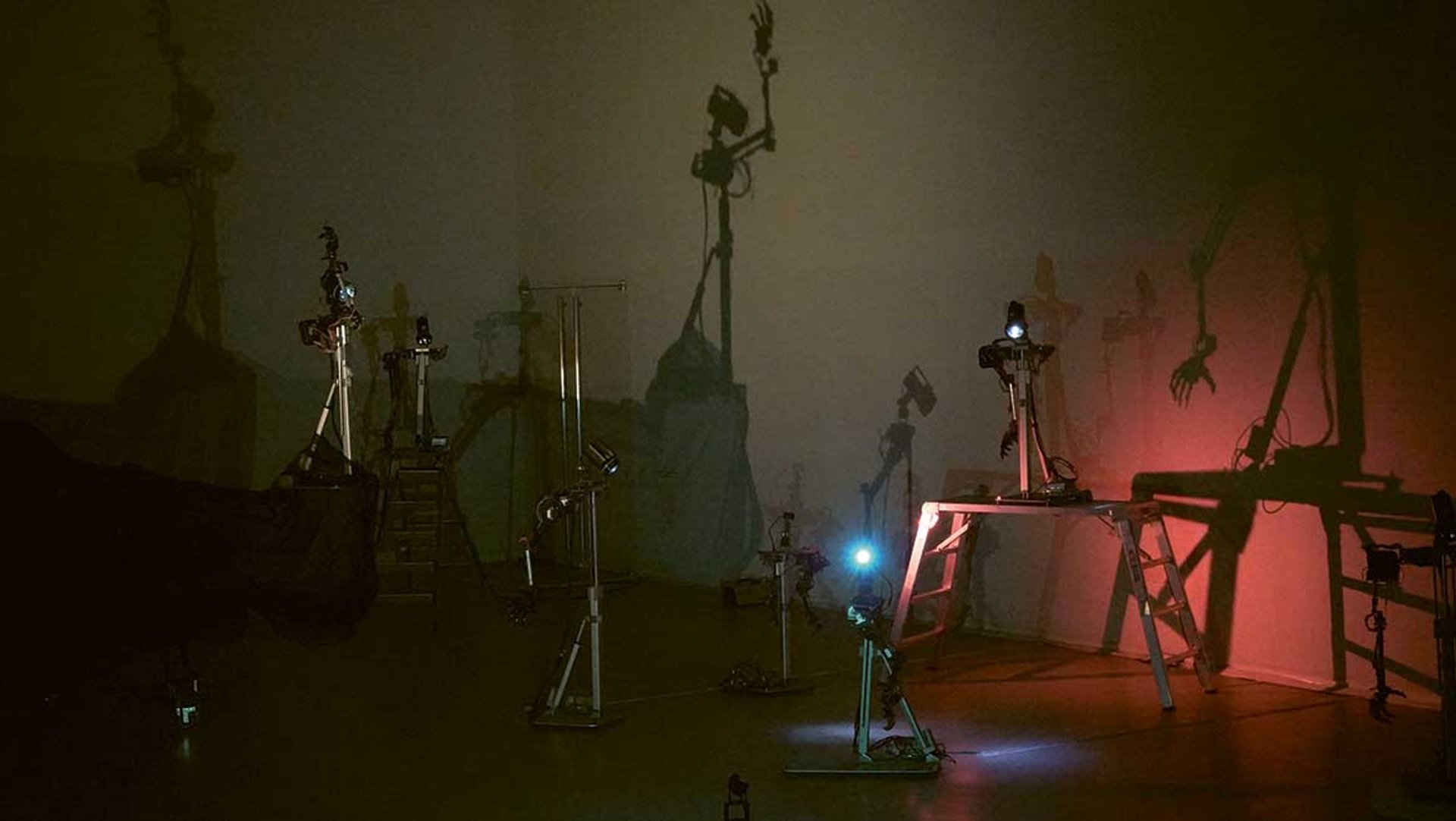
Lyrics Of Cheap Androids 2 (Robot Nocturne) (2020)
Photo: © Taeho Park; courtesy the artist
Audience interaction is a major component of Kwon’s work, which aims to “break away from the traditionally passive, one-sided way of experiencing performances”, he says. He wants audiences to have a direct experience that “naturally dissolves the boundaries between exhibitions and performances”, and creates “unpredictable, unique situations each time that focus on audiences steering their own self-directed journeys”.
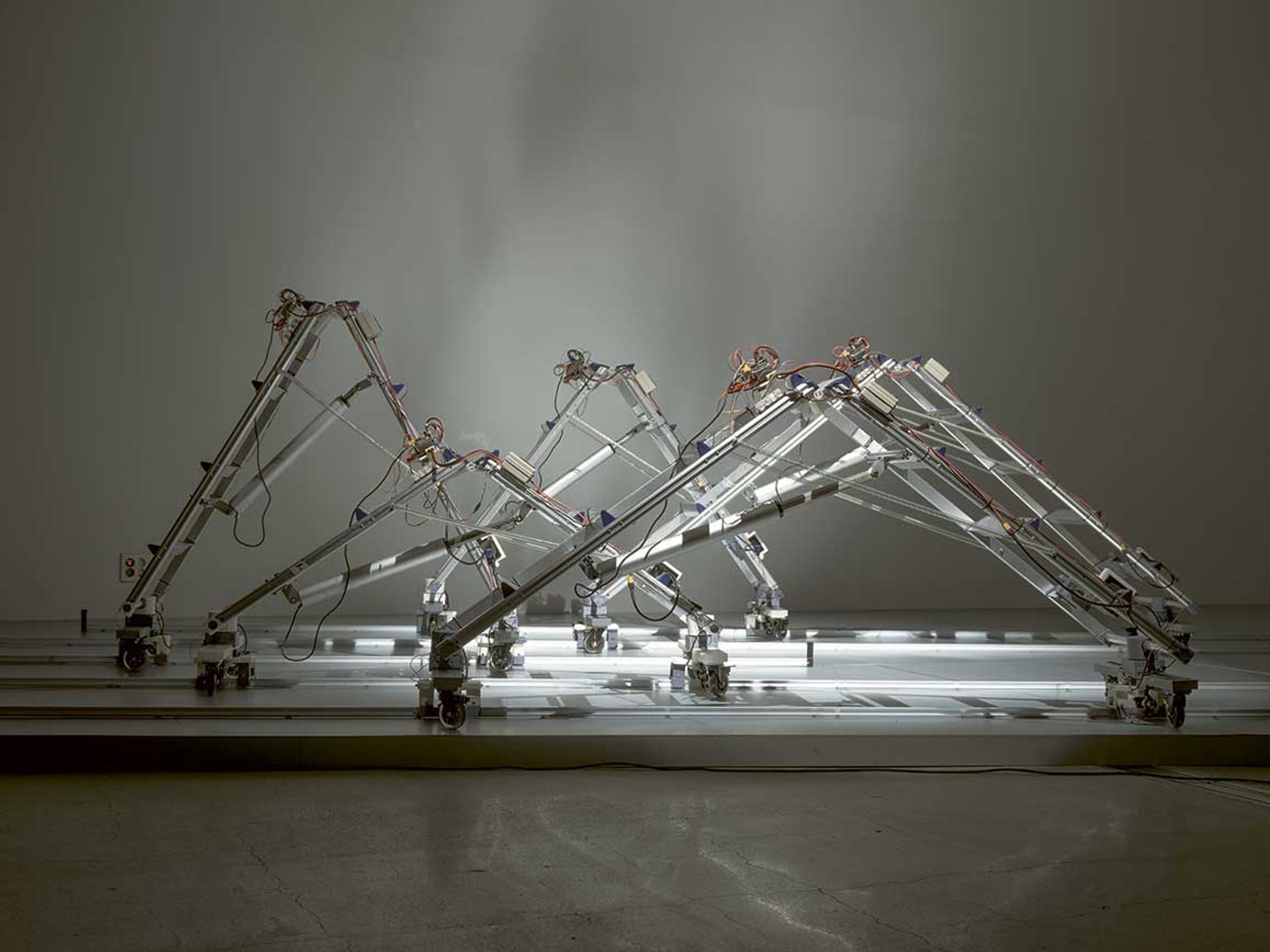
Dancing Ladders (2022)
Photo: © Jang Jun-Ho; courtesy MMCA
In the work Self-sounding Town Resonant Village (2019)—which was exhibited at the Museum of Contemporary Art in Busan—when one audience member approached another, the sounds emitted from their headphones would become mixed. “This process of approaching others to blend and share sounds completely transforms headphones—a tool we know for personal listening—into instruments of empathy and connection,” Kwon says.
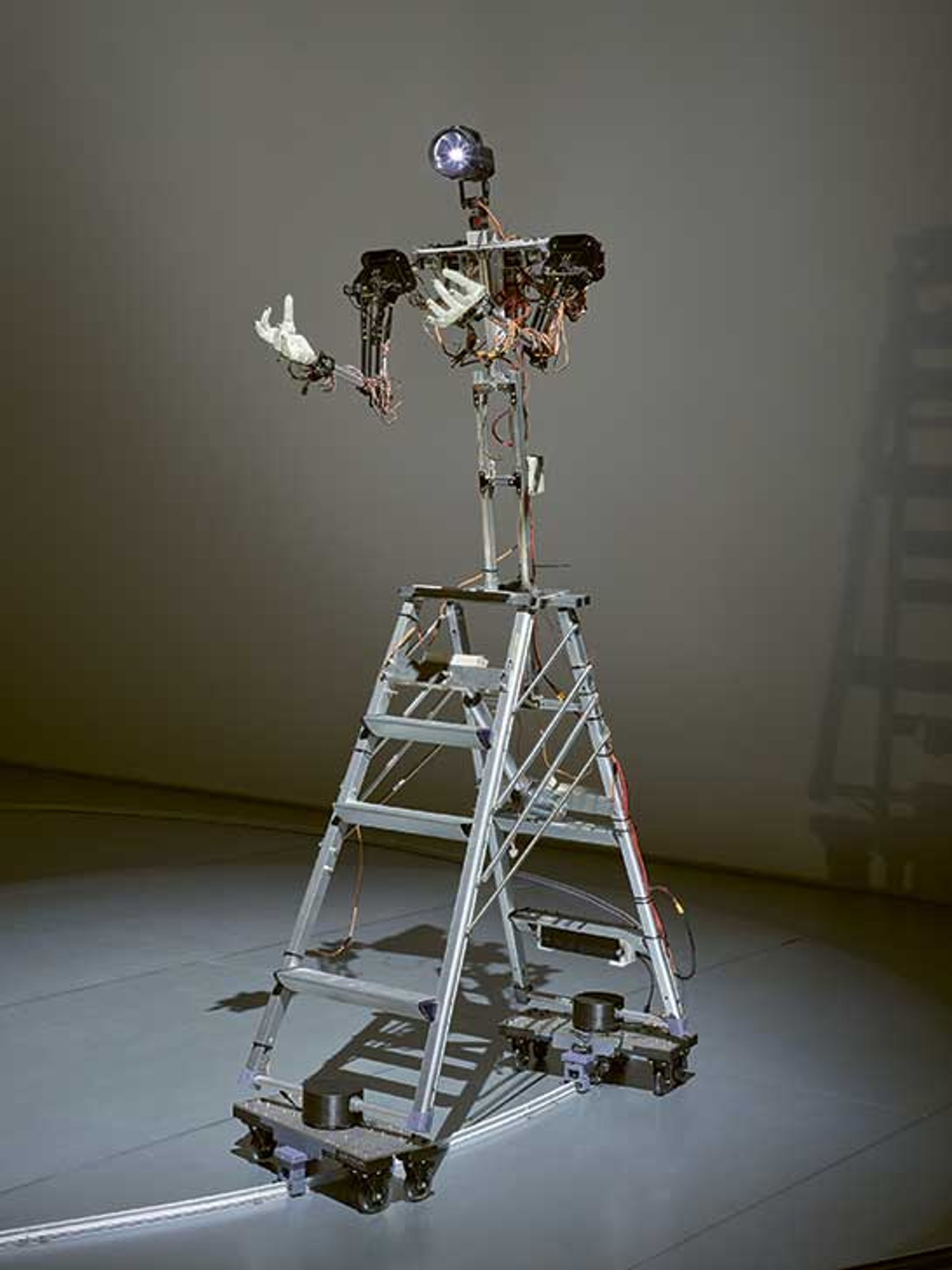
Ochetuji Ladderbot (2022)
Photo: © Park Seungki; courtesy the artist
The artist is preparing a project titled Speak Slowly, and It Will Become a Song for the Aichi Prefectural Ceramic Museum as part of the Aichi Triennale in Japan in September. The work uses GPS-enabled headphones that allow audiences to hear location-specific sounds throughout the museum, from the sound of ceramic instruments and interviews with ceramic artisans to women’s folk songs that were recorded locally in Japan and collected from Vietnamese migrants in Korea.


