

Photography has a unique capacity to make the invisible visible, and to illuminate truths about the world and ourselves that often go unnoticed. It documents reality whilst simultaneously interpreting it, acting as both witness and storyteller. The 2025 Royal Photographic Society Awards, the world’s longest-running photography prize, celebrated this power, recognising photographers whose work challenges boundaries and transforms how we see. From experimental landscapes to socially engaged portraiture, the winners demonstrate the breadth of contemporary photography and its capacity to engage, provoke and inspire.
At the forefront is Susan Derges, awarded the RPS Centenary Medal for her outstanding contribution to the art of photography. Based in Devon, Derges often works without a camera, using natural landscapes as both medium and subject. Her images emerge through the interplay of light, water and natural forms, producing photographs that feel elemental and otherworldly. They are simultaneously abstract and tangible, capturing the rhythms of rivers, the movement of shadows and the traces of night skies. Through this process, Derges invites viewers to reconsider not only what a photograph is but how it can be made, positioning photography as both a method of discovery and a poetic exploration of the natural world.
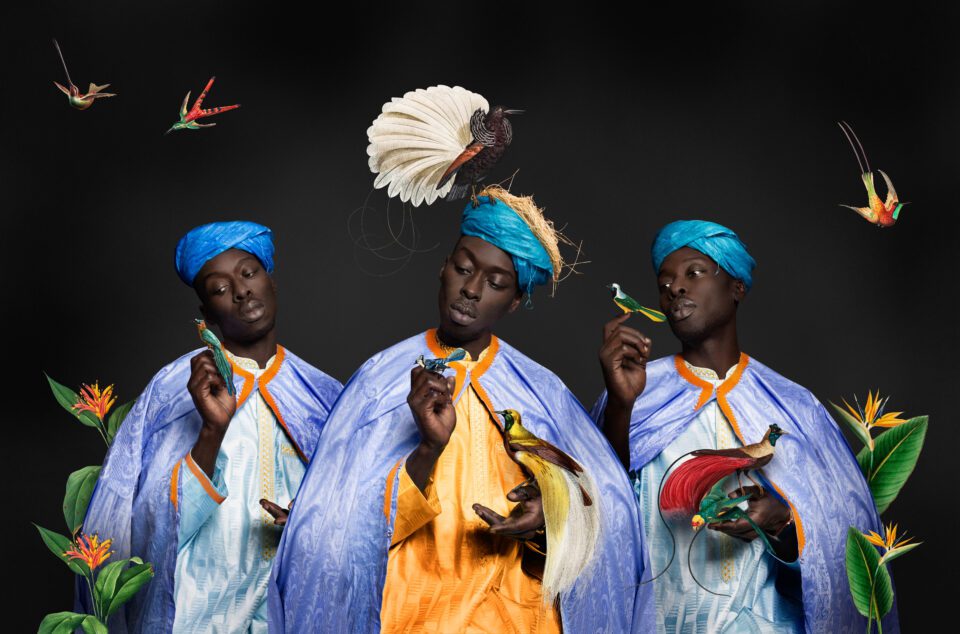
Equally compelling is Omar Victor Diop, recipient of the RPS Award for Achievement in the Art of Photography. Diop’s practice blends staged portraiture with historical and cultural references, producing images that are as aesthetically striking as they are intellectually rich. Each photograph operates as a dialogue between past and present, exploring narratives of identity, heritage and selfhood, whilst questioning representation in global visual culture. His meticulous staging – costumes, props and colour palettes – creates work that is both theatrical and deeply grounded in lived experience. Portraits such as his series referencing colonial history draw the viewer in with formal elegance but confront them with the complexities of memory, history and power. Diop’s photography exemplifies how the medium can balance beauty with social engagement, aesthetic rigor with critical reflection.
Photography prizes worldwide continue to highlight such diverse approaches. The World Press Photo Awards focus on photojournalism, rewarding images that convey pressing social and political issues with immediacy and precision. The Prix Pictet foregrounds environmental concerns, recognising photographers whose work responds to climate change and global sustainability. The Hasselblad Award celebrates technical innovation, mastery and enduring contributions to visual art. In the UK, our own Aesthetica Art Prize provides a platform for photographers whose work is conceptually rigorous and visually inventive. This year’s 2025 shortlist includes Askio, Joanne Coates and Michelle Blancke. Askio transforms urban landscapes into layered compositions, Coates’s intimate portraits bring the lives of working class rural communities to the fore with narrative tension. Blancke’s quiet, observational work emphasises light, shadow and subtle emotion. Collectively, these artists demonstrate the vitality of new voices and the imaginative possibilities of contemporary photography.
Science and experimentation remain key threads in the RPS Awards. David Malin received the Progress Medal for his pioneering contributions to astronomical imaging, developing techniques that revealed unprecedented detail in the cosmos. His photographs of galaxies, nebulae and star clusters are scientifically invaluable while visually spectacular, bridging art and empirical inquiry. Tami Aftab, awarded for achievement under 30, explores migration, memory and identity through intimate portraiture, creating work that is both socially engaged and emotionally resonant. Raghu Rai, celebrated for editorial and documentary photography, chronicles everyday life in India with sensitivity, capturing monumental events and fleeting human gestures with equal care. Amak Mahmoodian’s photojournalism highlights marginalised communities, offering perspectives often absent in mainstream narratives.
Curatorship and scholarship remain central to photography’s evolution. Charlotte Cotton, awarded for curatorship, criticism and research, has shaped understanding of photography through exhibitions and publications, including her seminal The Photograph as Contemporary Art. Richard Billingham, this year’s honorary fellow, has documented working-class life in Britain with unflinching honesty while nurturing new photographers through teaching. Their work underscores that photography is not only about creating images but also about framing them within critical, historical and cultural contexts.
Across these varied practices, several key themes emerge. Photography today is interdisciplinary, combining analogue and digital processes, experimentation and traditional approaches. It remains engaged with social, political and environmental concerns, offering audiences ways to see, understand and empathise. Platforms such as the Aesthetica Art Prize amplify new talent, demonstrating that contemporary photography thrives on diversity of perspective, approach and subject. The most compelling work today often challenges conventions whilst remaining grounded in human experience, illustrating photography’s enduring capacity to connect, provoke and inspire.
The 2025 RPS winners – spanning Derges’s elemental landscapes, Diop’s historically resonant portraiture, Malin’s cosmic vistas, Rai and Aftab’s socially engaged imagery, and Mahmoodian’s empathetic reportage – demonstrate photography’s enduring power. Diop in particular exemplifies how photography can be beautiful, meticulous and politically potent all at once, showing that staged, conceptual portraiture can carry urgent contemporary meaning. Photography is not simply a means of recording reality; it is a lens through which we interpret, question and understand it. By recognising both established practitioners and new talent, the RPS Awards, alongside the Aesthetica Art Prize, celebrate creativity, technical skill, conceptual innovation and social engagement, affirming photography’s central role in shaping culture.
Find out more about the RPS Awards 2025: rps.org
Words: Simon Cartwright
Image Credits:
1. Omar Victor Diop, ALLEGORIA 1 © Omar Victor Diop. Courtesy The Royal Photographic Society.
2. Raghu Rai © Raghu Rai. Courtesy The Royal Photographic Society.
3. Omar Victor Diop, ALLEGORIA 6 © Omar Victor Diop. Courtesy The Royal Photographic Society.
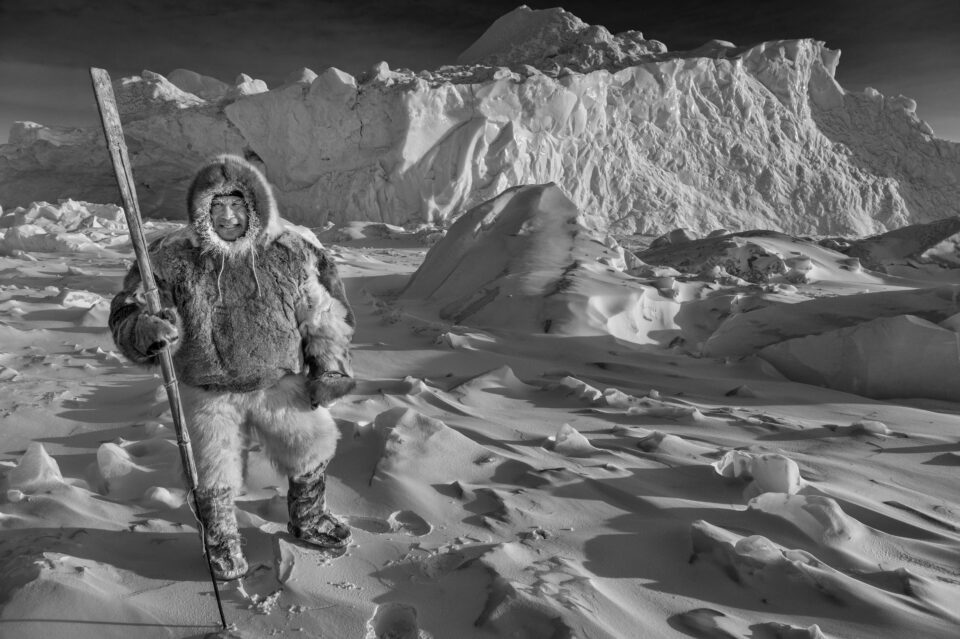
4. Ragnar Guðni Axelsson, Greenland-Arctic Heroes – Mads Ole-Ingelfieldfjord-Thule- 191 © Ragnar Guðni Axelsson. Courtesy The Royal Photographic Society.


