

Architecture, memory and the poetics of concrete converge in Brutal Scotland, an exhibition that situates post-war modernism within a broader cultural and emotional terrain. At its core, the show interrogates how built environments embody ideological ambition, social rupture and aesthetic endurance. Photography here becomes not merely documentary but interpretive. The tension between decay and resilience runs throughout, suggesting that these structures are far from static relics. Instead, they operate as living documents of a nation’s evolving identity. In this sense, the exhibition positions Brutalism as a lens through which to reconsider histories of progress, failure and reinvention.
Emerging from this conceptual framework, Simon Phipps has developed a practice that is both rigorous and quietly affective. A graduate in sculpture from the Royal College of Art, his sensitivity to form and materiality is evident in every frame. Over a career spanning more than 25 years, he has established himself as a leading chronicler of post-war modernist architecture. His publications, including Brutal London, Finding Brutalism and Concrete Poetry, have mapped a distinctly British engagement with concrete landscapes. Recognition has followed, with Finding Brutalism receiving the DAM Architectural Book Award in 2018. Phipps has cultivated a visual language defined by restraint, clarity and attentiveness to structure.
Significantly, his photographic approach resists spectacle in favour of stillness and neutrality. As Catherine Slessor notes, the images are “framed in a steady, neutral gaze”, allowing the buildings themselves to assert their presence without embellishment. This aesthetic choice foregrounds the endurance of these sites, rendering them as “grizzled survivors” that silently narrate their histories. Phipps’ work thus bridges documentation and meditation, offering viewers space to contemplate the meanings embedded in concrete. The absence of human figures further amplifies this effect, transforming architecture into a protagonist. He extends the relationship between photography and modernity into a reflective register.
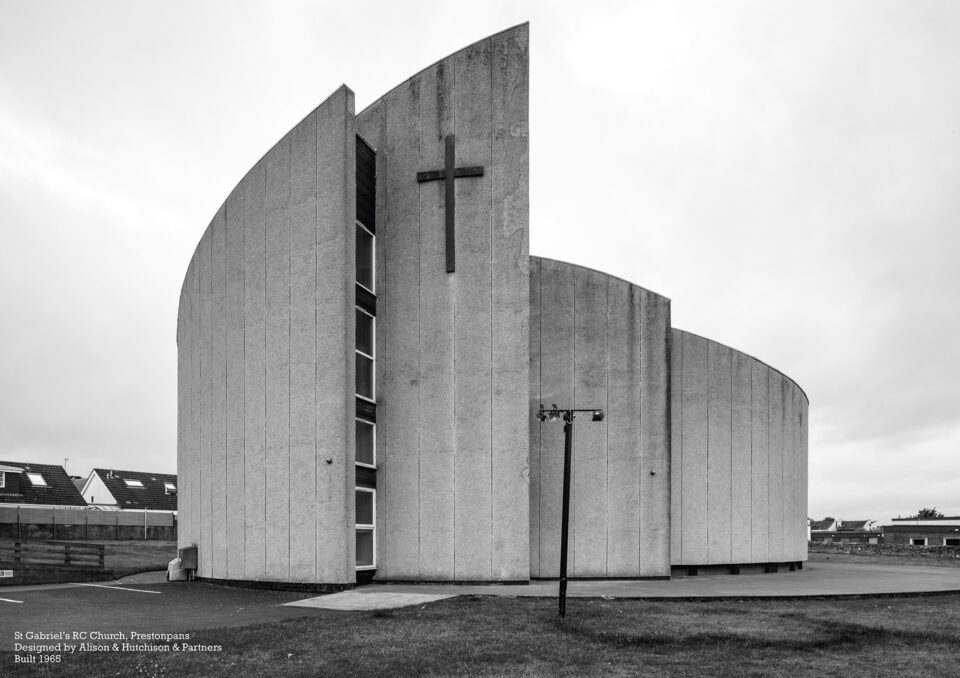
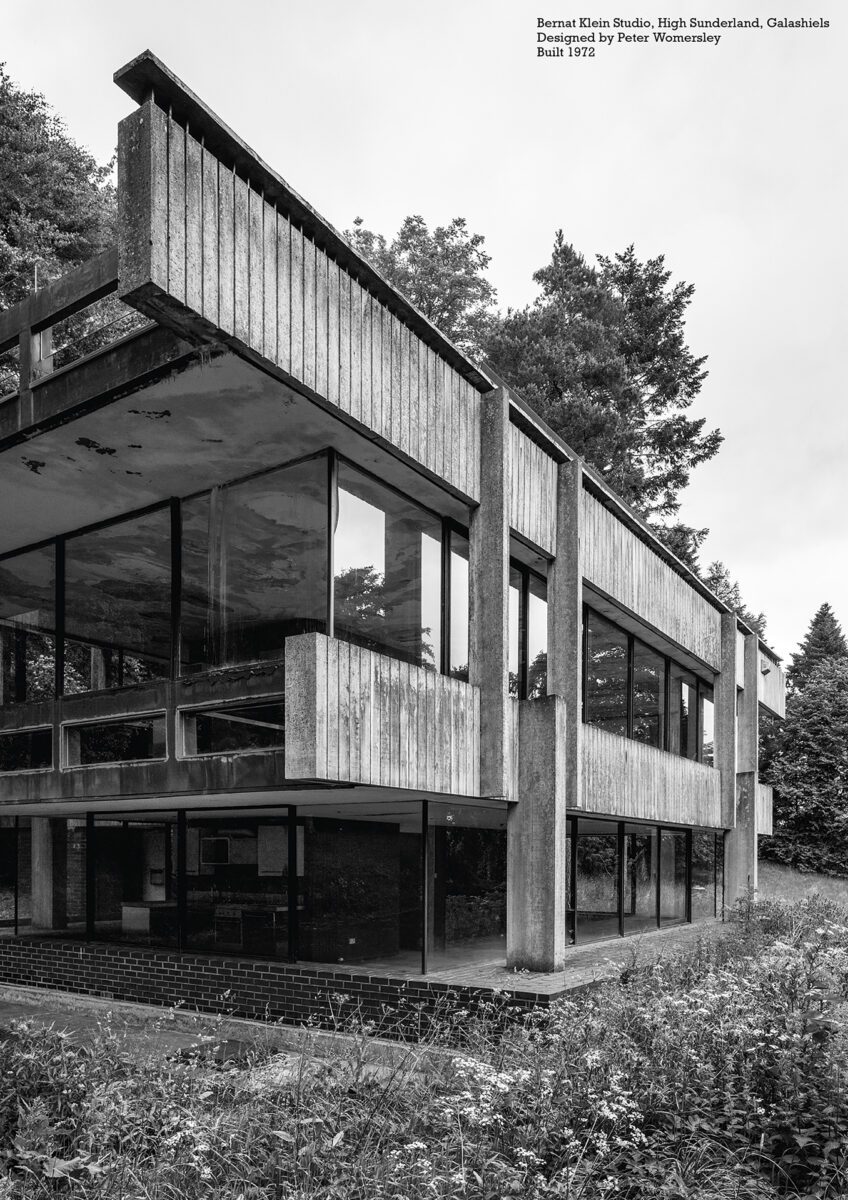
Turning to Brutal Scotland, the exhibition presents a distilled selection from a larger photographic odyssey encompassing 160 buildings across the country. The journey, stretching from Inverness to Galashiels, underscores both geographic breadth and conceptual depth. Here, Scotland’s post-war modernist architecture is framed as a site of ambition and contradiction. These structures, emerging between the 1950s and 1970s, reflect a period of optimism tempered by the realities of rapid urban change. As the press material states, they are “tangible, concrete symbols of social ambition, architectural experimentation, urban renewal and in some cases the outcome of rapid slum clearance”. This duality is central to the exhibition’s narrative, inviting viewers to reassess the legacy of these often-contested forms.
Notably, the exhibition design itself plays a crucial role in shaping the viewing experience. Drawing inspiration from Manplan, the radical architectural magazine of the late 1960s and early 1970s, the installation integrates photography with graphic elements. Period advertisements, bold typography and fragments of pop-culture lyrics create a layered visual field. The colour scheme, derived from the thematic structure of the magazine, further reinforces the historical context. Conceived as a monographic installation spanning two galleries, the show immerses visitors in an atmosphere that is both archival and contemporary. This approach situates Phipps’ work within a broader cultural matrix, emphasising the interconnectedness of architecture, media and everyday life.
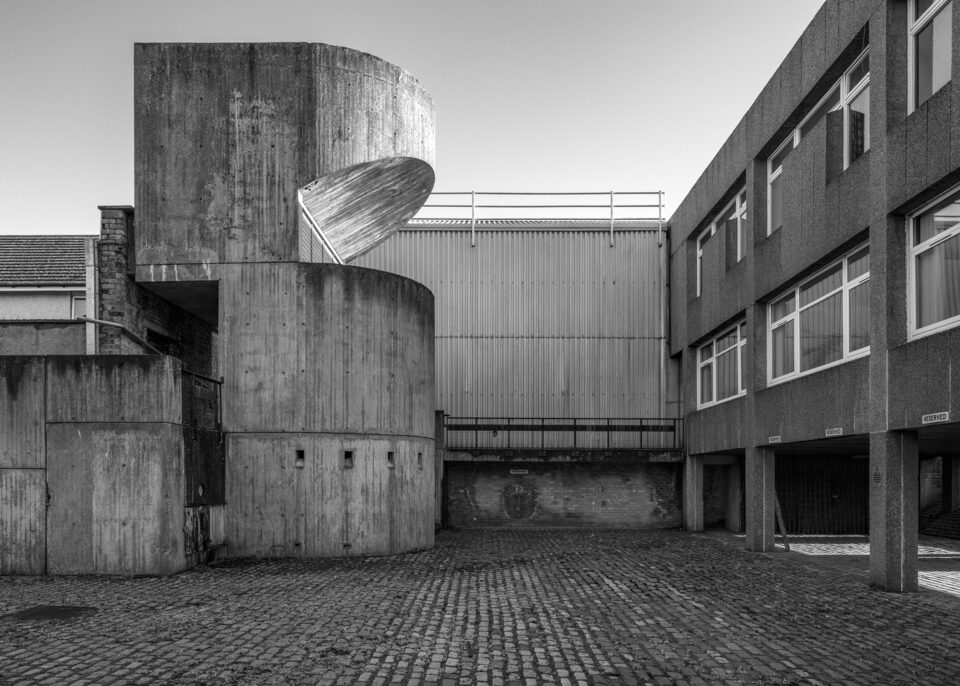
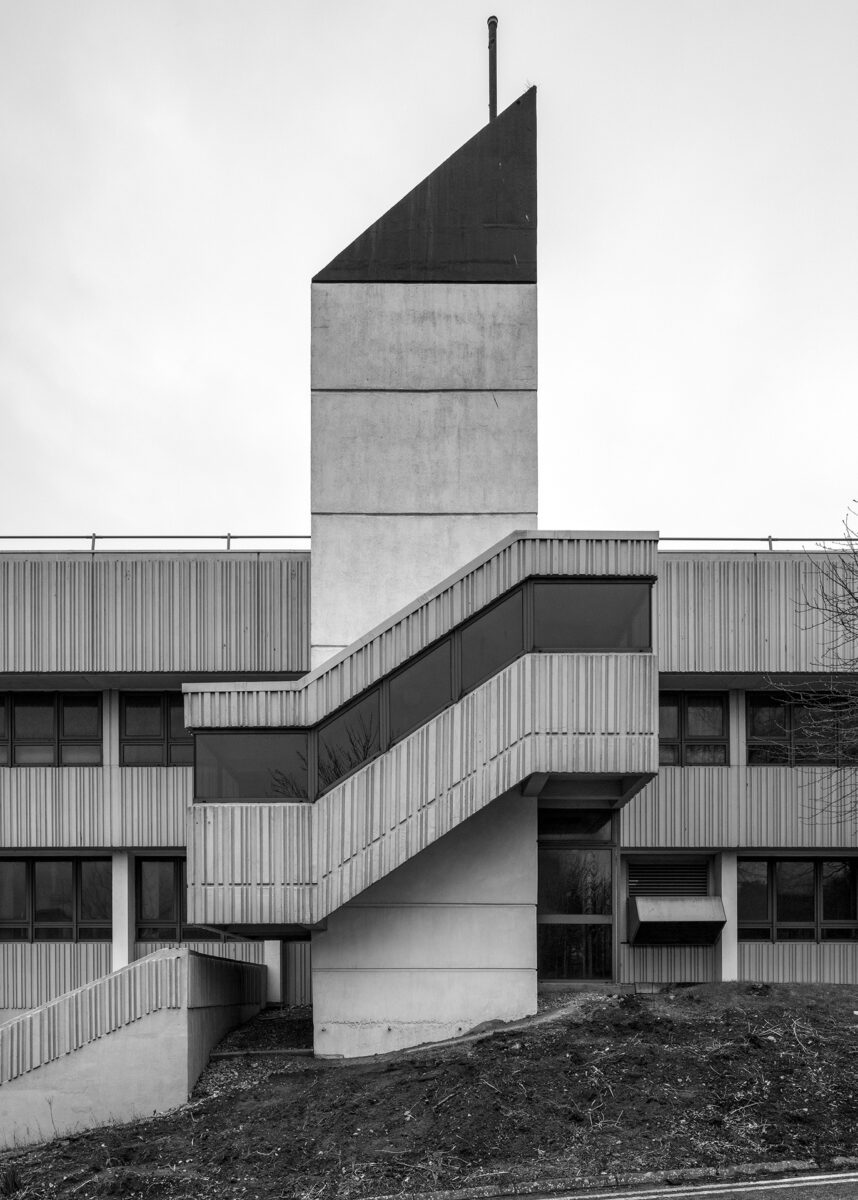
Within this framework, the photographs themselves articulate a nuanced exploration of Brutalist aesthetics. Buildings such as St Peter’s Seminary and Cumbernauld Centre emerge as focal points, emblematic of both ambition and neglect. These structures, once heralded as solutions to post-war challenges, now occupy a precarious position between preservation and decay. The exhibition acknowledges their divisive status while foregrounding their architectural significance. As the text suggests, they are “increasingly recognised as having significant architectural heritage”, marking a shift in public perception. Phipps reveals the quiet dignity of these often-overlooked sites.
Across the United Kingdom, Brutalism has left an indelible mark on the urban landscape, its legacy both celebrated and contested. In London, the Barbican Estate stands as a monumental example of integrated design, while Sheffield’s Park Hill embodies the social aspirations of modernist housing. Glasgow’s Red Road flats, now demolished, remain emblematic of the era’s ambitions and failures. Meanwhile, Birmingham’s Central Library, once a Brutalist icon, has been replaced, sparking debates about heritage and loss. These examples underscore the complexity of Brutalism’s reception, reflecting broader tensions between preservation and progress. Within this context, Phipps’ focus on Scotland adds a vital dimension, highlighting regional variations within a national narrative.
Alongside Phipps, several contemporary artists are engaging with similar themes, expanding the discourse around architecture and memory. Photographers such as Hélène Binet have explored the sculptural qualities of modernist buildings, while Bas Princen examines the intersection of architecture and landscape. Meanwhile, artists like Rut Blees Luxemburg bring a more urban, nocturnal perspective to the built environment. These practitioners share an interest in the poetic potential of architecture, albeit through distinct methodologies. Their work collectively contributes to a renewed appreciation of modernist forms, situating them within contemporary visual culture. In dialogue with these artists, Phipps’ practice stands out for its archival scope and sustained engagement.
Importantly, the exhibition also foregrounds the notion of the sublime within Brutalist architecture. As Paul Stallan writes, “Sublime in art is the fusion of fear and beauty, brutalist architecture exploits this tension, a quality Simon elevates in his work.” This idea resonates throughout the show, where imposing concrete forms are rendered with sensitivity. The photographs capture both the monumental scale and textures of these buildings. In doing so, Phipps challenges reductive interpretations of Brutalism as merely austere or oppressive. Instead, he presents it as a dynamic interplay of form, function and emotion.
Equally, the material culture surrounding the exhibition reinforces its conceptual depth. The accompanying book, designed by Graphical House and published by Duckworth Books, extends the visual narrative into print. Posters and limited edition screenprints offer further points of engagement, blurring the boundaries between art object and documentation. These elements underscore the exhibition’s commitment to accessibility and dissemination. By situating the work within both gallery and publishing contexts, Phipps ensures its longevity and reach. This multifaceted approach reflects a broader understanding of how architectural photography can operate within contemporary culture.
Brutal Scotland returns us to the question of how we inhabit and remember our built environments. The exhibition does not seek to resolve the tensions inherent in Brutalism but rather to illuminate them. Through a combination of photographic precision and curatorial innovation, it invites viewers to reconsider the narratives embedded in concrete. These buildings, once symbols of a future-oriented vision, now serve as markers of historical transformation. Phipps’ work captures this temporal complexity with remarkable clarity, affirming the enduring relevance of architecture as a site of cultural reflection.
Brutal Scotland: Scotland’s Post-War Modernist Architecture is at Street Level Photoworks, Glasgow until 16 May: streetlevelphotoworks.org
Words: Simon Cartwright
Image Credits:
1&6. Shell Campus, Aberdeen © Simon Phipps, courtesy of Street Level Photoworks.
2. Medical Sciences Building, Dundee © Simon Phipps, courtesy of Street Level Photoworks.
3. St Gabriels, Prestonpans © Simon Phipps, courtesy of Street Level Photoworks.
4. Bernat Klein Studio, Galashiels © Simon Phipps, courtesy of Street Level Photoworks.
5. Thomas Keay Ltd, Dundee © Simon Phipps, courtesy of Street Level Photoworks.

