

The mid-20th century was a time of profound change for the art world. One of the most notable shifts was a radical rethinking of how audiences accessed and engaged with exhibitions. Creatives began to push beyond the limitations of traditional “white cube” galleries or institutional museum settings. In 1958, Allan Kaprow coined the term “environment”, using it to describe large-scale artworks which transformed interiors. They would later become known as installations. This trend – of artworks you could step inside – continued into the 1960s and beyond, resulting in experiences that altered the relationship between artist and observer. They were often ephemeral and experimental in nature, combining art, architecture and design – and paved the way for the digital immersive experiences so popular today.
A new exhibition at M+, Hong Kong, foregrounds the visionary contribution of women to this movement. Dream Rooms: Environments by Women Artists 1950s – Now presents twelve pieces by trailblazing figures from Asia, Europe and North and South America. The show was first presented at Haus der Kunst, Munich, in 2023, under the title Inside Other Spaces. Now, M+ brings the curation up-to-date, with three newly commissioned installations by Asian practitioners: Pinaree Sanpitak, Chiharu Shiota and Kimsooja.
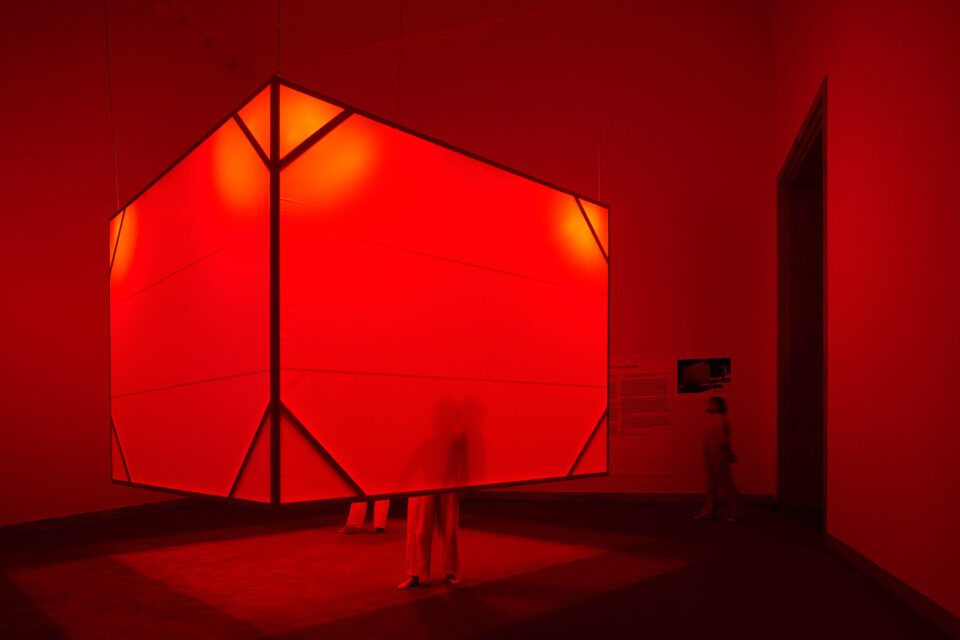
Dream Rooms is a celebration of 20th century artists who took the fundamentals of how we view our world – sight, sound, touch – and flipped them on their head. In Laura Grisi’s Vento di Sud-Est (1968), a powerful gust of air blows into a dark room, bringing the outdoors into the gallery. The piece, carefully reconstructed for the show, is accompanied by a film documenting winds in different parts of the world. There are also legendary light experiments from Aleksandra Kasuba and Nanda Vigo. In Spectral Passage (1975), Kasuba illuminates a series of interconnected nylon structures with neon; each space corresponds to a different part of the rainbow spectrum. The installation represents a journey through life, traversing birth, death and rebirth. Likewise, in Ambiente cronotopico vivibile, (1967), Vigo uses light and colour to create something that feels like portal to another world. A mirrored box is controlled by an external switch, allowing those outside the room to dictate the atmosphere for those stood on the inside.
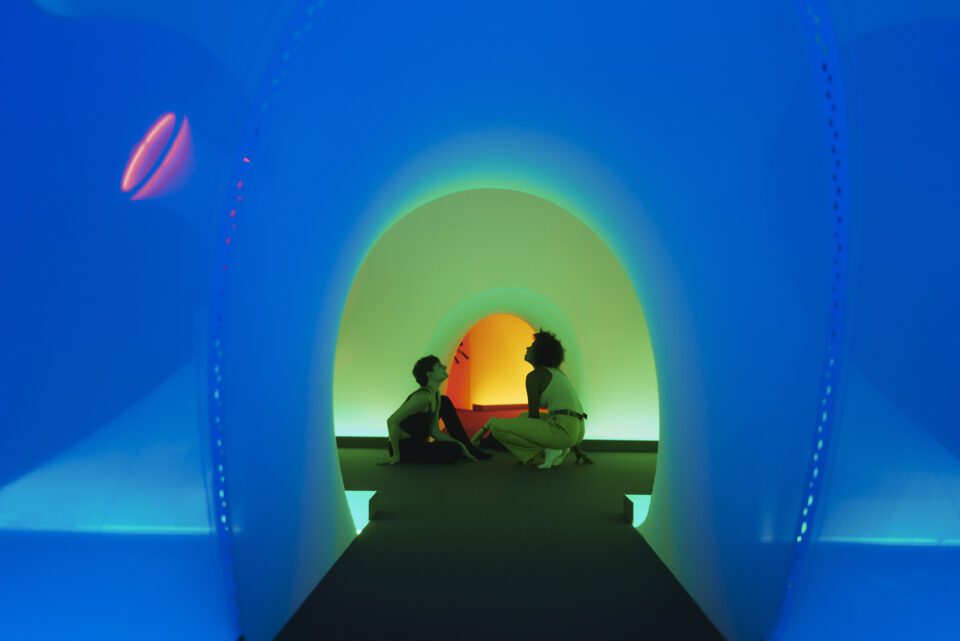
Other works confront gender inequality head-on. One standout moment comes from Judy Chicago, a prominent voice in second-wave feminism. She’s best-known for The Dinner Party (1974), a huge triangular table, where thirty-nine place settings celebrate important women from history and mythology. M+ spotlights Feather Room (1966), an all-white, edgeless, otherworldly arena filled with 300 pounds of cruelty-free feathers. The curved walls and soft, diffused light, Haus der Kunst explains, “can be read in critical dialogue with the tradition of hard materials adopted in the history of male-dominated sculpture and architecture.” Meanwhile, Tania Mouraud’s We Used to Know (1970) features a stainless-steel tower, standing alone in the centre of a space, illuminated by flood lights. The artist uses heat and sound to provoke psychological unease: anxiety, fear or a sense of threat. When the piece debuted more than 50 years ago, Mouraud wrote: “The visitor who enters the gallery is attacked by intense light, sweltering heat and engulfed in a feeling of inexorable anxiety, caused by the ultrasound. And therefore, wants only one thing: not to go near the tower. Not to enter the gallery. Not to violate the sanctuary. The room and tower are taboo.” The piece is a powerful, visceral metaphor for the exclusion of women from the arts.
Alongside iconic 20th century environments, Dream Rooms also highlights new commissions from those shaping the genre today. Together, Pinaree Sanpitak, Chiharu Shiota and Kimsooja bring the curation into the here-and-now, honouring the genre’s history whilst looking ahead. Sanpitak’s The House is Crumbling is an experimental, ever-changing setting composed of thousands of Thai khid pillows. Visitors are invited to deconstruct and reconstruct the space, revealing how even the smallest actions can transform our surroundings. In M+’s Focus Gallery, Chiharu Shiota’s Infinite Memory sees the artist’s signature red threads envelope three towering red dresses that evoke the female body. Notably, Kimsooja’s renowned holographic installation To Breathe, previously exhibited at Centre Pompidou Metz, Desert X and Yorkshire Sculpture Park, is presented across M+ Gallery. It wraps the windows and skylights with a translucent diffraction film that reflects natural light throughout the day, producing a slowly shifting experience.
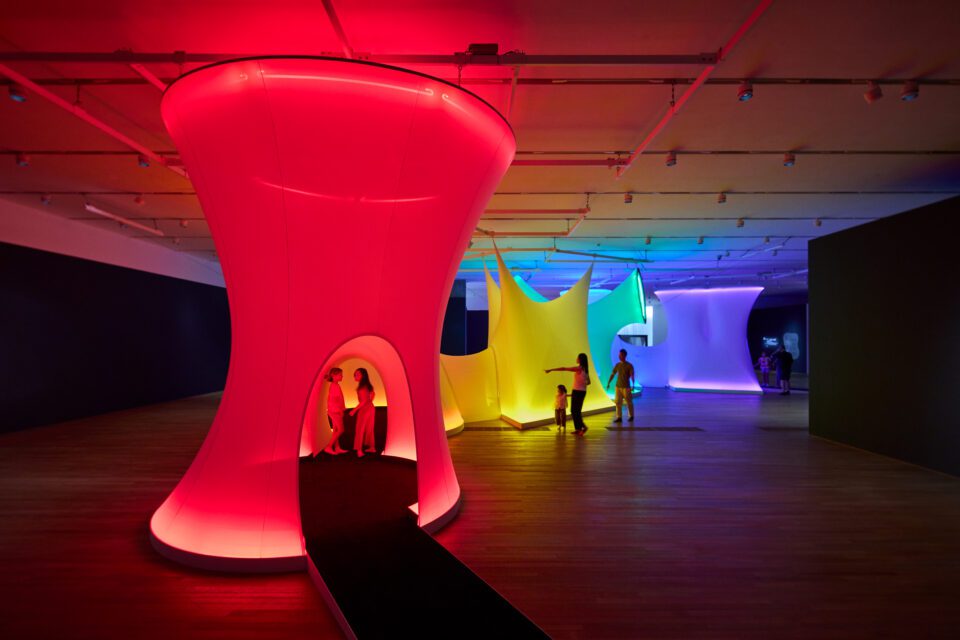
Audiences play an active role in the experience – becoming part of each artwork by engaging with their materials, sensations and sounds. They are encouraged to explore, laugh, wonder or, at times, embrace feelings of unease. Russell Storer, Senior Curator at M+, says: “By reconstructing these groundbreaking environments, the exhibition offers the opportunity to engage physically with significant historical works alongside powerful new commissions by contemporary Asian artists. We invite our visitors to encounter art as a fully embodied experience, moving beyond visual perception to activate sensory, spatial and emotional awareness. Dream Rooms fosters a deeper understanding of how art shapes our perception of space, time and the self.” M+ offers a bold reframing of art history, challenging longstanding narratives and placing women at the forefront of spatial and sensory experimentation. It is an invitation to connect with works that changed the course of contemporary art, creating a dialogue across time and geography, whilst revealing how immersive art has long been a site of resistance, innovation and expression.
Dream Rooms: Environments by Women Artists 1950s – Now is at M+ Gallery, Hong Kong until 18 January.
Words: Emma Jacob
Image Credits:
1. Chiharu Shiota, Internal Line, 2024. Installation view of I to Eye, Nakanoshima Museum of Art, Osaka, Japan, 2024 © VG Bild-Kunst, Bonn, 2025, and Chiharu Shiota. Courtesy of the artist.
2. Nanda Vigo, Ambiente cronotopico vivibile, 1967. Reconstruction Haus der Kunst München, 2023. Installation view of Inside Other Spaces: Environments by Women Artists 1956–1976, Haus der Kunst München, 2023 © The heirs of Nanda Vigo. Photo: Agostino Osio–Alto Piano. Courtesy of Haus der Kunst München.
3. Aleksandra Kasuba, Spectral Passage, 1975. Reconstruction Haus der Kunst München, 2023. Installation view of Inside Other Spaces: Environments by Women Artists 1956–1976, Haus der Kunst München, 2023 © Estate of Aleksandra Kasuba. Photo: Constantin Mirbach, Courtesy of Haus der Kunst München.
4. Yamazaki Tsuruko, Red (shape of mosquito net) 1956. Reconstruction National Museum of Art, Osaka, 1985. Installation view of Inside Other Spaces: Environments by Women Artists 1956–1976, Haus der Kunst München, 2023 © Estate of Tsuruko Yamazaki Photo: Agostino Osio–Alto Piano. Courtesy of Haus der Kunst München.
5. Aleksandra Kasuba, Spectral Passage, 1975. Reconstruction Haus der Kunst München, 2023. Adapted reconstruction for the spaces of M+, 2025. Installation view of Dream Rooms: Environments by Women Artists 1950s–Now, 2025 © Estate of Aleksandra Kasuba. Photo:Dan Leung. Image courtesy of M+, Hong Kong.


