

Spring in London brings a wave of artistic innovation, and none more compelling than the archival exhibition of Senga Nengudi at Whitechapel Gallery. Running from 1 April to 14 June, the show offers a glimpse into the work of an artist whose practice spans sculpture, performance and choreography. Nengudi’s work exists at the intersection of the corporeal and the sculptural, exploring the elasticity of materials, the rhythms of movement and the lived experience of the body. Through photographs, films and archival material, the exhibition illuminates the experimentation that defined her most productive period between 1972 and 1982. It is an opportunity to encounter a body of work both historically significant and deeply resonant in the present. Themes of transformation, resilience and the dialogue between external forces and internal experience are central, offering a layered encounter with form, material and meaning.
The exhibition focuses on Nengudi’s most iconic works, particularly her seminal performance piece, R.S.V.P., first realised in 1976. It combines sculptural forms made from nylon hosiery with movement-based activations, creating a space that is tactile, sensuous and deeply thought-provoking. The tights, stretched, knotted and filled with sand, evoke the contours and vulnerabilities of the human body, referencing maternal experience, societal expectations and the subversive potential of materiality. Photographs and film documentation reveal the collaborative aspect of these performances, particularly the involvement of dancer and choreographer Maren Hassinger, whose movements animate the forms. Complementary works include Spirit Flags, outdoor pieces created in New York in the early 1970s, where wind and weather give life to the objects, demonstrating Nengudi’s fascination with how environmental forces shape form. Across these works, the interplay of object, body and environment emerges as a defining feature of her practice.
Whitechapel’s legacy of radical exhibitions provides an ideal context for Nengudi’s work. Since 1901, the gallery has presented artists who challenge perception and push boundaries. Barbara Hepworth’s 1954 solo show introduced meditative sculptural forms to East London, while Jackson Pollock’s 1958 presentation questioned the nature of painting and gesture. Helio Oiticica’s 1969 installation invited audiences to inhabit immersive environments, and Gilbert & George’s performance-based work in 1971 blurred the line between life and art. Eva Hesse’s 1979 exhibition demonstrated the expressive potential of unconventional materials, establishing the gallery as a space where experimentation and communal engagement thrive. This commitment to innovation continues to shape its curatorial programme and positions Nengudi within a lineage of artists who have redefined the possibilities of contemporary art.
The gallery has consistently fostered dialogue across generations and geographies, presenting works that explore identity, politics and materiality. Frida Kahlo’s 1982 retrospective brought intensely personal imagery into conversation with a London audience, while Sonia Boyce’s exhibitions in 1988 and 2024 interrogated race, gender and performative identity. Sophie Calle’s 2010 works examined intimacy and observation, and Zarina Bhimji’s 2012 installations reflected on displacement and memory. Emily Jacir in 2015 and William Kentridge in 2016 brought global narratives to the East End, while Theaster Gates in 2021, Nicole Eisenman in 2023 and Zineb Sedira in 2024 highlighted the social and political dimensions of contemporary practice. Nengudi’s exhibition aligns with this ethos, underscoring Whitechapel Gallery’s consistent focus on pioneering, inclusive and experimental curatorial perspectives.
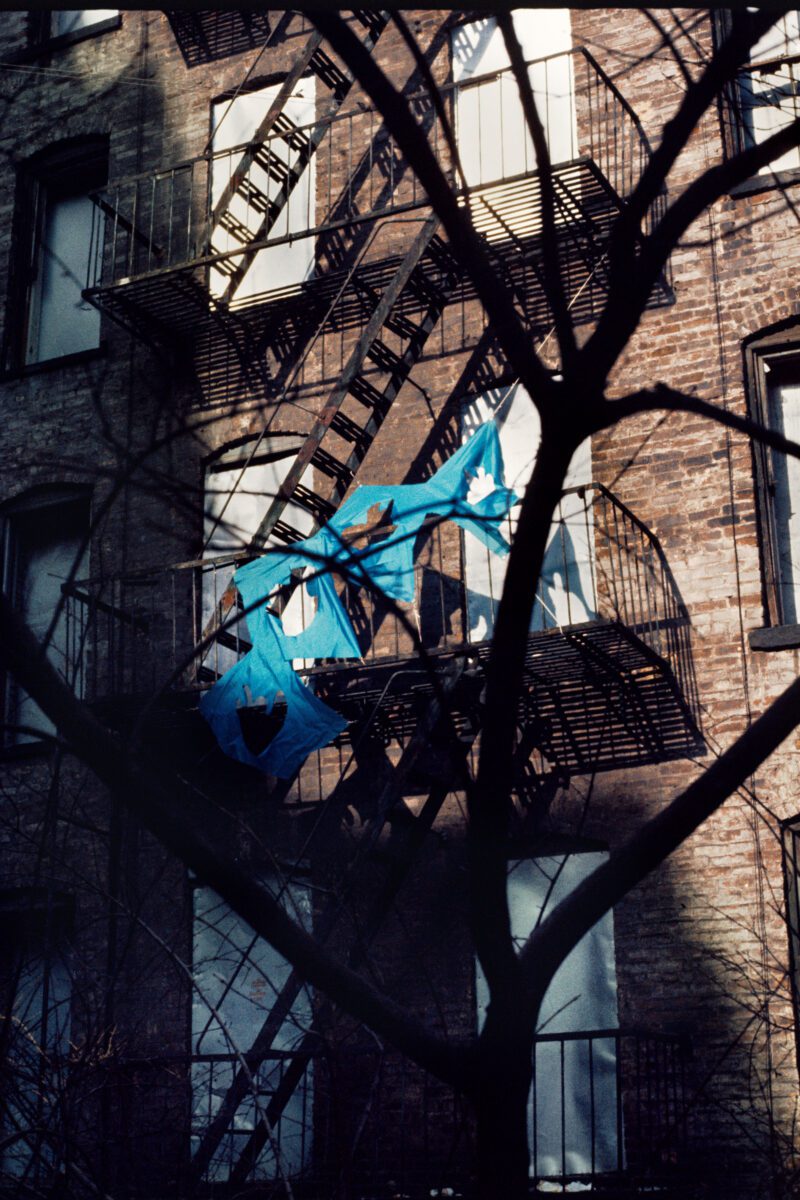
Nengudi’s work explores the complex relationship between body, material and space, offering an immersive encounter for audiences. R.S.V.P. is not simply a series of sculptural forms but an environment that considers bodily presence, flexibility and resilience. The tension between control and improvisation, static form and kinetic activation, reflects broader concerns with identity, embodiment and performativity. Performance Piece (1977) and Performance with Inside Outside (1978) highlight her engagement with relational space, where objects and bodies exist in dynamic interaction. Air Propo (1982), an improvisational collaboration with dancer Cheryl Banks Smith and musician Lawrence D. “Butch” Morris, emphasises multisensory and communal experiences. The gallery itself becomes a stage, transforming the act of viewing into an intimate and participatory encounter.
Archival material enriches the exhibition, offering insight into Nengudi’s process and evolution. Spirit Flags, suspended across urban landscapes, is animated through natural forces, reflecting her ongoing interest in how external pressures – social, cultural and environmental – shape form and perception. Photographs capture the ephemeral, preserving fleeting gestures while inviting reflection on temporality and movement. These works foreground the interplay between permanence and impermanence, structure and spontaneity, while situating Nengudi’s practice within broader artistic and cultural dialogues. The exhibition reveals the rigour and poetic precision of her experimentation.
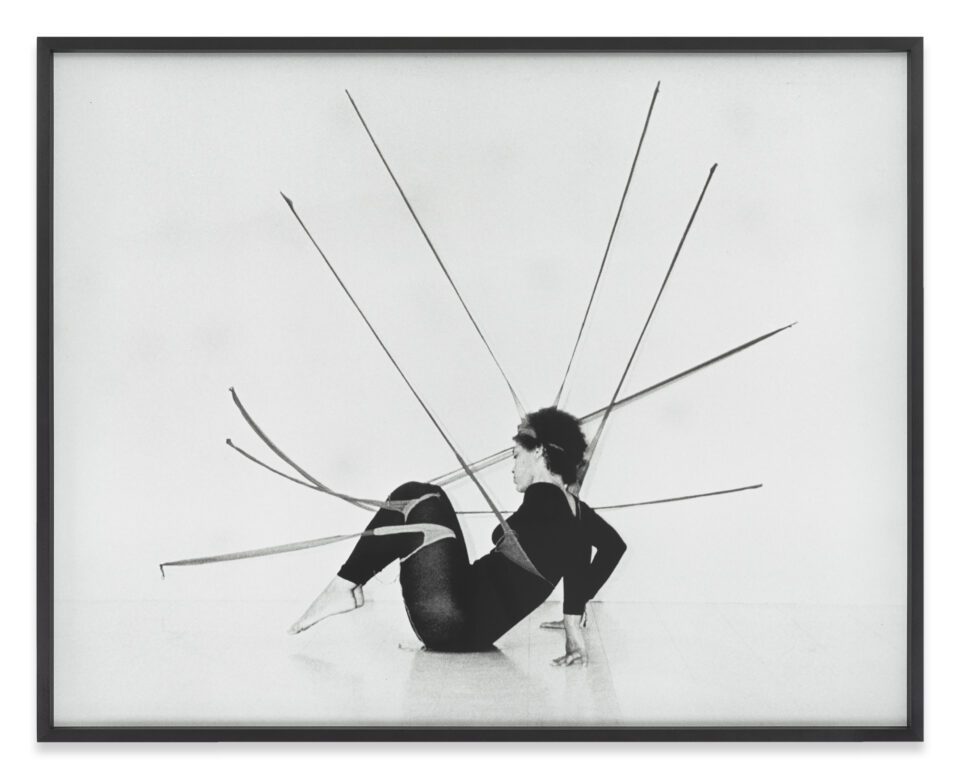
Nengudi’s practice resonates with contemporary conversations around embodiment, gender and performativity, making this exhibition particularly timely. Her work demonstrates that art can operate as social critique, formal investigation and personal reflection simultaneously. It challenges viewers to reconsider relationships with material, spatial dynamics and collective experience. The exhibition’s dialogue with the concurrent survey of Veronica Ryan highlights Nengudi’s influence on contemporary sculpture and performance. It provides a rare opportunity to experience work that has inspired multiple generations while remaining strikingly relevant today. Nengudi’s nuanced approach to form, body and movement ensures the exhibition is both an aesthetic and intellectual experience.
London’s spring programme offers a constellation of exhibitions that resonate with Nengudi’s exploration of form, movement and materiality, highlighting the city’s dynamic art scene. Tate Modern presents Tracey Emin: A Second Life, a retrospective spanning over four decades that traces her work across sculpture, neon, drawing and installation, inviting reflection on intimacy, memory and expression. The Royal Academy of Arts celebrates the rediscovered 17th century painter Michaelina Wautier, whose striking compositions bring historical resonance to contemporary audiences. At the Victoria and Albert Museum, Schiaparelli: Fashion Becomes Art explores Elsa Schiaparelli’s boundary‑blurring designs, merging fashion, art and theatricality in a surrealist context. Serpentine Galleries host two major exhibitions: David Hockney at Serpentine North, presenting vibrant digital and painted works, and Cecily Brown at Serpentine South, with painterly explorations inspired by nature and the gallery’s gardens.
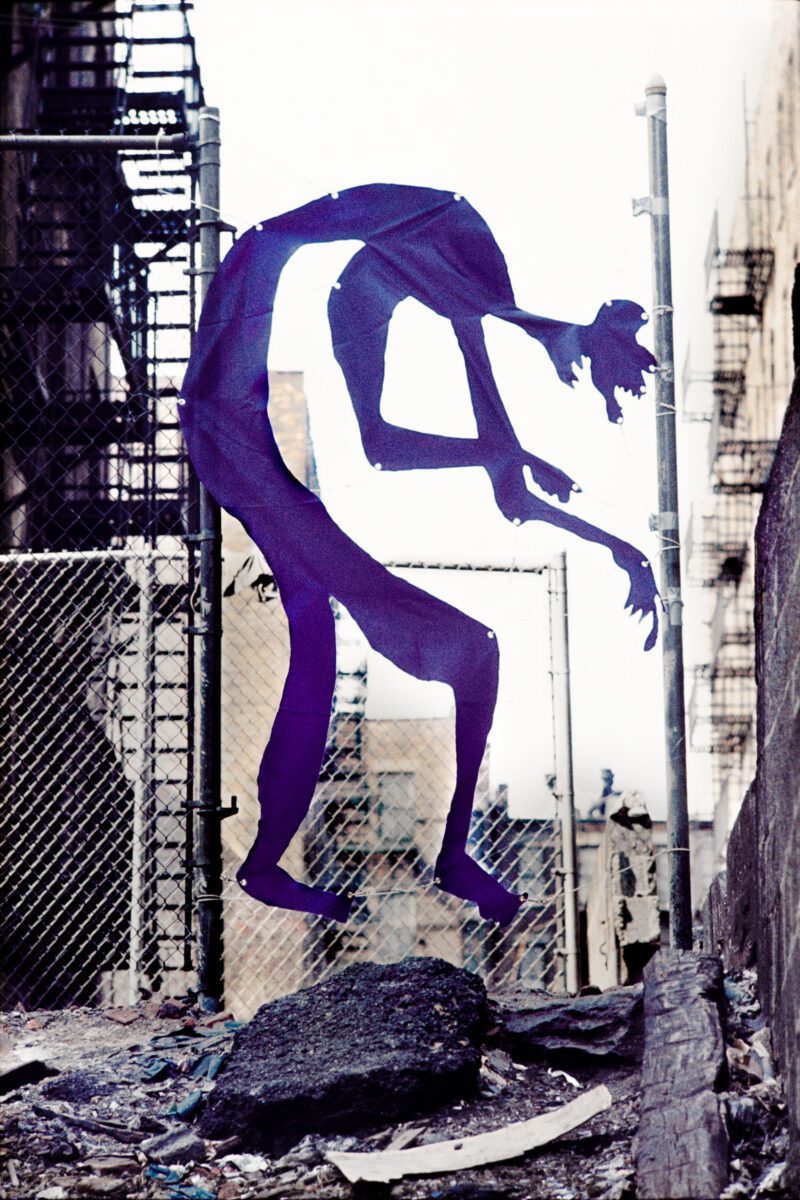
Senga Nengudi at Whitechapel stands as a singular experience within this cultural landscape, offering audiences an intimate yet expansive engagement with form, material and performance. The exhibition celebrates her pioneering contributions while emphasising the participatory and performative qualities that continue to inspire contemporary practice. It prompts reflection on resilience, elasticity and the transformative potential of art to engage both mind and body. Visitors can witness the fluidity of objects, the interaction of performers and materials, and the social and cultural frameworks that shape artistic expression. Archival photographs, film and documentation converge to create a rich narrative that is historical, tactile and immediate. Nengudi’s work asserts the power of art to illuminate human experience.
In its 125th year, Whitechapel affirms its place as a crucible where history, experimentation and community converge. Presenting Nengudi alongside major surveys and contemporary commissions underscores the gallery’s commitment to art that challenges, engages and transforms. The exhibition exemplifies a fearless embrace of inclusivity, improvisation and risk, bridging past innovation with contemporary dialogue. You will encounter a programme that is at once radical, socially attuned and formally daring, reinforcing the East End as one of the world’s most electrifying cultural quarters. Senga Nengudi at Whitechapel celebrates the elasticity of creativity, the resilience of form and the performative possibilities of sculpture, offering a vivid testament to art’s enduring power.
Senga Nengudi: Performance Works 1972-1982 is at Whitechapel Gallery, London until 14 June: whitechapelgallery.org
Words: Anna Müller
Image Credits:
1&4. Senga Nengudi, Performance Piece,1977 (detail). Silver gelatin prints, triptych Overall dimensions 300.8 x 104.1 cm Courtesy Sprüth Magers and Thomas Erben Gallery, New York Photo Harmon Outlaw.
2. Senga Nengudi Studio Performance with R.S.V.P.,1976 Silver gelatin print 76.2 x 104.1 cm Courtesy Sprüth Magers and Thomas Erben Gallery, New York PhotoKen Peterson.
3. Senga Nengudi Drifting Leaves, 1972C-print 105.4 x 70.8 x 4.8 cm. Courtesy of Sprüth Magers and Thomas Erben Gallery, New York Photo Doug Harris.
5. Senga Nengudi Down (Purple), 1972C-print 105.4 x 70.8 x 4.8 cm. Courtesy of Sprüth Magers and Thomas Erben Gallery, New York Photo Doug Harris.


