

Violence and resilience have long existed side by side, shaping the contours of human history. Seeds of Hate and Hope, the Sainsbury Centre’s latest exhibition, brings together the work of seven artists – Hew Locke, Indrė Šerpytytė, Ishiuchi Miyako, Kimberly Fulton Orozco, Mona Hatoum, Peter Oloya, and William Kentridge – each responding in their own way to global mass atrocities. From genocides and ethnic cleansing to war crimes and crimes against humanity, the exhibition examines how artists across the 20th and 21st centuries have witnessed, experienced and interpreted acts of violence. The focus is not on images of suffering but on reflections that explore grief, memory and the possibility of hope.
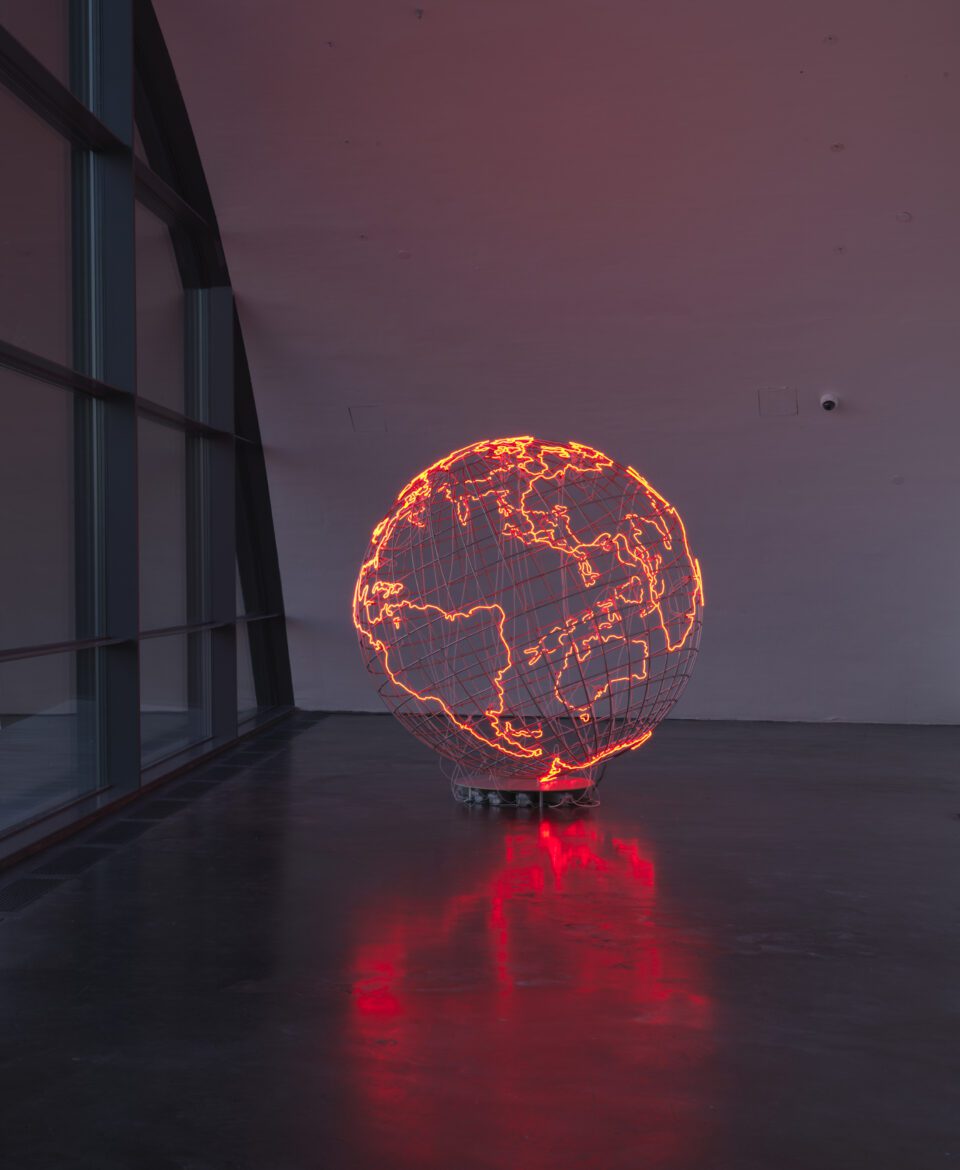
The exhibition opens with Mona Hatoum’s Hot Spot (2006), a globe of red neon that hovers in space like a planet in perpetual unrest. Hatoum describes it as a world “continually caught up in conflict,” and the installation conveys this tension without resorting to literal depictions of violence. The sense of human fragility and endurance continues with Peter Oloya’s bronze sculptures, shaped first in clay during his childhood experiences of conflict in northern Uganda. Oloya’s figures carry traces of suffering while radiating resilience, creating a quiet dialogue with Hatoum’s luminous, tense globe.
This conversation between past and present extends into the conceptual works of William Kentridge and Gideon Rubin. Kentridge’s Ubu Tells the Truth (1997) confronts apartheid-era injustice through layered drawing, film, and performance, blending absurdity and severity to illuminate systemic oppression. Rubin’s Black Book (2017) responds differently, redacting every page of Adolf Hitler’s Mein Kampf and transforming a text of hatred into an act of visual meditation and erasure. Placed in the same exhibition, these works form a bridge between historical atrocity and contemporary reflection, showing how art can confront human cruelty without relying on graphic representation.
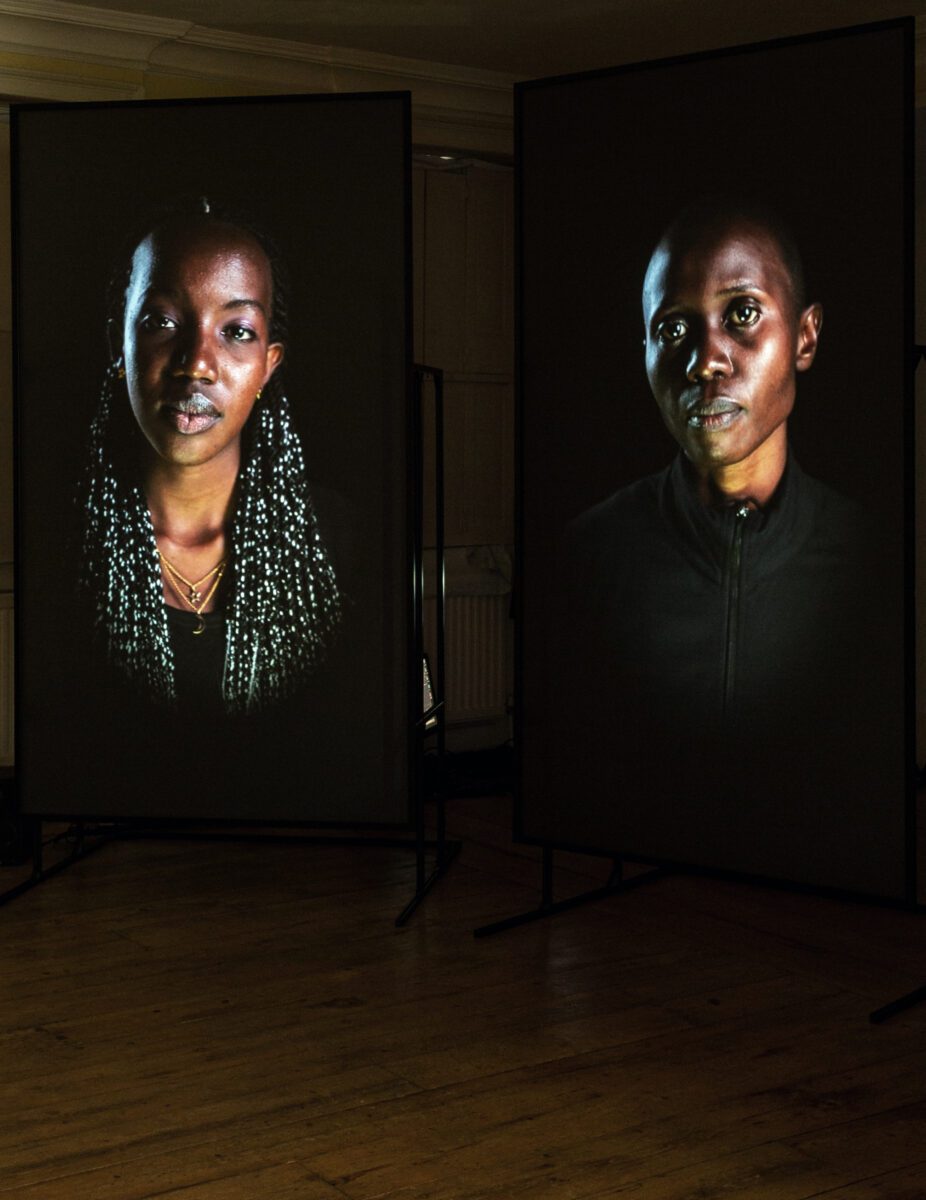
Memory becomes intimate and tactile in Ishiuchi Miyako’s photography, which documents everyday objects that belonged to atomic bomb victims in Hiroshima and Nagasaki. Shoes, clothing, and toys carry traces of lives abruptly altered, transforming the mundane into memorials. Hew Locke’s assemblages continue the thread of personal and collective memory, interrogating legacies of empire and displacement through visually rich, politically charged compositions. Kimberly Fulton Orozco’s work intersects with these concerns, exploring cycles of trauma in diasporic communities, while Indrė Šerpytytė examines the layered effects of loss and displacement with subtle lyricism. Each artist builds upon the other, creating a continuum that moves seamlessly from the intimate to the monumental.
Even historical reverberations of atrocity are present in Zoran Mušič’s paintings. Created in the aftermath of the Holocaust, his muted palettes and spare compositions convey absence and endurance, providing a quiet counterpoint to the conceptual and material interventions of contemporary artists. The exhibition forms a layered meditation on memory: historical and immediate, individual and collective.
Curators Tafadzwa Makwabarara and Jelena Sofronijevic have orchestrated this interplay with careful precision. Their approach balances historical depth with contemporary relevance, foregrounding voices that are often marginalised while allowing space for contemplation. Makwabarara’s focus on cultural empowerment and Sofronijevic’s commitment to pluralistic representation ensure that each narrative resonates individually yet contributes to a broader meditation on human experience. Across materials, media, and generations, Seeds of Hate and Hope emphasises art as a catalyst for empathy, dialogue, and understanding. Each piece probes human cruelty alongside resilience, mourning alongside hope, demonstrating that even amid hate and violence, acts of care, reflection, and creation remain possible. As part of the Sainsbury Centre’s wider Can We Stop Killing Each Other? season, the exhibition resonates with Anton Forde’s Tiaki Ora ∞ Protecting Life, Tesfaye Urgessa’s Roots of Resilience, and the National Gallery Masterpiece Tour’s reflections on peace. Collectively, these works question not only why humans harm one another but how art can open pathways toward empathy, awareness, and constructive action.
In a world marked by displacement, conflict, and persistent inequality, Seeds of Hate and Hope speaks urgently to our present. Memory and reflection coexist with activism, grief with resilience, suffering with the potential for understanding. From Hatoum’s hovering neon globe to Mušič’s muted canvases, Oloya’s enduring figures to Miyako’s intimate objects, the exhibition underscores the capacity of creativity to witness, to remember, and to guide us toward empathy and hope.
Seeds of Hate and Hope is at the Sainsbury Centre, Norfolk until 17 May 2026: sainsburycentre.ac.uk
Words: Anna Müller
Image Credits:
1. Mona Hatoum, Hot Spot, 2006. Stainless steel, neon tube. Courtesy of the David and Indrė Roberts Collection. © Mona Hatoum. All rights reserved, DACS 2025. Image courtesy of White Cube. Photo: Stephen White.
2. Indrė Šerpytytė. Image courtesy of Indrė Šerpytytė and Imperial War Museum, London UK
3. Mona Hatoum, Hot Spot, 2006. Stainless steel, neon tube. Courtesy of the David and Indrė Roberts Collection. © Mona Hatoum. All rights reserved, DACS 2025. Image courtesy of White Cube. Photo: Stephen White.
4. David Cotterrell, Mirror IV: Legacy, 2015, video. © David Cotterrell, 2018. Image courtesy of the artist.


