

In 2020, photographer Rania Matar returned to the Lebanese capital of Beirut in the aftermath of the infamous port explosion. There, she encountered a sentence scrawled on an abandoned building: “Where do I go?” The question stuck with her, indicative of a nation that has faced turmoil, conflict and upheaval for decades. She herself left the country in 1984, during the Lebanese Civil War, and recognises her own experience in many other women who face the painful decision of whether to stay or leave. Now, that graffiti has become the title of a new exhibition and accompanying book. Matar explained that the name “was taken from the writing on the wall of an abandoned silk factory in Kfarmatta, south of the capital, Beirut. I was with Perla, a young woman who threw herself on that wall.” Where Do I Go? لوي†ن†رو†ح is Matar’s photographic love letter to the women of Lebanon. These shots, taken across the country between 2020 and 2025, do not frame their subjects as symbols of fragility, but as individuals claiming space.
Born and raised in Lebanon, Matar was 11 years old when the country fell into civil war. The conflict lasted 15 years, during which time 150,00 people were killed and 800,00 were displaced. Matar was one such person, moving to the USA in 1984 to escape the destruction. At the time, it was one of the largest waves of emigration the country had ever seen, but recent years have seen that number surpassed. She works in both the USA and the Middle East, dedicating her practice to exploring issues of personal and collective identity. Her work has been widely exhibited in museums worldwide in solo and group shows, including Museum of Fine Arts, Boston, LACMA, Carnegie Museum of Art, ICA/Boston, National Museum of Women in the Arts and Fotogrfiska. In 2018, she received a Guggenheim Fellowship.
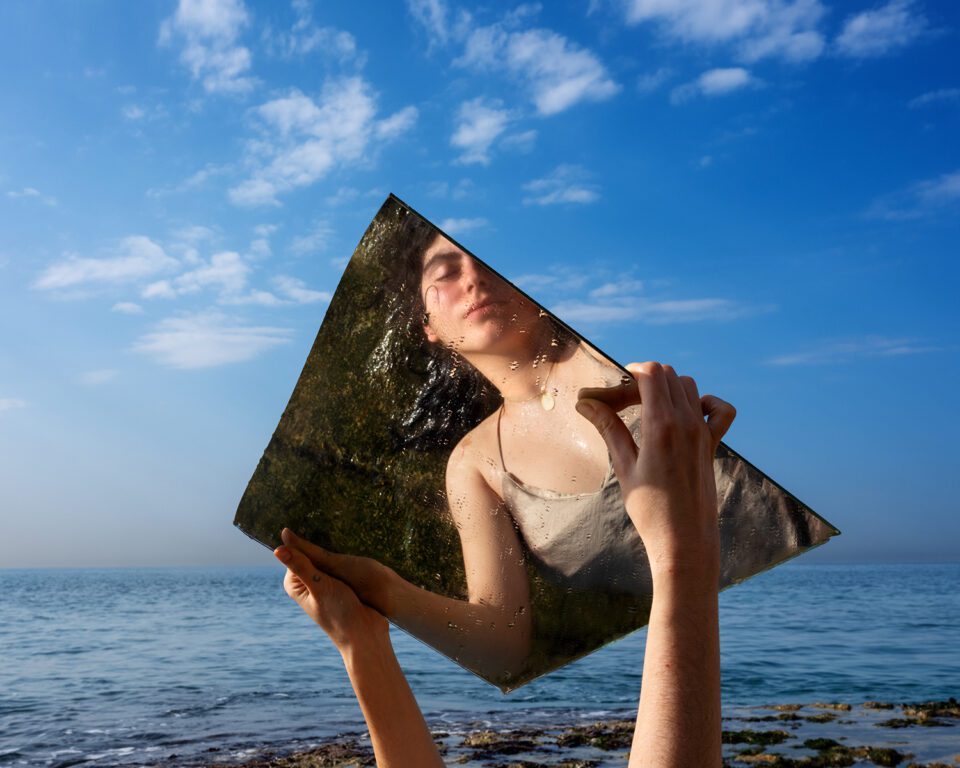
Participants play an important role in shaping Matar’s imagery. They select the locations and decide whether to climb trees or rocks, enter abandoned buildings or step into the water. She describes these portraits as “collaborations,” allowing the women to assert agency over both setting and representation. This is an important distinction, in which Matar complicates common western narratives that see women from the region reduced to victims. The reality is that gender inequality continues to impact the lives of Lebanese women, but this fact does not define their existence. According to the human rights charity Amnesty International, “women’s rights ground continued to advocate for a unified personal status law and political rights, including the right to equal custody of their children, to full protection from domestic violence, and to pass on their nationality to their foreign spouses and children.” But under Matar’s gaze, women are far more than statistics, they are fully rounded people with complexity and self-determination.
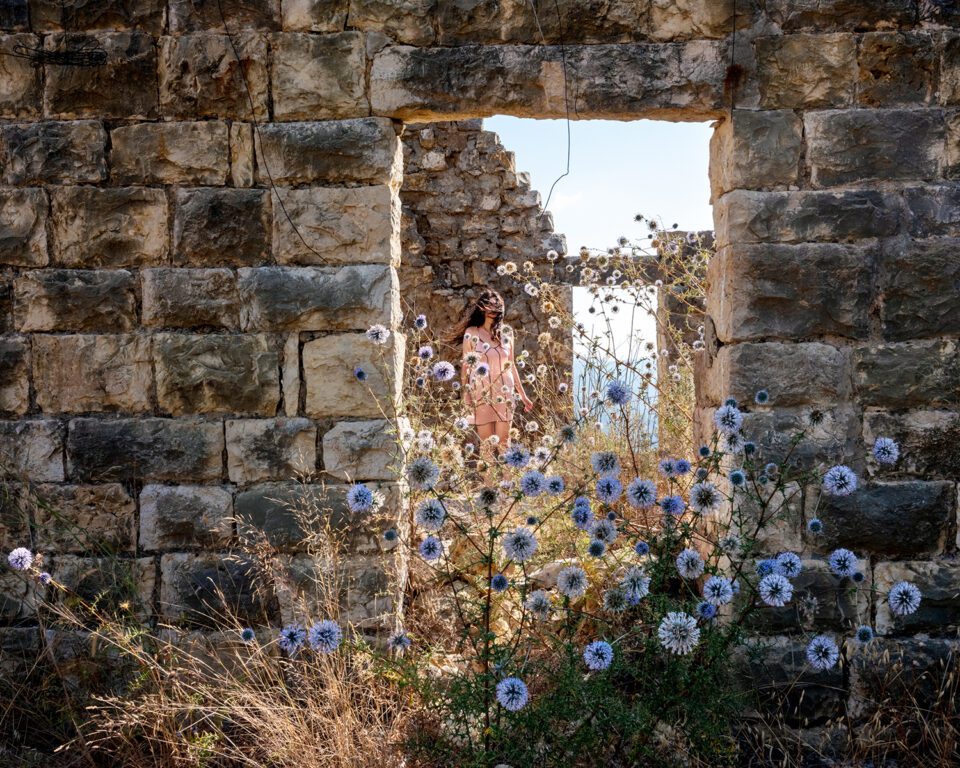
The photographs traverse coastlines, mountains, urban districts and border zones, moving from the Mediterranean and Mount Lebanon to Beirut’s eclectic architecture. Matar juxtaposes grand abandoned mansions, shuttered theatres, former hotels and ordinary streets that bear the visible residue of conflict. Bullet-scarred interiors overgrown with vegetation contrast with open fields of poppies, yarrow and thistle. Here, the interior becomes exterior, and the landscape acts as an extension of inner life. The destruction of buildings and cities is a visual manifestation of decades of uncertainty and upheaval, something the women of Lebanon continue to reckon with on a daily basis.
Where Do I Go? is rooted in Lebanon, but its resonance extends far beyond the country’s borders. Matar addresses the female experience, with themes of belonging, migration, and the precariousness of living through political and economic instability. Together, the images speak to the human condition with clarity and nuance, spotlighting place, endurance and hope – themes that are as universal as they are personal.
Where Do I Go? لوي†ن†رو†ح is at Lecia Gallery, Boston from 27 March – 31 April: leicagalleryboston.com
Where Do I Go? will be published by Kaph Books in April 2026: kaphbooks.com
Words: Emma Jacob
Image Credits:
1. Tara (in the Flowers), Bekaatat Kanaan, Lebanon, 2022. © Rania Matar.
2. Rhea S. Piccadilly Theatre, Beirut, Lebanon, 2021. (Homage to Fouad El Khoury) © Rania Matar.
3. Rianna (with Mirror) Amshit, Lebanon, 2024. © Rania Matar.
4. Rianna, Chartoun, Lebanon, 2022. © Rania Matar.


