

Artist Cara Romero (b. 1977) is an enrolled citizen of the Chemehuevi Indian Tribe. She has spent much of her life between the contrasting settings of the rural Chemehuevi reservation in Mojave Desert, California, and the urban sprawl of Houston, Texas. Romero’s visual storytelling is informed by this identity, representing Indigenous and non-Indigenous cultural memory, countering dominant narratives of Native American experiences and showcasing the diversity within Indigenous nations and communities.
Phoenix Art Museum presents a landmark display of the photographer’s work, representing the first major museum exhibition dedicated solely to her oeuvre. Cara Romero: Panûpünüwügai (Living Light) features more than 60 iconic, large-scale pieces, spanning more than a decade. In a particularly exciting feature, the exhibition includes a new, never-before-seen project, based in regional, collaborative storytelling with Native peoples. Jeremy Mikolajczak, Director and CEO of the museum, says: “Romero stands at the forefront of contemporary photography, masterfully weaving materials, myths, and Indigenous practices with urgent contemporary realities. Though rooted in her personal story and Indigenous futurism, her work speaks universally to themes of women’s empowerment, environmental stewardship, and the role of landscape in shaping identity. This exhibition represents a milestone for our communities to experience the work of a groundbreaking artist with deep cultural and historical ties to the Desert Southwest.”
The exhibition’s title, Panûpünüwügai, translates to “living light,” and has multiple meanings: the spirit of light, the way light interacts with human beings and how both light and people are enlivened through these interactions. The show orbits around this central concept, and is split into five thematic sections, guiding visitors through site-specific installations and large-scale photographs. Romero begins with a series inspired by her experience growing up in the Chemehuevi Valley in Southeaster California, along the Colorado River, which profoundly shaped her worldview. Throughout this section, audiences encounter four young boys who represent “time-travelling spirit beings of the landscape.” They act as a reminder that neither time, nor the rich ecological and social history of the Mojave Desert, are linear.

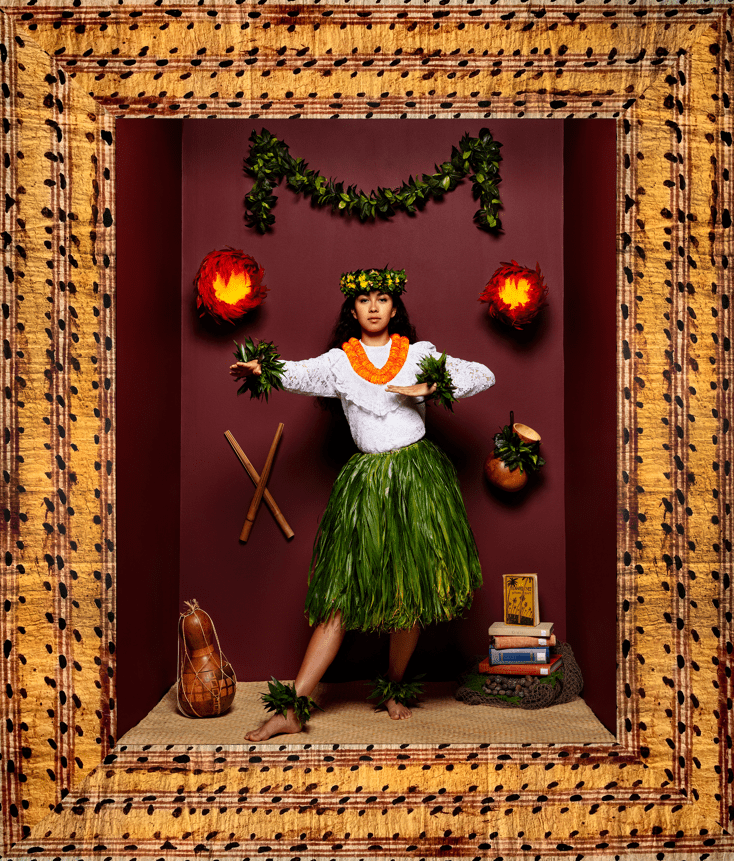
Romero upends stereotypical images and stories from pop culture and mass media that often define Native-American experiences and opportunity. She riffs on common visuals such as children’s toys and Leonardo da Vinci’s The Last Supper, among other mainstream imagery. In a series of striking portraits, she turns her subjects into life-size American Girl dolls. The company, founded in 1986, brought out its first non-white doll in 1993, and it wasn’t until 2002 that Kaya, a Native American character, was released onto shelves. Romero resists this lack of visibility – or representation that feeds into one narrative – by turning women into dolls, dressed in traditional garb and surrounded by objects emblematic of their heritage.
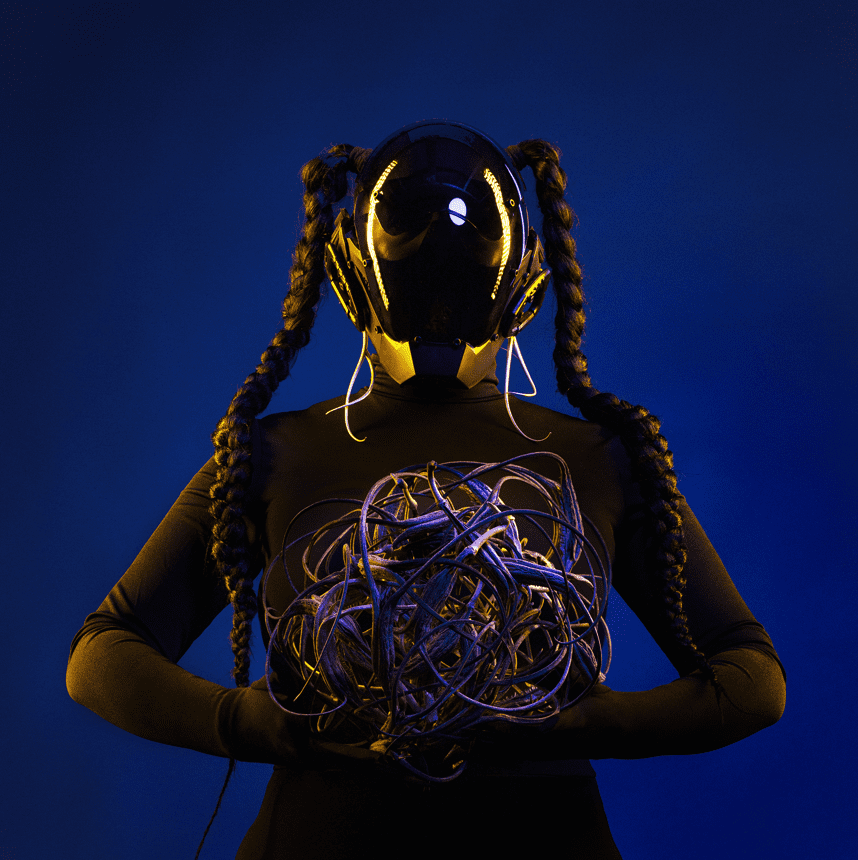
Elsewhere, some of Romero’s most memorable creations speak to historical and contemporary issues of resource extraction and its impacts on Indigenous ecosystems. These images form the Environmental Racism section, made up of photographic dreamscapes, many of which were created underwater, that encourage reflection on the relationship between humanity, place, the landscape and extractive economies. The artist’s love of magical realism and counternarratives also comes to the fore in Ancestral Futures, where Romero asserts the sacred role of ancestral knowledges and Indigenous peoples. Here, viewers encounter a new commission created in collaboration with communities in Phoenix. The monumental photographic work weaves elements of desert ecology with a nonlinear time, resulting in a piece that honours previous generations and their deep understanding of the land, whilst asserting the vitality of Native American communities now and in the future.
In discussing her aims for the show, the artist explains: “my hope is that together, we open people’s minds to the many fascinating diversities of Native people and stories.” There is little question that this expansive and boundary-pushing show will achieve these goals. Romero traverses great swathes of history and culture with nuance and confidence, inviting audiences to see beyond mainstream narratives, gain a greater appreciate for Indigenous history and engage in important intercultural conversations.
Cara Romero: Panûpünüwügai (Living Light) is at Phoenix Art Museum until 28 June: phxart.org
Words: Emma Jacob
Image Credits:
1. Cara Romero, Coyote Girl, 2024, archival pigment print. © Cara Romero. Image courtesy of the artist.
2. Cara Romero, The Zenith, 2022, archival pigment print. Hood Museum of Art, Dartmouth: Purchased through the Acquisition and Preservation of Native American Art Fund; 2022.47.1. © Cara Romero. Image courtesy of the artist.
3. Cara Romero, Kaitlyn, 2024, archival pigment print. © Cara Romero. Image courtesy of the artist.
4. Cara Romero, Amedée, 2024, archival pigment print. © Cara Romero. Image courtesy of the artist.
5. Cara Romero, Devil’s Claw No. 2, 2025, archival pigment print. © Cara Romero. Image courtesy of the artist.


