

A long-awaited exhibition of Dörte Eißfeldt (b. 1950), one of Germany’s foremost experimental photographers, opens in Berlin this February. It’s an exciting survey of an artist known for harnessing unconventional methods to develop images that defy categorisation – such as inverting positives and negatives, or taking multiple exposures. Eißfeldt’s body of work spans everything from snapshots of everyday life to heavily abstracted compositions that foreground texture and materiality. It’s an approach that has let to widespread acclaim; in November 2025, she received the prestigious Prix Viviane Esders. Plus, her pieces are held in major collections around the world, including the Museum of Modern Art in New York; Bibliothèque Nationale, Paris; and Staatsgalerie Stuttgart, amongst many others.
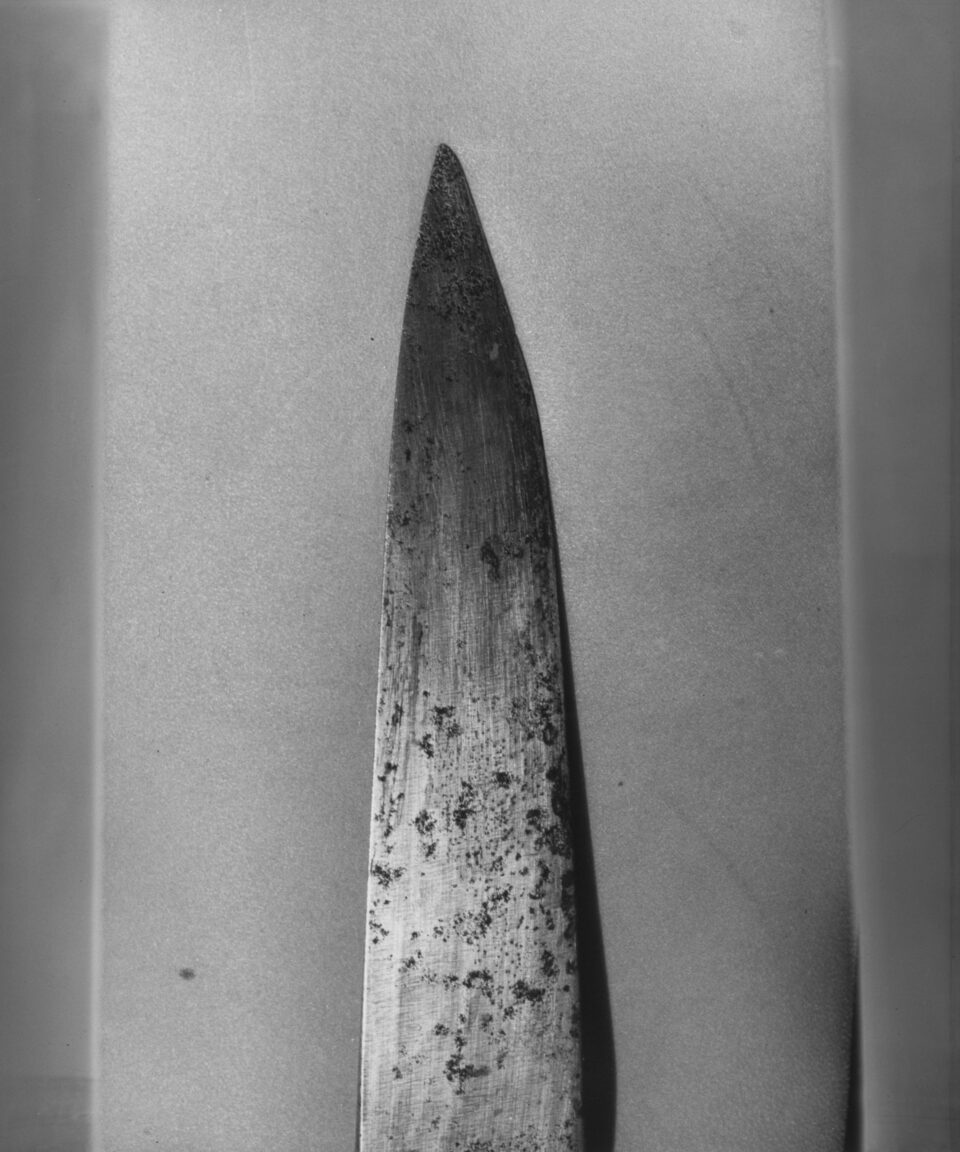
Eißfeldt studied art in Hamburg in the early 1970s, initially focusing on painting and film, before moving towards analogue and digital photograpy. C/O Berlin’s show, titled Archipelago, spans nearly five decades, during which she has sustained an interest in depicting “fragments of reality”: hands covering the focal point of a scene, or feet walking towards the edges of a frame. It’s not always clear what you are looking at – a knife, a feather, or a leaf? Subjects are often depicted in a state of transformation, from melting snowballs to waves crashing against the shore. Yet one fact remains constant: nothing is as it seems.
Viewers might be reminded of Michael Wesely (b. 1963), a fellow German art photographer known for his ultra-long exposure photos of buildings that collapse time into a single frame. There are also echoes of Dora Maar (1907-1997) – known for her pioneering, fantastical collages and photomontages, which featured in key Surrealism exhibitions and became icons of the movement. Eißfeldt’s use of solarization –which involves exposing a partially developed photograph to light – can be traced back to the 1800s. The technique was famously rediscovered by accident by surrealists Man Ray and Lee Miller in the late 1920s.
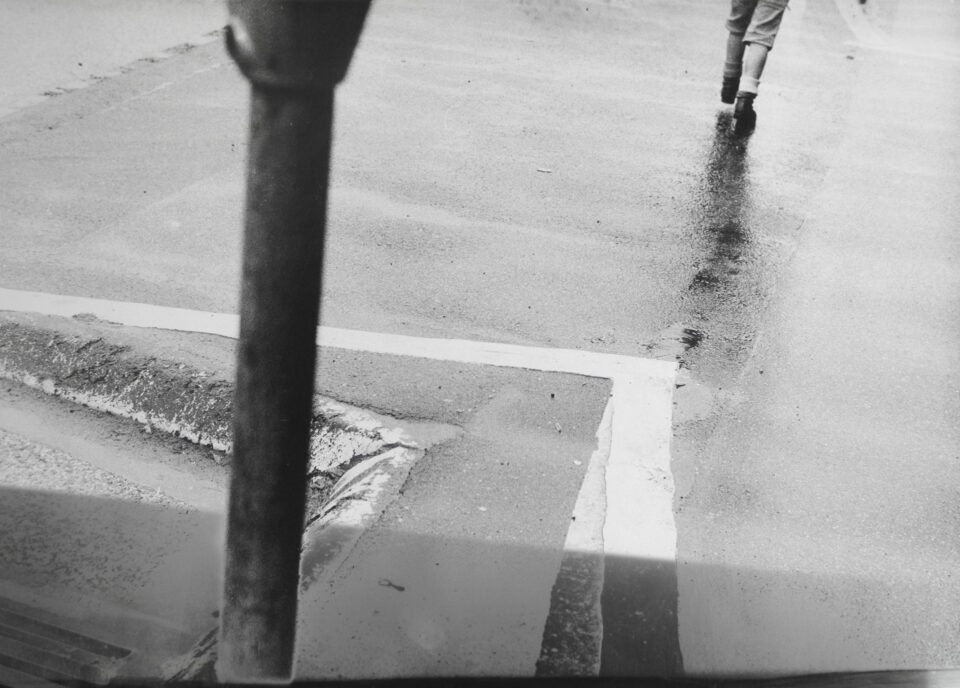
C/O Berlin’s show offers a real insight into Eißfeldt’s creative process. The curation is generous, allowing audiences to peer inside previously unpublished sketchbooks. These materials reveal a key throughline: Eißfeldt sees every image as having a “life” – a story that is told through the chemical processes used to make it, the paper on which it is printed, and the ways in which it is shared. Often, she repurposes archival works into new projects, such as in Möbiusband 01, (2003), where a print of the shoreline folds into an infinity loop. In this way, older pieces are kept alive, their meaning changing over time.
In recent years, the arts has seen a resurgence of analogue processes – perhaps as a push-back against generative AI and a burgeoning desire to “return to the real.” Archipelago is a testament to the power of human experimentation, filled with images that are tactile, physical and prompt a double take.
Dörte Eißfeldt: Archipelago, runs 7 February – 10 June.
Words: Eleanor Sutherland
Image Credits:
1. Dörte Eißfeldt, Möbiusband 01, (2003).
2. Dörte Eißfeldt, Schneeball 01, (1988).
3. Dörte Eißfeldt, Haut, (1989).
4. Dörte Eißfeldt, Favorit 08, (1980).


