

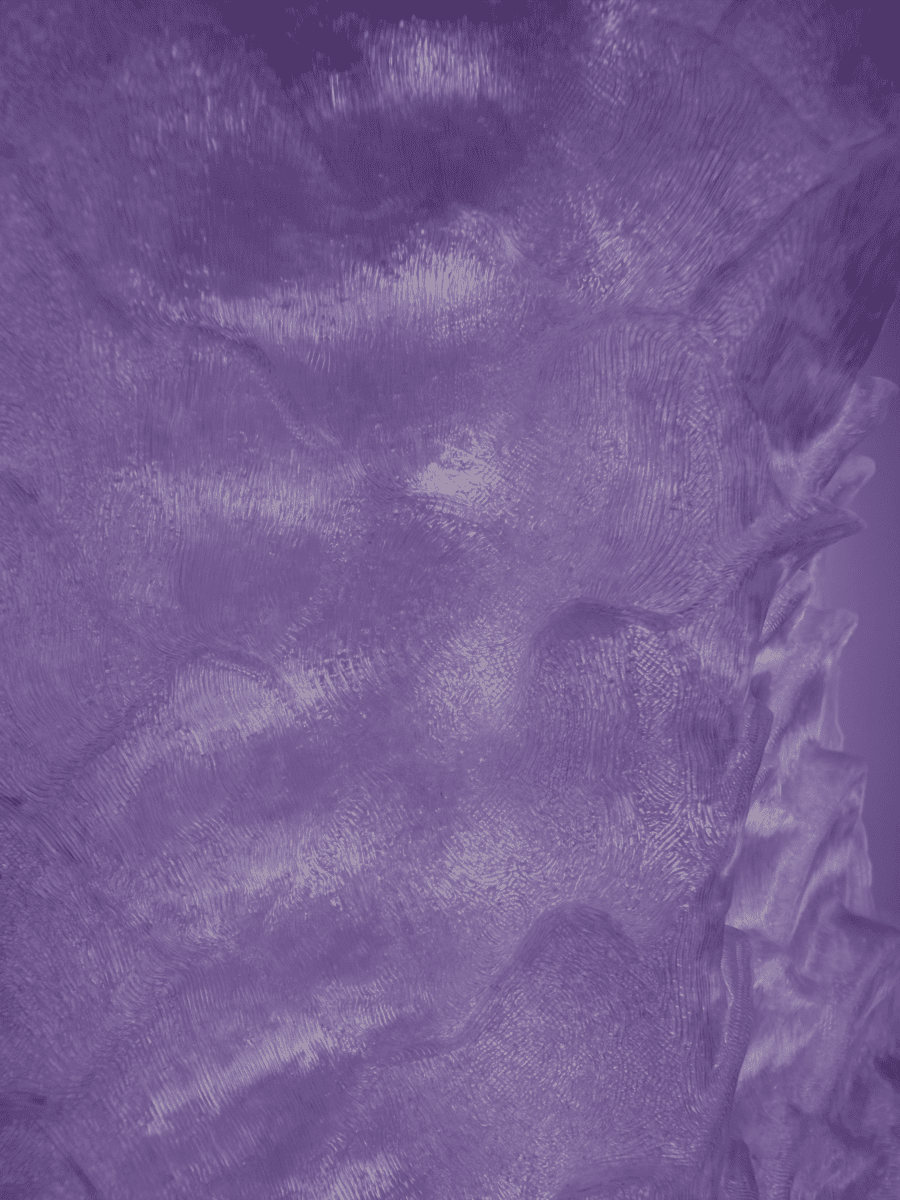
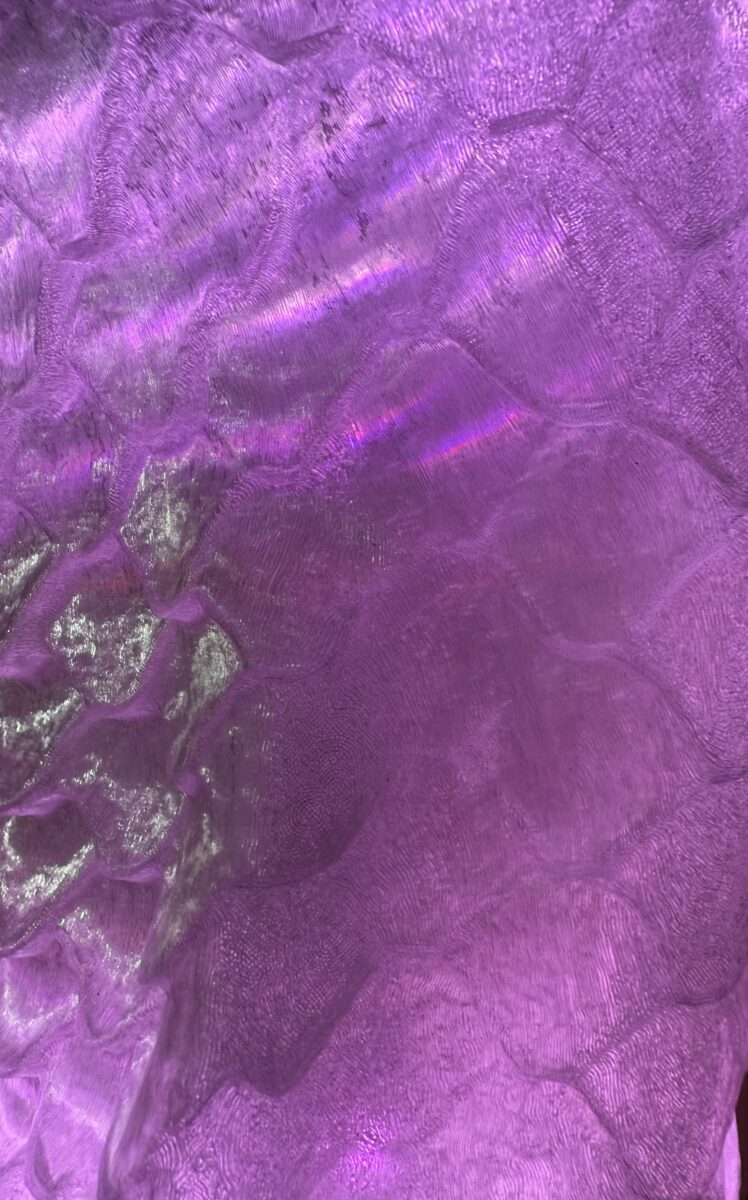
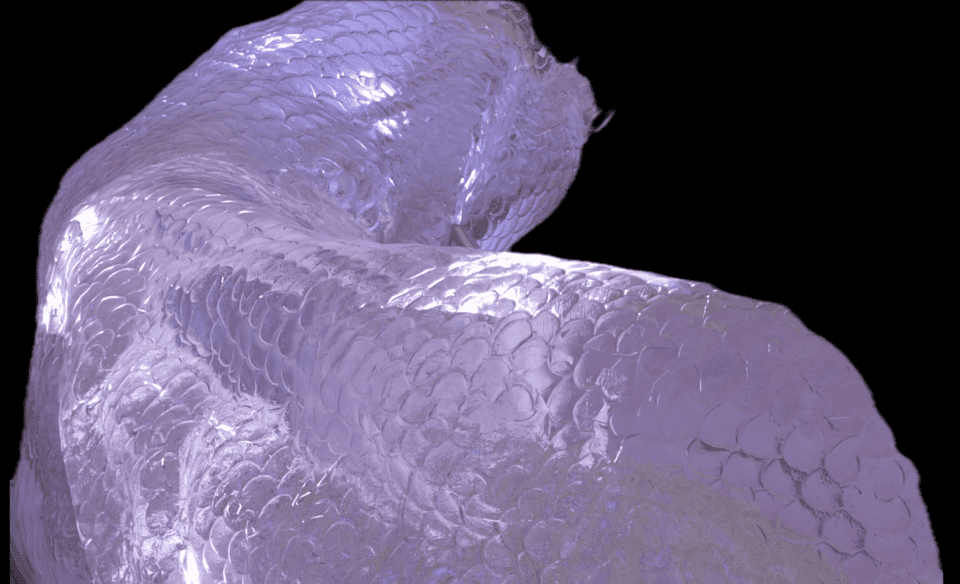
Each spring, Somerset House unveils a large-scale installation in its famed courtyard. The free, public artwork is an opportunity for audiences to encounter some of the most exciting figures working in contemporary art. This year, this opportunity goes to Dana-Fiona Armour (b. 1988), who defines herself as an artist-researcher, often collaborating with scientists and statisticians in her work. Serpentine Currents combines sculpture, technology and science, to raise awareness of issues surrounding marine ecosystems and changing ocean conditions. The three-part sculpture is modelled on a 3D scan of an endangered sea snake species. LED lights react to historic and predicted ocean data from the British coastline, responding to rising sea temperatures and decreasing salinity to evoke how sea snakes act as bioindicators for ocean health. It’s a pertinent reminder of the fragile state of the world’s water, and encourages audiences to look closely, imagine differently and connect with the natural world through light and movement. Aesthetica caught up with Armour ahead of the show’s opening to chat about the piece.
A: Take us back to the start. How did you begin working as an artist?
DFA: My practice has always been at the intersection of material experimentation, research and storytelling. I started out working very physically with sculpture and installation, but over time my curiosity expanded towards science, ecology and new technologies. What drives my work is a desire to translate complex systems – whether biological or technological – into experiences that people can feel rather than simply observe. I see myself as a sort of translator, between disciplines, matter and species.
A: What first drew you to sea snakes as a subject? Why did you choose them as the focus of this work?
DFA: My interest began during a research residency at the Natural History Museum in Paris, where I was working closely with scientists studying the hydrodynamics of snakes. It was fascinating to observe how sea snakes move – their efficiency, elegance and adaptability. From there, I became interested in their ecological importance and vulnerability. Sea snakes are often misunderstood, yet they are vital to marine ecosystems, which made them a powerful subject through which to talk about conservation and beauty.
A: Could you explain how sea snakes are an indicator of marine health?
DFA: Sea snakes are bioindicators, meaning their wellbeing directly reflects the condition of their environment. Because they are highly sensitive to changes in water temperature, pollution and habitat disruption, shifts in their populations often signal deeper imbalances in marine ecosystems. The work highlights how climate change and human activity ripple through entire ocean systems.
A: The piece is called Serpentine Currents – Fragments of a Changing Future. Why did you choose this title?
DFA: The title reflects both form and concept. Serpentine Currents speaks to the flowing, undulating movement of sea snakes and oceans, while Fragments of a Changing Future refers to the deconstructed and fragmented sculptural forms and the damaged state of our ecosystems. The work is about transition – a future that is still unfolding but already shaped by environmental loss and resilience.
A: You often work with scientists. What excites you about bringing art and science together?
DFA: It’s the moment when my role as an artist shifts – from producing objects to actively participating in a process of research. When I collaborate with scientists, I move out of the studio and into the laboratory, where I’m confronted with protocols, legal frameworks and a precise technical language. That friction is extremely generative. It forces me to translate artistic intuitions into hypotheses that can be tested, and then to turn those results back into sensory and emotional experiences. Science offers depth, rigor and precision, while art creates space for interpretation and emotional connection. Working with researchers – such as scientists from the CNRS and the Muséum national d’Histoire naturelle in Paris – allows me to anchor my projects in real data and active research, while transforming that knowledge into something experiential and accessible for wider audiences. This dialogue between disciplines opens new ways of understanding complex issues, particularly questions of ecology and biodiversity loss.
A: The sculpture uses real ocean data. How did you turn complex information into something people can easily understand and feel?
DFA: The LED light system acts as a translator. The installation’s lights will be animated by data gathered from oceanographic sensors at the British coast by CEFAS (Centre for Fisheries and Aquaculture Sciences), referring to 50 years of recorded sea temperature and salinity. This data has additionally been predicted into the next 50 years and imagines a future where sea temperatures have continued to rise, to the extent that sea snakes would be able to inhabit UK waters. This is very much rooted in reality, should ocean temperature changes continue. Instead of presenting data as numbers or graphs, the information becomes colour, rhythm and movement, allowing visitors to intuitively sense changes in marine health.
A: Light and movement play a big role. What do they allow you to express that images cannot?
DFA: Light and the movement of the fountains create immersion as they allow the spectator to feel the work and create a certain atmosphere. The constantly shifting lights and fountain “tides” are the response to real environmental conditions. So rather than explaining an idea, the installation invites audiences to feel it physically and emotionally, interacting with it in real time and in shifting ways.
A: Serpentine Currents is in a public space. How does this shape the way people experience it?
DFA: Presenting the work in Somerset House’s courtyard makes it part of everyday life rather than a closed gallery setting. People can encounter it unexpectedly, from different angles and at different times of day. The openness of the space encourages curiosity, reflection and conversation, and allows audiences of all ages to engage with the work on their own terms. It’s a great way to reach a large and diverse public.
A: What do you hope audiences take away from viewing your installation?
DFA: I hope people leave with a heightened awareness of our interconnectedness with marine ecosystems, and a sense of responsibility as well as hope. The work aims to remind that even species we fear or misunderstand are essential to the health of our planet and that change is still possible if we choose to act.
Dana-Fiona Armour: Serpentine Currents is at Somerset House, London from 19 February – 26 April: somersethouse.org.uk
Words: Emma Jacob & Dana-Fiona Armour
Image Credits:
1&5. Dana-Fiona Armour, ‘Serpentine Currents – Fragments of a changing Future’, 3D Simulation – Credit: Dana-Fiona Armour, 3D Artist Emma Borne.
2. Dana-Fiona Armour, ‘Serpentine Currents- Fragments of a changing Future’, 3D Simulation. Credit: Dana-Fiona Armour, 3D Artist Emma Borne
3. Dana-Fiona Armour, ‘Serpentine Currents – Fragments of a changing Future’, Prototype
4. Dana-Fiona Armour, ‘Serpentine Currents – Fragments of a changing Future’, Prototype. Credit – Dana-Fiona Armour.


