

Movement, memory and the infrastructures that quietly shape daily life underpin Phoebe Boswell’s latest commission for London’s Underground, where escalators become both conduit and canvas. Water threads through the work as a conceptual and historical force, linking subterranean rivers with human passage above them. The project situates transit as a site of reflection, where repetition and routine open onto questions of belonging and visibility. Beneath the surface of the city, layered geographies and suppressed ecologies echo the lived experiences of those who move through its spaces. Boswell’s intervention reframes the Underground as a place where histories converge, diverge and resurface in unexpected ways. In doing so, the commission invites a slower, more attentive mode of looking.
Phoebe Boswell’s interdisciplinary practice spans drawing, video, animation, sound and writing, forming installations that respond intuitively to the environments they inhabit. Born in Nairobi and now based in London, her perspective is informed by a diasporic sensibility that navigates between geographies and temporalities. Her work consistently engages with themes of migration, grief, intimacy and collective memory, often through a Black feminist lens that foregrounds care and relationality. Participation frequently plays a role in her process, with collaborators contributing to the formation of layered visual and narrative structures. She has exhibited internationally and received recognition including the Paul Hamlyn Award for Artists and the Lumière Award from the Royal Photographic Society. Across her body of work, Boswell examines how representation can shape understanding, agency and connection.
Bodies of water recur throughout Boswell’s recent work as both subject and metaphor, carrying associations of endurance, transformation and shared experience. Rather than positioning water solely as a symbol of fluidity, her practice considers its role as a repository of memory and a carrier of historical weight. This approach acknowledges the complex entanglement of water with migration, colonial routes and diasporic movement. Water is presented as a space of possibility, intimacy and renewal, capable of holding multiple narratives simultaneously. Through layered imagery and time-based processes, Boswell constructs environments where stillness and motion coexist. These investigations form the groundwork for her latest commission, extending her engagement with aquatic imaginaries into the public sphere.
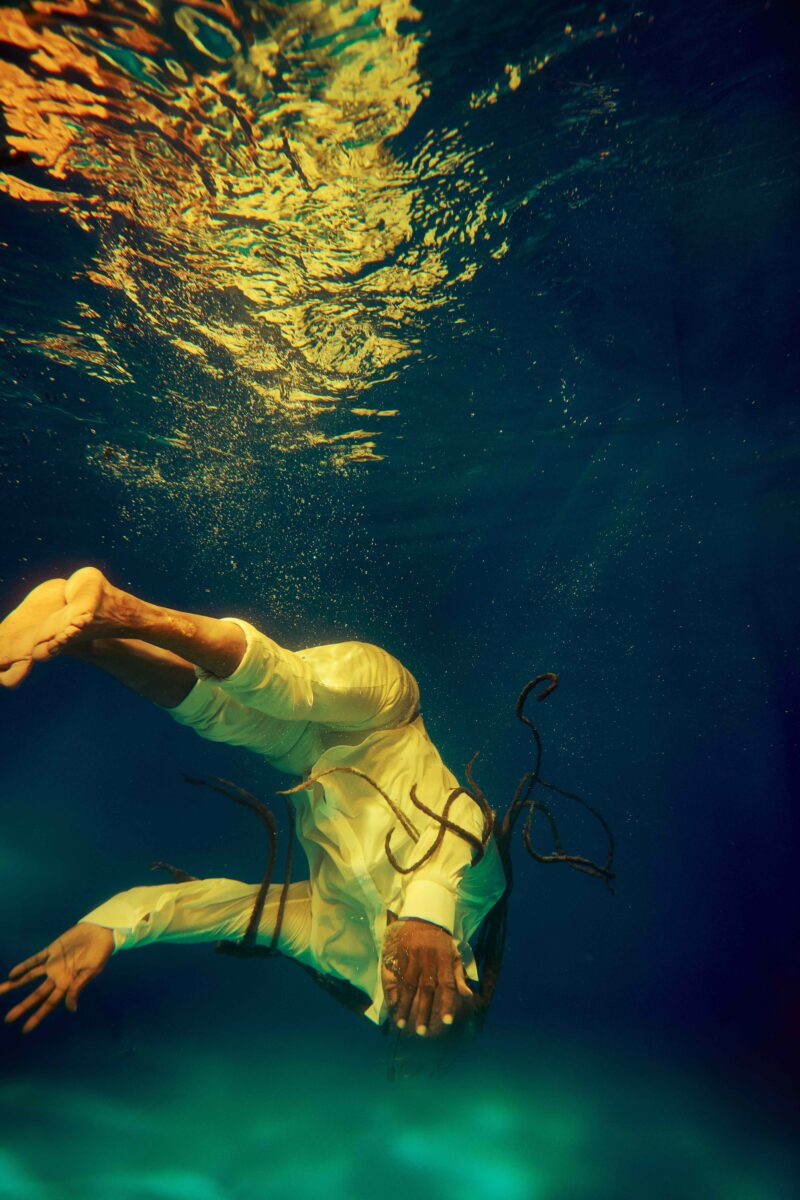
Installed across escalator sites at Bethnal Green and Notting Hill Gate Underground stations from 25 March, the commission responds directly to the rhythms of commuter movement. Four photographic assemblages are positioned alongside escalators, activated by the continuous flow of passengers passing through the stations. Participants, drawn from local swimming communities, were photographed underwater in response to prompts that encouraged intuitive, embodied gestures. These images are then sequenced using methodologies associated with early animation techniques, creating compositions that shift and evolve as viewers move past them. Boswell describes the project as “a call to the surface”, framing it as an invitation to consider the stories carried within bodies and environments. The work engages with hidden waterways beneath London, including the River Westbourne and the River Walbrook, drawing parallels between diverted natural flows and engineered urban systems.
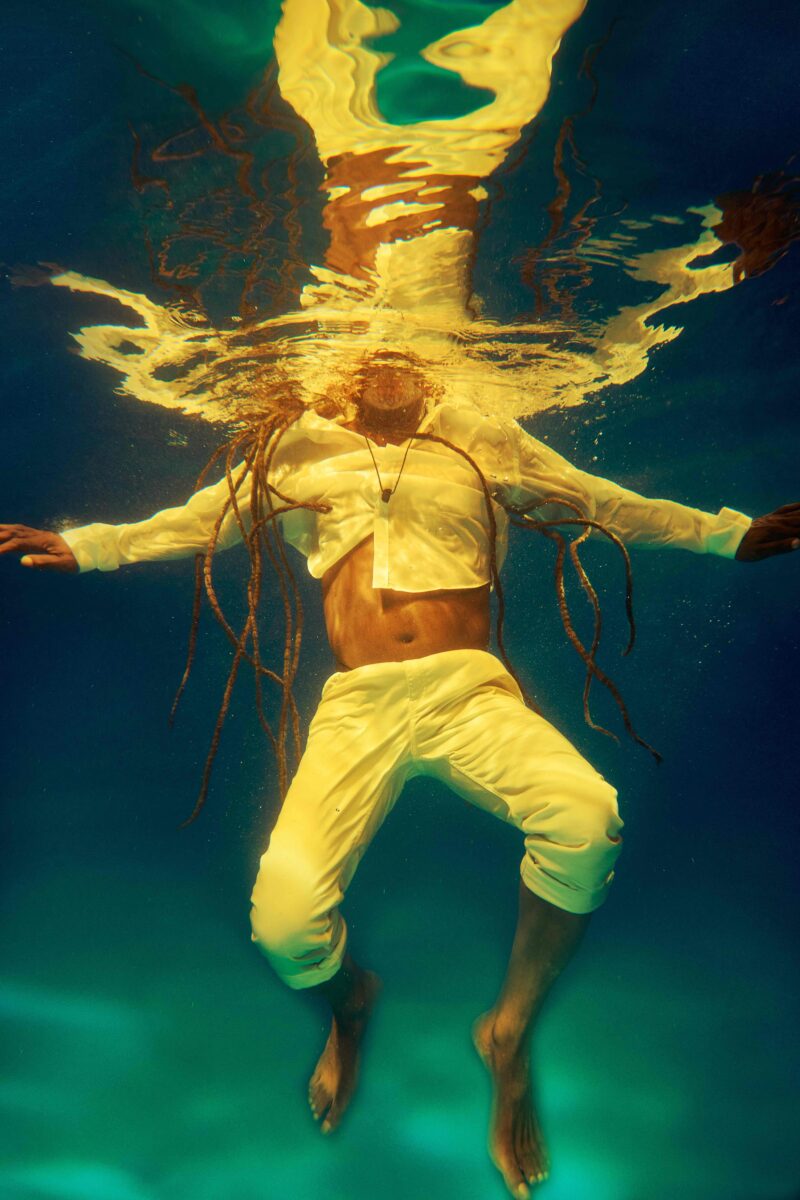
Collaboration and community sit at the centre of the commission, with participants contributing personal reflections on their relationships with water. The inclusion of Black swimmers is particularly significant, responding to the statistic that 95 per cent of Black British adults do not swim, a figure that points to broader histories of exclusion and access. By bringing these narratives into the context of a highly visible public transport network, the work creates a platform for representation that is both subtle and expansive. The underwater setting of the photographic sessions introduces an element of suspension, where participants exist in a liminal state between presence and abstraction. Boswell’s process foregrounds care and attentiveness, allowing individual stories to coalesce into a collective visual language. The resulting assemblages operate as shifting portraits of community, shaped as much by movement as by image.
Artists working with similar concerns have also explored the intersections of water, migration and identity through varied formal approaches. Alberta Whittle’s moving-image works often address colonial legacies and diasporic memory through immersive environments that incorporate sound and film. Torkwase Dyson’s practice engages with spatial abstraction, examining how geometry, architecture and environment intersect with Black spatial imaginaries and lived experience. Zineb Sedira’s photographic and film-based works trace transnational journeys across the Mediterranean, reflecting on family histories and geopolitical boundaries. While each artist approaches these themes differently, their practices share an interest in how movement across water can signify both displacement and connection. Boswell’s contribution aligns with this broader field while maintaining a distinctive emphasis on participation, animation and site-responsive installation. Together, these practices reflect a growing attentiveness within contemporary art to fluidity as both material condition and conceptual framework.
Within the context of Art on the Underground, Boswell’s commission joins a programme that has consistently foregrounded the role of public art in everyday environments. Artists such as Helen Cammock, Monster Chetwynd and Joy Gregory have previously contributed works that engage commuters in moments of unexpected encounter, embedding artistic interventions within the rhythms of the city. These projects expand the function of public space, encouraging reflection within contexts often defined by movement and transit. Eleanor Pinfield, Head of Art on the Underground, notes that Boswell’s work “engage[s] deeply with the idea of the Underground as a series of connections”, linking hidden waterways with human journeys across generations. The programme’s reach, seen by millions of passengers daily, situates contemporary art within a uniquely accessible and widely experienced setting.
Public art in transit environments alters how space is perceived and experienced, introducing moments of pause into otherwise functional settings. These interventions encourage a heightened awareness of surroundings, prompting viewers to consider their relationship to place, infrastructure and one another. The integration of art into everyday journeys creates opportunities for reflection that might otherwise be absent from routine activity. Justine Simons OBE describes this capacity when noting that “public art has the power to transform the everyday and connect us to the untold stories of our city.” Such projects do not require extended engagement to be impactful; instead, they operate through brief yet resonant encounters that accumulate over time. In this way, art embedded in public systems contributes to a broader cultural landscape that is both shared and continuously evolving.
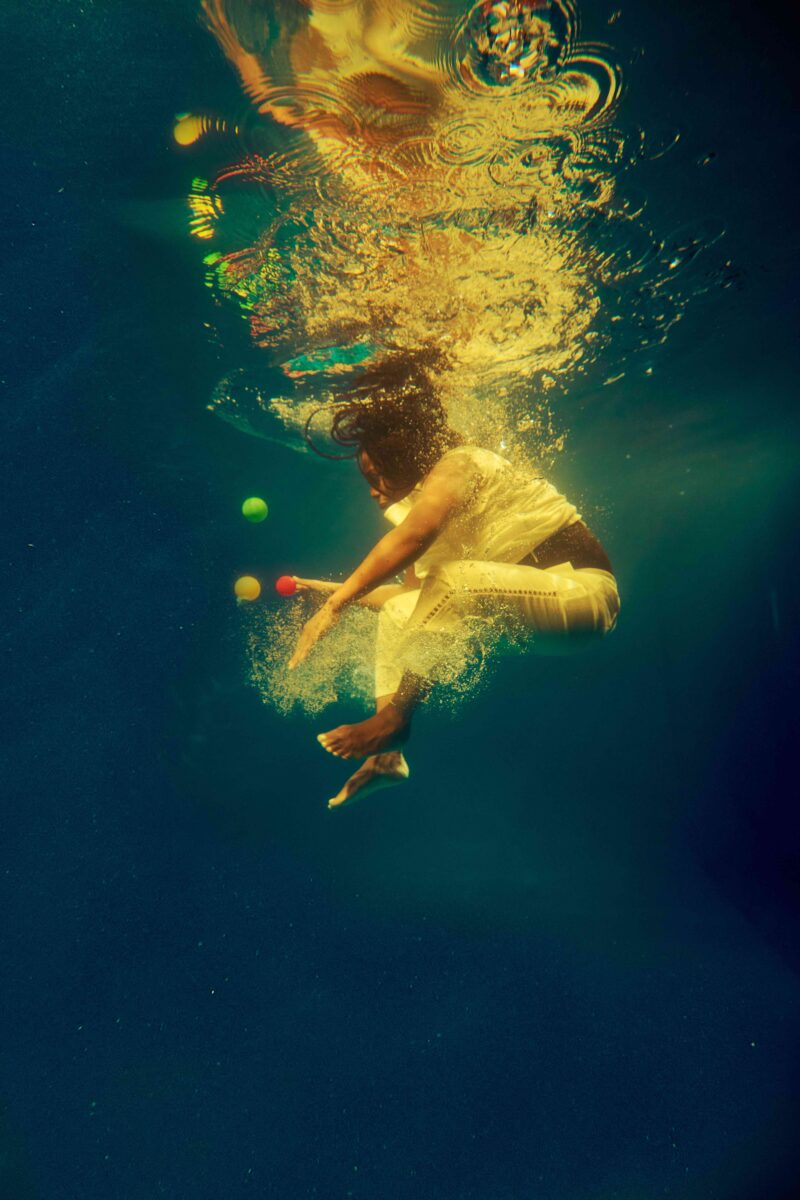
The escalator functions in Boswell’s installation as an active participant in the animation of the work, generating movement through the passage of commuters. References to early devices such as zoetropes and phenakistoscopes situate the project within a historical lineage of image sequencing and optical illusion. Rather than relying on mechanical apparatus alone, the work harnesses the motion of the viewer to bring still images into sequence, creating a dynamic interplay between observer and environment. Boswell explains that “the escalator itself and the commuters riding it become the animating device”, highlighting the participatory nature of the installation. This relationship between motion and perception underscores the temporal dimension of the work. The installation thus operates as both image and process, shaped by the continual movement of people through space.
Across the stations, the presence of Boswell’s work introduces a visual and conceptual layer that engages with histories beneath the city while remaining firmly rooted in the present moment. The reference to hidden rivers offers a reminder of the natural systems that continue to exist alongside urban infrastructure, even when no longer visible. By aligning these submerged waterways with narratives of migration and community, the commission articulates a broader understanding of connection that extends beyond physical proximity. The work invites passengers to consider their own movement through the city in relation to wider patterns of flow, both human and environmental. It creates a space where personal experience intersects with collective history, allowing multiple perspectives to coexist within a shared framework. In this context, Boswell’s installation functions as a reflective surface within the pace of urban transit, offering a momentary shift in attention that resonates beyond the immediate encounter.
Phoebe Boswell’s we move through scales of blue is set to be unveiled at Bethnal Green Underground & Notting Hill Gate Underground on 25th March: art.tfl.gov.uk
Words: Shirley Stevenson
Image Credits:
All images Phoebe Boswell, we move through scales of blue. Courtesy the artist and Wentrup
Gallery, Berlin.


