

Upstate Art Weekend, the annual summer series celebrating arts and culture of the region north of New York City, has grown exceptionally since it began in 2020 and for the 2024 edition welcomed more than 140 participants including galleries, museums, artist residencies and studios. This year’s iteration brought something new—the Zero Art Fair. Tucked away in a barn in Elizaville, New York, the Zero Art Fair debuted on Friday 19 July to overwhelming support while touting a slightly revelatory approach to the traditional art fair model.
The brainchild of artists Jennifer Dalton and William Powhida, the fair allowed visitors to take home one available work per day for free—with a catch. Works were transferred at the fair to visitors with a contract that puts the pieces on a five-year vesting schedule. After that time has passed, the work will be owned by the person who took it home. But until then, the contract allows the artist rights to their work that they usually have after an art fair, including the ability to sell the work, borrow it for an exhibition and under certain scenarios even request for its return.
In the case of another interested buyer, the contract gives the borrower right of first refusal and a prorated discount on the retail price set by the artist based on the vesting schedule. If the person who took the work home from the Zero Art Fair decides to sell the work after it comes into their possession, the contract also states the artist will receive 50% of the sale price of the first sale, and 10% royalties in perpetuity on subsequent resales. If the work is sold or changes hands, the contract stipulates the owner of the work will inform the artist.
“We can’t be certain that no one will cheat and try to sell the work without payment to the artists,” Dalton said. “But the contract is legally enforceable and we are optimistic that people will behave well and continue the spirit of generosity of the project.” (The contract itself releases Zero Art Fair and its organisers from any claims or liabilities related to enforcing the contract).
The unique contract allows for people who aren’t the typical art collector to take part in an art fair and give them a chance to live with works of art. The fair was scheduled to start on Friday 19 July and last until Sunday 21 July, but it closed on the first day after receiving an overwhelming response from collectors. Of the 81 fair participants, all but four artworks were placed with owners that day.
Visitors who took home a work from the fair also signed a contract that puts the piece on a five-year vesting schedule
Photo: Zero Art Fair
“The vibe could not have been more different than at a typical art fair,” said Powhida. “We definitely placed art with people who couldn’t normally afford to collect art at most art fairs. We placed a lot of works with people who work in the arts, including curators, artists, academics, art dealers, a historian, and an art consultant.”
One of the fair’s aims was to demystify what happens in the commercial art market, and the way artists function with it. One of the fair’s aims was to demystify what happens in the commercial art market, and the way artists function with it. It sought to clarify, for example, some of the mechanics behind the purchasing and selling of work, as well as what happens to artwork that artists are not able to sell. This unconventional approach translated to the mood of the fair.
“The overall response was incredibly positive,” said Powhida. “We heard from other artists about how the whole project made them think about their careers, the value of art, their own relationships to the market and its pressures.”
The painter Jane Fine, who has participated in numerous fairs including the Armory Show in New York, noted how her interactions with the person who obtained her artwork was different from her usual experiences with collectors. Fine’s work was chosen by someone she knew and within a few hours the borrower reached out to her directly.
“That is very atypical—it’s very rare to be contacted directly by a new collector,” Fine said.
“I love Jen and William’s intellect and sense of humour and their intention to poke fun at institutional and corporate thinking,” Fine added. “They spoke about wanting to expose the fallacy of scarcity of product in the art world, and I believe they achieved that goal.”
The fair allowed artists and collectors from across a broad spectrum of backgrounds and disciplines to experience this new model. This included academics, people from the surrounding towns and individuals who might not usually attend an art fair or be able to afford art from one.
“I love to give art away. It is the single most rewarding part of art making. Yes, I sell work. That too is a reward, of sorts. We have to eat and pay the rent,” artist Bo Bartlett says. “My hope is that the Zero Art Fair, where everything is free, might get people to see and to think about art differently,” adds Bartlett.
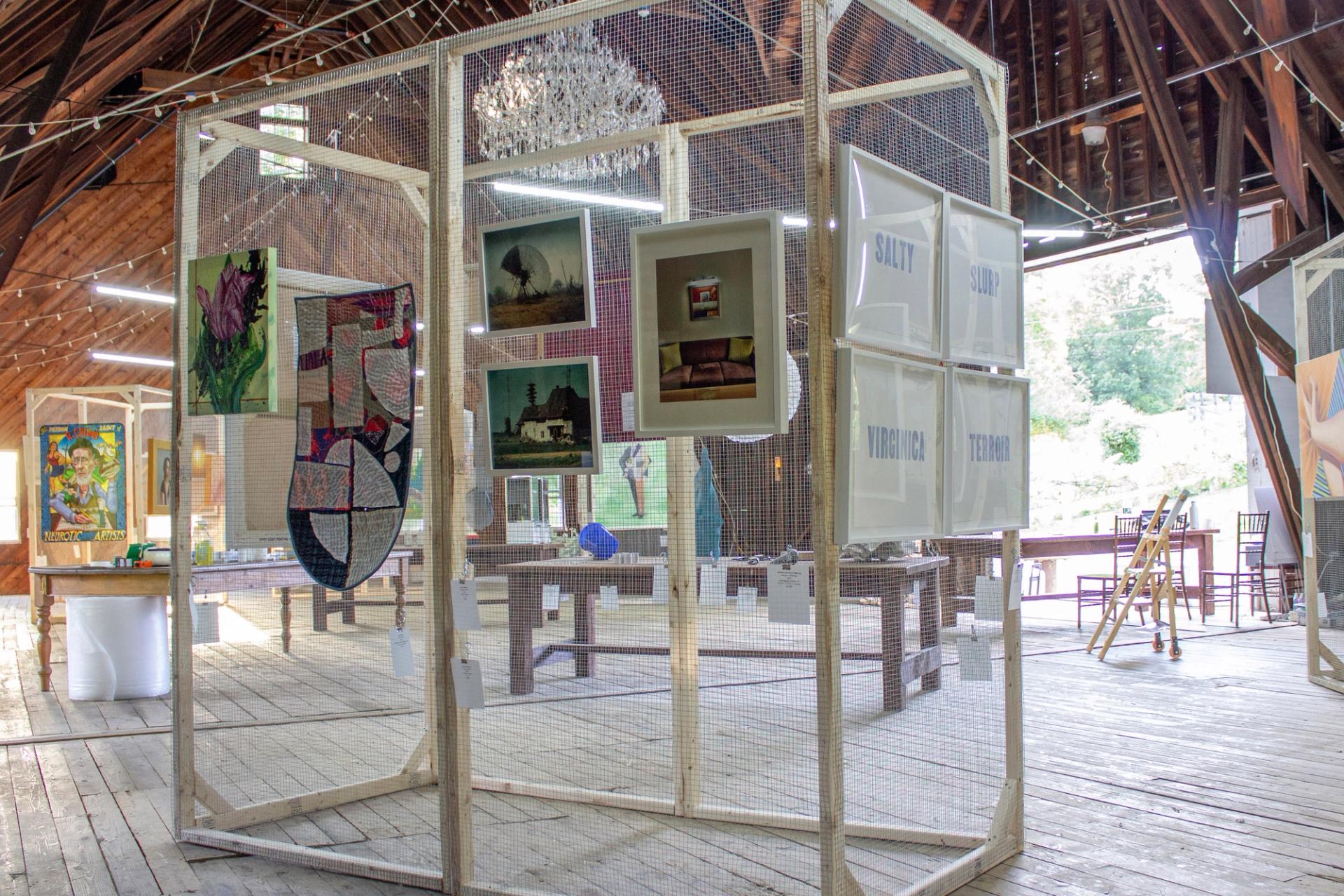
Organisers would love to see other innovations and experiments enter the market
Photo: Zero Art Fair
In an increasingly crowded marketplace ruled by mega galleries and name-brand fairs like Frieze and Art Basel, smaller dealers and emerging artists often face challenges. As the art world increasingly looks to address issues of equity and access, the launch of alternative fairs has been one way to spotlight a wider range of artists and galleries. In 2010 longtime New York gallerist Elizabeth Dee launched Independent, an invite-only and more tightly curated art fair, in response to the larger fair model.
Future Fair followed in 2019 in New York, launching with a unique profit-sharing system among participants. Esther, the newest of these fairs, was held in the historic Estonian House in New York’s Murray Hill neighbourhood, featured only 20 galleries and was free for visitors to attend.
“Zero Art Fair is not a solution to the problems in the art market,” Dalton said. “But it could be an ancillary mechanism that could exist alongside it for artists to occasionally clear out space in their studios and storage, and to make some of their work available to people who are usually unable to afford it, increasing access and creating a wider constituency for art. We would love to see other experiments and innovations pop up as well.”


