

The most precious thing we have is time. It is finite and cannot be replenished: once it’s gone, it’s gone. And it is becoming increasingly evident that our consumerist desire to control and dictate the pace of time is devastatingly out of kilter with the rhythms of nature. The disparity between human and natural timeframes is explored throughout Climate Clock, a permanent public art trail across Northern Finland. It forms part of Oulu 2026 European Capital of Culture programme under the umbrella heading of “Cultural Climate Change”. An urgent temporal theme is especially appropriate to Oulu, the third northernmost city in the world, which is currently experiencing the effects of Arctic warming four times faster than the global average.
“The Climate Clock is ticking, snow is melting and we are learning anew what our forebears knew—that time is not ours to command; that nature keeps its own time”, says Climate Clock’s curator Alice Sharp. She has worked closely with geologists, glaciologists, biologists, archaeologists and snow hydrologists alongside Finnish and international artists to produce seven site-specific artworks throughout the Oulu region. These range from monumental clay vessels and marine sound installations to works that intervene directly with the natural environment, all of which intertwine art, science and nature to explore myriad means of renewing and sustaining our bonds with nature and the many permutations of natural time.
Ranti Bam’s Ilé-Ilá: A Place that Remembers (2026) Photo: Rosa Ruuskanen/Oulu 2026
The Kierikki Stone Age Centre situated on the banks of the river Iijoki in the northernmost part of the Oulu region was once home to a thriving Neolithic community between 5,000BC and 3,000BC. Here, the British Nigerian artist Ranti Bam has created eight human scale black stoneware vessels, each 2.5m high collectively titled Ilé-Ilá: A Place that Remembers (2026). Installed on the river’s shoreline and throughout the surrounding forest, these vessels are shaped by the pressure of the artist’s own body, taking inspiration from the prehistoric ceramics found throughout the area which often bear the fingerprints of their ancient creators, as well as drawing on Bam’s Nigerian heritage and the Yoruba Ita system of knowledge and divination.
Bam regards clay as a living entity, responsive, impressionable and an immediately physical as well as a richly metaphorical reminder that humans and landscapes are materially entangled. This sense of interconnectedness was further reinforced by her working with Jan Hjort, a professor of physical geography at Oulu University whose research into how rocks and landforms interact with nature reveals how changes in the deep past of the land under our feet impacts air, water and seasonal cycles into the future. All is interconnected.
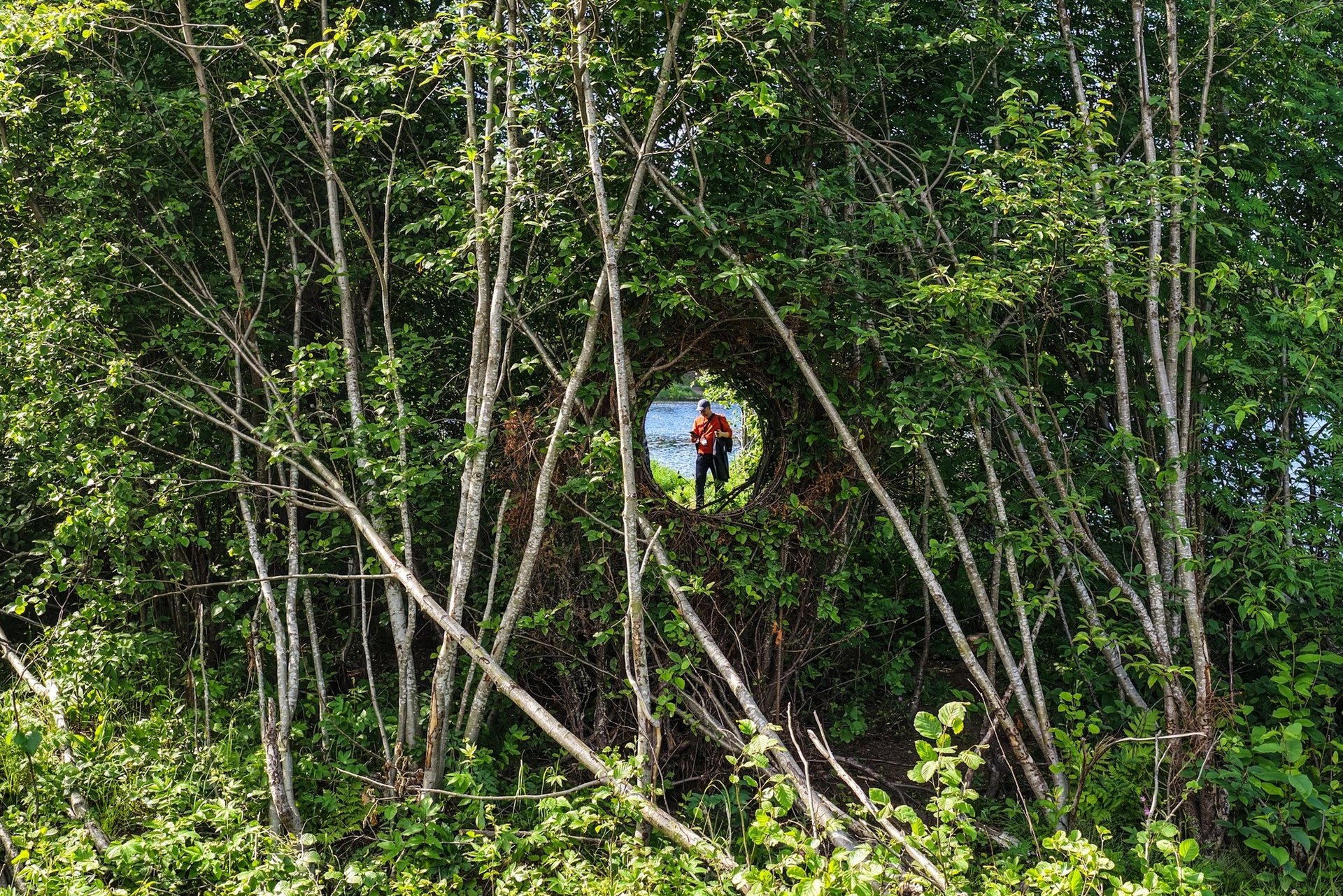
Antti Laitinen’s Olet Tässä (You Are Here) (2026), part of the Climate Clock art trail Photo: Rosa Ruuskanen/Oulu 2026
A little further south in the forests of Kiiminski, the living landscape has been changed in the immediate here and now by the Finnish artist Antti Laitinen, who has twisted the branches of the trees to create a number of circular ‘viewing windows’ that frame the ever-changing landscape. Nearby a pair of giant lichen-covered spheres made from juniper branches are suspended from the trees, each positioned in a different microclimate: one in a more open windy setting, the other in a more sheltered shady spot. Each reflects both instantaneous gusts of wind and variations in light and moisture as well as more long-term climate shifts, with Laitnen learning from his collaboration with the lichen scientist Jouko Rikkinen that this composite organism, formed by a symbiotic partnership between fungi and algae, is crucial bioindicator of air quality as well as having the potential to live for hundreds of years, way beyond this artwork and its creator.
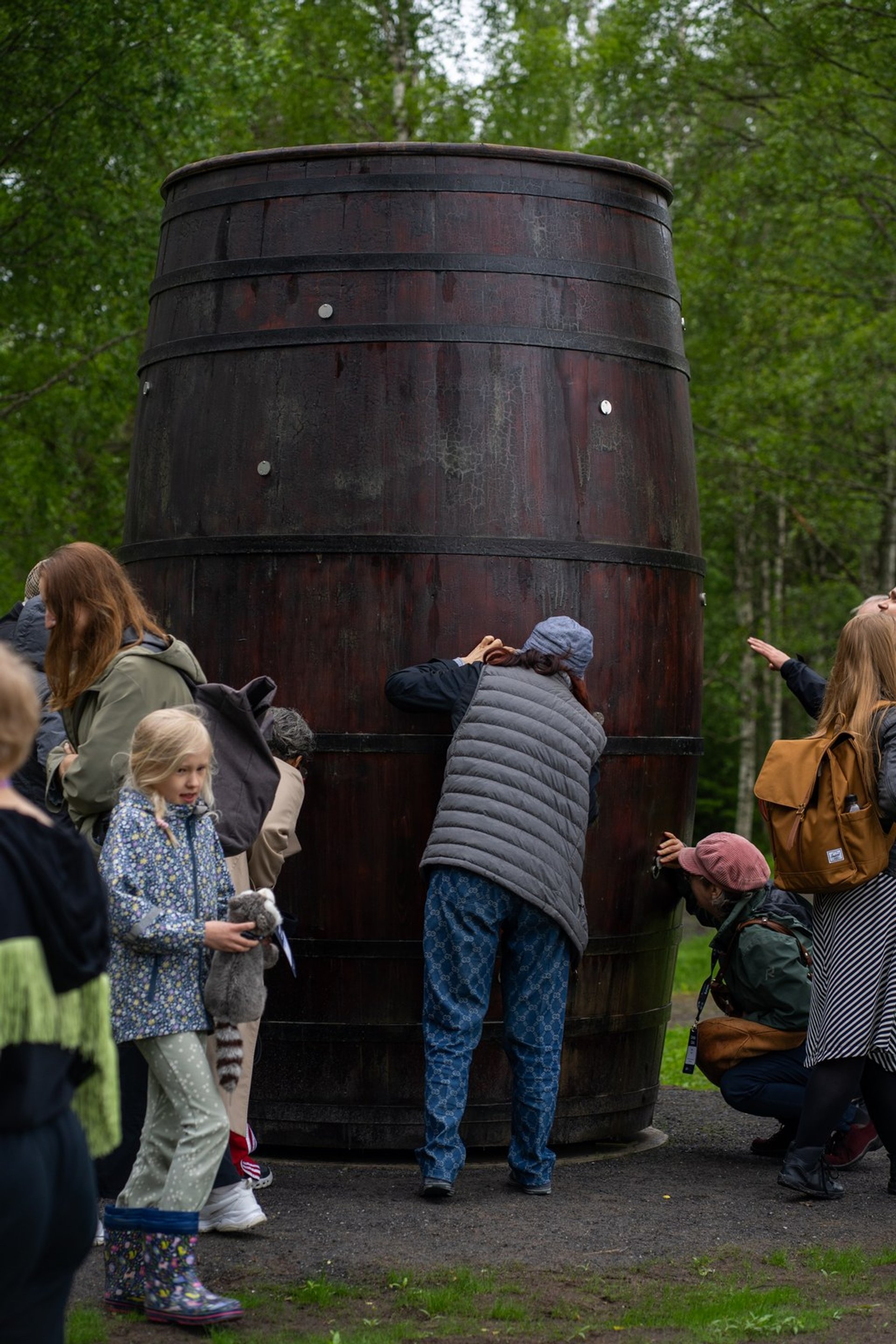
Takahiro Iwasaki’s Architectural Snowflakes: Letters from Heaven (2026) Photo: Rosa Ruuskanen/Oulu 2026
Other timeframes explored in this thought-provoking series of collaborations between art and science include the Japanese artist Takahiro Iwasaki’s three-metre-high version of a wooden tar barrel on the banks of the river Ylikiiminki. This giant vessel acknowledges the local annual pine tar-burning festival, celebrating the substance historically produced in Finland for the weatherproofing of ships and buildings. But through many spy holes in the surface it also reveals a magical interior containing hundreds of model snowflakes, these most delicate of structures reflecting the long winters of the region—for the time being at least—as well as forming a motif in the local church architecture.
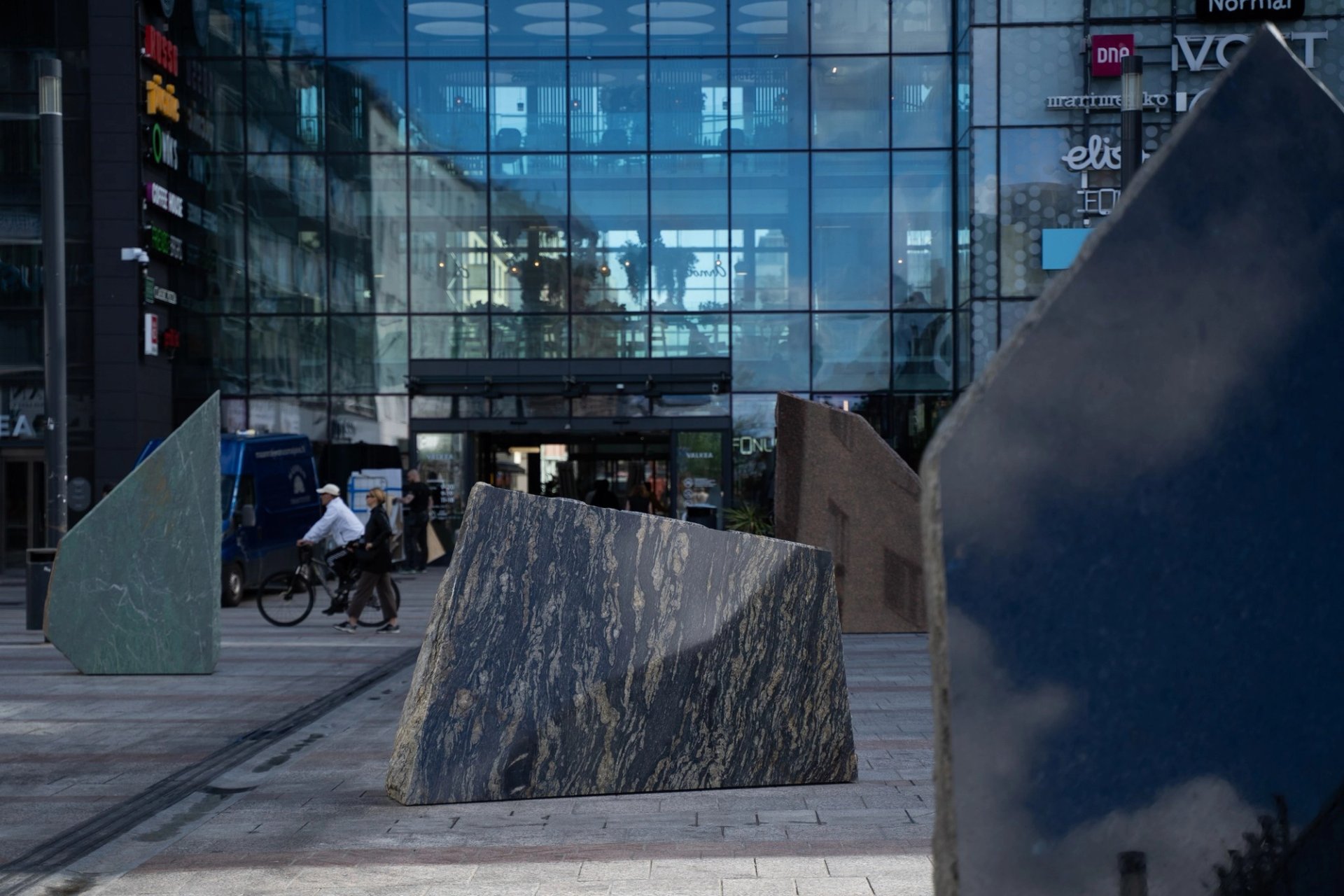
Rana Begum’s No.1574 Stone (2026) Photo: Rosa Ruuskanen/Oulu 2026
Then deep and immediate time coalesces in the British Bangladeshi artist Rana Begum’s five granite and marble sculptures that have been cut and painted to evoke large fragments of broken glacial ice, with yet another temporal dimension offered by one side of each piece being highly polished to reflect the urban to-ings and fro-ings of the crowds in Oulu City’s busy Market Square.
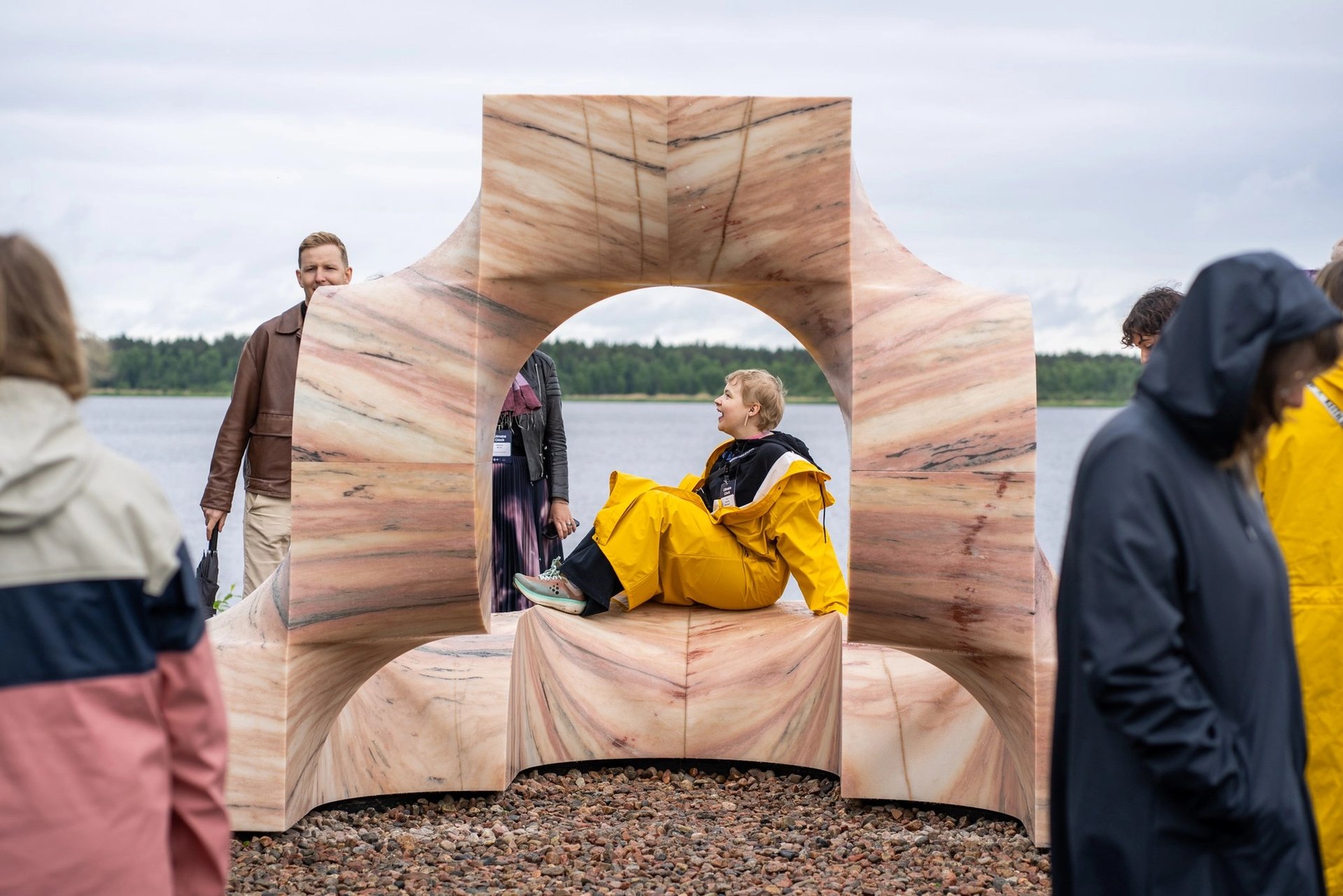
Superflex’s Super Kello (2026) Photo: Rosa Ruuskanen/Oulu 2026
Over to the west of the region on the quayside of the Kiviniemi Fishing Harbour in Kello, a former hamlet now part of the municipality of Haukipudas, the Danish group SUPERFLEX offer several different means to measure time with Super Kello (2026). This dramatic, curvaceous, pink marble sculpture offers both a place to sit and look out across the Gulf of Bothnia as well as the chance to experience an additional sound element that emits a Finnish translation of Homer’s The Odyssey. However, it’s a long listen: relayed at the speed of one word per hour it stretches over the course of ten years—literally echoing the length of Odysseus’s journey home. Then taking into account an even more—hopefully—distant timeframe, the shape of the sculpture has been constructed in the form of scientifically developed ‘fish cubes’ to offer a habitable environment for marine life for when the work is ultimately submerged by rising sea levels.
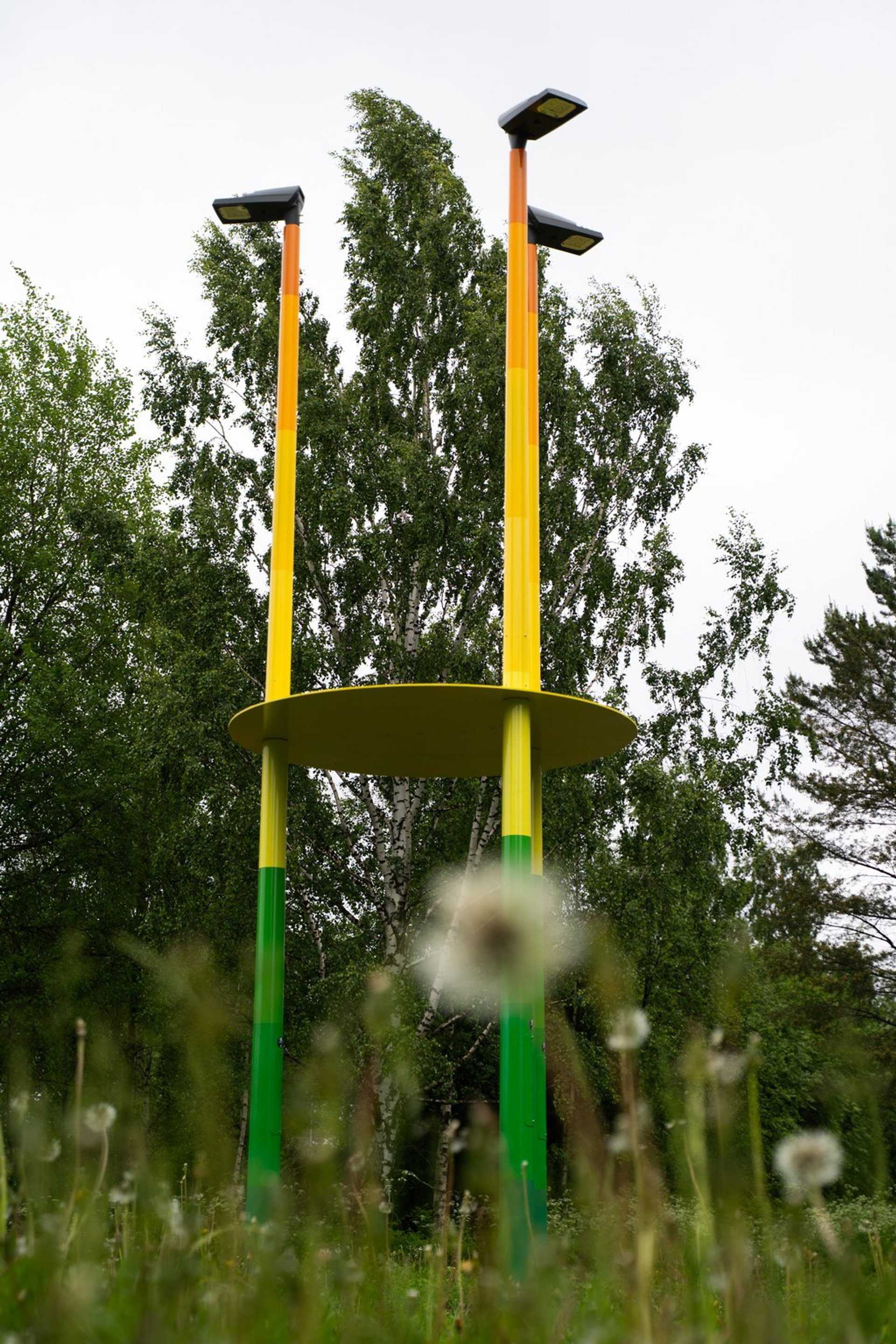
Gabriel Kuri’s Risk Assessing Risk Assessment (2026) Photo: Rosa Ruuskanen/Oulu 2026
Back on terra firma the immediate environmental consequences of more modern journeys are starkly laid bare by the Mexican-born sculptor Gabriel Kuri, who has worked with the climate scientist Kevin Anderson to transform the main road from Oulu City to the airport into a new urban terrain of climate risk by painting lampposts, benches and rocks in the exact red, orange and green hues of a risk assessment chart. It’s a stark reminder of how we are inescapably complicit and immersed in the consequences of climate change, and nowhere more so as we drive to the airport and take to the skies.
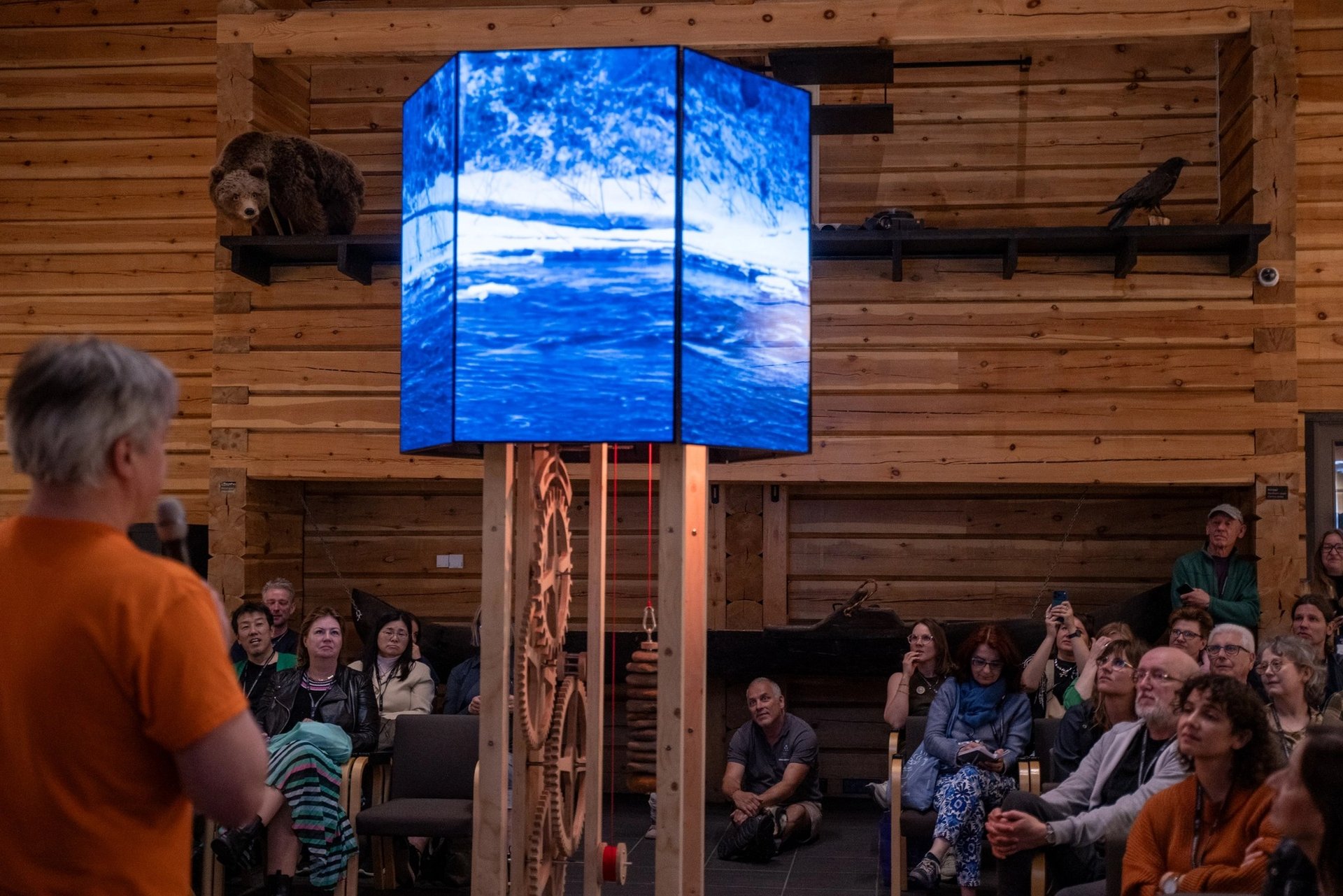
Tellervo Kalleinen and Oliver Kochta-Kalleinen’s The Most Valuable Clock in the World Photo: Rosa Ruuskanen/Oulu 2026
Completing the Climate Clock trail and embedding it firmly in the lives of the local population is The Most Valuable Clock in the World made by the Finnish duo Tellervo Kalleinen and Oliver Kochta-Kalleinen. This takes the form of a large wind up mechanical electronic clock where wooden gears control six screens to showcase recorded filmed moments in cycles of hours, minutes and seconds. Touring throughout the region for the next year, and finally coming to rest in the Hameenlinna Art Museum in June 2027, the clock was made in collaboration with communities throughout the Oulu region, who have donated images of meaningful personal moments to form a time capsule for future generations, capturing the life and values of mid-21st century Oulu.
In sum as well as in parts, Climate Clock offers a bold and visionary series of works that powerfully demonstrate how the human time treadmill is not the only metric with which to measure ours and the planet’s existence. Or, as Sharp puts it, the “Climate Clock artists enable you to set out of the tyranny of the time you are in” enabling audiences to “imagine entire new worlds… between the tick and the tock”. Nonetheless, if future generations are to enjoy this glorious Nordic expedition across so many environments and within so many timeframes, we had better start waking up to the consequences of the tick and the tock being unleashed by our Anthropocene era.
• Climate Clock, Oulu, Finland


