

Naomi Beckwith, deputy director and chief curator, Solomon R. Guggenheim Museum and Foundation
Seeing In Minor Keys was beholding the fierce urgency of someone who has got to get going real soon (see also: the maximalist post-war presentations by Okwui Enwezor; Noah Davis’s cascade of proposals for the Underground Museum, Los Angeles; Bisi Silva’s endless, yet loving, reproaches against what she termed “cultural terrorism”). The result is a polyphony of propositions, the most salient of which is a survey of post-war African art with a much-needed, multi-generational focus on women from Werewere Liking to Ranti Bam. The exhibition offers an alternate route through artworks, eschewing both the path of prestidigitations and clinical distillations.
Ranti Bam Photo: © Marco Zorzanello
I suspect most visitors were not musicologists; few would understand what a minor key effects or symbolises. But Kuouh, in establishing a musical metaphor, asked us to look and listen, requiring a shift in our art-consumptive behaviour. We are asked to take a different bodily position, to attach ourselves firmly to the earth, and consider different criteria for art. The exhibition is a peri-spiritual project, which asks the audience to imagine a work of art mediating between the past and present and the living and the dead—not simply mediating between idea and form.
A major part of any exhibition is what happens around it as much as what’s on view within designated galleries. I arrived in a Venice where artists assisted each other on their installations and cared for each other’s appetites and grooming habits. Proud parents and cousins fawned on gravel paths, greeting new-found friends with a familial warmth sorely needed as visitors moved under the gaze of increased security and police presence.
Beatrix Ruf, director, Hartwig Foundation
Koyo Kouoh’s In Minor Keys Biennale felt far more “major” than minor to me. The five curators celebrated the artists she chose—many of them unfamiliar to many of us—with beauty, respect and a surprising sense of harmony, still holding in it conflict, protest and political urgency.
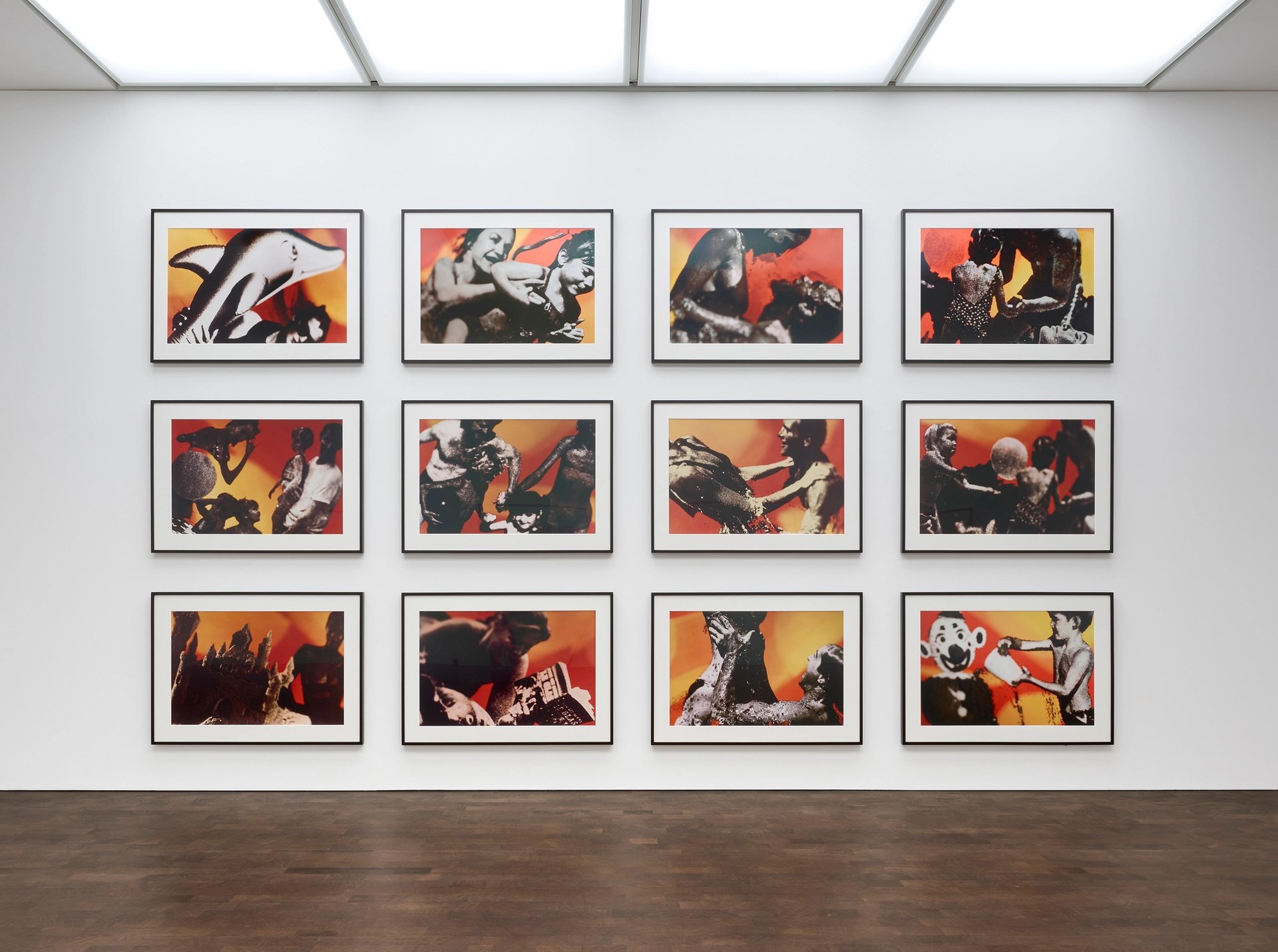
Helter Skelter at Fondazione Prada © Richard Prince
It was striking to see how many national pavilions and artistic projects responded to the In Minor Keys theme both politically and poetically. Questions of the human condition and presence permeated the works, while motifs of water, fluidity and ephemerality recurred throughout. I think especially of the Indian and Uzbek contributions, for example. Very defining was the sheer number of pavilions fully committed to performative practices: Florentina Holzinger’s intense and uncompromising Austrian pavilion; Miet Warlop for Belgium; the Dutch pavilion’s shutting down of its own architecture; Gabrielle Goliath, whose work—excluded from her country’s pavilion—appeared instead in a nearby church; the contemplative soundscape of the Holy See pavilion in a stunning cloister garden; and contributions by Tarek Atoui, Rirkrit Tiravanija, Sophia Al-Maria, Alia Farid and Fadi Kattan in the temporary Qatar tent.
In a kind of double-take recognition, one is especially struck by Sung Tieu’s intervention on the façade of the German Pavilion. By covering it with tiles referencing a now-defunct housing block where the Vietnamese were forced to live after German reunification, she dissolves the building’s historically loaded presence into a subtle monument to a community first exploited and later neglected by both German governments.
Opening week means endless walking, and even then, one still hasn’t seen it all. But I was glad not to miss the very significant show of Lydia Ourahmane, the immersive Canicula film installations of the Fondazione Bulgari, the brilliant Paulo Nazareth exhibition at Punta della Dogana, and the dark and deep Helter Skelter exhibition by Arthur Jafa and Richard Prince at Fondazione Prada.
Diana Campbell Betancourt, artistic director, Samdani Art Foundation
Koyo Kouoh did not make exhibitions to “show things”—she made exhibitions to empower and embolden people to make great art and transform their worlds. She made exhibitions to open doors that were previously closed to many artists until recently. In Minor Keys is no exception. Koyo would never use a budget to build a wall—she would tear down walls and change how walls are built (as you see in the exhibition design). Many of the artists in the show also build or have built institutions, from RAW Material Company to Linda Goode Bryant, Denniston Hill and others.
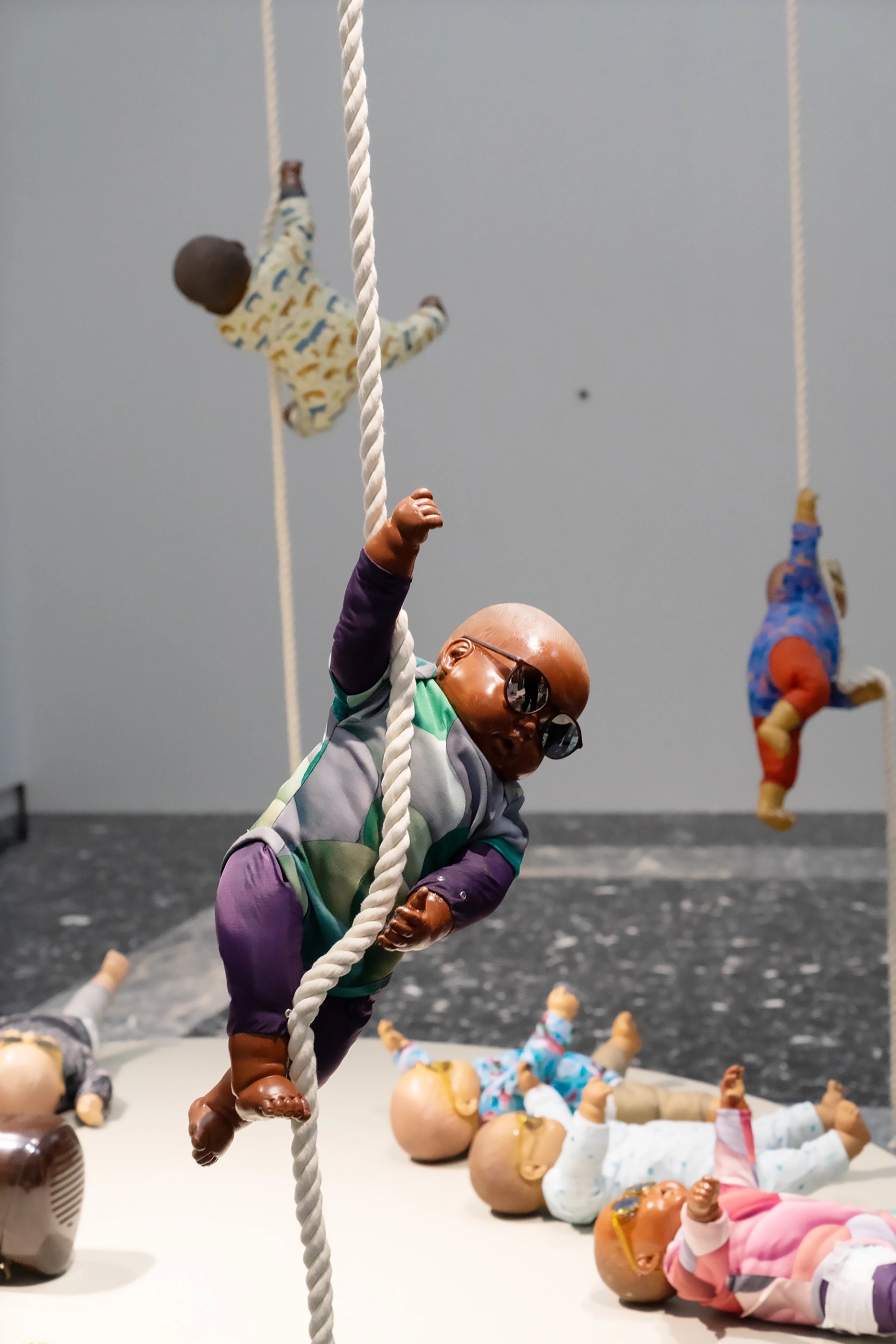
Moon Babies in the Japan pavilion Photo: Luca Zambelli Bais
Koyo tasked her curatorial team with continuing to inspire artists and bring them together in Venice to challenge the limitations of thinking about the world in black and white terms. So I think a lot of what In Minor Keys will do will come from the ripple effects of the relationships that artists made with each other in building this show. Private philanthropy stepped in to make this artist-centric curatorial dream possible. As the writer Siddhartha Mitter said, “Koyo would never allow her Biennale to be scrappy.”
I believe other curators were inspired by this approach to open doors for artists, such as the Indian pavilion where I met the artist Skarma Sonam Tashi, who had never left India before participating in the Biennale. Beyond the main exhibition, this edition of the Biennale was about what it means to be alive and the stakes of humanity in 2026 (fertility, mortality and mourning: Japan, Denmark, Bahamas), which is why we see so much “live art” on a large scale (Belgium, Austria, Netherlands), works about mysticism and spirituality (Holy See, South Africa), and protest (protest signs integrated into the artworks of the main exhibition). One of my favourite collateral exhibitions was Darkness Visible: The Long Shadow of Dictatorship, an exhibition by Museo de Arte Moderno de Buenos Aires on the 50th anniversary of Argentina’s military dictatorship. Just as artists were protesting at the 61st Biennale, this exhibition, which shows the quest for freedom in another context by earlier artists, remains all the more relevant.
Ekow Eshun, writer, curator, broadcaster
I was very struck by the main pavilion in the Giardini. I thought that it was really powerfully choreographed as an exhibition. It seemed to me a show that took as a beginning point, or at least as an inspiration, Édouard Glissant’s idea of “Tout-Monde”, or “Whole World”, which essentially is a world without hierarchy. It’s a world without geographic or geopolitical power structures, a world where the West doesn’t come first. And this, I think, was one of the things that Koyo maybe was attempting to express, but certainly I read as an articulation in that space. So what does it look like to proceed through a world where the global south or the global majority speaks as clearly, as loudly, as eloquently, as profoundly as the rest of the world: as the North, as the West? And the presumption here is, all can speak in conversation.
The end result isn’t necessarily harmony—instead what you get is a chorus. Nevertheless, a chorus of voices, an attunement, a set of variations: major keys and, indeed, minor keys, playing against each other. For me, this was exhilarating. You walk into the main space, the first space you go into, where the walls are clad in indigo fabric, and there’s a sense of these artists looking out and speaking of a wider world. And then I like the way that the show radiated out from that central space, even to the extent that the colour of the walls has different shades of blue that start to ripple out from there—you have conversations that are taking place between the artists.
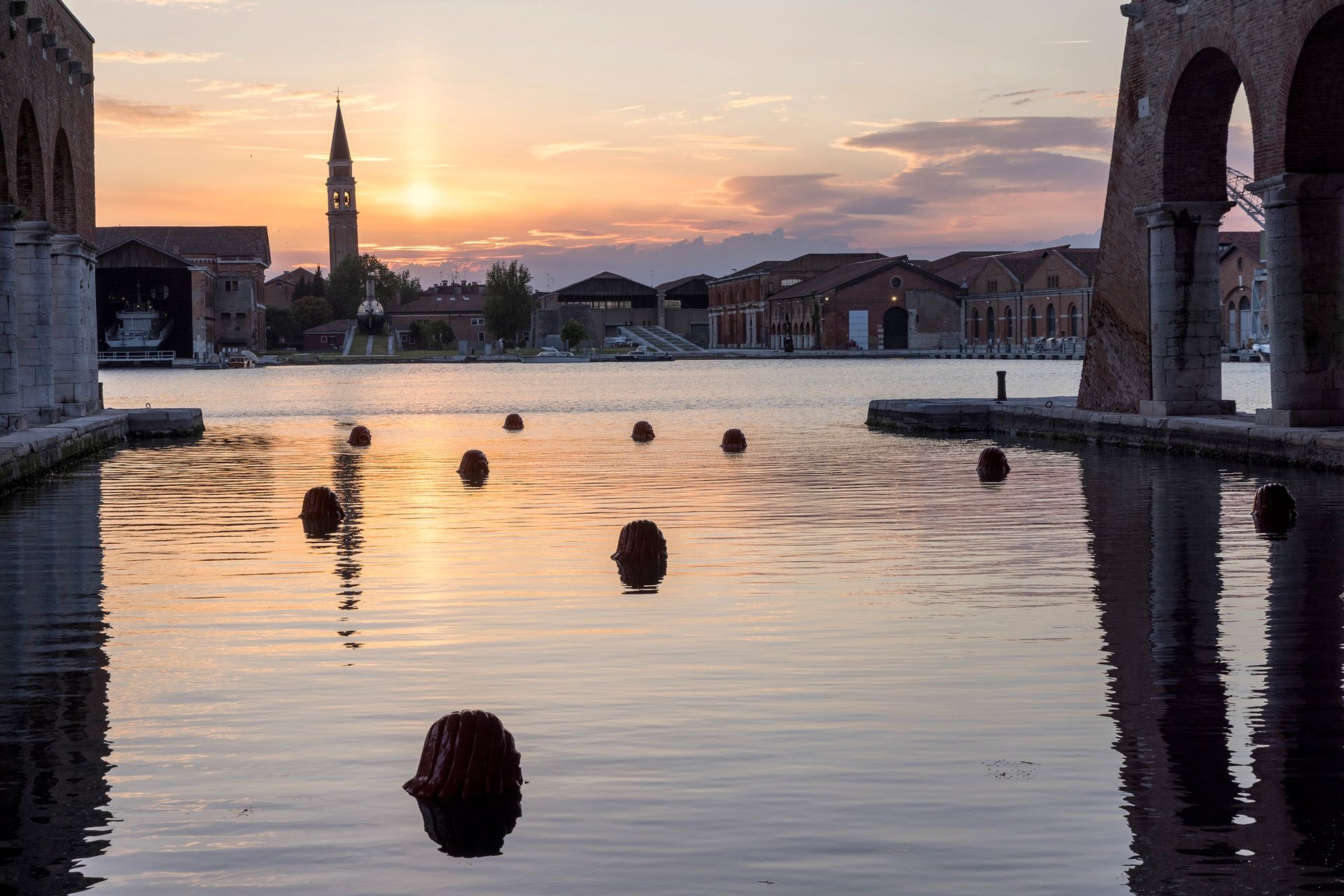
Alice Maher’s Les Filles d’Ouranos (1996/2025) Photo: Marco Zorzanello
And obviously within all of that, there is also the other theme or threnody, which is the mourning for Koyo, that takes place throughout the show. And that combination of looking and searching and inquiring and then remembering, and even mourning, I found very moving. I found the exhibition overall to be a work that spoke in personal terms, political terms, poetic terms and lyrical terms.
Francesco Manacorda, director, Castello di Rivoli
We really need to judge In Minor Keys using completely different parameters.
I don’t think we can judge it as an exhibition, we need to judge it as a process of rebuilding. There is an amazing word in Italian that doesn’t really translate into English, which is rimarginare. This is when you’re talking about a wound that is healing, and rimarginare is the idea of the whole of a wound as its margins, and therefore when the wound is fully healed, the margins are not there anymore. And I think that is what’s going on with this series of shows: getting rid of the margins and getting the West to recalibrate and reimagine what it means to have a visual culture that is not centred on our system but shared across different cultures. And this means that the system really needs to change, so we can’t just use the same parameters, like, “Oh, Daniel Birnbaum’s exhibition was better”, because this is a larger project of which In Minor Keys is just one of many steps. There will be more chapters in Venice and beyond that will continue this rimarginare process.
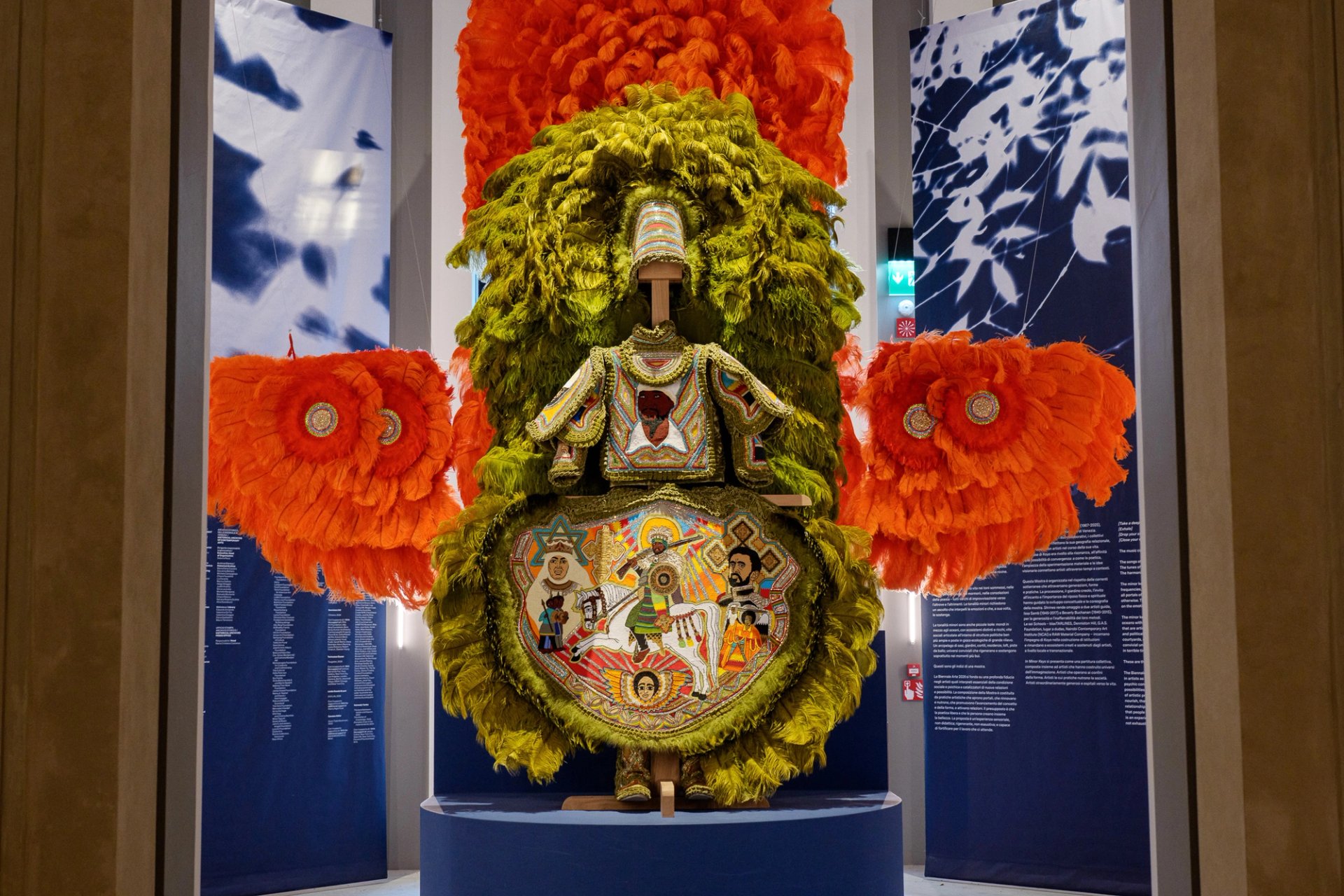
Big Chief Demond Melancon in In Minor Keys Photo: Andrea Avezzù
Because this is necessarily a long work of adaptation and not an episodic thing, it means that the institutions have to change as well. Museums are a Western invention and the market is also a Western invention: the fact that everything needs to be linked to a name, and that that name has to be recognisable, these are all things that need to be revisited. Then inside In Minor Keys I absolutely loved the idea of the engagement with the schools and with inspirational figures. But there were also great single artworks, both by well-known artists like Walid Raad, Otobong Nkanga and Kader Attia, but also by some I didn’t know, like Big Chief Demond Melancon, Mohammed Joha from Gaza or Alexa Kumiko Hatanaka from Canada.
Among the national pavilions, the Holy See really did a lot for me. The experience of the garden with the music was transformative, it was a phenomenon, and the combination of the mystical tradition with the new compositions was a completely spiritual experience. Although I didn’t find the Indian pavilion very resolved, I loved all the other Indian projects throughout the city: Amar Kanwar in the Palazzo Grassi; Dayanita Singh in the state archives and also Nalini Malani in the Magazzini was incredible. Then I think Chiara Camoni made the best Italian pavilion in my memory; and a final shoutout for Lawrence Abu Hamdan’s real masterpiece in the wonderful film exhibition Canicula.
Tai Shani, artist
Like most, I miss believing that contexts like the Biennale could offer a third space, where art-making and appreciation let us reach beyond our positions to find commonality and open new horizons. In recent years, this has felt increasingly untenable. The rifts are now so profound, fundamental and existential that our differences cannot be accommodated anywhere.
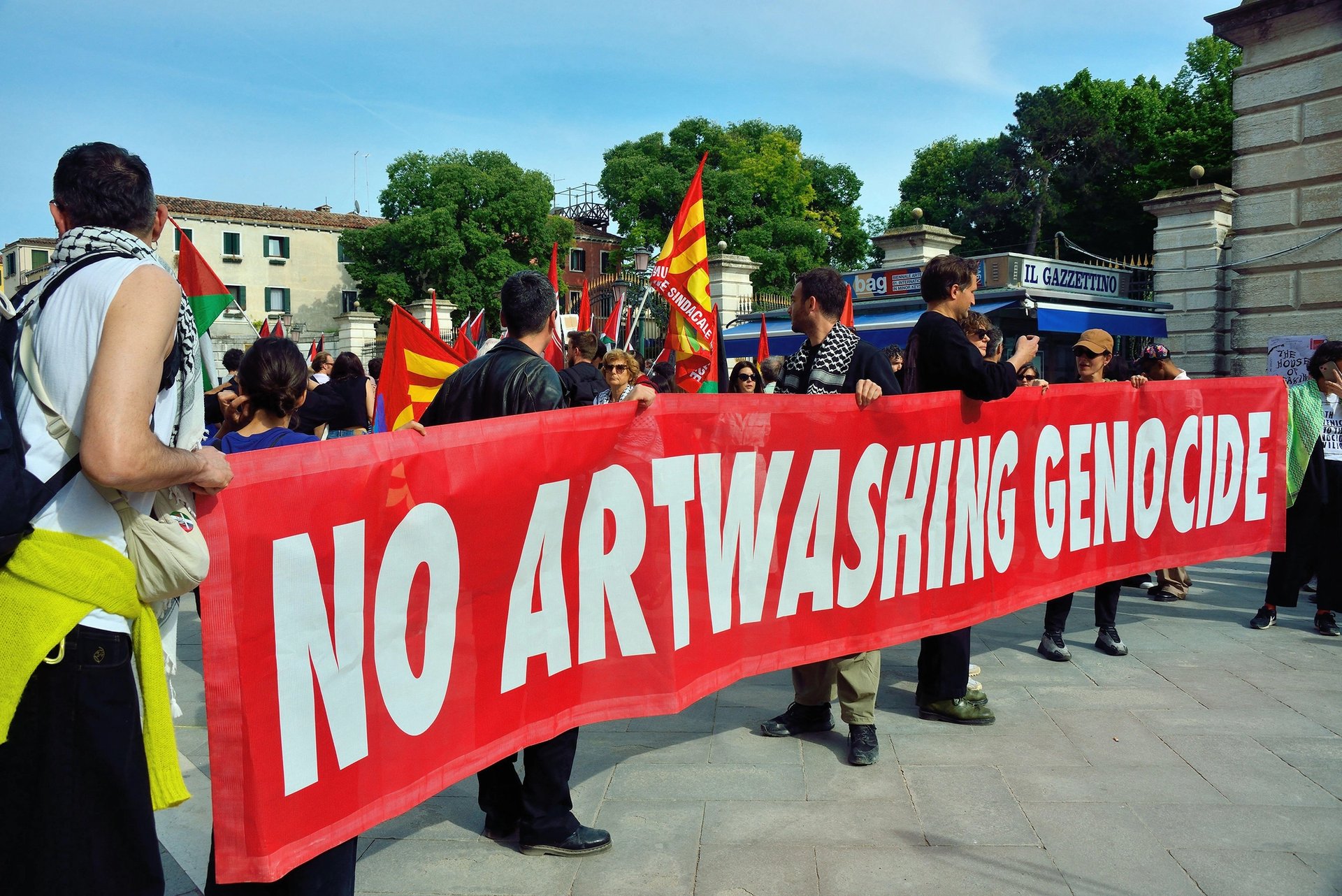
A protest demanding the closure of the Israel pavilion Photo: Ferdinando Piezzi/Alamy Stock Photo
Venice this year made that loss of a shared imaginary impossible to ignore. It was brought into stark relief by the protests across the Biennale. The one-day strike on 8 May, called by ANGA [Art Not Genocide Alliance] and local unions, was the largest in the Biennale’s history, yet wilfully underreported. Twenty-seven pavilions were fully or partially closed, a monumental display of how strongly the people who form the fabric of these contexts feel. “If I Must Die”, the poem by the late Palestinian poet and professor Refaat Alareer, killed in Gaza, opens In Minor Keys. Palestine and the engulfing global emergencies were everywhere: in the strike, in the mass protest, in the earlier resignation of the International Jury, and in the gestures made with scant tools to take an ethical position and reach for moral clarity.
What Koyo Kouoh’s exhibition is doing feels important. Its curation and politics articulate the urgency of decentring empire, refusing a Western canon or chronology and centring artists from the global south, the diasporas and the margins of dominant art history. This resonates with a wider geopolitical shift, and it felt important that it was there. The West has never been a majority, and its cultural and imperial dominance was, and is, contingent on unspeakable violence. There is no censoring that.
The Biennale has always carried real meaning for me, but its limitations have been exposed. The genocide has laid bare a huge rift: on one side artists, curators, writers, artworkers; and on the other the structural mechanisms for showing and producing the work. Something has to shift.
Hammad Nasar, curator, writer and director of programmes and content, Ibraaz
There is no confusion as to what Koyo Kouoh and her team stood for, and who they stood with. Visitors are greeted in the Giardini by the artist group Fierce Pussy’s deconstructed Palestinian flag and Ukrainian artist Zhanna Kadyrova’s concrete origami deer. In the Arsenale, the first encounter is with Refaat Alareer’s affecting poem “If I Must Die”, before being enveloped within a mesmerising multi-sensorial installation by Khaled Sabsabi (the Lebanese Australian artist selected, then controversially dropped, and eventually reinstated to represent Australia).
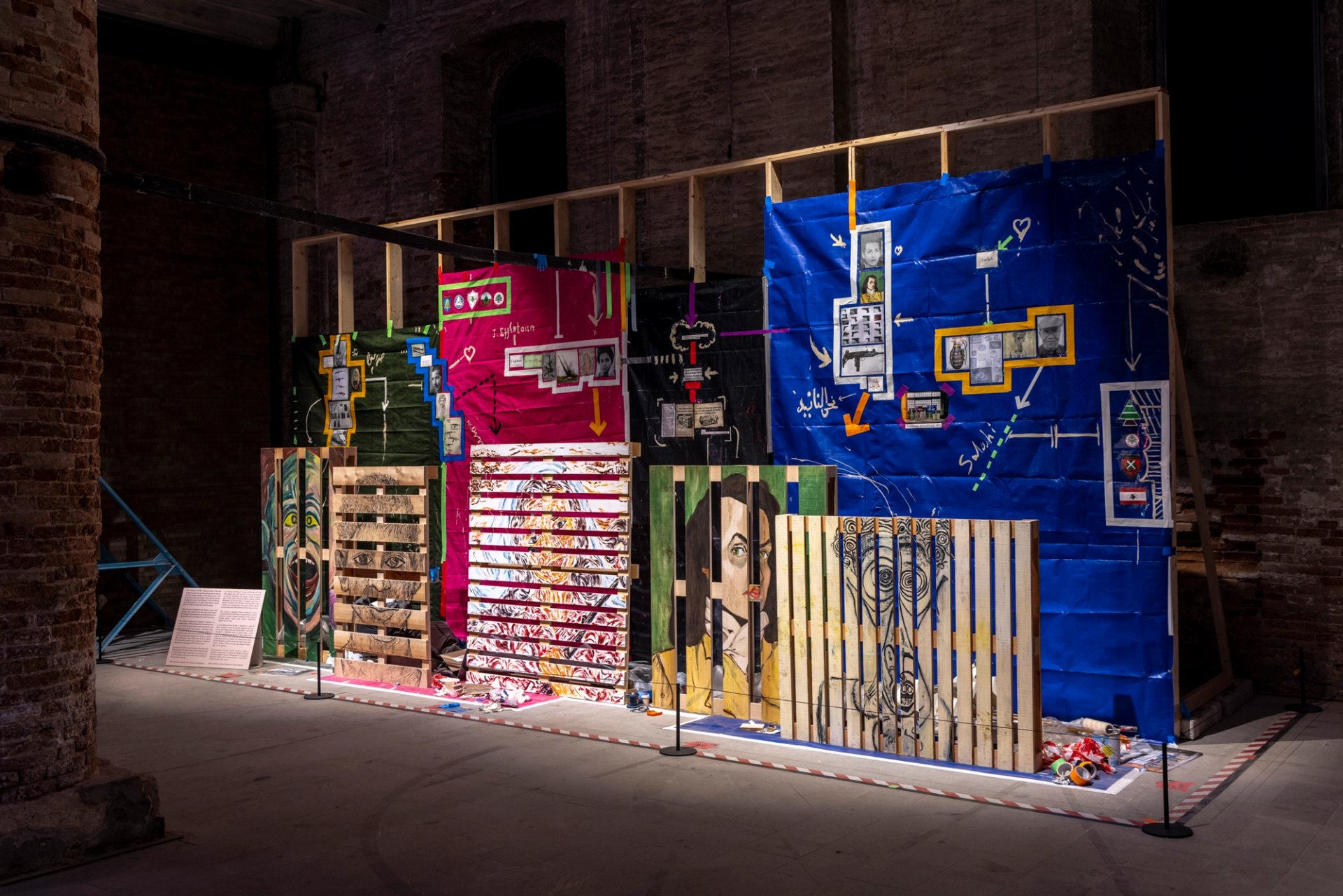
Walid Raad’s Postscript to the Arabic Edition (1938-2025)in In Minor Keys Photo: Marco Zorzanello
Amidst a dense hang, the mezzanine of the curated exhibition in the Giardini sings with an arresting juxtaposition of painting-collage-sculpture hybrid works that play with ideas of refuge: everyday life on empty cardboard boxes (Sohrab Hura); unreliable narrations of Yasser Arafat’s nightly changing beds (Walid Raad); and evocative landscapes of Gaza constructed from discarded materials (Mohammed Joha). There was space for “schools”—shape-shifting, artist-centric institutions—inside the exhibition. That solidarity and agency was reciprocated outside by the silent protests of artists and cultural workers wearing T-shirts bearing names and works of artists from Palestine; and then extended to the city in the louder strike co-ordinated by ANGA.
The national pavilions ranged from the dramatic clarion call of Florentina Holzinger’s bell ringing in the Austrian pavilion to Dana Awartani’s quietly powerful survey of threatened heritage sites across the Arab world in unfired bricks in the Saudi pavilion. Outside the “official” Biennale, Gabrielle Goliath’s Elegy, the cancelled South African pavilion (full disclosure: it comes to Ibraaz in London in October), is a haunting act of mourning. Lawrence Abu Hamdan’s investigation into the use of a sonic weapon to disperse silent protests in Serbia is part of the excellent Canicula, and Lydia Ourahmane’s fully functioning pier (from the exhibition 5 Works) will eventually serve a public park in Poveglia. These works ring in all the keys—engaging fully with the world as we find it.
• Venice Biennale, until 22 November


