

There are few figures in the canon of 20th century image-making who require less introduction than Cecil Beaton. A polymath of rare fluency, Beaton moved effortlessly between photography, costume design and stagecraft, shaping the visual language of modern celebrity with a precision that still reverberates today. His lens did not simply capture – it constructed, elevating its subjects into carefully composed myths of glamour and identity. His work defined an era in which appearance became inseparable from performance, and portraiture from spectacle. To encounter Beaton is to encounter the architecture of fame itself.
Beaton’s accolades are well rehearsed, yet no less striking for their familiarity. A celebrated designer for theatre and film, he earned Academy Awards for his work on My Fair Lady and Gigi, translating his photographic sensibility into sumptuous visual worlds. His appointment as royal photographer in 1939 positioned him at the centre of British cultural life, where he reimagined the monarchy for a modern audience. At the same time, his portraits of figures such as Marilyn Monroe and Audrey Hepburn demonstrated an uncanny ability to oscillate between intimacy and artifice. Beaton’s practice was never confined to a single medium – rather, it existed as a continuum, one that blurred distinctions between fashion, theatre and photography. This hybridity remains central to his enduring influence.
His biography reads as a chronicle of proximity to power and creativity. Emerging from the milieu of London’s Bright Young Things, Beaton developed an early reputation for elaborate studio portraits that foregrounded artifice as a creative strategy. His collaborations with the British Royal Family – including images of Queen Elizabeth II and Princess Margaret – reshaped public perceptions of monarchy, balancing grandeur with a carefully calibrated intimacy. Beyond the court, his friendships with cultural figures such as Maria Callas and Benjamin Britten further embedded him within a network of artistic exchange. Beaton’s life was, in many ways, a stage upon which the 20th century performed itself.
This summer, that fascination finds renewed expression at Harewood House with Cecil Beaton: Staging Icons, an exhibition organised in collaboration with the National Portrait Gallery. Bringing together over 50 photographs, the show reframes Beaton not merely as a chronicler of fame but as an architect of identity. Installed throughout the grand State Floor interiors, the exhibition situates his images within a context of historic portraiture, creating a dialogue between past and present. Visitors can expect a carefully orchestrated journey through Beaton’s career – from royal commissions to Hollywood portraits – united by a consistent exploration of theatricality. The effect is immersive, inviting audiences to step into the constructed worlds he so meticulously devised. It is, in essence, Beaton on Beaton’s own terms.
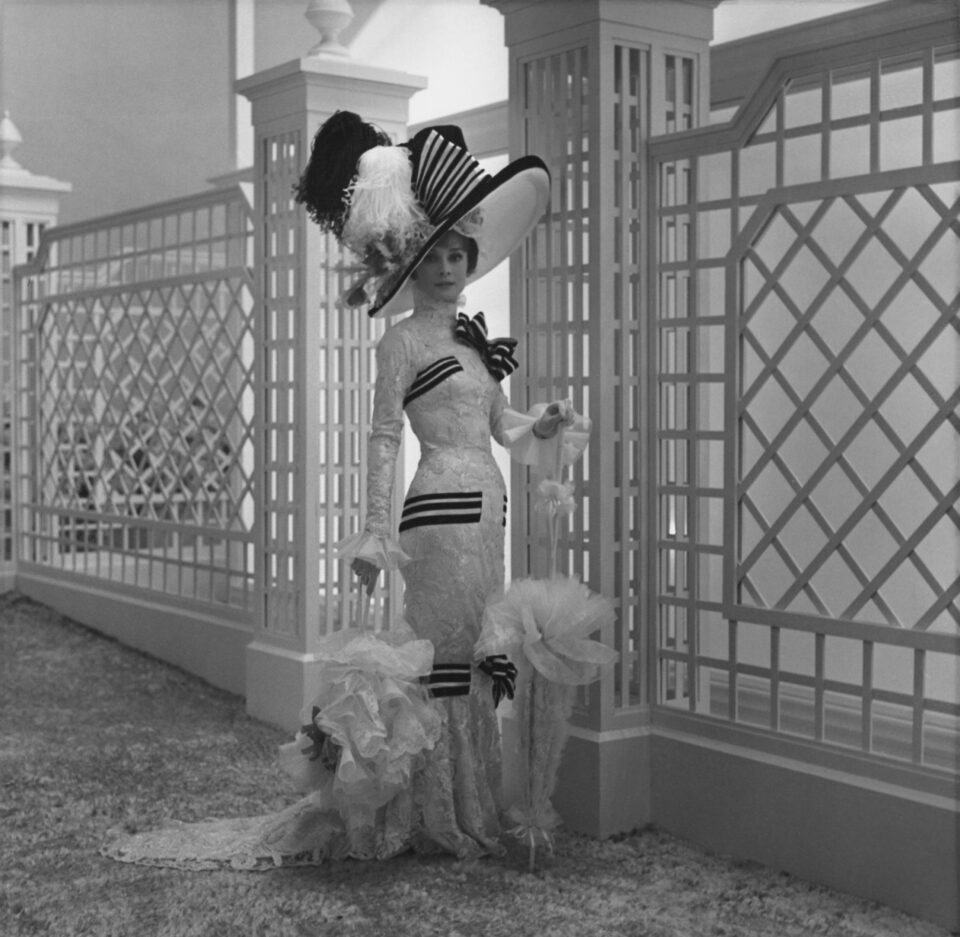
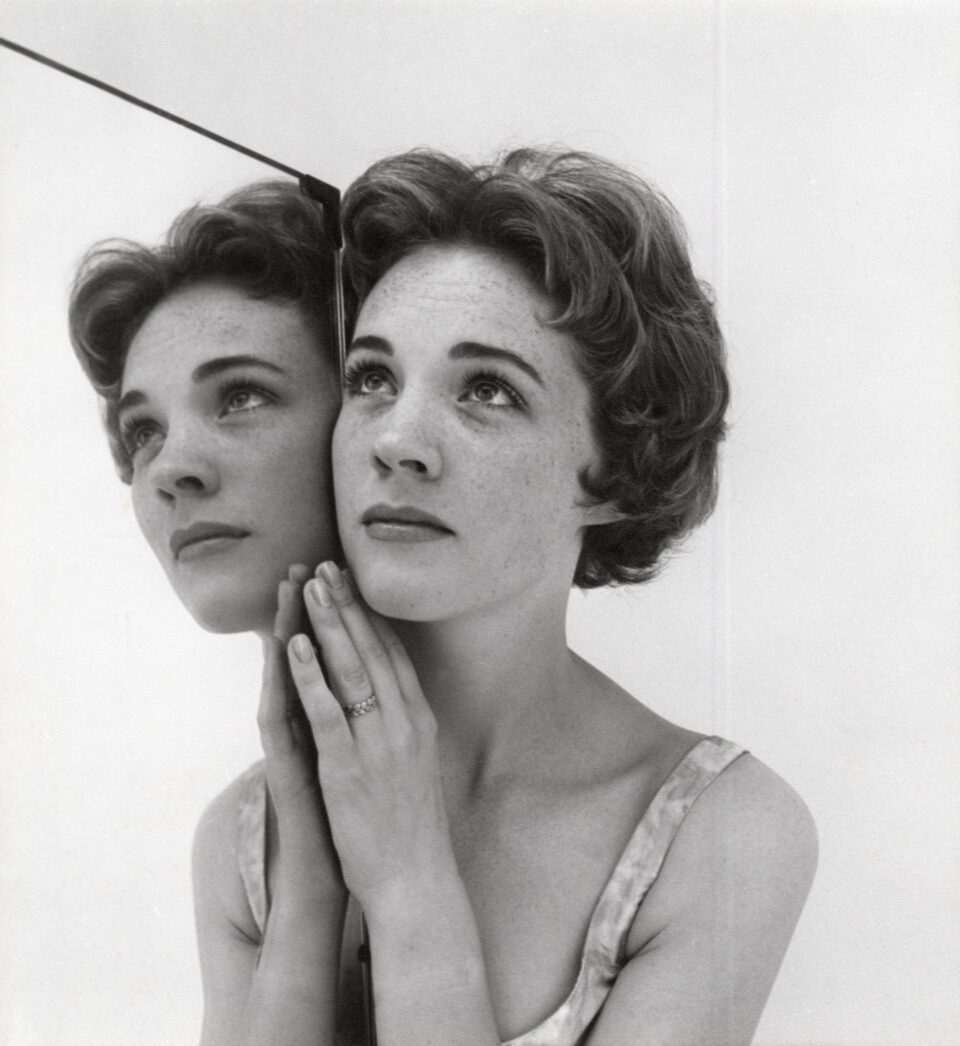
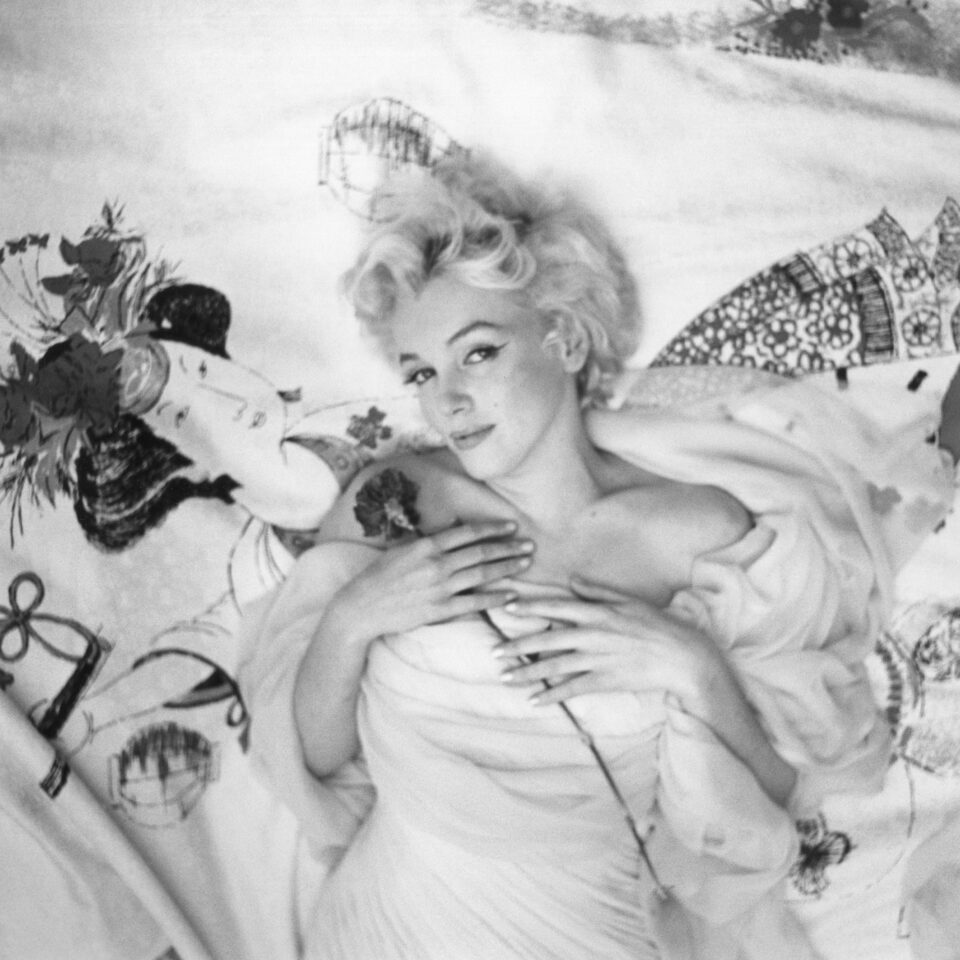
What distinguishes this exhibition is its focus on staging as a conceptual framework. Beaton’s photographs are not passive records but active performances, shaped by backdrops, costume and light. A portrait such as Princess Margaret’s 19th birthday image – styled in a sequin butterfly gown by Norman Hartnell – exemplifies this approach, transforming its subject into an almost mythological figure. Elsewhere, his images of Monroe, taken in the relative informality of a hotel suite, reveal a quieter negotiation between persona and self. These contrasts underscore the exhibition’s central thesis: that identity, in Beaton’s hands, is always mediated through performance. As Miranda Stacey notes, “Beaton’s impact on portraiture, and how we visualise British culture, cannot be underestimated.”
The significance of Harewood’s programme lies in its ability to recontextualise such histories within a contemporary framework. Long committed to integrating heritage with new artistic perspectives, the institution has cultivated a model in which historic collections are continually reinterpreted. Recent commissions, such as Ashley Karrell’s portrait of David Harewood, exemplify this commitment to addressing gaps within traditional narratives. By placing Beaton’s work alongside these interventions, Harewood foregrounds the evolving nature of portraiture itself. Zoë Hughes captures this ethos succinctly, describing how the exhibition allows visitors “to step into his glamorous world and see icons, stars, and royals amongst the beautiful backdrop of the House.” It is a strategy that privileges dialogue and reassessment. In doing so, Harewood positions itself as a site of both preservation and critique.
The involvement of the National Portrait Gallery further amplifies the exhibition’s resonance. As the custodian of the world’s largest collection of portraits, the institution has played a pivotal role in legitimising photography as a fine art form. Its 1968 Beaton retrospective marked a turning point – the first-time photographs and living sitters were exhibited within its walls. This legacy informs the current collaboration, which brings significant works from the collection to audiences in the North of England. It also underscores the Gallery’s ongoing commitment to expanding the boundaries of portraiture. In this context, Staging Icons becomes more than an exhibition – it is part of a broader institutional narrative about visibility, representation and cultural memory. The past, here, is always in conversation with the present.
To fully grasp Cecil Beaton’s impact, it is instructive to situate his practice alongside that of his contemporaries – a generation that fundamentally redefined what photography could be. Figures such as Man Ray, Irving Penn and Richard Avedon each pushed the medium beyond documentation into the realm of interpretation, dismantling the notion of the photograph as a neutral record. Instead, they positioned it as a site of authorship, artifice and intent – an approach that finds a particularly vivid articulation in Cecil Beaton: Staging Icons at Harewood House. Installed within the opulent interiors of the house, Beaton’s images read not simply as portraits but as performances in their own right, aligning him with a broader movement that understood photography as an act of construction. The exhibition quietly situates his work within this expanded field, where image-making becomes inseparable from cultural storytelling. In doing so, it reveals how Beaton’s vision both paralleled and diverged from his peers.
Man Ray’s surrealist interventions offer one point of entry into this dialogue – his experimental techniques destabilised reality, introducing abstraction and dream logic into photographic practice. Through processes such as solarisation and montage, he transformed the medium into a space of ambiguity, where meaning remained fluid and open-ended. Irving Penn, by contrast, pursued a rigorous minimalism, using pared-back settings and exacting composition to distil his subjects to their essence. His work foregrounded stillness and form, allowing the sitter’s presence to emerge with quiet intensity. Richard Avedon injected a different kind of energy, capturing movement and psychological nuance with an immediacy that exposed the tension beneath public personas. These varied approaches collectively expanded photography’s expressive range, offering multiple strategies for engaging with identity in a rapidly changing world. They provide a critical framework through which to understand the stakes of Beaton’s own aesthetic decisions.
Beaton’s contribution, as Staging Icons makes clear, lies in his unapologetic embrace of theatricality – a commitment to image-making as an act of staging. Where Penn stripped back and Avedon revealed, Beaton constructed, layering costume, backdrop and gesture into meticulously composed scenes. His portraits do not seek to uncover an essential truth so much as to fabricate a persuasive one, shaping how figures from Marilyn Monroe to Queen Elizabeth II are seen and remembered. This approach resonates powerfully within Harewood House itself, a site where histories of display, status and performance are already embedded in its architecture. By placing Beaton’s work in this setting, the exhibition underscores the extent to which identity – whether royal, celebrity or artistic – is always, to some degree, staged. It is here that Beaton’s singularity comes into focus as a practitioner who understood, perhaps more clearly than most, that photography is never just about seeing, but about shaping how we are seen.
Cecil Beaton: Staging Icons is at Harewood House, Leeds from 13 June – 4 October: harewood.org
Words: Simon Cartwright
Image Credits:
1&4. Julie Andrews by Cecil Beaton, 1959 © Cecil Beaton Archive. Conde Nast.
2. Cecil Beaton by Cecil Beaton, 1933 © Cecil Beaton Archive. Conde Nast
3. Audrey Hepburn by Cecil Beaton, 1963 © Cecil Beaton Archive. Conde Nast.
5. Marilyn Monroe; Rights of publicity and persona rights are used the with permission of The Estate of Marilyn Monroe LLC. marilynmonroe.com. Photo by Cecil Beaton, 1956. © Cecil Beaton Archive. Conde Nast.


